Department of Plant Protection, Faculty of Agriculture, University of Kurdistan, Sanandaj, Iran.
Department of Horticultural Science, Faculty of Agriculture, University of Kurdistan, Sanandaj, Iran.
Sci Rep. 2022 Jun 22;12(1):10510. doi: 10.1038/s41598-022-14864-w.
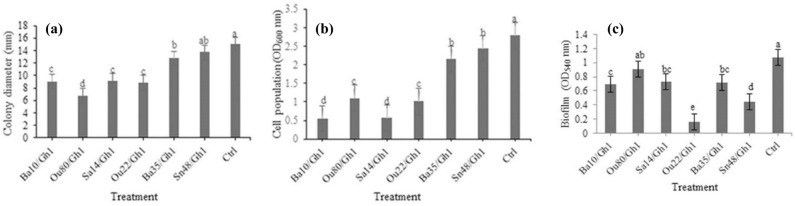
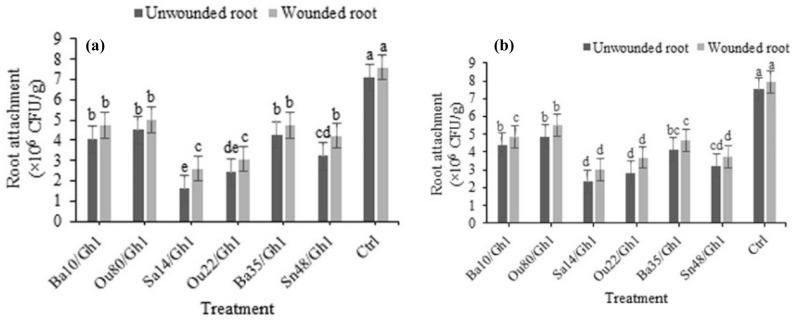
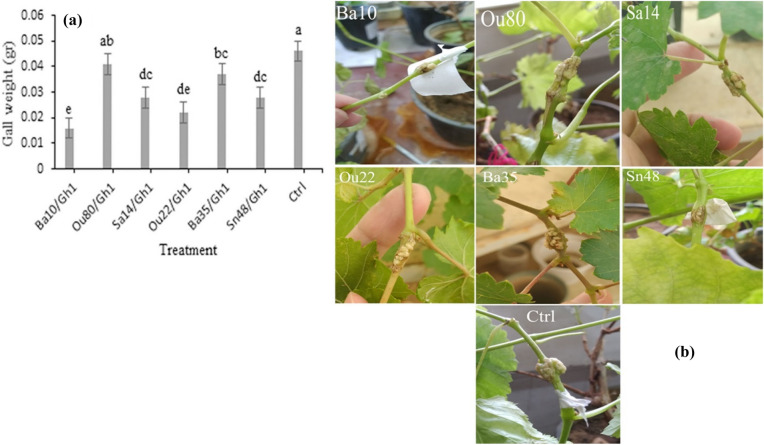
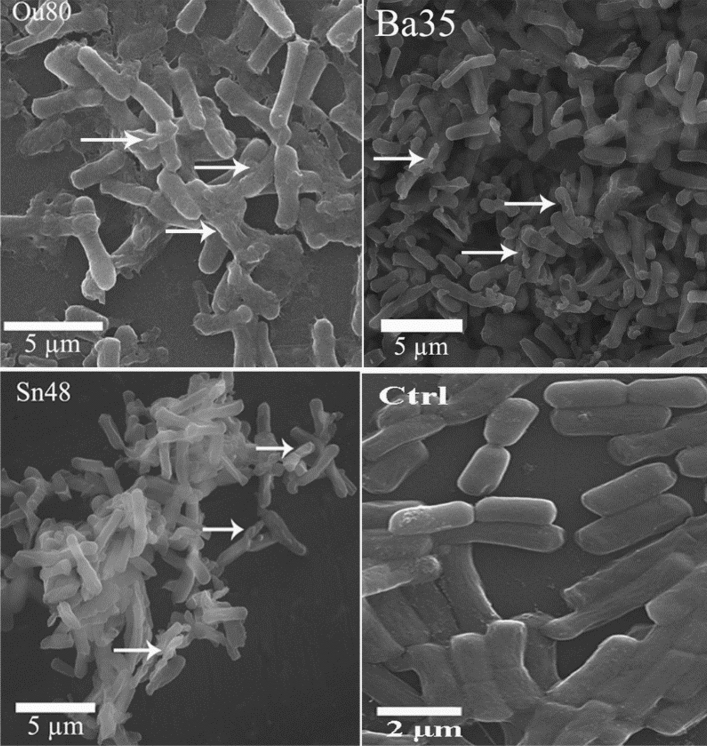
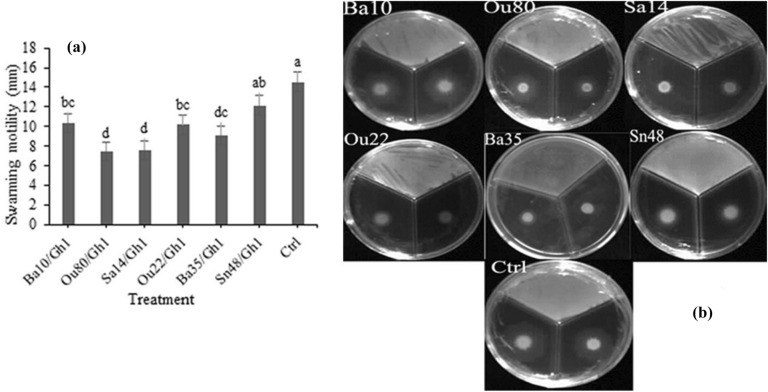
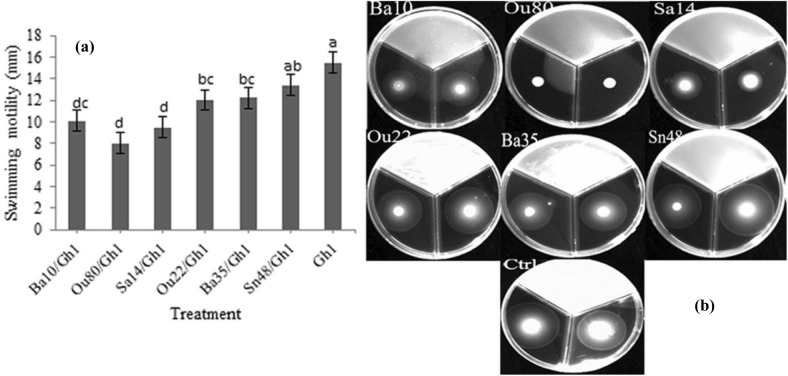
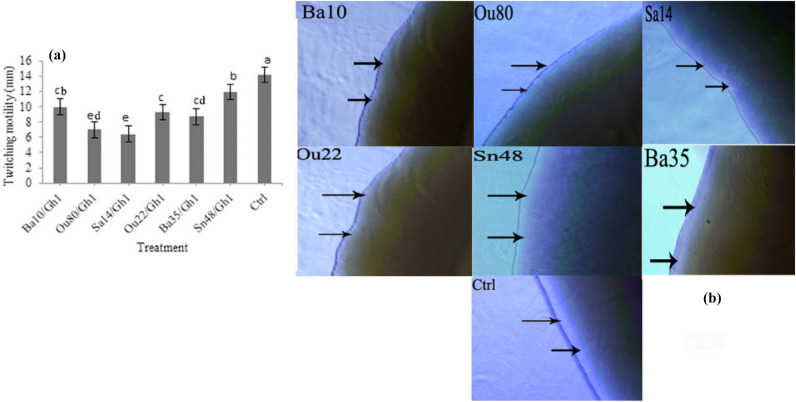
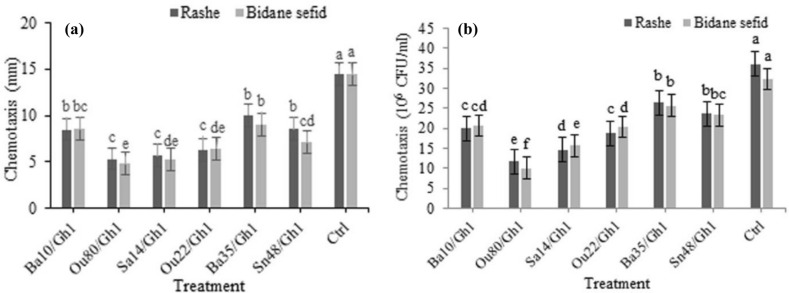
The volatile organic compounds (VOCs) produced by endophytic bacteria have a significant role in the control of phytopathogens. In this research, the VOCs produced by endophytic bacteria including Serratia sp. Ba10, Pantoea sp. Sa14, Enterobacter sp. Ou80, Pseudomonas sp. Ou22, Pseudomonas sp. Sn48 and Pseudomonas sp. Ba35, which were previously isolated from healthy domesticated and wild-growing grapevine were evaluated in terms of their effects on the virulence traits of Agrobacterium tumefaciens Gh1, the causal agent of crown gall disease. Based on the gas chromatography-mass spectrometry analysis, 16, 15, 14, 7, 16, and 15 VOCs have been identified with high quality in strains of Ba10, Sa14, Ou80, Ou22, Sn48, and Ba35, respectively. All endophytic bacteria produced VOCs that significantly reduced crown gall symptoms and inhibited the populations of A. tumefaciens Gh1 at different levels. Moreover, scanning electron microscopy analysis revealed various morphological abnormalities in the A. tumefaciens cells exposed to the VOCs produced by Ba35, Ou80, and Sn48 strains. The VOCs significantly reduced swarming-, swimming-, twitching motility and biofilm formation by A. tumefaciens Gh1. Our results revealed that VOCs could reduce the attachment of A. tumefaciens Gh1 cells to root tissues of grapevine cultivars Rashe and Bidane sefid, as well as chemotaxis motility towards root extract of both cultivars. Based on our results, it was shown that the antibacterial VOCs produced by endophytic bacteria investigated in the current study can manage crown gall disease and increase our knowledge on the role of VOCs in microbial interactions.
内生细菌产生的挥发性有机化合物(VOCs)在植物病原菌的控制中具有重要作用。在这项研究中,从健康的家养和野生葡萄藤中分离出的内生细菌,包括沙雷氏菌 Ba10、泛菌 Sa14、肠杆菌 Ou80、假单胞菌 Ou22、假单胞菌 Sn48 和假单胞菌 Ba35,其产生的 VOCs 对根癌病的致病因子根癌农杆菌 Gh1 的毒力特性进行了评估。基于气相色谱-质谱分析,在 Ba10、Sa14、Ou80、Ou22、Sn48 和 Ba35 菌株中分别鉴定出了 16、15、14、7、16 和 15 种高质量的 VOCs。所有内生细菌产生的 VOCs 均能显著降低根瘤病症状,并在不同程度上抑制根癌农杆菌 Gh1 的种群。此外,扫描电子显微镜分析显示,暴露于 Ba35、Ou80 和 Sn48 菌株产生的 VOCs 的根癌农杆菌细胞出现了各种形态异常。VOCs 显著降低了根癌农杆菌 Gh1 的群集、游泳、扭动运动和生物膜形成。我们的结果表明,VOCs 可以减少根癌农杆菌 Gh1 细胞与葡萄品种 Rashe 和 Bidane sefid 根组织的附着,以及对两种品种根提取物的趋化运动。根据我们的结果表明,研究中调查的内生细菌产生的抗菌 VOCs 可以控制根癌病,并增加我们对 VOCs 在微生物相互作用中的作用的认识。