Department of Cognitive Sciences, University of California, Irvine, CA 92697.
The Ohio State University School of Medicine, Columbus, OH 43215.
Proc Natl Acad Sci U S A. 2022 Jun 28;119(26):e2122515119. doi: 10.1073/pnas.2122515119. Epub 2022 Jun 22.
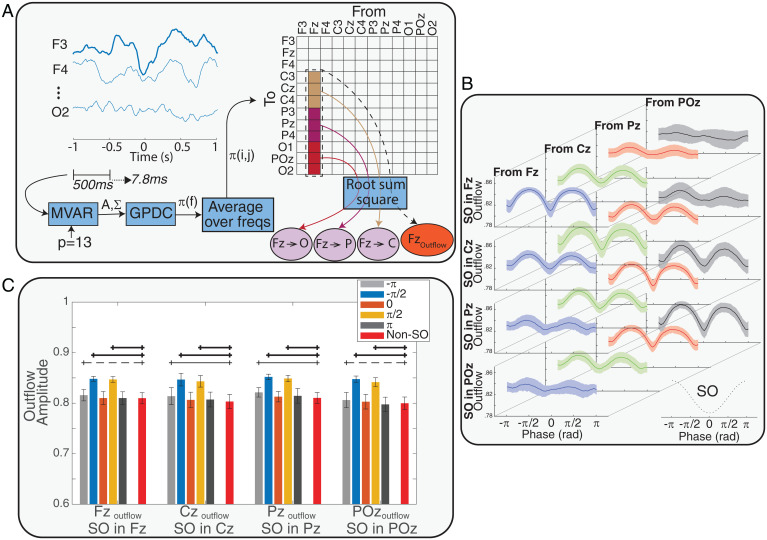
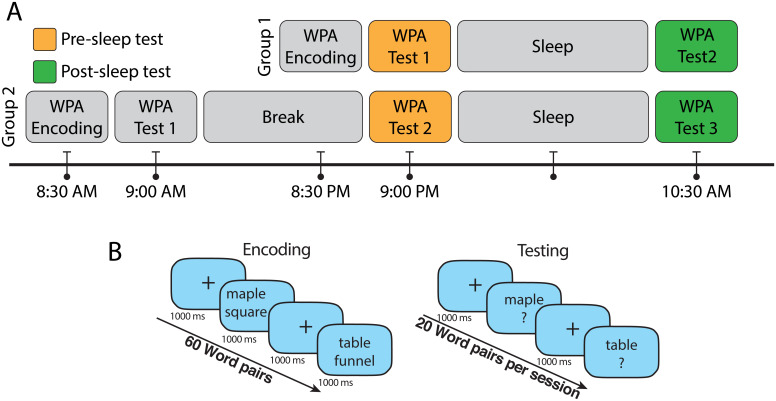
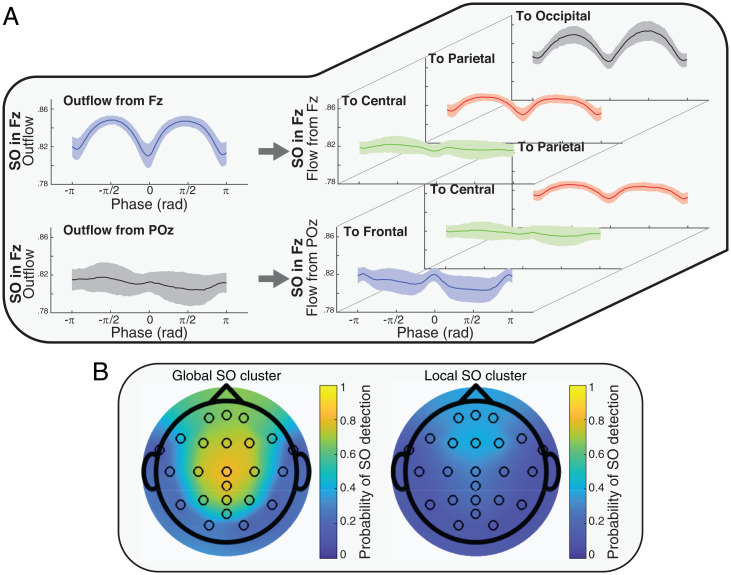
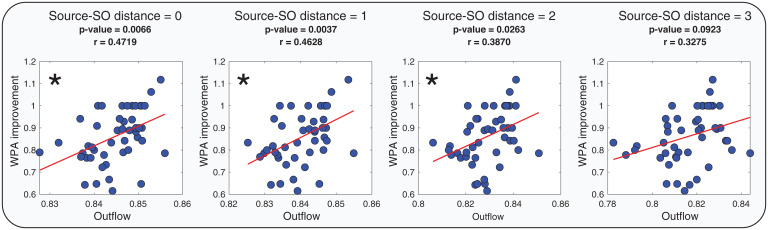
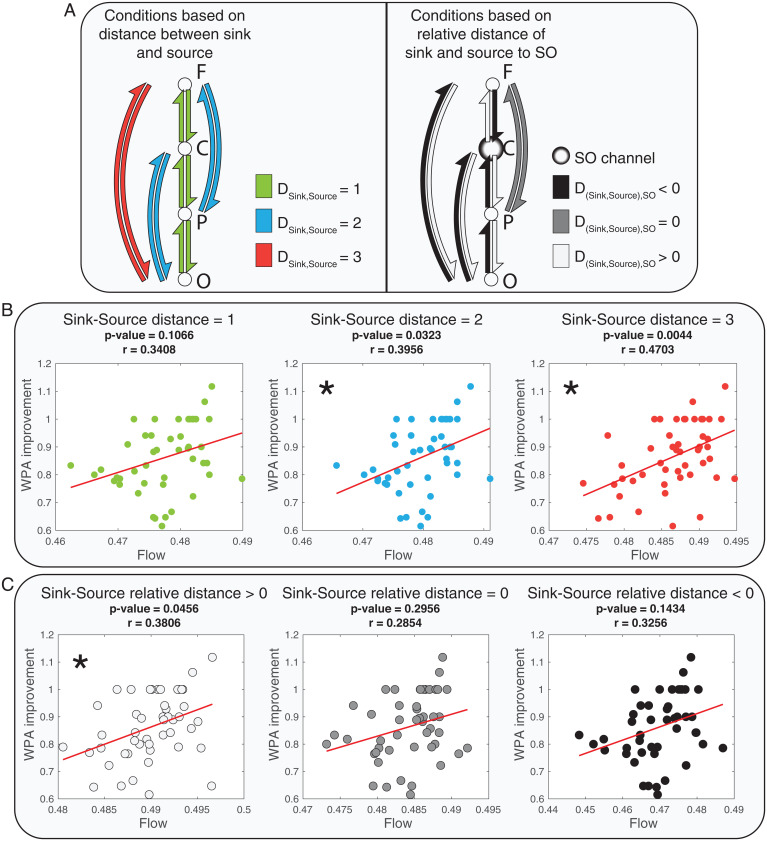
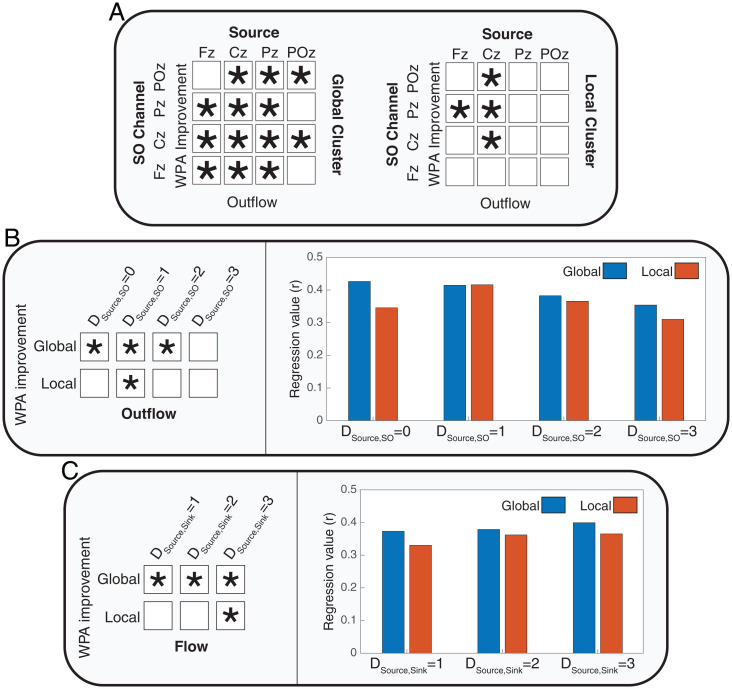
A prominent and robust finding in cognitive neuroscience is the strengthening of memories during nonrapid eye movement (NREM) sleep, with slow oscillations (SOs;<1Hz) playing a critical role in systems-level consolidation. However, NREM generally shows a breakdown in connectivity and reduction of synaptic plasticity with increasing depth: a brain state seemingly unfavorable to memory consolidation. Here, we present an approach to address this apparent paradox that leverages an event-related causality measure to estimate directional information flow during NREM in epochs with and without SOs. Our results confirm that NREM is generally a state of dampened neural communication but reveals that SOs provide two windows of enhanced large-scale communication before and after the SO trough. These peaks in communication are significantly higher when SOs are coupled with sleep spindles compared with uncoupled SOs. To probe the functional relevance of these SO-selective peaks of information flow, we tested the temporal and topographic conditions that predict overnight episodic memory improvement. Our results show that global, long-range communication during SOs promotes sleep-dependent systems consolidation of episodic memories. A significant correlation between peaks of information flow and memory improvement lends predictive validity to our measurements of effective connectivity. In other words, we were able to predict memory improvement based on independent electrophysiological observations during sleep. This work introduces a noninvasive approach to understanding information processing during sleep and provides a mechanism for how systems-level brain communication can occur during an otherwise low connectivity sleep state. In short, SOs are a gating mechanism for large-scale neural communication, a necessary substrate for systems consolidation and long-term memory formation.
认知神经科学中的一个突出而有力的发现是,在非快速眼动(NREM)睡眠期间,记忆会得到增强,而慢波(SO;<1Hz)在系统水平的巩固中起着关键作用。然而,随着深度的增加,NREM 通常会出现连接中断和突触可塑性降低的情况:这似乎是不利于记忆巩固的大脑状态。在这里,我们提出了一种方法来解决这个明显的悖论,该方法利用事件相关因果关系度量来估计在有和没有 SO 的 NREM 时期的定向信息流。我们的结果证实,NREM 通常是一种神经通讯减弱的状态,但也揭示了 SO 在 SO 波谷之前和之后提供了两个增强的大规模通讯窗口。当 SO 与睡眠纺锤波耦合时,这些通讯峰值明显高于未耦合的 SO。为了探究这些 SO 选择性信息流峰值的功能相关性,我们测试了预测夜间情景记忆改善的时间和地形条件。我们的结果表明,SO 期间的全局、长程通讯促进了情景记忆的睡眠依赖性系统巩固。信息流峰值与记忆改善之间的显著相关性为我们对有效连接的测量提供了预测有效性。换句话说,我们能够根据睡眠期间独立的电生理观察来预测记忆改善。这项工作介绍了一种理解睡眠期间信息处理的非侵入性方法,并提供了系统水平大脑通讯如何在原本连接性较低的睡眠状态下发生的机制。简而言之,SO 是大规模神经通讯的门控机制,是系统巩固和长期记忆形成的必要基础。