Buesa Ignacio, Pérez-Pérez Juan G, Visconti Fernando, Strah Rebeka, Intrigliolo Diego S, Bonet Luis, Gruden Kristina, Pompe-Novak Maruša, de Paz Jose M
Instituto Valenciano de Investigaciones Agrarias, Centro para el Desarrollo de la Agricultura Sostenible, Unidad Asociada al CSIC "Riego en la Agricultura Mediterránea", Valencia, Spain.
Ecophysiologie et Génomique Fonctionnelle de la Vigne, Institut National de la Recherche Agronomique, Institut des Sciences de la Vigne et du Vin, Villenave d'Ornon, France.
Front Plant Sci. 2022 Jun 6;13:866053. doi: 10.3389/fpls.2022.866053. eCollection 2022.
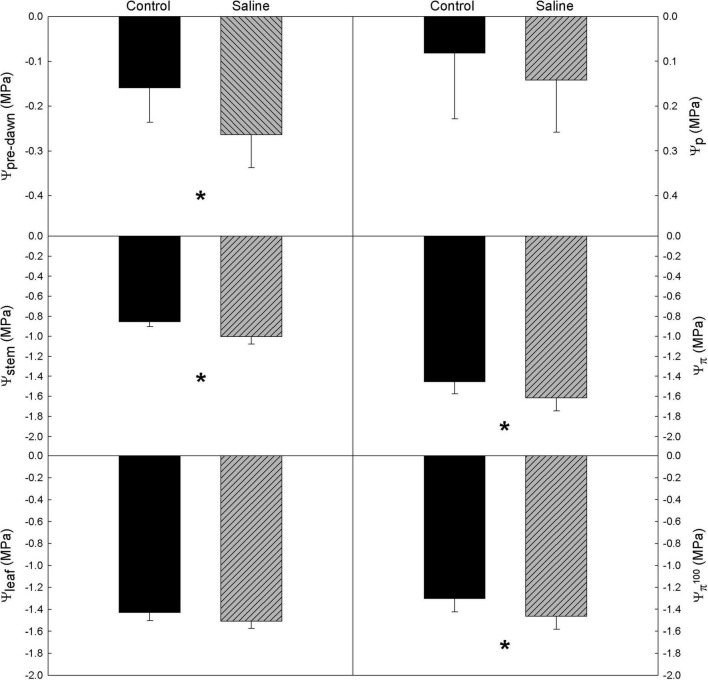
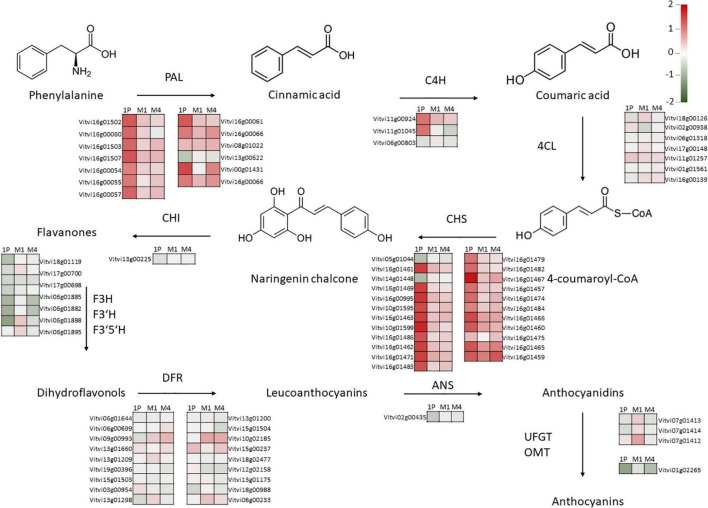
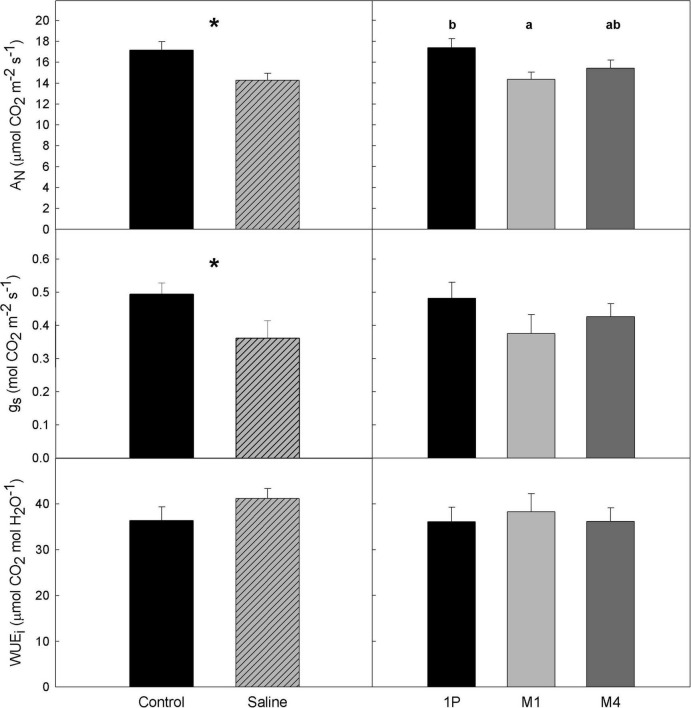
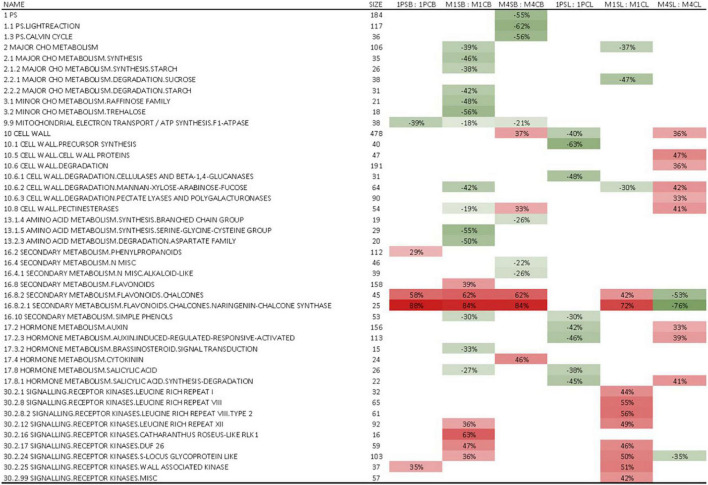
The use of more salt stress-tolerant vine rootstocks can be a sustainable strategy for adapting traditional grapevine cultivars to future conditions. However, how the new M1 and M4 rootstocks perform against salinity compared to conventional ones, such as the 1103-Paulsen, had not been previously assessed under real field conditions. Therefore, a field trial was carried out in a young 'Tempranillo' ( L.) vineyard grafted onto all three rootstocks under a semi-arid and hot-summer Mediterranean climate. The vines were irrigated with two kinds of water: a non-saline Control with EC of 0.8 dS m and a Saline treatment with 3.5 dS m. Then, various physiological parameters were assessed in the scion, and, additionally, gene expression was studied by high throughput sequencing in leaf and berry tissues. Plant water relations evidenced the osmotic effect of water quality, but not that of the rootstock. Accordingly, leaf-level gas exchange rates were also reduced in all three rootstocks, with M1 inducing significantly lower net photosynthesis rates than 1103-Paulsen. Nevertheless, the expression of groups of genes involved in photosynthesis and amino acid metabolism pathways were not significantly and differentially expressed. The irrigation with saline water significantly increased leaf chloride contents in the scion onto the M-rootstocks, but not onto the 1103P. The limitation for leaf Cl and Na accumulation on the scion was conferred by rootstock. Few processes were differentially regulated in the scion in response to the saline treatment, mainly, in the groups of genes involved in the flavonoids and phenylpropanoids metabolic pathways. However, these transcriptomic effects were not fully reflected in grape phenolic ripeness, with M4 being the only one that did not cause reductions in these compounds in response to salinity, and 1103-Paulsen having the highest overall concentrations. These results suggest that all three rootstocks confer short-term salinity tolerance to the scion. The lower transcriptomic changes and the lower accumulation of potentially phytotoxic ions in the scion grafted onto 1103-Paulsen compared to M-rootstocks point to the former being able to maintain this physiological response in the longer term. Further agronomic trials should be conducted to confirm these effects on vine physiology and transcriptomics in mature vineyards.
使用更耐盐的葡萄藤砧木可能是使传统葡萄品种适应未来环境的一种可持续策略。然而,与传统砧木(如1103 - 保尔森)相比,新的M1和M4砧木在盐分条件下的表现此前尚未在实际田间条件下进行评估。因此,在一个半干旱且夏季炎热的地中海气候条件下,对一个嫁接到这三种砧木上的年轻“丹魄”(L.)葡萄园进行了田间试验。葡萄藤用两种水进行灌溉:一种是电导率为0.8 dS m的非盐水对照,另一种是电导率为3.5 dS m的盐水处理。然后,对接穗中的各种生理参数进行了评估,此外,还通过高通量测序研究了叶片和浆果组织中的基因表达。植物水分关系证明了水质的渗透效应,但未证明砧木的渗透效应。相应地,所有三种砧木的叶片水平气体交换率也都降低了,其中M1诱导的净光合速率明显低于1103 - 保尔森。然而,参与光合作用和氨基酸代谢途径的基因组表达没有显著差异表达。用盐水灌溉显著增加了嫁接到M - 砧木上的接穗中的叶片氯含量,但嫁接到1103P上的接穗则没有。砧木对接穗中叶片氯和钠积累具有限制作用。接穗中很少有过程因盐水处理而受到差异调节,主要是参与黄酮类和苯丙烷类代谢途径的基因组。然而,这些转录组效应并未完全反映在葡萄酚类成熟度上,M4是唯一一种在盐分处理下不会导致这些化合物减少的砧木,而1103 - 保尔森的总体浓度最高。这些结果表明,所有三种砧木都赋予接穗短期耐盐性。与M - 砧木相比,嫁接到1103 - 保尔森上的接穗中转录组变化较小,潜在植物毒性离子积累较少,这表明前者能够在更长时间内维持这种生理反应。应进行进一步的农艺试验,以确认这些对成熟葡萄园葡萄生理和转录组学的影响。