Department of Neurobiology, Harvard Medical School, Boston, United States.
Elife. 2022 Jun 23;11:e76051. doi: 10.7554/eLife.76051.
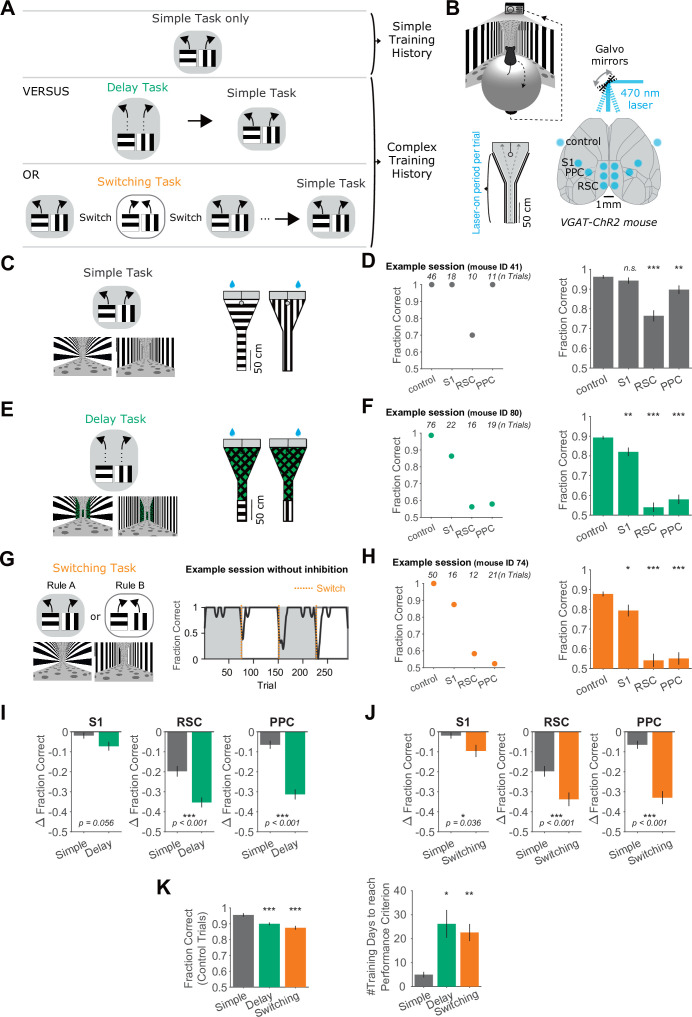
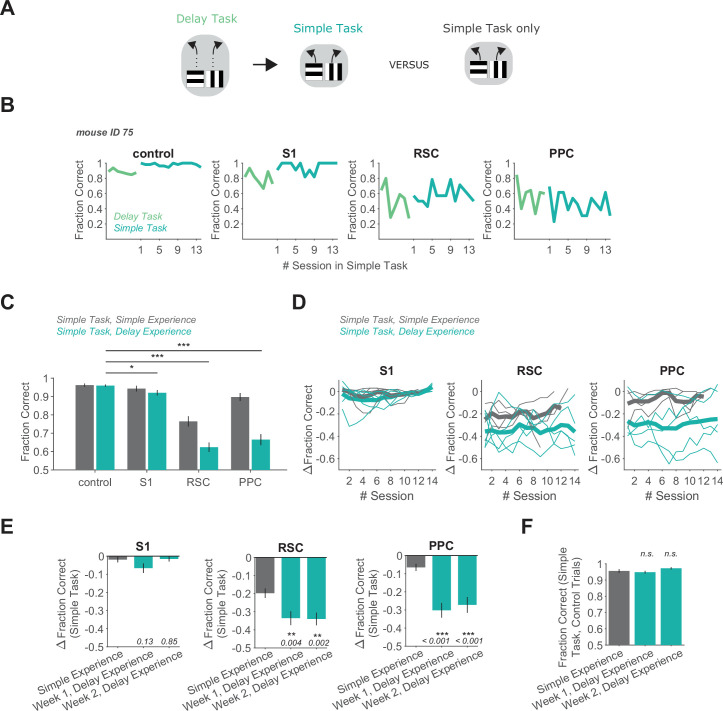
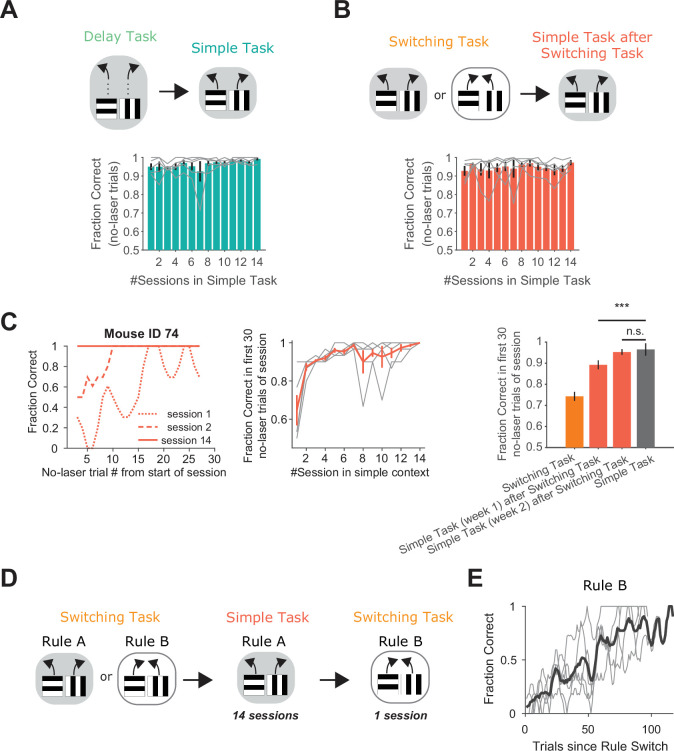
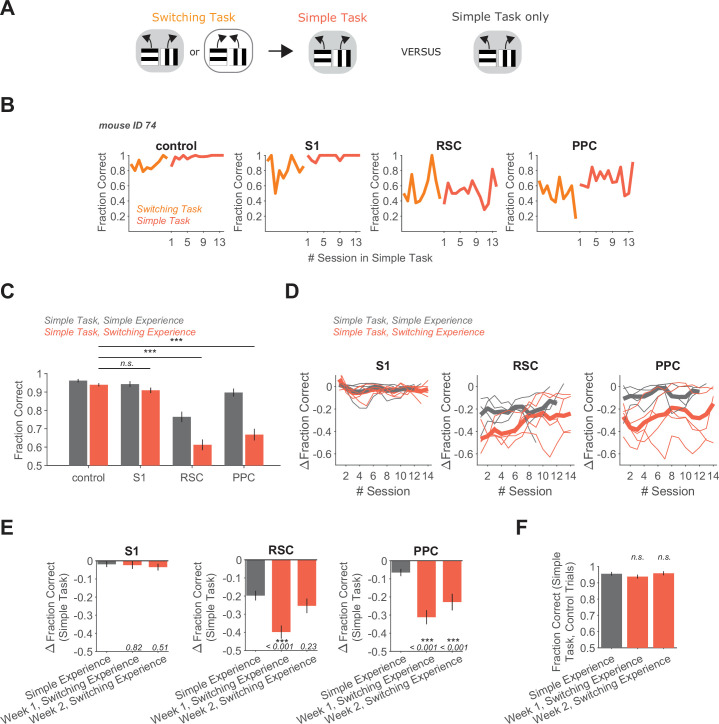
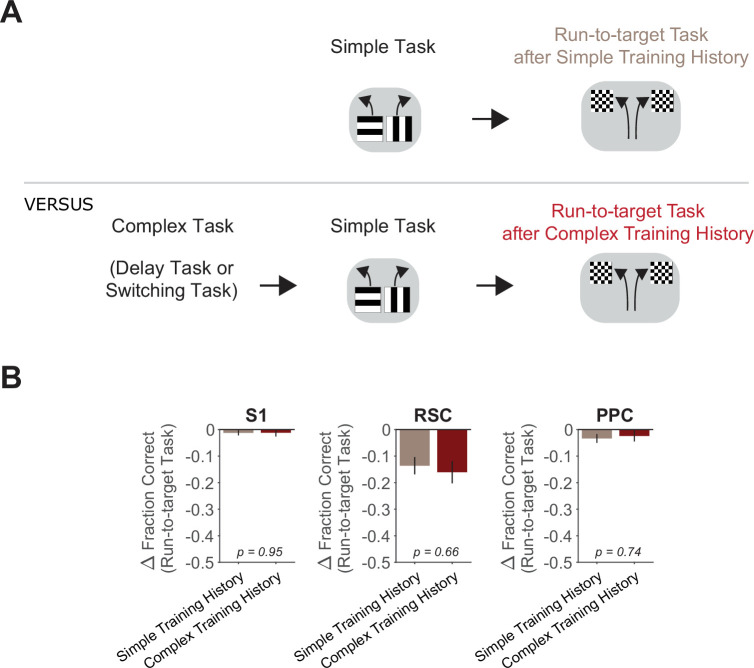
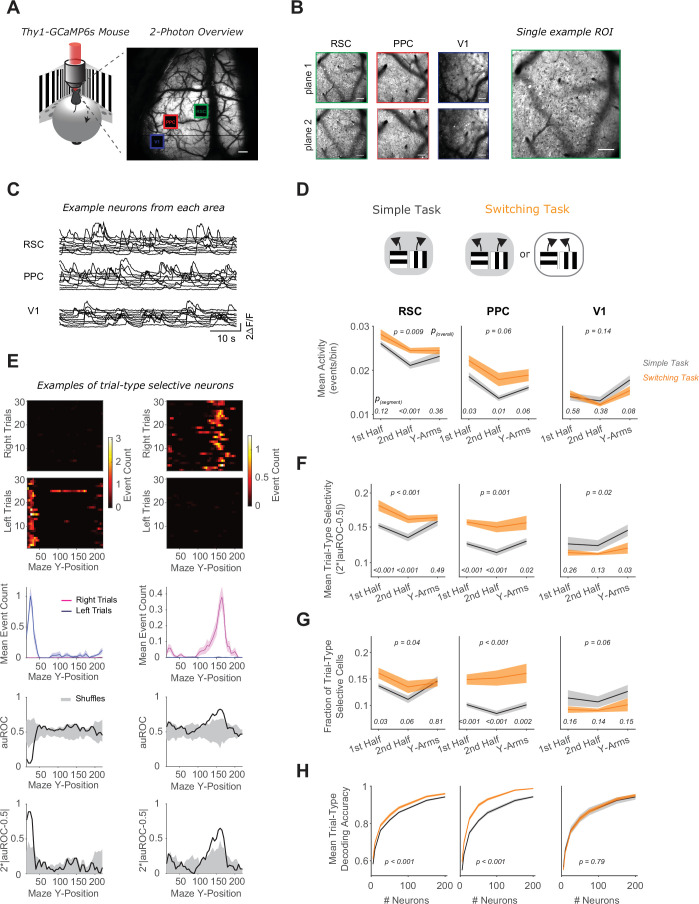
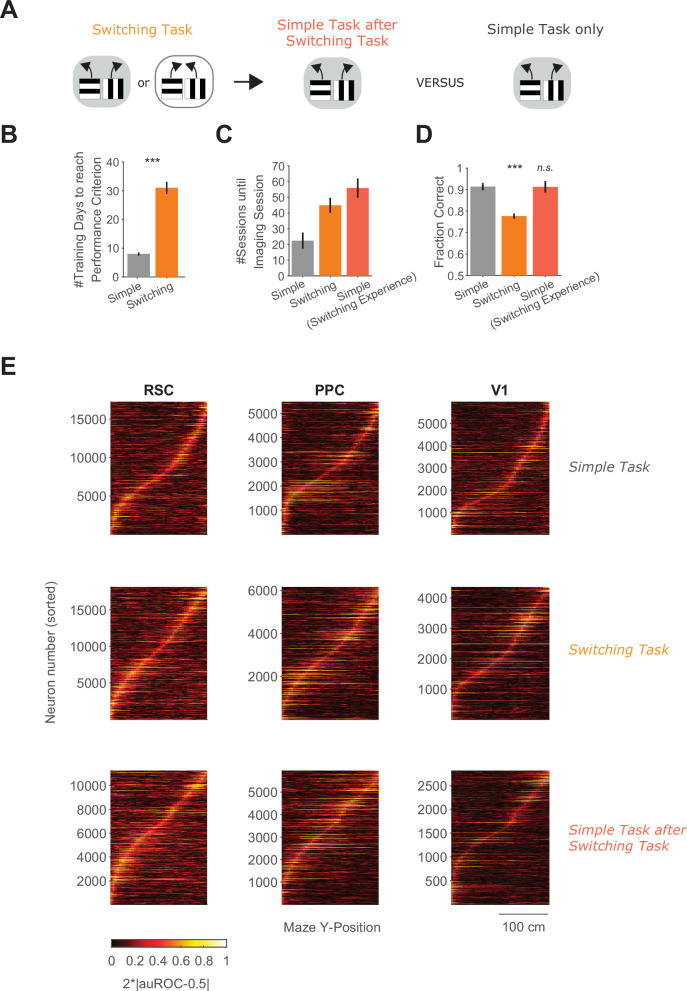
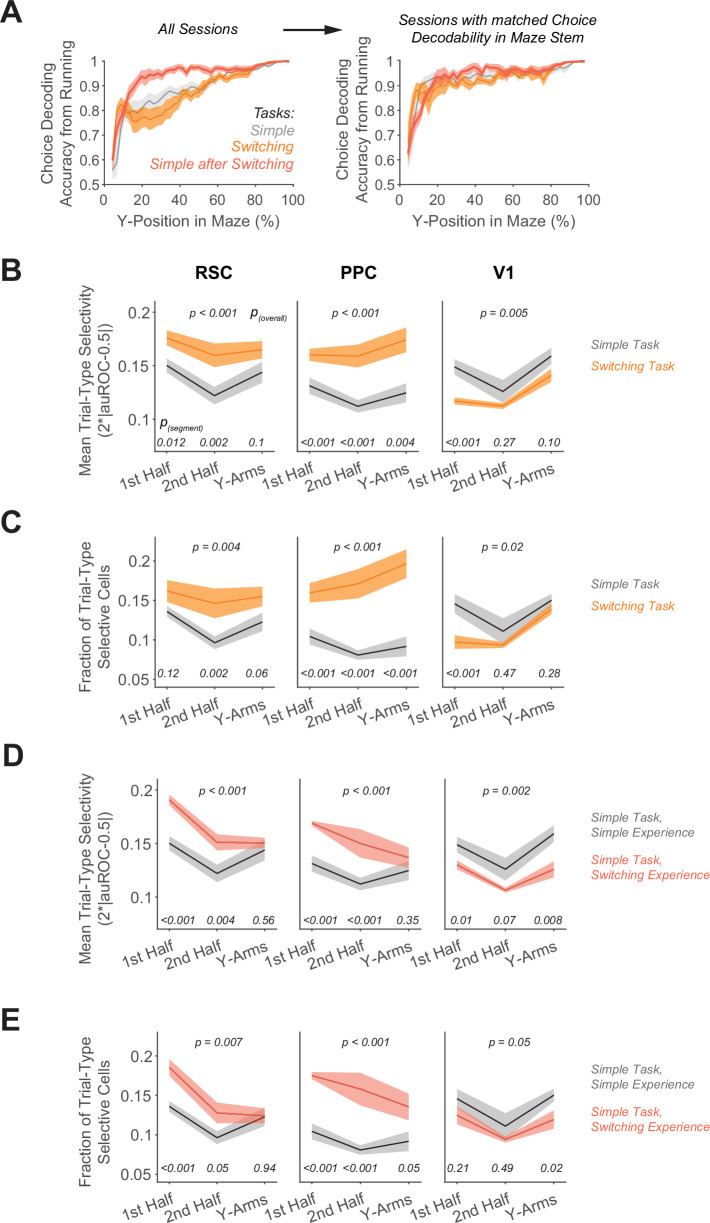
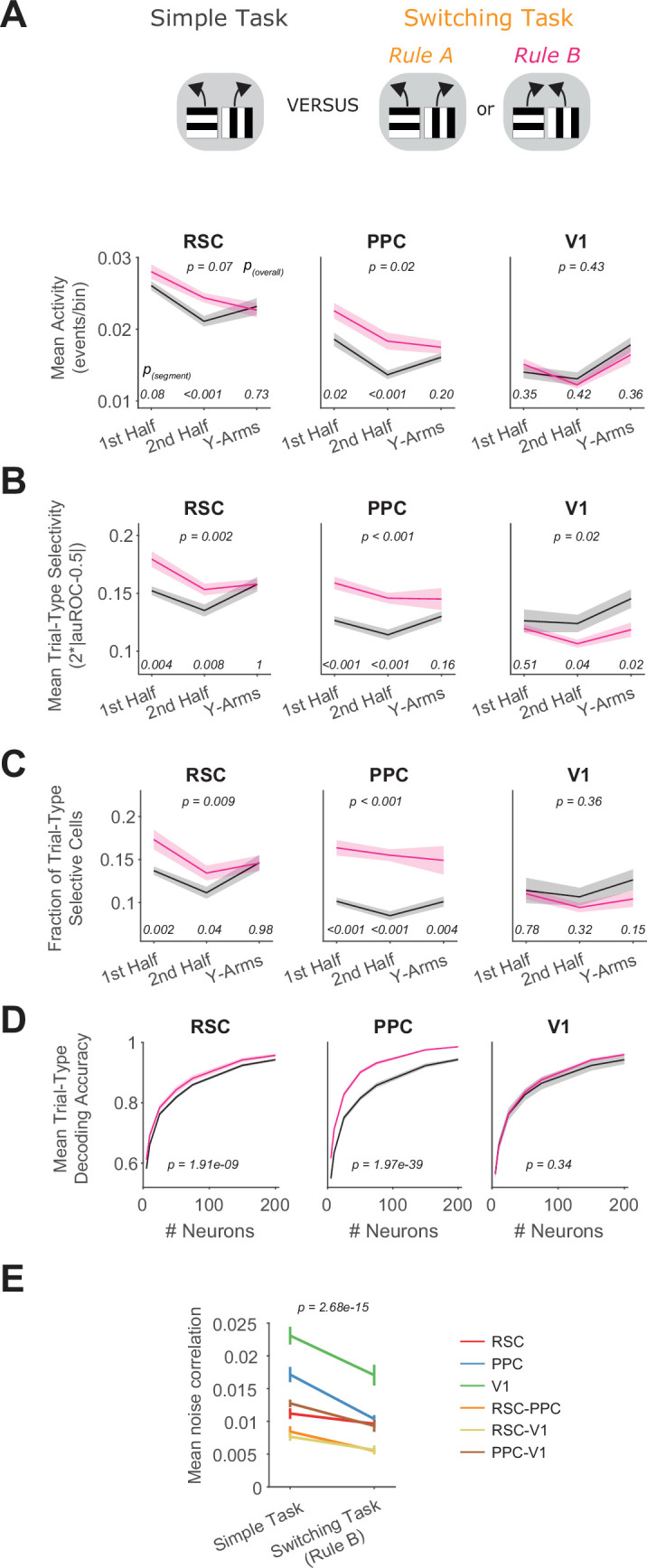
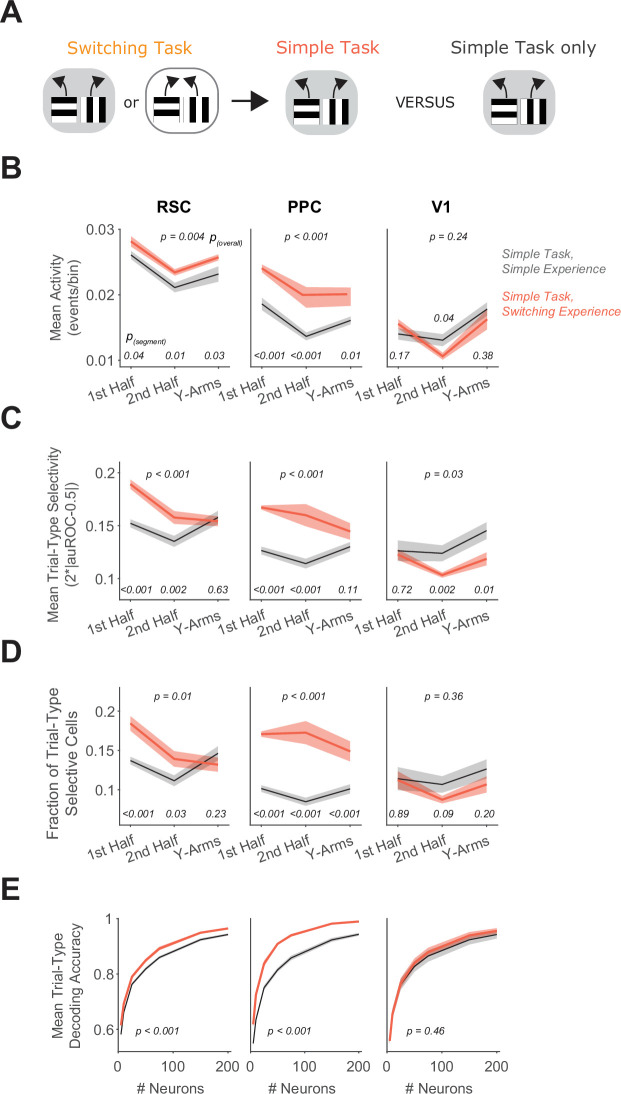
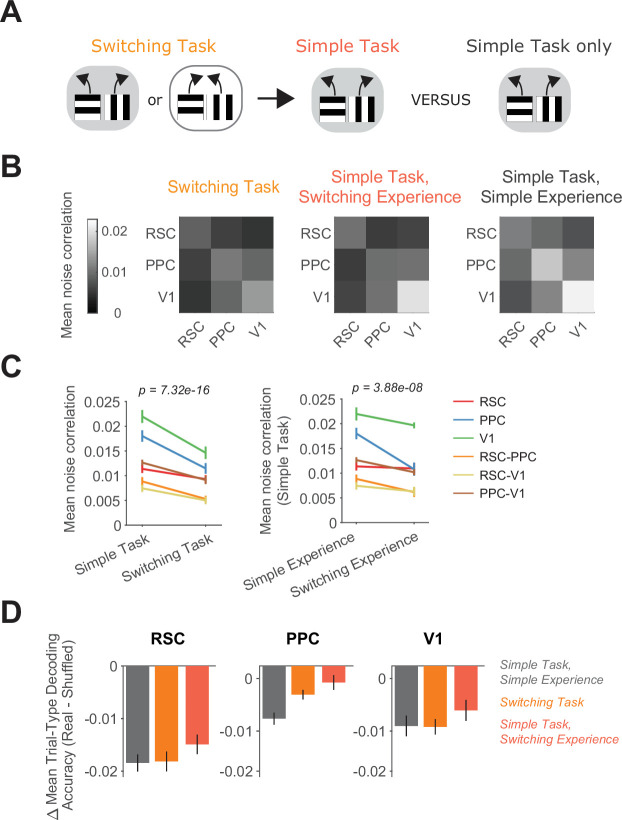
Neural activity in the mammalian cortex has been studied extensively during decision tasks, and recent work aims to identify under what conditions cortex is actually necessary for these tasks. We discovered that mice with distinct cognitive experiences, beyond sensory and motor learning, use different cortical areas and neural activity patterns to solve the same navigation decision task, revealing past learning as a critical determinant of whether cortex is necessary for goal-directed navigation. We used optogenetics and calcium imaging to study the necessity and neural activity of multiple cortical areas in mice with different training histories. Posterior parietal cortex and retrosplenial cortex were mostly dispensable for accurate performance of a simple navigation task. In contrast, these areas were essential for the same simple task when mice were previously trained on complex tasks with delay periods or association switches. Multiarea calcium imaging showed that, in mice with complex-task experience, single-neuron activity had higher selectivity and neuron-neuron correlations were weaker, leading to codes with higher task information. Therefore, past experience is a key factor in determining whether cortical areas have a causal role in goal-directed navigation.
哺乳动物大脑皮层的神经活动在决策任务中得到了广泛研究,最近的工作旨在确定在什么条件下大脑皮层对于这些任务实际上是必需的。我们发现,除了感觉和运动学习之外,具有不同认知经验的小鼠使用不同的大脑皮层区域和神经活动模式来解决相同的导航决策任务,这表明过去的学习是大脑皮层对于目标导向导航是否必需的关键决定因素。我们使用光遗传学和钙成像技术研究了具有不同训练历史的小鼠中多个大脑皮层区域的必要性和神经活动。在精确执行简单导航任务时,后顶叶皮层和后扣带皮层大多是可有可无的。相比之下,当小鼠之前接受过具有延迟期或关联切换的复杂任务训练时,这些区域对于相同的简单任务是必需的。多区域钙成像显示,在具有复杂任务经验的小鼠中,单个神经元的活动具有更高的选择性,神经元之间的相关性更弱,从而导致具有更高任务信息量的编码。因此,过去的经验是决定大脑皮层区域在目标导向导航中是否具有因果关系的关键因素。