Department of Neurobiology, Harvard Medical School, Boston, MA, USA.
Neural Computation Laboratory, Istituto Italiano di Tecnologia, Rovereto, Italy.
Nat Commun. 2023 Apr 14;14(1):2121. doi: 10.1038/s41467-023-37804-2.
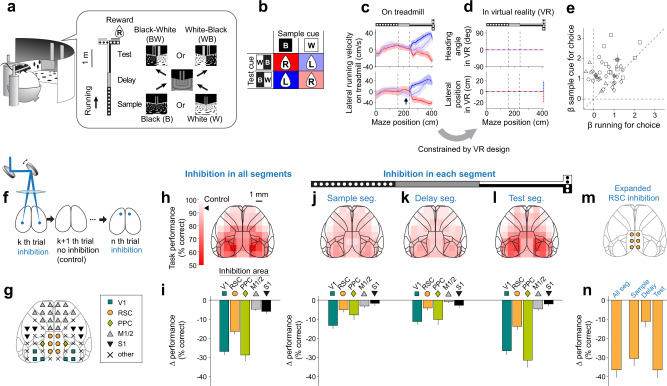
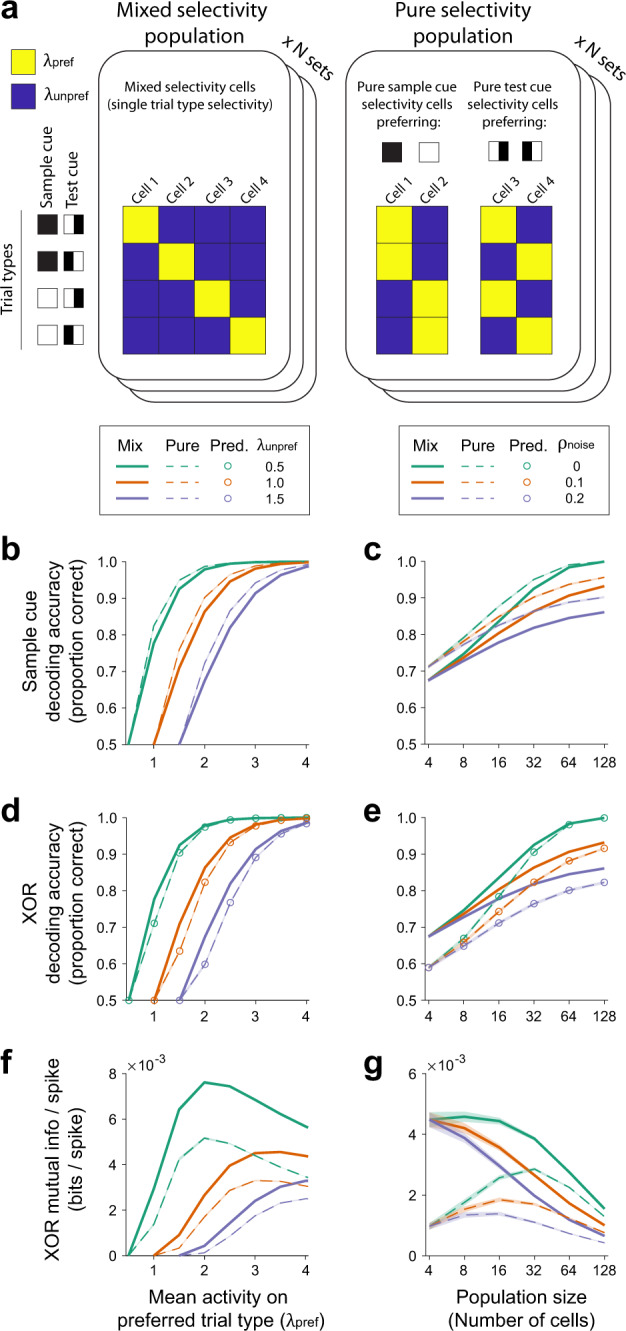
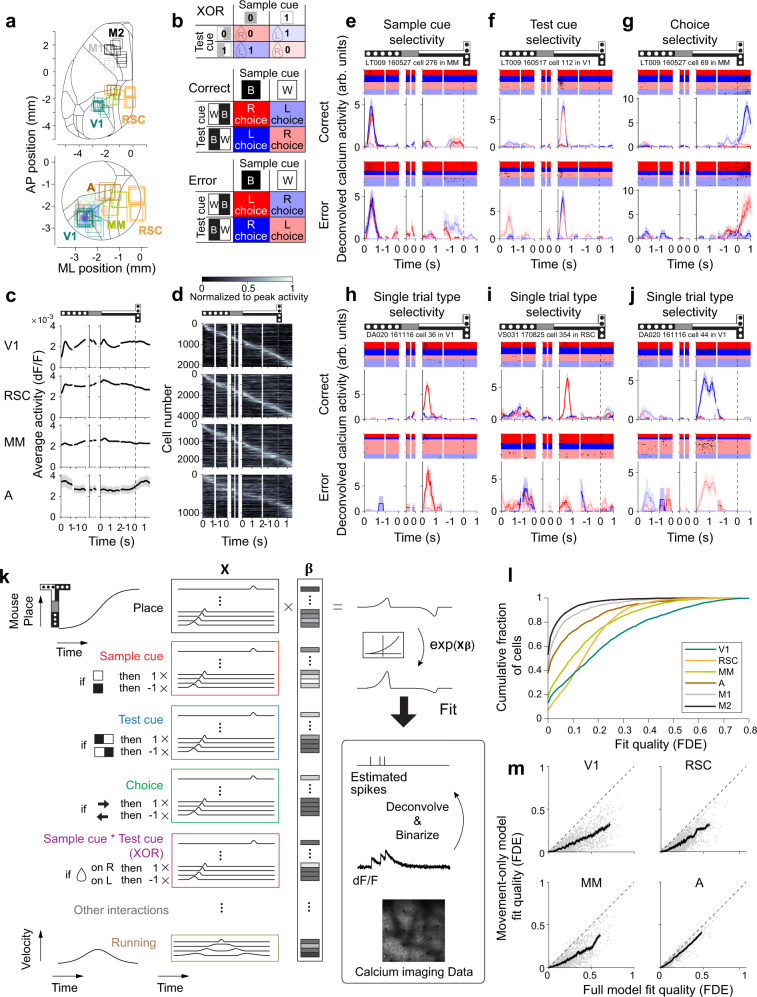
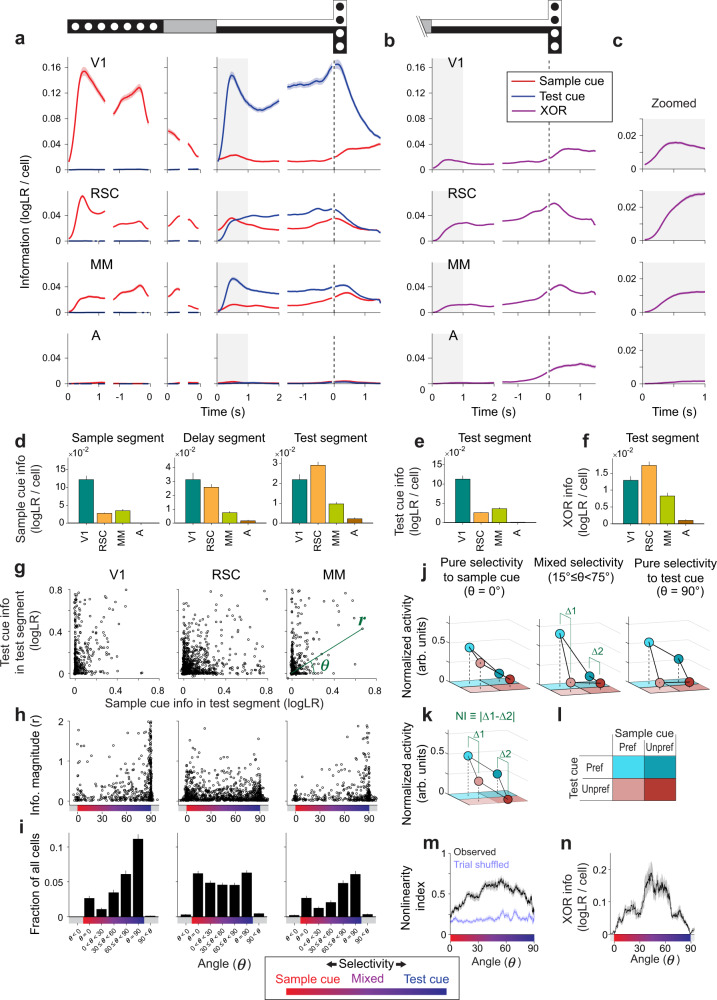
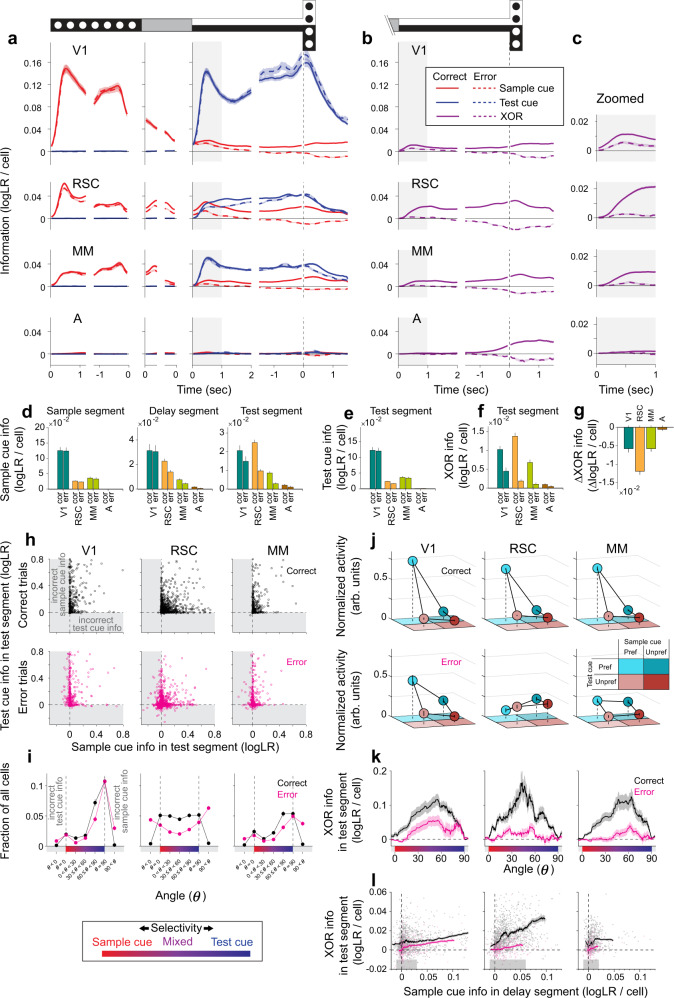
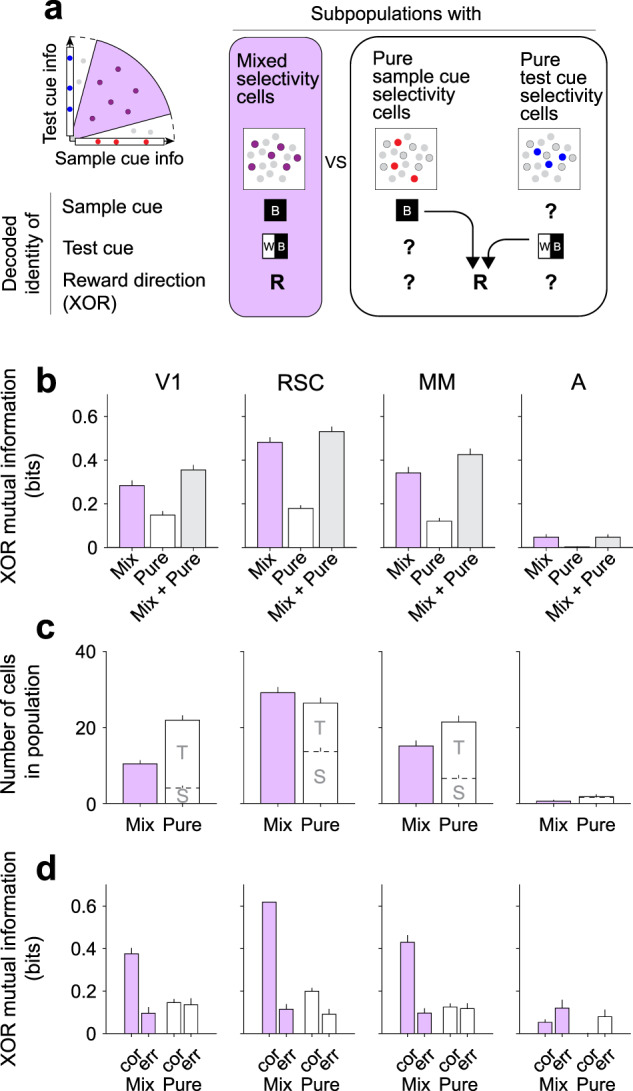
Decision-making requires flexibility to rapidly switch one's actions in response to sensory stimuli depending on information stored in memory. We identified cortical areas and neural activity patterns underlying this flexibility during virtual navigation, where mice switched navigation toward or away from a visual cue depending on its match to a remembered cue. Optogenetics screening identified V1, posterior parietal cortex (PPC), and retrosplenial cortex (RSC) as necessary for accurate decisions. Calcium imaging revealed neurons that can mediate rapid navigation switches by encoding a mixture of a current and remembered visual cue. These mixed selectivity neurons emerged through task learning and predicted the mouse's choices by forming efficient population codes before correct, but not incorrect, choices. They were distributed across posterior cortex, even V1, and were densest in RSC and sparsest in PPC. We propose flexibility in navigation decisions arises from neurons that mix visual and memory information within a visual-parietal-retrosplenial network.
决策需要灵活性,以便根据存储在记忆中的信息,快速响应感官刺激改变行为。我们在虚拟导航中确定了大脑皮层区域和神经活动模式,在此过程中,老鼠根据与记忆线索的匹配情况,选择朝向或远离视觉线索进行导航。光遗传学筛选确定 V1、顶后皮质(PPC)和后扣带回皮质(RSC)是准确决策所必需的。钙成像揭示了可以通过编码当前和记忆中的视觉线索的混合来快速进行导航切换的神经元。这些混合选择性神经元是通过任务学习出现的,它们在正确选择之前形成有效的群体编码,从而预测老鼠的选择,但在错误选择时不会。它们分布在大脑后部,甚至在 V1 中,在 RSC 中最为密集,在 PPC 中最为稀疏。我们提出,导航决策的灵活性来自于在视觉-顶后-后扣带回网络中混合视觉和记忆信息的神经元。