Lee Namgyu, Kim Dohoon
Department of Molecular, Cell and Cancer Biology, University of Massachusetts Medical School, Worcester, MA 01605, USA.
Metabolites. 2022 Jun 8;12(6):527. doi: 10.3390/metabo12060527.
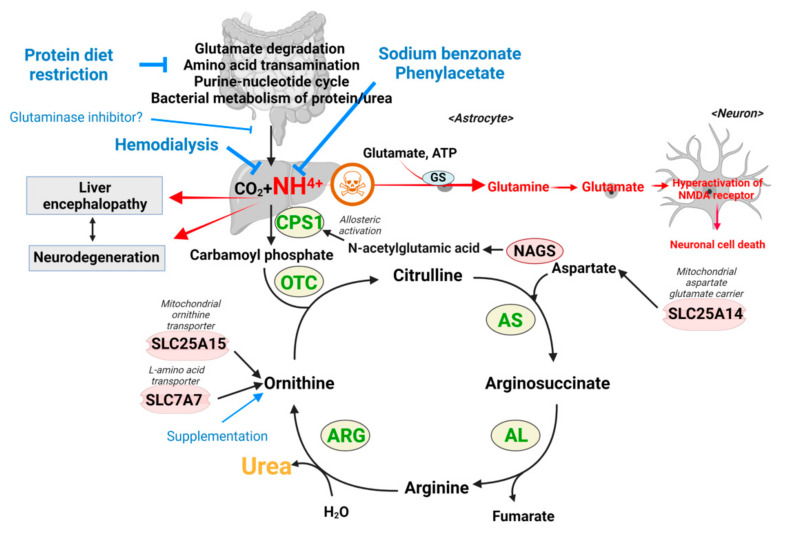
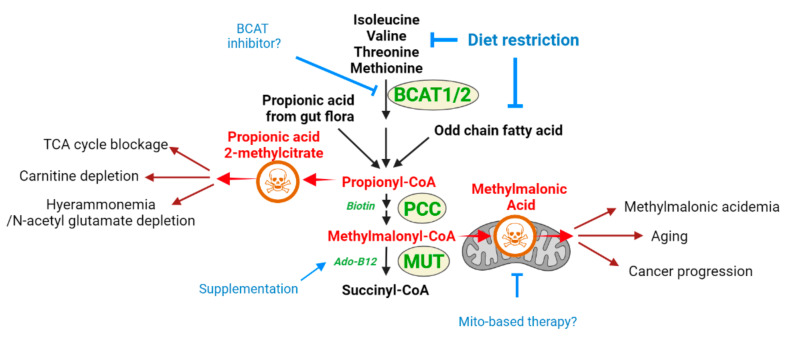
In inborn errors of metabolism, such as amino acid breakdown disorders, loss of function mutations in metabolic enzymes within the catabolism pathway lead to an accumulation of the catabolic intermediate that is the substrate of the mutated enzyme. In patients of such disorders, dietarily restricting the amino acid(s) to prevent the formation of these catabolic intermediates has a therapeutic or even entirely preventative effect. This demonstrates that the pathology is due to a toxic accumulation of enzyme substrates rather than the loss of downstream products. Here, we provide an overview of amino acid metabolic disorders from the perspective of the 'toxic metabolites' themselves, including their mechanism of toxicity and whether they are involved in the pathology of other disease contexts as well. In the research literature, there is often evidence that such metabolites play a contributing role in multiple other nonhereditary (and more common) disease conditions, and these studies can provide important mechanistic insights into understanding the metabolite-induced pathology of the inborn disorder. Furthermore, therapeutic strategies developed for the inborn disorder may be applicable to these nonhereditary disease conditions, as they involve the same toxic metabolite. We provide an in-depth illustration of this cross-informing concept in two metabolic disorders, methylmalonic acidemia and hyperammonemia, where the pathological metabolites methylmalonic acid and ammonia are implicated in other disease contexts, such as aging, neurodegeneration, and cancer, and thus there are opportunities to apply mechanistic or therapeutic insights from one disease context towards the other. Additionally, we expand our scope to other metabolic disorders, such as homocystinuria and nonketotic hyperglycinemia, to propose how these concepts can be applied broadly across different inborn errors of metabolism and various nonhereditary disease conditions.
在先天性代谢缺陷中,例如氨基酸分解障碍,分解代谢途径中代谢酶的功能丧失突变会导致作为突变酶底物的分解代谢中间产物积累。在患有此类疾病的患者中,通过饮食限制氨基酸以防止这些分解代谢中间产物的形成具有治疗甚至完全预防的效果。这表明病理状况是由于酶底物的毒性积累而非下游产物的缺失所致。在此,我们从“毒性代谢物”本身的角度对氨基酸代谢紊乱进行概述,包括它们的毒性机制以及是否也参与其他疾病背景的病理过程。在研究文献中,经常有证据表明此类代谢物在多种其他非遗传性(且更常见)疾病状况中起作用,这些研究可为理解先天性疾病中代谢物诱导的病理过程提供重要的机制见解。此外,为先天性疾病开发的治疗策略可能适用于这些非遗传性疾病状况,因为它们涉及相同的毒性代谢物。我们在甲基丙二酸血症和高氨血症这两种代谢紊乱中深入阐述了这种相互启发的概念,其中病理代谢物甲基丙二酸和氨与其他疾病背景相关,如衰老、神经退行性变和癌症,因此有机会将一种疾病背景的机制或治疗见解应用于另一种疾病。此外,我们将范围扩展到其他代谢紊乱,如同型胱氨酸尿症和非酮症高甘氨酸血症,以提出如何将这些概念广泛应用于不同的先天性代谢缺陷和各种非遗传性疾病状况。