Song Changyou, Liu Bo, Li Hongxia, Tang Yongkai, Ge Xianping, Liu Bo, Xu Pao
Key Laboratory of Aquatic Animal Nutrition and Health, Freshwater Fisheries Research Center, Chinese Academy of Fishery Science, Wuxi 214081, China.
Wuxi Fisheries College, Nanjing Agricultural University, Wuxi 214081, China.
Antioxidants (Basel). 2022 Jun 15;11(6):1179. doi: 10.3390/antiox11061179.
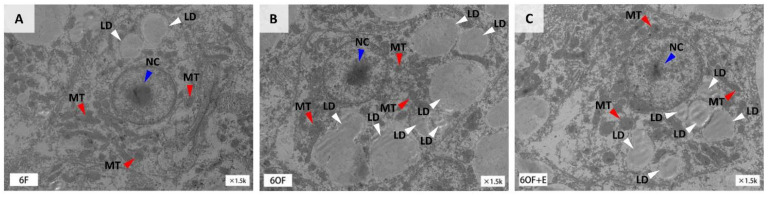
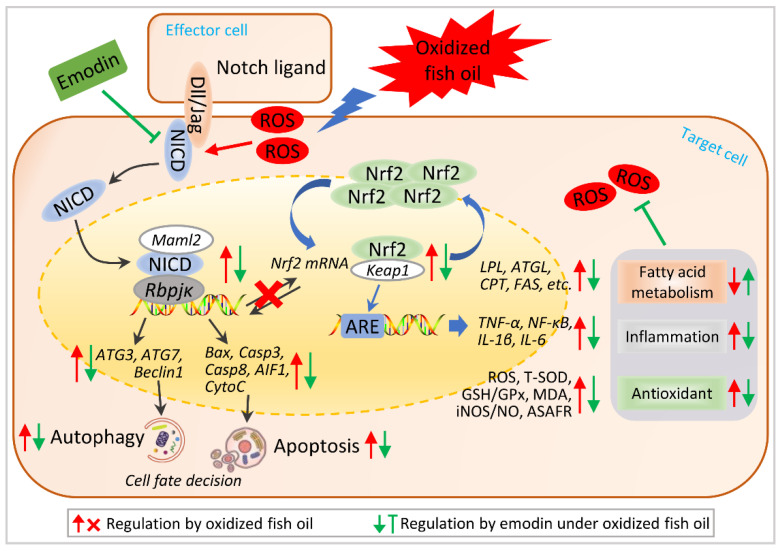
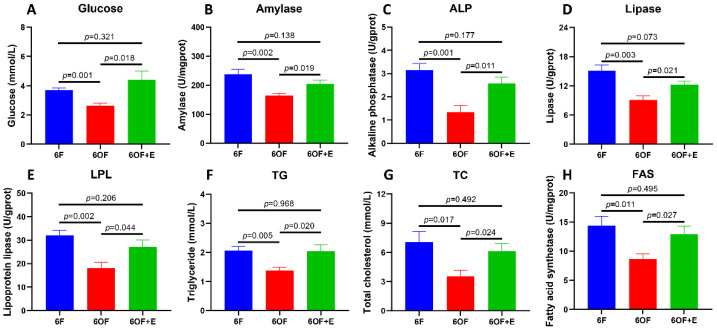
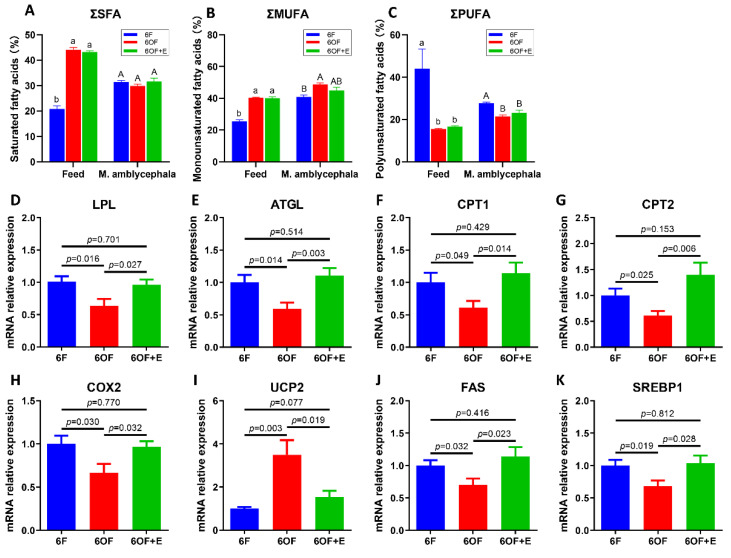
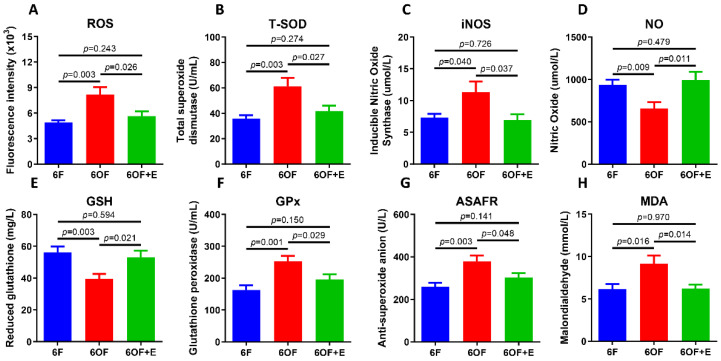
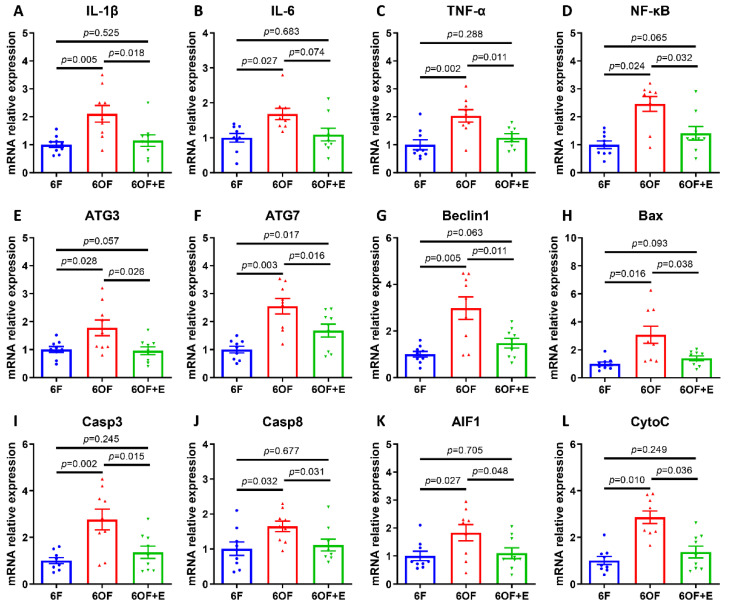
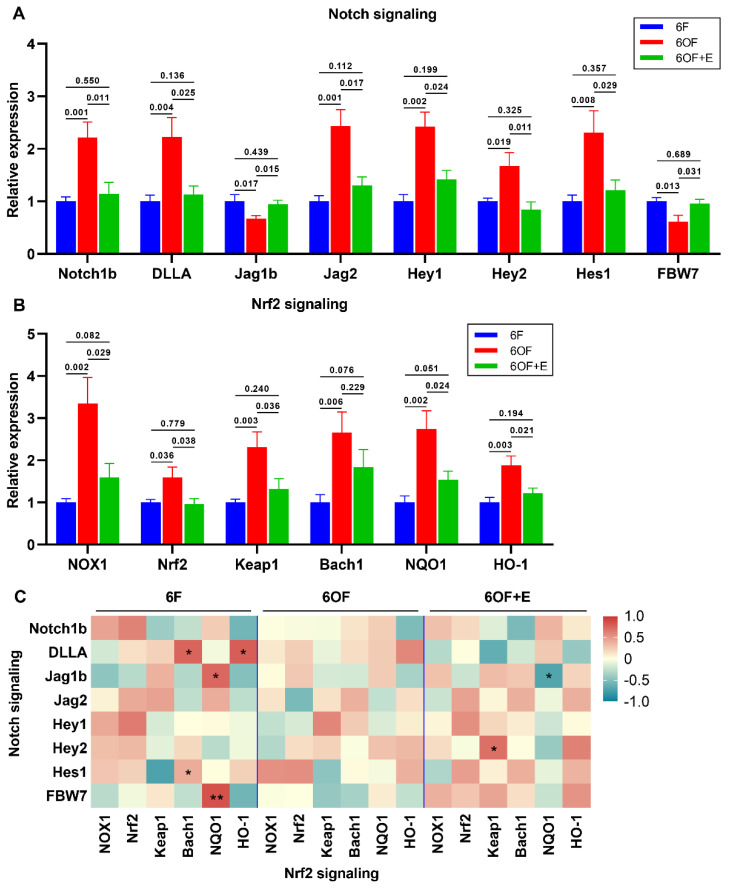
Dietary oxidized lipids are key perpetrator to accumulate excessive reactive oxygen species (ROS) that induce oxidative stress for animals. Immoderate oxidative stress dysregulates cell fate, perturbs cellular homeostasis, thereby interrupts metabolism and normal growth. Therefore, a 12-week feeding trial with fish oil (FO, control group), oxidized fish oil (OF), and emodin-supplemented (OF+E) diets was conducted to evaluate the therapeutic mechanism of emodin on metabolic and oxidative resistance in liver. Morphologically, emodin remits oxidized fish oil-induced cellular constituents damage, evidenced by lipid droplets enlargement and accumulation, mitochondria rupture, and nucleus aggregation, which were functionally related to oxidative stress, metabolism, and cell fate determination. Consecutively, glucose, lipid, and amino acid metabolism were retained under emodin stimulation. Specifically, fatty acid metabolic genes optimized fatty acid utilization and metabolism, featured as total saturated fatty acids (SFA), monounsaturated fatty acids (MUFA), and polyunsaturated fatty acids (PUFA) alternation. Physiologically, inflammation, autophagy, apoptosis, as well as antioxidant capacity were alleviated by emodin. Interactively, fatty acid metabolism was correlated with antioxidant capacity; while the crosstalk and dynamic equilibrium between apoptosis and autophagy determine the cell fate under oxidative stress amelioration. Synergistically, Nrf2 and Notch signaling were active to antioxidant defense. In particular, oxidative stress blocked the crosstalk between Notch and Nrf2 signaling, while emodin rescued Notch-Nrf2 interaction to ameliorate oxidative stress. In conclusion, these results suggest that elevated ROS levels by oxidative stress activates Notch and Nrf2 signaling but intercepts Notch-Nrf2 crosstalk to stimulate cell fate and antioxidant program; dietary emodin alleviates oxidative stress and returns overall ROS levels to a moderate state to maintain homeostatic balance. The crosstalk between Notch and Nrf2 signaling might be the potential therapeutic target for emodin to ameliorate oxidative stress and metabolic disorder in liver.
膳食氧化脂质是导致动物体内积累过多活性氧(ROS)的关键因素,这些活性氧会引发氧化应激。过度的氧化应激会破坏细胞命运调控,扰乱细胞内稳态,进而干扰新陈代谢和正常生长。因此,开展了一项为期12周的饲喂试验,分别用鱼油(FO,对照组)、氧化鱼油(OF)和添加大黄素的氧化鱼油(OF+E)日粮饲喂,以评估大黄素对肝脏代谢和抗氧化能力的治疗机制。从形态学上看,大黄素可减轻氧化鱼油诱导的细胞成分损伤,脂质滴增大和积累、线粒体破裂以及细胞核聚集证明了这一点,这些与氧化应激、新陈代谢和细胞命运决定功能相关。接着,在大黄素刺激下,葡萄糖、脂质和氨基酸代谢得以维持。具体而言,脂肪酸代谢基因优化了脂肪酸的利用和代谢,表现为总饱和脂肪酸(SFA)、单不饱和脂肪酸(MUFA)和多不饱和脂肪酸(PUFA)的变化。生理上,大黄素减轻了炎症、自噬、凋亡以及抗氧化能力。相互作用方面,脂肪酸代谢与抗氧化能力相关;而凋亡和自噬之间的相互作用及动态平衡决定了氧化应激改善条件下的细胞命运。协同作用下,Nrf2和Notch信号通路对抗氧化防御具有活性。特别是,氧化应激阻断了Notch和Nrf2信号通路之间的相互作用,而大黄素恢复了Notch-Nrf2相互作用以减轻氧化应激。总之,这些结果表明,氧化应激导致的ROS水平升高激活了Notch和Nrf2信号通路,但阻断了Notch-Nrf2相互作用,从而刺激细胞命运和抗氧化程序;膳食大黄素减轻氧化应激,使整体ROS水平恢复到适度状态以维持稳态平衡。Notch和Nrf2信号通路之间的相互作用可能是大黄素改善肝脏氧化应激和代谢紊乱的潜在治疗靶点。