Iorio Roberto, Celenza Giuseppe, Petricca Sabrina
Department of Biotechnological and Applied Clinical Sciences, University of L'Aquila, Via Vetoio, 67100 L'Aquila, Italy.
Antioxidants (Basel). 2022 Jun 18;11(6):1199. doi: 10.3390/antiox11061199.
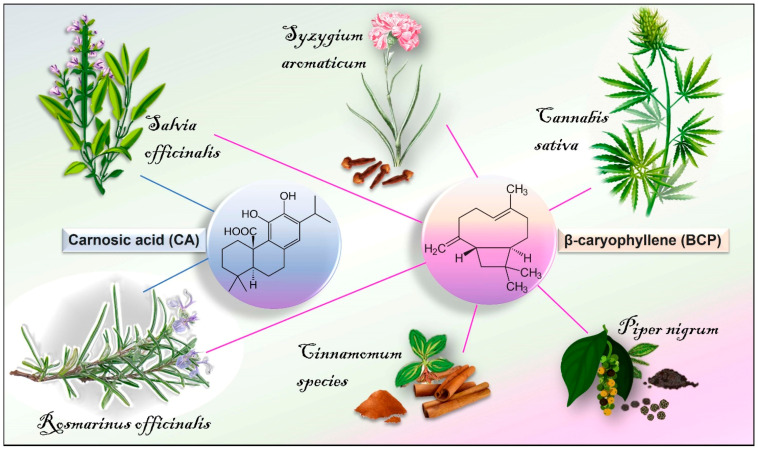
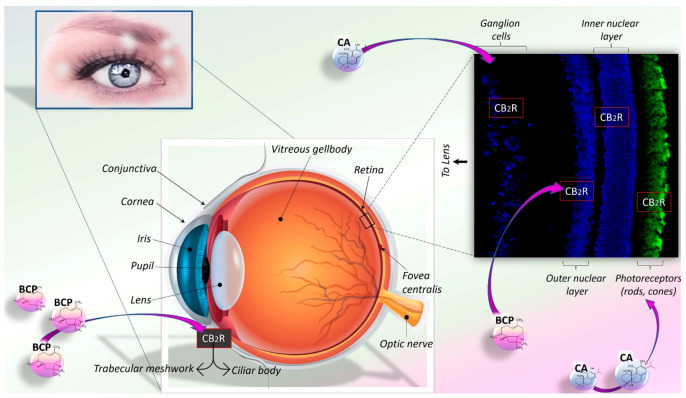
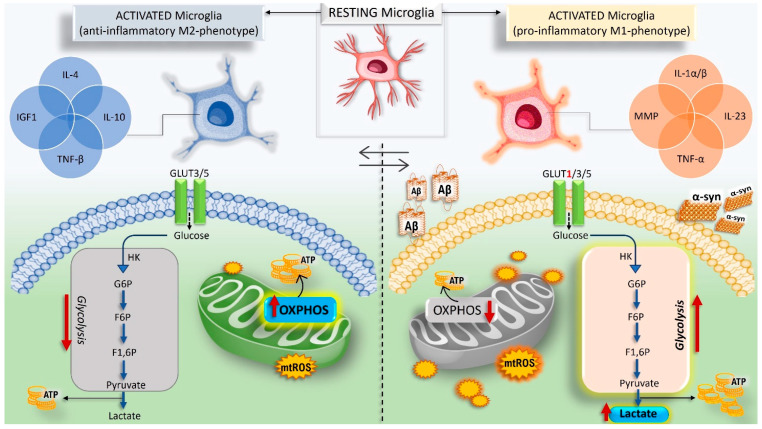
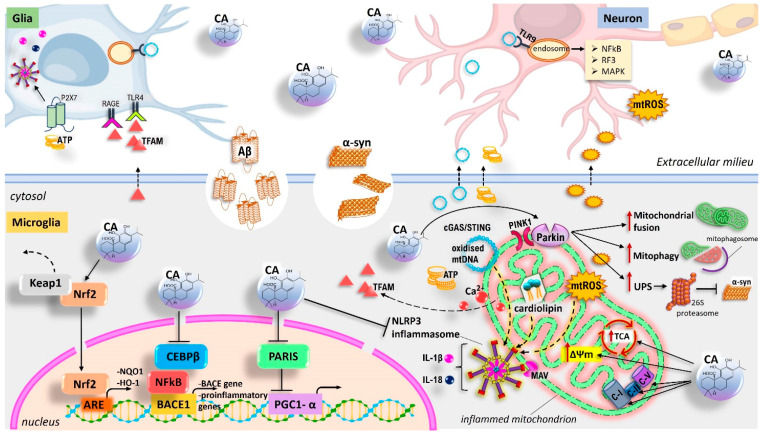
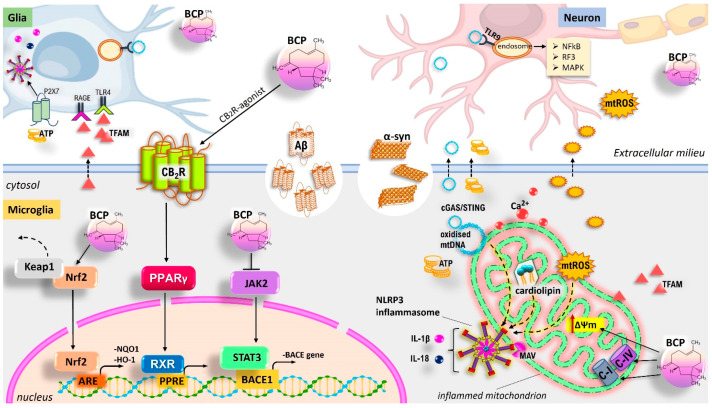
Inflammation and oxidative stress are interlinked and interdependent processes involved in many chronic diseases, including neurodegeneration, diabetes, cardiovascular diseases, and cancer. Therefore, targeting inflammatory pathways may represent a potential therapeutic strategy. Emerging evidence indicates that many phytochemicals extracted from edible plants have the potential to ameliorate the disease phenotypes. In this scenario, ß-caryophyllene (BCP), a bicyclic sesquiterpene, and carnosic acid (CA), an ortho-diphenolic diterpene, were demonstrated to exhibit anti-inflammatory, and antioxidant activities, as well as neuroprotective and mitoprotective effects in different in vitro and in vivo models. BCP essentially promotes its effects by acting as a selective agonist and allosteric modulator of cannabinoid type-2 receptor (CB2R). CA is a pro-electrophilic compound that, in response to oxidation, is converted to its electrophilic form. This can interact and activate the Keap1/Nrf2/ARE transcription pathway, triggering the synthesis of endogenous antioxidant "phase 2" enzymes. However, given the nature of its chemical structure, CA also exhibits direct antioxidant effects. BCP and CA can readily cross the BBB and accumulate in brain regions, giving rise to neuroprotective effects by preventing mitochondrial dysfunction and inhibiting activated microglia, substantially through the activation of pro-survival signalling pathways, including regulation of apoptosis and autophagy, and molecular mechanisms related to mitochondrial quality control. Findings from different in vitro/in vivo experimental models of Parkinson's disease and Alzheimer's disease reported the beneficial effects of both compounds, suggesting that their use in treatments may be a promising strategy in the management of neurodegenerative diseases aimed at maintaining mitochondrial homeostasis and ameliorating glia-mediated neuroinflammation.
炎症和氧化应激是相互关联且相互依存的过程,涉及许多慢性疾病,包括神经退行性疾病、糖尿病、心血管疾病和癌症。因此,针对炎症途径可能代表一种潜在的治疗策略。新出现的证据表明,从可食用植物中提取的许多植物化学物质有可能改善疾病表型。在这种情况下,β-石竹烯(BCP),一种双环倍半萜,和肌醇六磷酸(CA),一种邻二酚二萜,在不同的体外和体内模型中被证明具有抗炎、抗氧化活性,以及神经保护和线粒体保护作用。BCP主要通过作为大麻素2型受体(CB2R)的选择性激动剂和变构调节剂来发挥其作用。CA是一种亲电前体化合物,在氧化作用下会转化为其亲电形式。这可以相互作用并激活Keap1/Nrf2/ARE转录途径,触发内源性抗氧化“第二阶段”酶的合成。然而,鉴于其化学结构的性质,CA也表现出直接的抗氧化作用。BCP和CA可以很容易地穿过血脑屏障并在脑区积累,通过防止线粒体功能障碍和抑制活化的小胶质细胞,主要通过激活促生存信号通路,包括调节细胞凋亡和自噬,以及与线粒体质量控制相关的分子机制,从而产生神经保护作用。帕金森病和阿尔茨海默病的不同体外/体内实验模型的研究结果报告了这两种化合物的有益作用,表明它们在治疗中的应用可能是管理神经退行性疾病的一种有前景的策略,旨在维持线粒体稳态并改善胶质细胞介导的神经炎症。