Zheng Kunhua, Xie Ying, Dan Lintao, Mao Meixian, Chen Jie, Li Ran, Wang Xuanding, Hesketh Therese
People's Hospital of Kaihua, Quzhou 324300, China.
Center for Global Health, Zhejiang University School of Medicine, Hangzhou 310000, China.
Antibiotics (Basel). 2022 Jun 10;11(6):791. doi: 10.3390/antibiotics11060791.
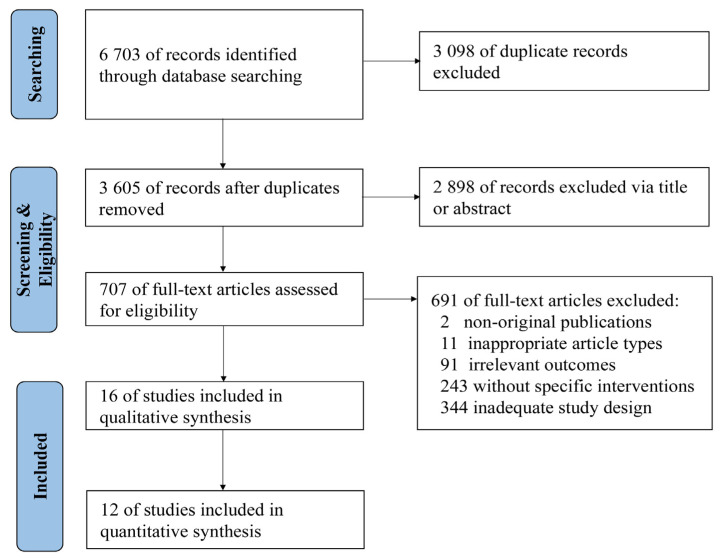
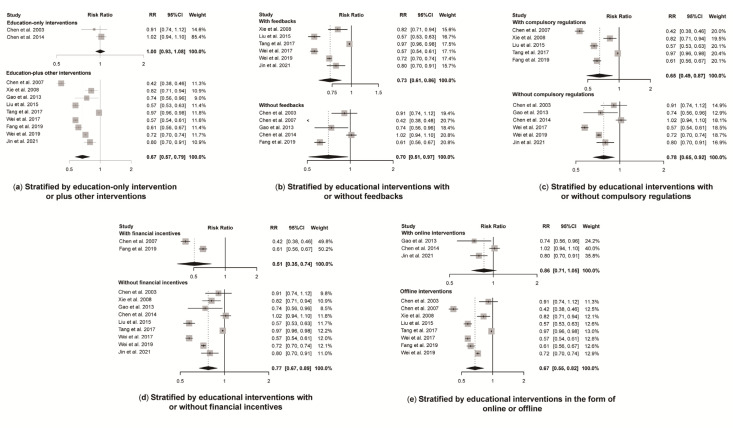
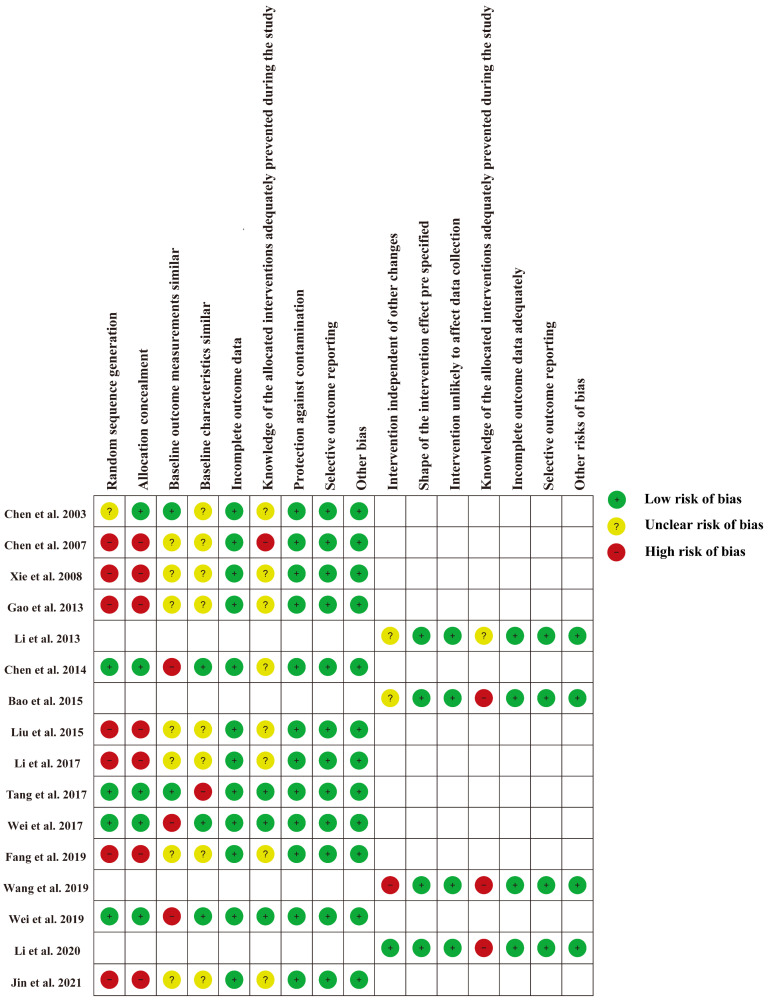
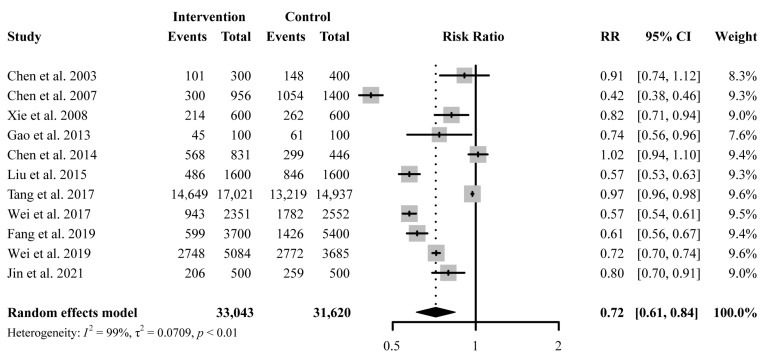
Educational interventions are considered an important component of antibiotic stewardship, but their effect has not been systematically evaluated in outpatient settings in China. This research aims to evaluate the effectiveness of educational interventions for health workers on antibiotic prescribing rates in Chinese outpatient settings. Eight databases were searched for relevant randomized clinical trials, non-randomized trials, controlled before-after studies and interrupted time-series studies from January 2001 to July 2021. A total of 16 studies were included in the systematic review and 12 in the meta-analysis. The results showed that educational interventions overall reduced the antibiotic prescription rate significantly (relative risk, RR 0.72, 95% confidence interval, CI 0.61 to 0.84). Subgroup analysis demonstrated that certain features of education interventions had a significant effect on antibiotic prescription rate reduction: (1) combined with compulsory administrative regulations (RR With: 0.65 vs. Without: 0.78); (2) combined with financial incentives (RR With: 0.51 vs. Without: 0.77). Educational interventions can also significantly reduce antibiotic injection rates (RR 0.83, 95% CI 0.74 to 0.94) and the inappropriate use of antibiotics (RR 0.61, 95% CI 0.51 to 0.73). The limited number of high-quality studies limits the validity and reliability of the results. More high-quality educational interventions targeting the reduction of antibiotic prescribing rates are needed.
教育干预被认为是抗生素管理的一个重要组成部分,但在中国门诊环境中,其效果尚未得到系统评估。本研究旨在评估针对卫生工作者的教育干预对中国门诊环境中抗生素处方率的有效性。检索了8个数据库,以查找2001年1月至2021年7月期间相关的随机临床试验、非随机试验、前后对照研究和中断时间序列研究。系统评价共纳入16项研究,荟萃分析纳入12项研究。结果表明,教育干预总体上显著降低了抗生素处方率(相对风险,RR 0.72,95%置信区间,CI 0.61至0.84)。亚组分析表明,教育干预的某些特征对降低抗生素处方率有显著影响:(1)与强制性行政法规相结合(RR有:0.65 vs. 无:0.78);(2)与经济激励措施相结合(RR有:0.51 vs. 无:0.77)。教育干预还可显著降低抗生素注射率(RR 0.83,95%CI 0.74至0.94)和抗生素的不当使用(RR 0.61,95%CI 0.51至0.73)。高质量研究数量有限,限制了结果的有效性和可靠性。需要更多针对降低抗生素处方率的高质量教育干预措施。