Martínez-García Javier, Molina Angie, González-Aseguinolaza Gloria, Weber Nicholas D, Smerdou Cristian
Division of Gene Therapy and Regulation of Gene Expression, Cima Universidad de Navarra, 31008 Pamplona, Spain.
Instituto de Investigación Sanitaria de Navarra (IdISNA), 31008 Pamplona, Spain.
Biomedicines. 2022 May 26;10(6):1238. doi: 10.3390/biomedicines10061238.
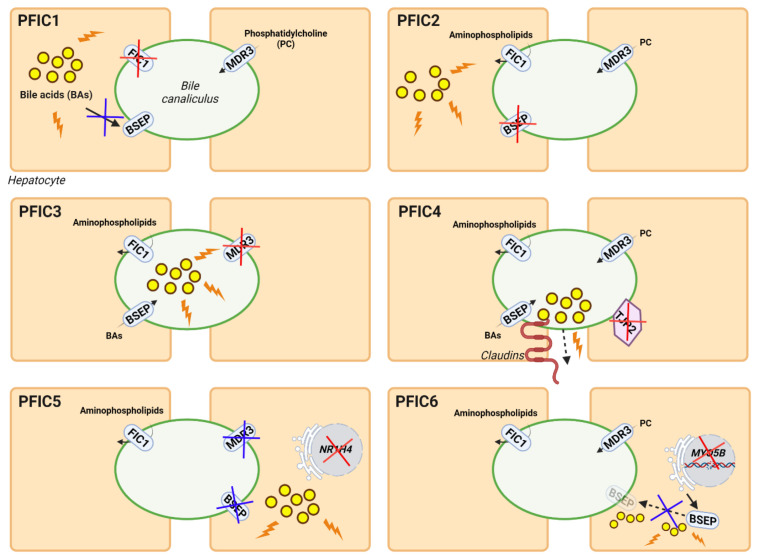
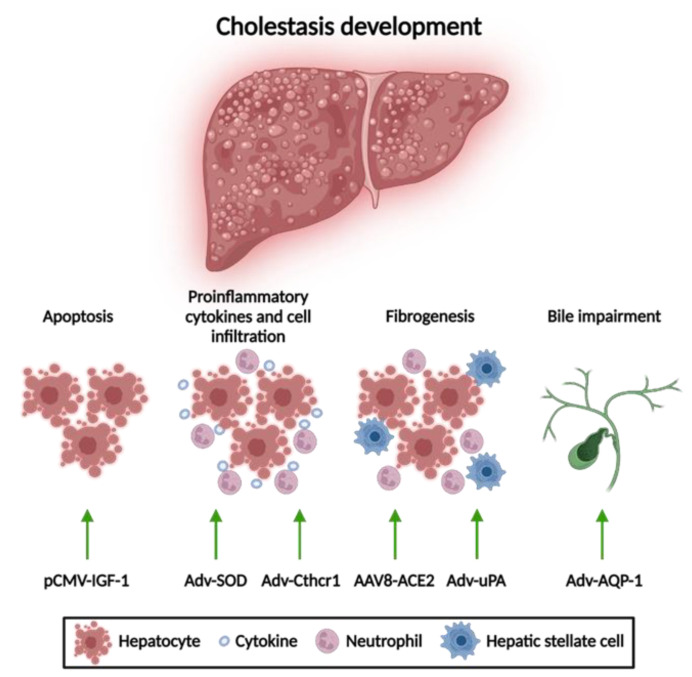
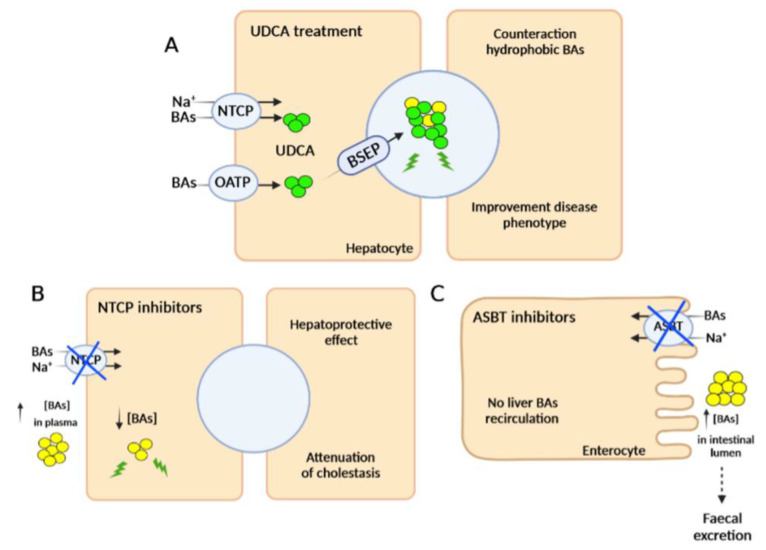
Cholestatic diseases can be caused by the dysfunction of transporters involved in hepatobiliary circulation. Although pharmacological treatments constitute the current standard of care for these diseases, none are curative, with liver transplantation being the only long-term solution for severe cholestasis, albeit with many disadvantages. Liver-directed gene therapy has shown promising results in clinical trials for genetic diseases, and it could constitute a potential new therapeutic approach for cholestatic diseases. Many preclinical gene therapy studies have shown positive results in animal models of both acquired and genetic cholestasis. The delivery of genes that reduce apoptosis or fibrosis or improve bile flow has shown therapeutic effects in rodents in which cholestasis was induced by drugs or bile duct ligation. Most studies targeting inherited cholestasis, such as progressive familial intrahepatic cholestasis (PFIC), have focused on supplementing a correct version of a mutated gene to the liver using viral or non-viral vectors in order to achieve expression of the therapeutic protein. These strategies have generated promising results in treating PFIC3 in mouse models of the disease. However, important challenges remain in translating this therapy to the clinic, as well as in developing gene therapy strategies for other types of acquired and genetic cholestasis.
胆汁淤积性疾病可由参与肝胆循环的转运蛋白功能障碍引起。尽管药物治疗是这些疾病当前的标准治疗方法,但无一具有治愈性,肝移植是严重胆汁淤积的唯一长期解决方案,尽管存在许多缺点。肝脏定向基因治疗在遗传性疾病的临床试验中已显示出有前景的结果,并且它可能构成胆汁淤积性疾病一种潜在的新治疗方法。许多临床前基因治疗研究在获得性和遗传性胆汁淤积的动物模型中均显示出阳性结果。递送可减少细胞凋亡或纤维化或改善胆汁流动的基因已在通过药物或胆管结扎诱导胆汁淤积的啮齿动物中显示出治疗效果。大多数针对遗传性胆汁淤积的研究,如进行性家族性肝内胆汁淤积症(PFIC),都集中于使用病毒或非病毒载体将突变基因的正确版本补充到肝脏中,以实现治疗性蛋白的表达。这些策略在该疾病的小鼠模型中治疗PFIC3方面已产生了有前景的结果。然而,将这种疗法转化为临床应用以及为其他类型的获得性和遗传性胆汁淤积开发基因治疗策略仍面临重大挑战。