Anderle Nicole, Koch André, Gierke Berthold, Keller Anna-Lena, Staebler Annette, Hartkopf Andreas, Brucker Sara Y, Pawlak Michael, Schenke-Layland Katja, Schmees Christian
NMI Natural and Medical Sciences Institute, The University of Tuebingen, 72770 Reutlingen, Germany.
Department of Women's Health, Eberhard Karls University Tuebingen, 72076 Tuebingen, Germany.
Cancers (Basel). 2022 Jun 12;14(12):2895. doi: 10.3390/cancers14122895.
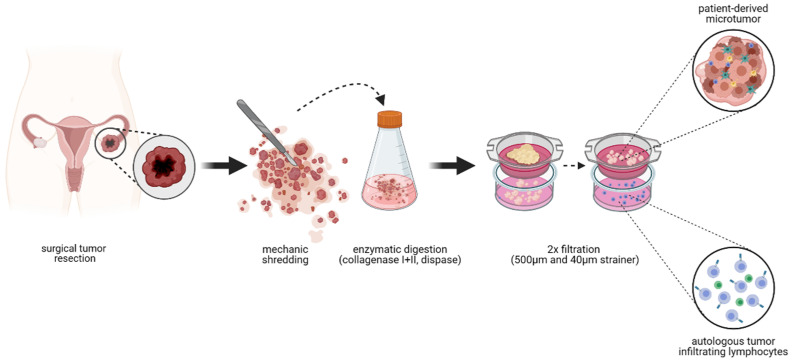
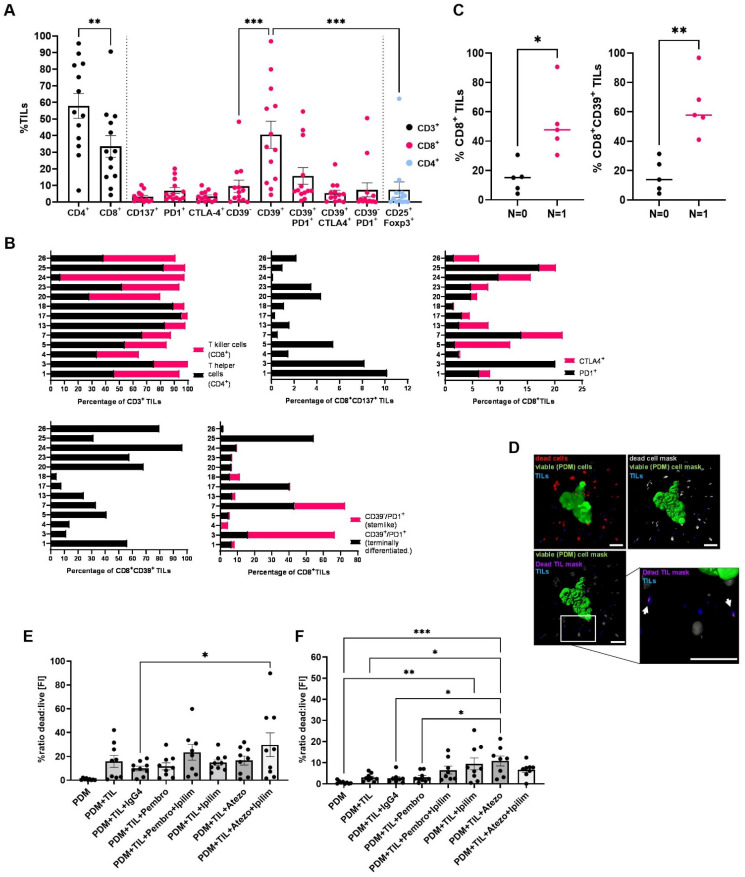
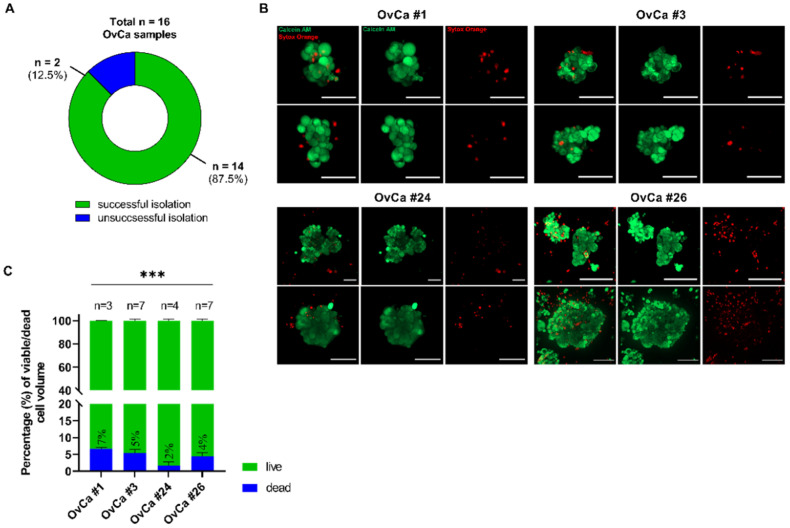
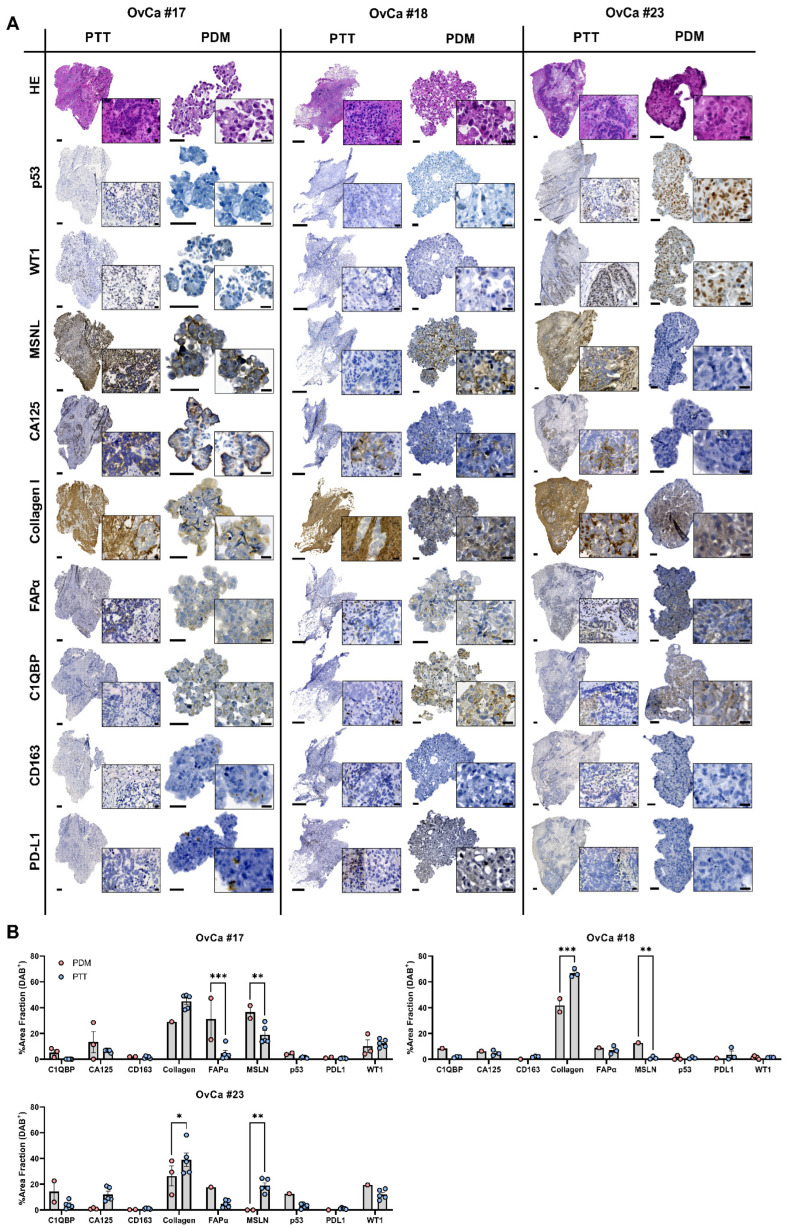
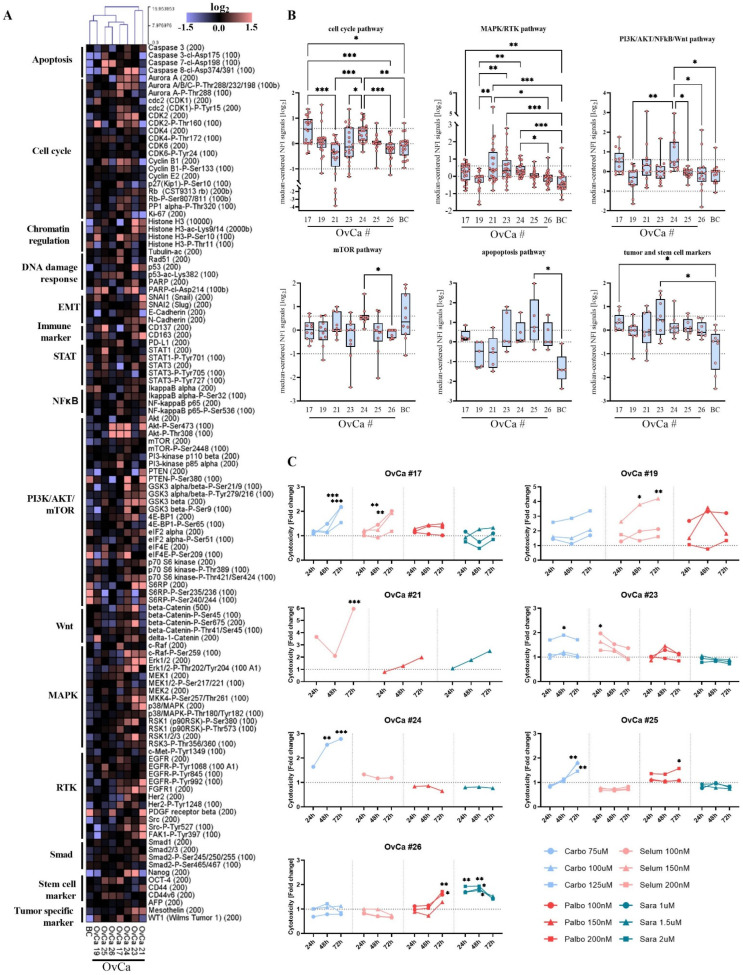
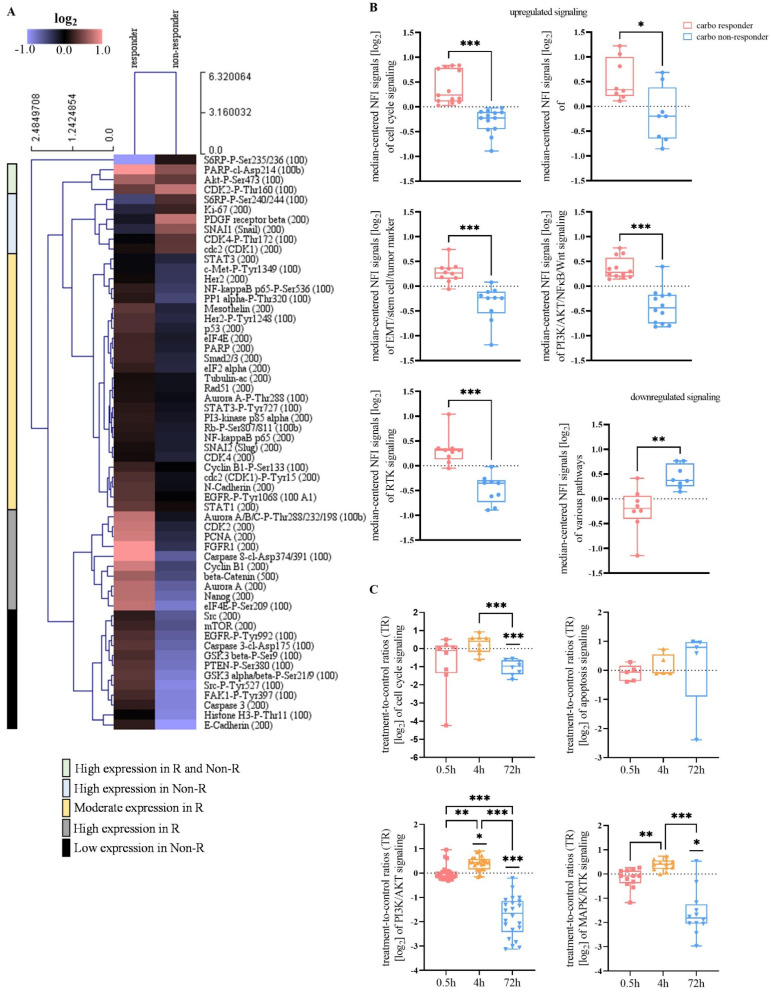
In light of the frequent development of therapeutic resistance in cancer treatment, there is a strong need for personalized model systems representing patient tumor heterogeneity, while enabling parallel drug testing and identification of appropriate treatment responses in individual patients. Using ovarian cancer as a prime example of a heterogeneous tumor disease, we developed a 3D preclinical tumor model comprised of patient-derived microtumors (PDM) and autologous tumor-infiltrating lymphocytes (TILs) to identify individual treatment vulnerabilities and validate chemo-, immuno- and targeted therapy efficacies. Enzymatic digestion of primary ovarian cancer tissue and cultivation in defined serum-free media allowed rapid and efficient recovery of PDM, while preserving histopathological features of corresponding patient tumor tissue. Reverse-phase protein array (RPPA)-analyses of >110 total and phospho-proteins enabled the identification of patient-specific sensitivities to standard, platinum-based therapy and thereby the prediction of potential treatment-responders. Co-cultures of PDM and autologous TILs for individual efficacy testing of immune checkpoint inhibitor treatment demonstrated patient-specific enhancement of cytotoxic TIL activity by this therapeutic approach. Combining protein pathway analysis and drug efficacy testing of PDM enables drug mode-of-action analyses and therapeutic sensitivity prediction within a clinically relevant time frame after surgery. Follow-up studies in larger cohorts are currently under way to further evaluate the applicability of this platform to support clinical decision making.
鉴于癌症治疗中治疗耐药性的频繁出现,迫切需要能够代表患者肿瘤异质性的个性化模型系统,同时实现并行药物测试并确定个体患者的适当治疗反应。以卵巢癌这种异质性肿瘤疾病为例,我们开发了一种三维临床前肿瘤模型,该模型由患者来源的微肿瘤(PDM)和自体肿瘤浸润淋巴细胞(TIL)组成,以识别个体治疗弱点并验证化疗、免疫治疗和靶向治疗的疗效。对原发性卵巢癌组织进行酶消化并在特定的无血清培养基中培养,能够快速有效地回收PDM,同时保留相应患者肿瘤组织的组织病理学特征。对超过110种总蛋白和磷酸化蛋白进行反相蛋白阵列(RPPA)分析,能够确定患者对标准铂类疗法的特异性敏感性,从而预测潜在的治疗反应者。将PDM与自体TIL进行共培养以进行免疫检查点抑制剂治疗的个体疗效测试,结果表明这种治疗方法可使细胞毒性TIL活性出现患者特异性增强。结合PDM的蛋白质信号通路分析和药物疗效测试,能够在术后临床相关的时间范围内进行药物作用模式分析和治疗敏感性预测。目前正在对更大的队列进行后续研究,以进一步评估该平台在支持临床决策方面的适用性。