KU Leuven, Laboratory of Molecular & Cellular Signaling, Department of Cellular & Molecular Medicine, Campus Gasthuisberg, O/N-I bus 802, Herestraat 49, BE-3000 Leuven, Belgium.
Cells. 2022 Jun 18;11(12):1963. doi: 10.3390/cells11121963.
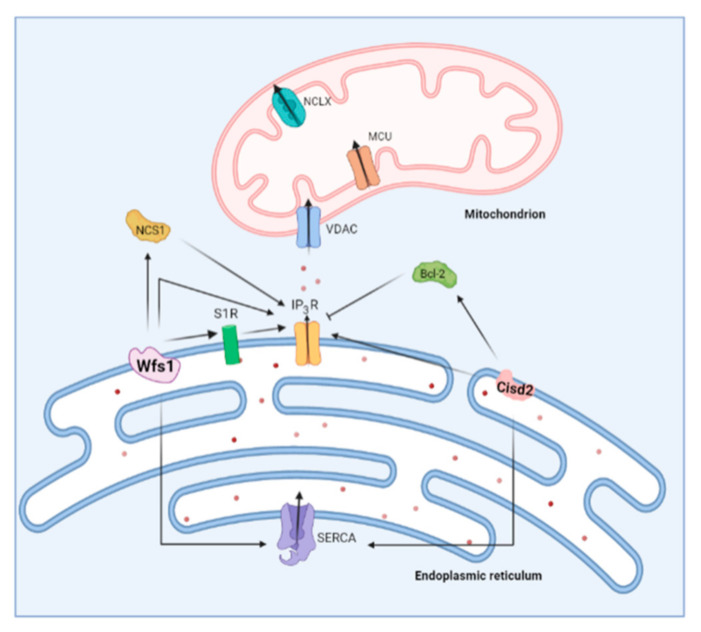
Calcium ions (Ca) operate as important messengers in the cell, indispensable for signaling the underlying numerous cellular processes in all of the cell types in the human body. In neurons, Ca signaling is crucial for regulating synaptic transmission and for the processes of learning and memory formation. Hence, the dysregulation of intracellular Ca homeostasis results in a broad range of disorders, including cancer and neurodegeneration. A major source for intracellular Ca is the endoplasmic reticulum (ER), which has close contacts with other organelles, including mitochondria. In this review, we focus on the emerging role of Ca signaling at the ER-mitochondrial interface in two different neurodegenerative diseases, namely Alzheimer's disease and Wolfram syndrome. Both of these diseases share some common hallmarks in the early stages, including alterations in the ER and mitochondrial Ca handling, mitochondrial dysfunction and increased Reactive oxygen species (ROS) production. This indicates that similar mechanisms may underly these two disease pathologies and suggests that both research topics might benefit from complementary research.
钙离子(Ca)在细胞中充当重要的信使,对于调节人体所有细胞类型的许多细胞过程的信号转导是必不可少的。在神经元中,Ca 信号对于调节突触传递以及学习和记忆形成过程至关重要。因此,细胞内 Ca 稳态的失调导致广泛的疾病,包括癌症和神经退行性疾病。细胞内 Ca 的主要来源是内质网(ER),它与包括线粒体在内的其他细胞器密切接触。在这篇综述中,我们专注于 ER-线粒体界面处 Ca 信号在两种不同的神经退行性疾病(即阿尔茨海默病和 W olfram 综合征)中的新兴作用。这两种疾病在早期都有一些共同的特征,包括内质网和线粒体 Ca 处理、线粒体功能障碍和活性氧(ROS)产生增加的改变。这表明类似的机制可能是这两种疾病病理的基础,并表明这两个研究课题可能受益于互补的研究。