'Dynamique de la Diversité Marine' (DyDiv) Lab, Station Biologique de Roscoff, Sorbonne Université, CNRS, UMR 7144, Place G. Teissier, 29680 Roscoff, France.
Laboratoire d'Ecogéochimie des Environnements Benthiques, Observatoire Océanologique de Banyuls, Sorbonne Université, CNRS, UMR 8222, Avenue Pierre Fabre, 66650 Banyuls-sur-Mer, France.
Genes (Basel). 2022 May 31;13(6):985. doi: 10.3390/genes13060985.
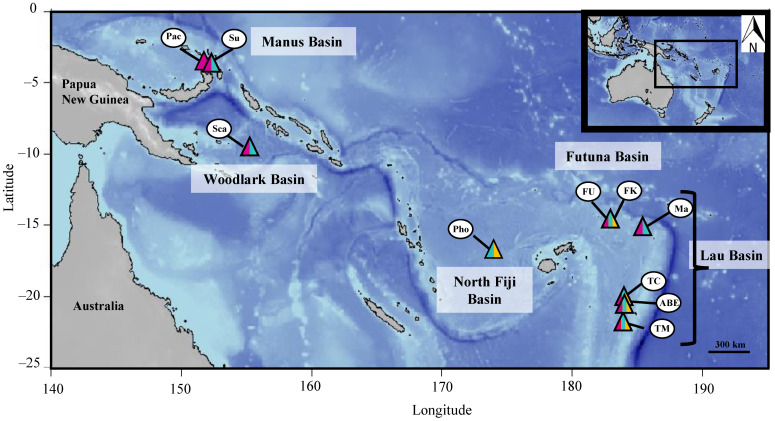
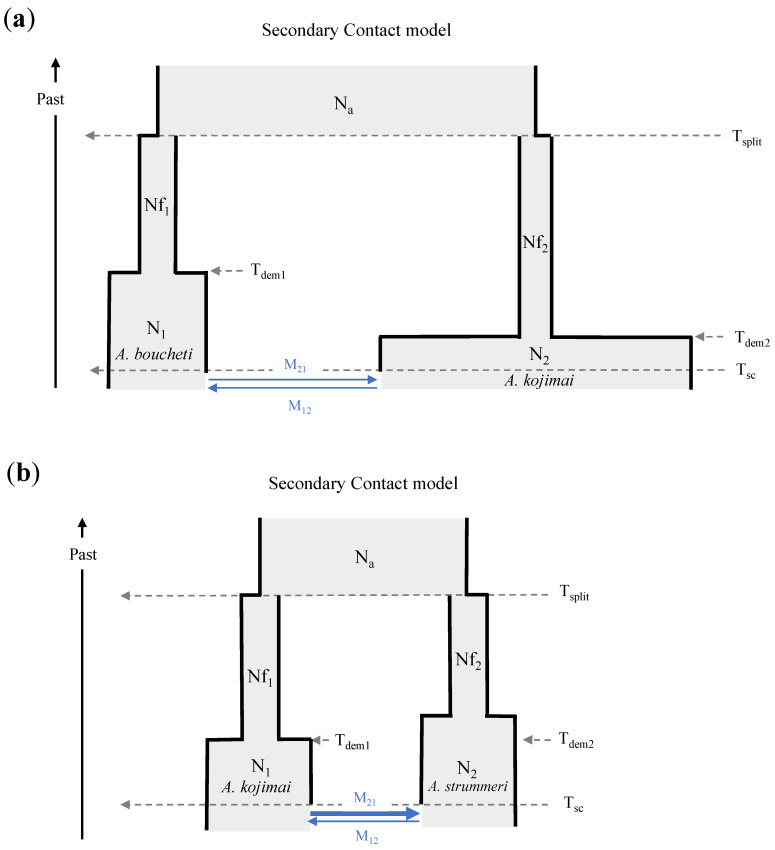
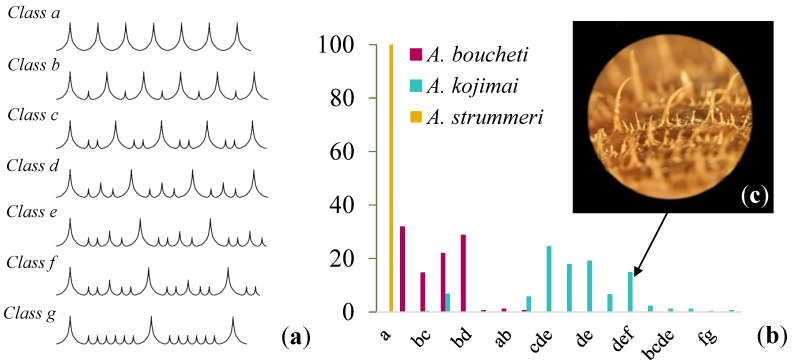
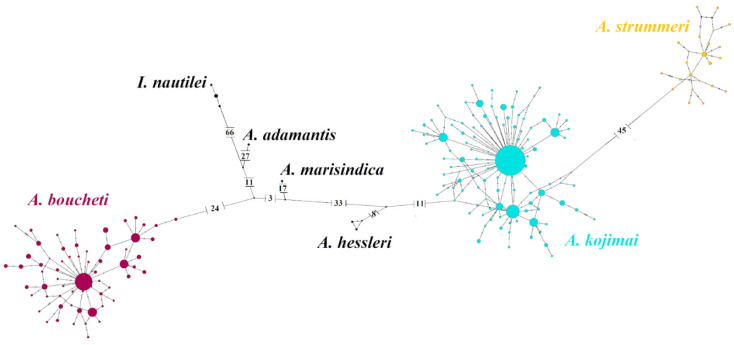
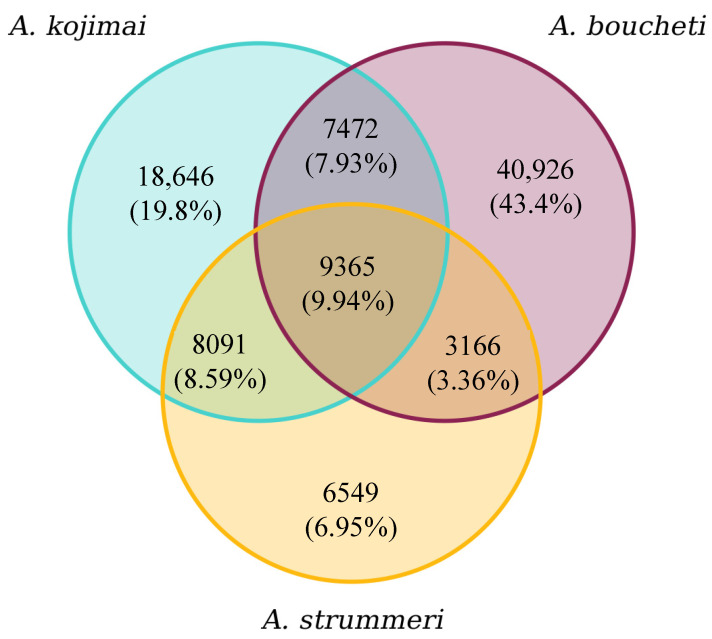
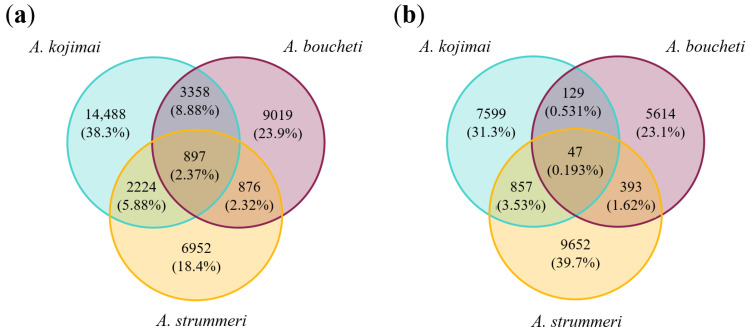
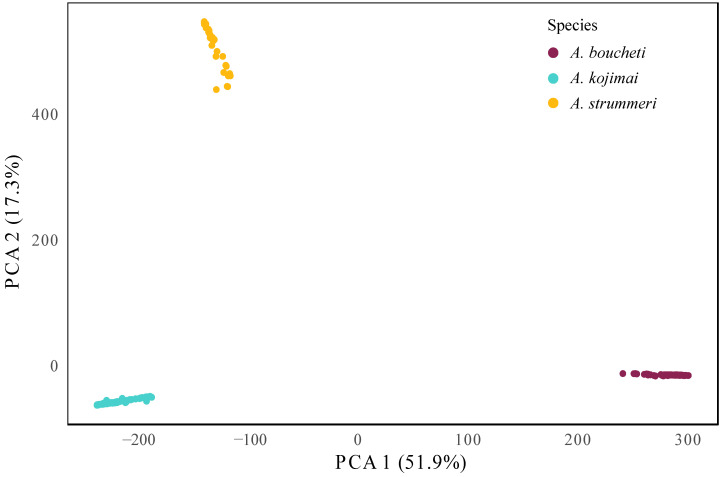
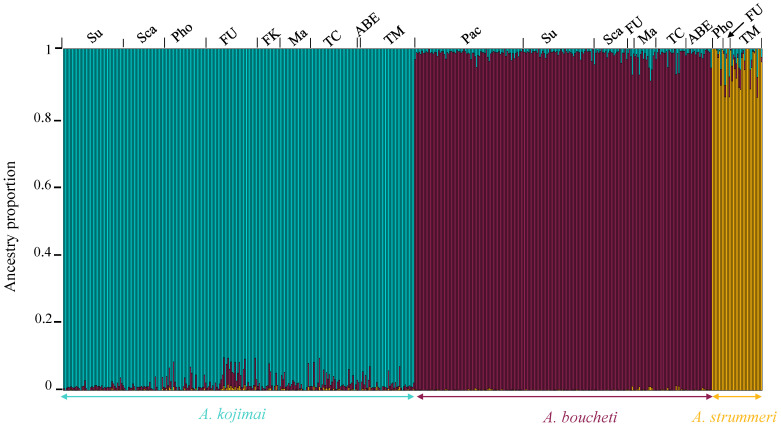
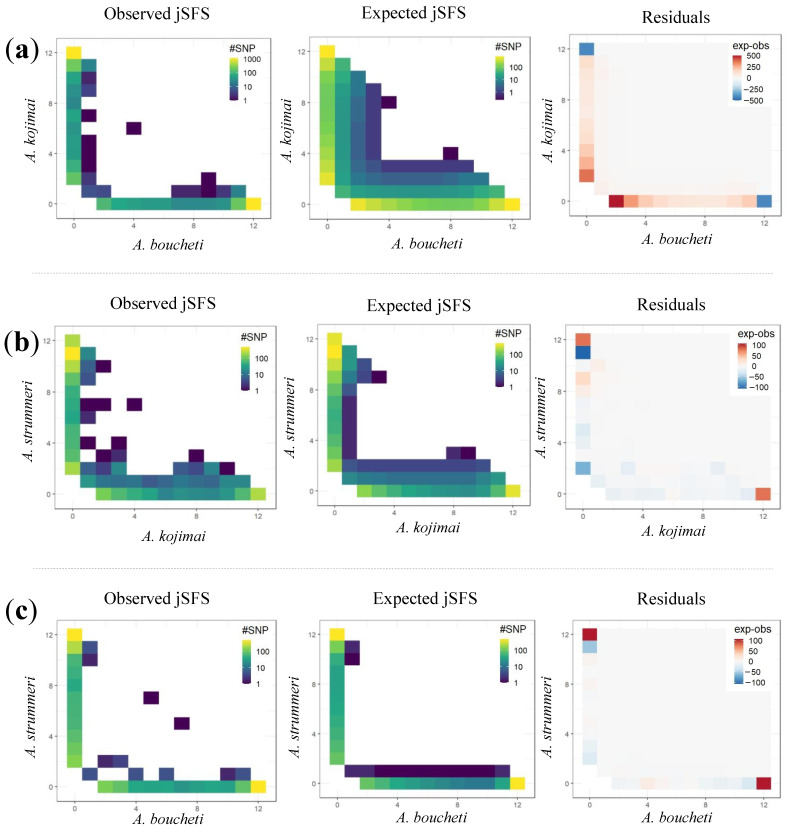
Deep hydrothermal vents are highly fragmented and unstable habitats at all temporal and spatial scales. Such environmental dynamics likely play a non-negligible role in speciation. Little is, however, known about the evolutionary processes that drive population-level differentiation and vent species isolation and, more specifically, how geography and habitat specialisation interplay in the species history of divergence. In this study, the species range and divergence of snails that occupy active Western Pacific vent fields was assessed by using sequence variation data of the mitochondrial gene, RNAseq, and ddRAD-seq. Combining morphological description and sequence datasets of the three species across five basins, we confirmed that , , and , while partially overlapping over their range, display high levels of divergence in the three genomic compartments analysed that usually encompass values retrieved for reproductively isolated species with divergences rang from 9% to 12.5% (mtDNA) and from 2% to 3.1% (nuDNA). Moreover, the three species can be distinguished on the basis of their external morphology by observing the distribution of bristles and the shape of the columella. According to this sampling, and form an east-to-west species abundance gradient, whereas is restricted to the Futuna Arc/Lau and North Fiji Basins. Surprisingly, population models with both gene flow and population size heterogeneities among genomes indicated that these three species are still able to exchange genes due to secondary contacts at some localities after a long period of isolation.
深海热液喷口在所有时间和空间尺度上都是高度破碎和不稳定的栖息地。这种环境动态可能在物种形成中发挥着不可忽视的作用。然而,人们对驱动种群分化和喷口物种隔离的进化过程知之甚少,更具体地说,地理和栖息地特化如何在物种分化历史中相互作用。在这项研究中,通过使用线粒体基因、RNAseq 和 ddRAD-seq 的序列变异数据来评估栖息在西太平洋活跃热液喷口场的蜗牛的物种范围和分化。通过对五个盆地的三个物种的形态描述和序列数据集进行组合,我们证实了 、 和 ,虽然在它们的分布范围内部分重叠,但在分析的三个基因组区室中显示出高度的分化,这些区室通常包含用于具有 9%至 12.5%(mtDNA)和 2%至 3.1%(nuDNA)生殖隔离物种的可育值。此外,这三个物种可以通过观察刚毛的分布和柱的形状来从外部形态上区分开来。根据这一采样, 和 形成了从东到西的物种丰富度梯度,而 则局限于富图纳弧/劳和北斐济盆地。令人惊讶的是,具有基因流和基因组间种群大小异质性的种群模型表明,这三个物种在长期隔离后,由于在一些局部地区的二次接触,仍然能够交换基因。