Park Soo Kyung, Kim Yea Bean, Kim Sangsoo, Lee Chil Woo, Choi Chang Hwan, Kang Sang-Bum, Kim Tae Oh, Bang Ki Bae, Chun Jaeyoung, Cha Jae Myung, Im Jong Pil, Kim Min Suk, Ahn Kwang Sung, Kim Seon-Young, Park Dong Il
Division of Gastroenterology, Department of Internal Medicine and Inflammatory Bowel Disease Center, Kangbuk Samsung Hospital, School of Medicine, Sungkyunkwan University, Seoul 03181, Korea.
Medical Research Institute, Kangbuk Samsung Hospital, School of Medicine, Sungkyunkwan University, Seoul 03181, Korea.
J Pers Med. 2022 Jun 9;12(6):947. doi: 10.3390/jpm12060947.
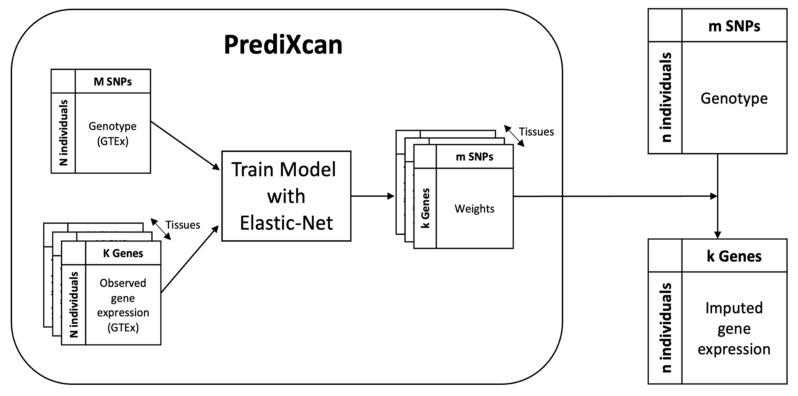
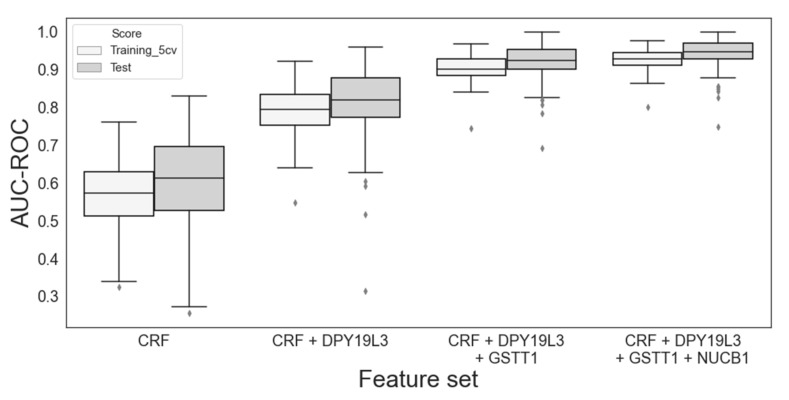
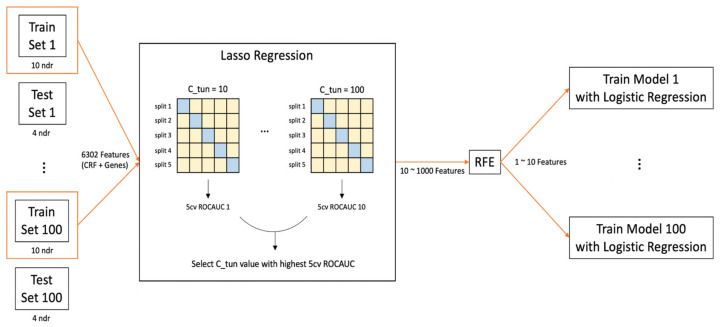
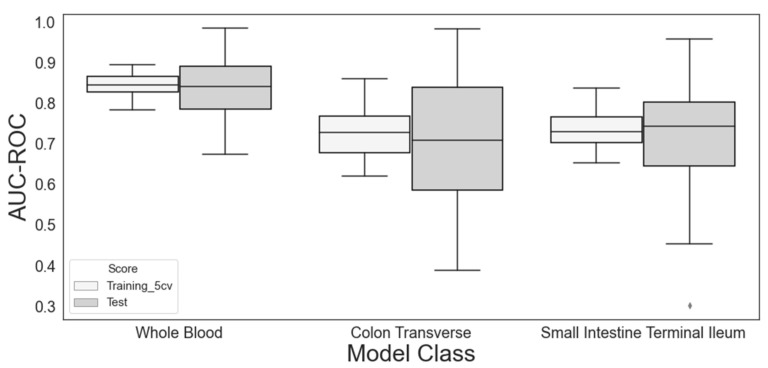
Almost half of patients show no primary or secondary response to monoclonal anti-tumor necrosis factor α (anti-TNF) antibody treatment for inflammatory bowel disease (IBD). Thus, the exact mechanisms of a non-durable response (NDR) remain inadequately defined. We used our genome-wide genotype data to impute expression values as features in training machine learning models to predict a NDR. Blood samples from various IBD cohorts were used for genotyping with the Korea Biobank Array. A total of 234 patients with Crohn's disease (CD) who received their first anti-TNF therapy were enrolled. The expression profiles of 6294 genes in whole-blood tissue imputed from the genotype data were combined with clinical parameters to train a logistic model to predict the NDR. The top two and three most significant features were genetic features (, , and ), not clinical features. The logistic regression of the NDR vs. DR status in our cohort by the imputed expression levels showed that the β coefficients were positive for and , and negative for , concordant with the known eQTL information. Machine learning models using imputed gene expression features effectively predicted NDR to anti-TNF agents in patients with CD.
近一半的患者对用于治疗炎症性肠病(IBD)的单克隆抗肿瘤坏死因子α(抗TNF)抗体治疗无原发性或继发性反应。因此,非持久反应(NDR)的确切机制仍未得到充分阐明。我们利用全基因组基因型数据推算表达值作为训练机器学习模型以预测NDR的特征。来自不同IBD队列的血样用于韩国生物样本库阵列基因分型。共纳入234例接受首次抗TNF治疗的克罗恩病(CD)患者。将从基因型数据推算出的全血组织中6294个基因的表达谱与临床参数相结合,训练一个逻辑模型以预测NDR。最显著的前两个和三个特征是遗传特征(、和),而非临床特征。根据推算的表达水平,对我们队列中NDR与持久反应(DR)状态进行逻辑回归分析,结果显示β系数对和为正,对为负,与已知的表达数量性状位点(eQTL)信息一致。利用推算的基因表达特征的机器学习模型可有效预测CD患者对抗TNF药物的NDR。