Dermatology Department, "Carol Davila" University of Medicine and Pharmacy, 011461 Bucharest, Romania.
Dermatology Department, "Elias" University Emergency Hospital, 011461 Bucharest, Romania.
Medicina (Kaunas). 2022 Jun 17;58(6):816. doi: 10.3390/medicina58060816.
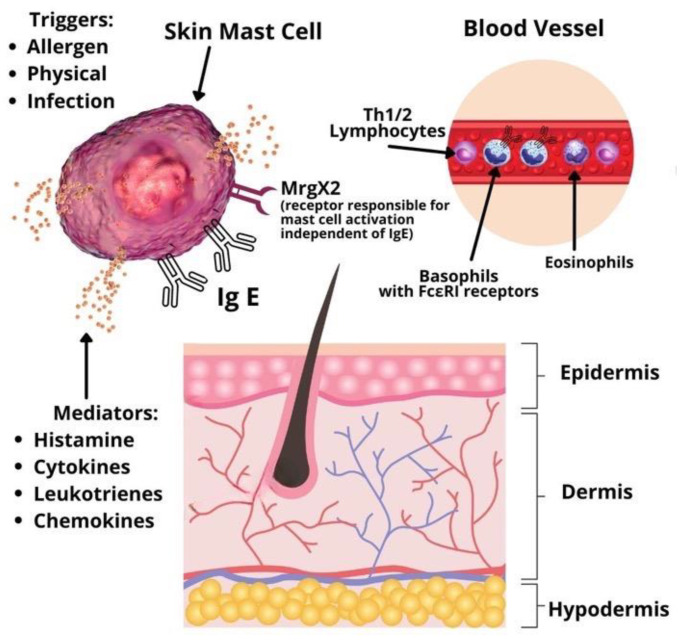
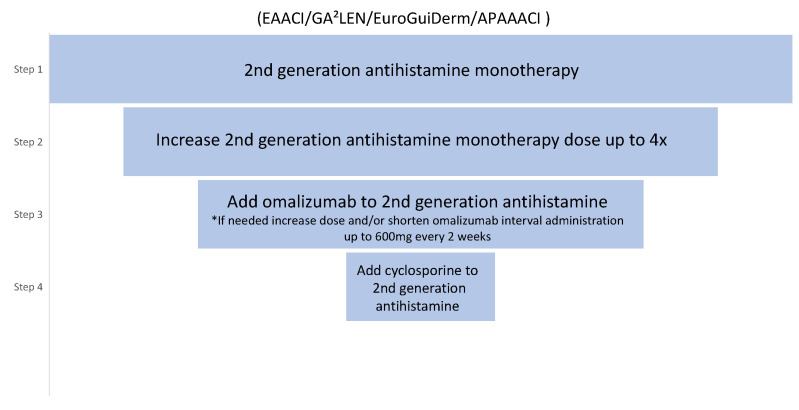
Chronic spontaneous urticaria (CSU) considerably alters patients' quality of life, often for extended periods, due to pruriginous skin lesions, impaired sleep, unexpected development of angioedema, and failure of conventional treatments in properly controlling signs and symptoms. Recent research focused on the development of new therapeutic agents with higher efficacy. Although the production of specific immunoglobulin E (IgE) antibodies against certain allergens is not a characteristic of the disease, treatment with omalizumab, a monoclonal anti-IgE antibody, proved efficient and safe in patients with moderate to severe chronic spontaneous urticaria uncontrolled by H1-antihistamines. Ligelizumab, a high-affinity monoclonal anti-IgE antibody, may also efficiently relieve symptoms of unresponsive chronic urticaria to standard therapies. This comprehensive review aims to present recently acquired knowledge on managing chronic spontaneous urticaria with new anti-IgE antibodies. We conducted extensive research on the main databases (PubMed, Google Scholar, and Web of Science) with no restrictions on the years covered, using the search terms "anti-IgE antibodies", "omalizumab", "ligelizumab", and "chronic spontaneous urticaria". The inclusion criteria were English written articles, and the exclusion criteria were animal-related studies. ClinicalTrials.gov was also reviewed for recent relevant clinical trials related to CSU treatment. CSU is a challenging disease with a significant effect on patients' quality of life. Current therapies often fail to control signs and symptoms, and additional treatment is needed. New biologic therapies against IgE antibodies and FcεRIα receptors are currently under investigation in advanced clinical trials. We reviewed recently published data on CSU management using these novel treatments. The development of new and improved treatments for CSU will lead to a more personalized therapeutical approach for patients and provide guidance for physicians in better understanding disease mechanisms. However, some agents are still in clinical trials, and more research is needed to establish the safety and efficacy of these treatments.
慢性自发性荨麻疹(CSU)常因瘙痒性皮肤损伤、睡眠障碍、血管性水肿的意外发作以及常规治疗无法有效控制症状和体征,而导致患者生活质量显著下降,且这种情况往往会持续很长时间。最近的研究集中在开发具有更高疗效的新型治疗药物。尽管针对某些过敏原产生特异性免疫球蛋白 E(IgE)抗体并不是该疾病的特征,但奥马珠单抗(一种单克隆抗 IgE 抗体)治疗对 H1 抗组胺药物治疗控制不佳的中重度慢性自发性荨麻疹患者是有效且安全的。Ligelizumab(一种高亲和力的单克隆抗 IgE 抗体)也可能有效地缓解对标准治疗无反应的慢性荨麻疹的症状。本综述旨在介绍新型抗 IgE 抗体治疗慢性自发性荨麻疹的最新知识。我们在主要数据库(PubMed、Google Scholar 和 Web of Science)上进行了广泛的研究,对涵盖的年份没有限制,使用的搜索词是“抗 IgE 抗体”、“奥马珠单抗”、“Ligelizumab”和“慢性自发性荨麻疹”。纳入标准为英文撰写的文章,排除标准为动物相关研究。还在 ClinicalTrials.gov 上审查了与 CSU 治疗相关的最近的相关临床试验。CSU 是一种具有挑战性的疾病,对患者的生活质量有重大影响。目前的治疗方法往往无法控制症状和体征,需要额外的治疗。针对 IgE 抗体和 FcεRIα 受体的新型生物疗法目前正在进行高级临床试验。我们回顾了最近使用这些新型治疗方法治疗 CSU 的发表数据。CSU 的新的和改进的治疗方法的发展将为患者提供更个性化的治疗方法,并为医生更好地了解疾病机制提供指导。然而,一些药物仍处于临床试验阶段,需要更多的研究来确定这些治疗方法的安全性和疗效。