Surgical Oncology Unit, Azienda Unità Sanitaria Locale-IRCCS di Reggio Emilia, 42123 Reggio Emilia, Italy.
Pathology Unit, Azienda Unità Sanitaria Locale-IRCCS di Reggio Emilia, 42123 Reggio Emilia, Italy.
Medicina (Kaunas). 2022 Jun 20;58(6):834. doi: 10.3390/medicina58060834.
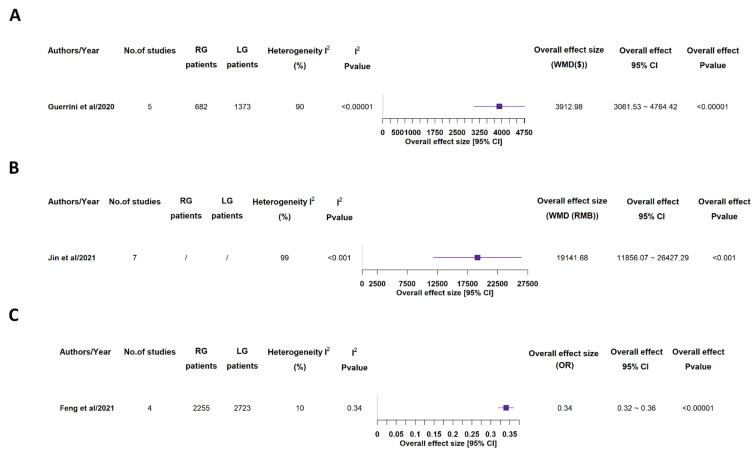
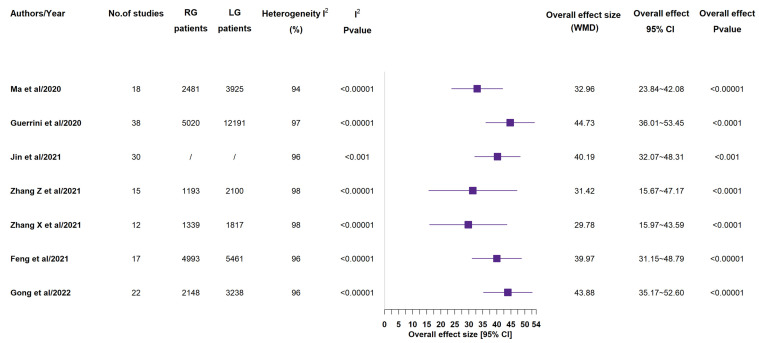
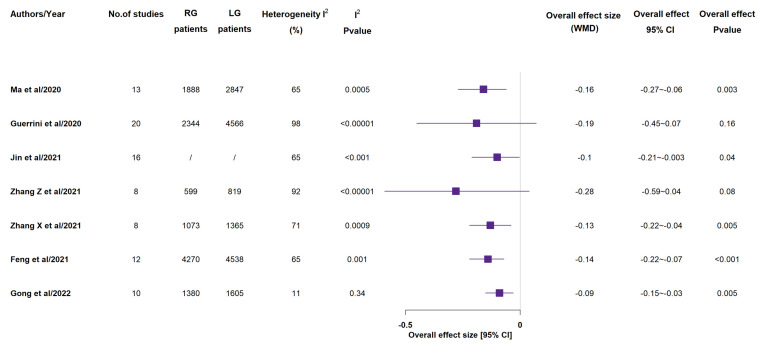
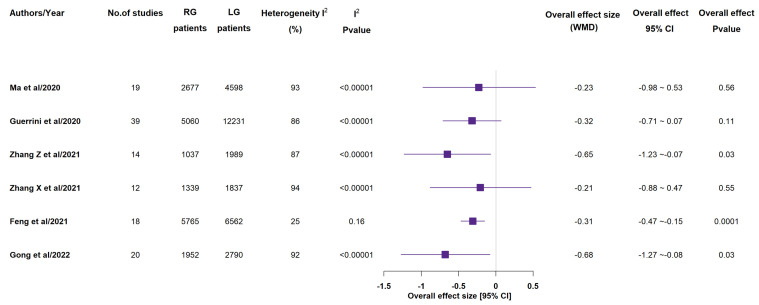
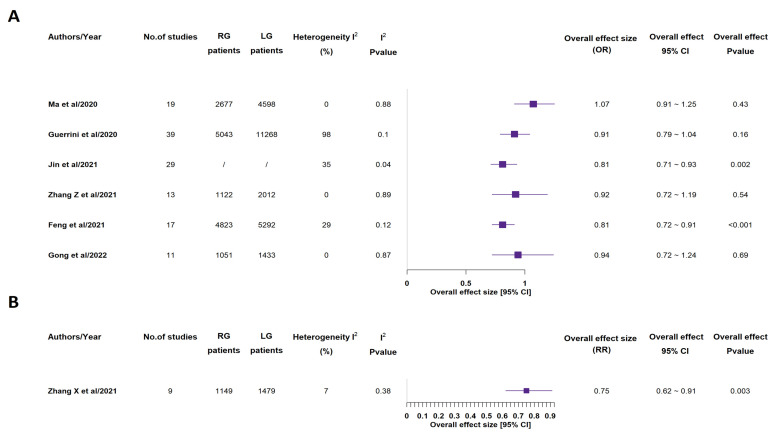
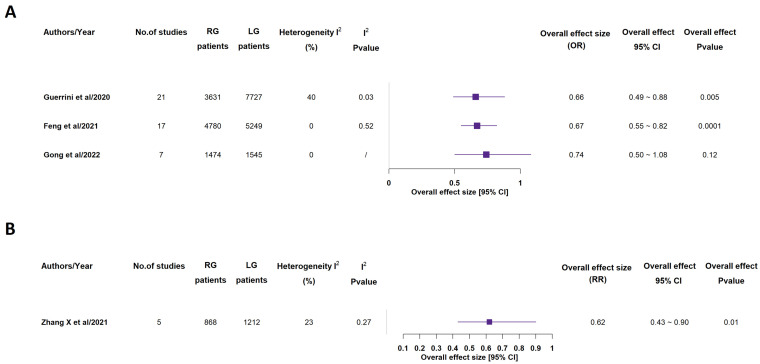
: Gastrectomy with D2 lymphadenectomy is the standard surgical treatment with curative intent for patients with gastric cancer (GC). Over the last three decades, surgeons have been increasingly adopting laparoscopic surgery for GC, due to its better short-term outcomes. In particular, laparoscopic gastrectomy (LG) has been routinely used for early gastric cancer (EGC) treatment. However, LG suffers from technical limitations and drawbacks, such as a two-dimensional surgical field of view, limited movement of laparoscopic tools, unavoidable physiological tremors and discomfort for operating surgeon. Therefore, robotic surgery has been developed to address such limitations. : We performed a systematic review following the Preferred Reporting Items for Systematic Reviews and Meta-Analyzes (PRISMA) guidelines in order to investigate the benefits and harms of robotic gastrectomy (RG) compared to the LG. PubMed/MEDLINE, Scopus, Cochrane Library (Cochrane Database of Systematic Re-views, Cochrane Central Register of Controlled Trials-CENTRAL) and Web of Science (Science and Social Science Citation Index) databases were used to search all related literature. : The 7 included meta-analyses covered an approximately 20 years-study period (2000-2020). Almost all studies included in the meta-analyses were retrospective ones and originated from Asian countries (China and Korea, in particular). Examined overall population ranged from 3176 to 17,712 patients. If compared to LG, RG showed both operative advantages (operative time, estimated blood loss, number of retrieved lymph nodes) and perioperative ones (time to first flatus, time to restart oral intake, length of hospitalization, overall complications, Clavien-Dindo (CD) ≥ III complications, pancreatic complications), in the absence of clear differences of oncological outcomes. However, costs of robotic approach appear significant. : It is impossible to make strong recommendations, due to the statistical weakness of the included studies. Further randomized, possibly multicenter trials are strongly recommended, if we want to have our results confirmed.
胃切除术伴 D2 淋巴结清扫术是有治愈意图的胃癌(GC)患者的标准手术治疗方法。在过去的三十年中,由于短期疗效较好,外科医生越来越多地采用腹腔镜手术治疗 GC。特别是,腹腔镜胃切除术(LG)已常规用于早期胃癌(EGC)的治疗。然而,LG 存在技术限制和缺点,例如二维手术视野、腹腔镜器械运动受限、无法避免的生理震颤以及手术医生的不适。因此,机器人手术已被开发出来以解决这些限制。
我们按照系统评价和荟萃分析的首选报告项目(PRISMA)指南进行了系统评价,以调查机器人胃切除术(RG)与 LG 相比的益处和危害。我们使用 PubMed/MEDLINE、Scopus、Cochrane 图书馆(Cochrane 系统评价数据库、Cochrane 中心对照试验注册库-CENTRAL)和 Web of Science(科学和社会科学引文索引)数据库搜索所有相关文献。
纳入的 7 项荟萃分析涵盖了大约 20 年的研究期(2000-2020 年)。荟萃分析中纳入的几乎所有研究都是回顾性研究,且源自亚洲国家(特别是中国和韩国)。检查的总体人群范围从 3176 人到 17712 人。与 LG 相比,RG 显示出手术优势(手术时间、估计出血量、淋巴结检出数)和围手术期优势(首次肛门排气时间、开始口服摄入时间、住院时间、总并发症、Clavien-Dindo(CD)≥III 级并发症、胰腺并发症),而肿瘤学结果无明显差异。然而,机器人方法的成本似乎很高。
由于纳入研究的统计学薄弱,不可能做出强有力的推荐。如果我们想证实我们的结果,强烈建议进行进一步的随机、可能多中心试验。