Department of Orthodontics, University Dental School, Rostock University Medical Center, 18057 Rostock, Germany.
Department of Materials Science and Medical Engineering, University of Rostock, 18119 Rostock, Germany.
Molecules. 2022 Jun 20;27(12):3949. doi: 10.3390/molecules27123949.
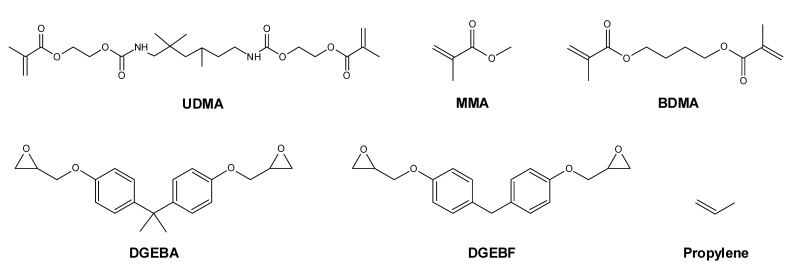
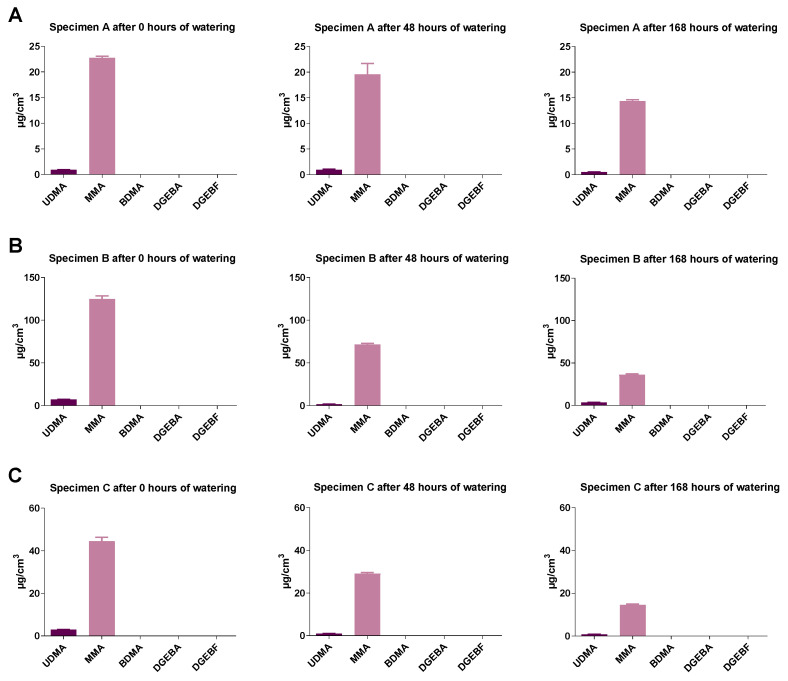
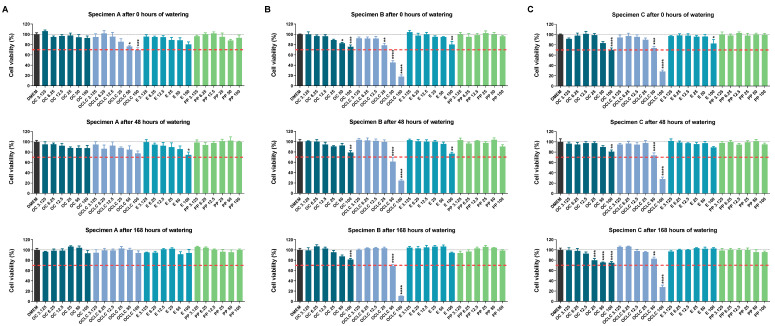
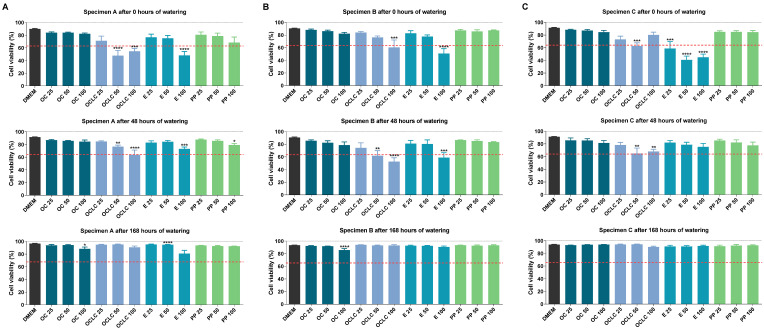
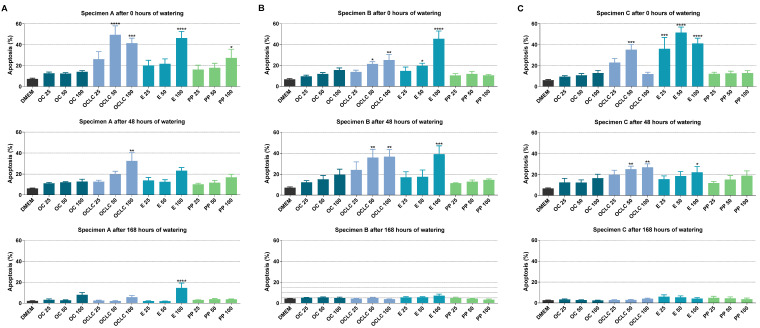
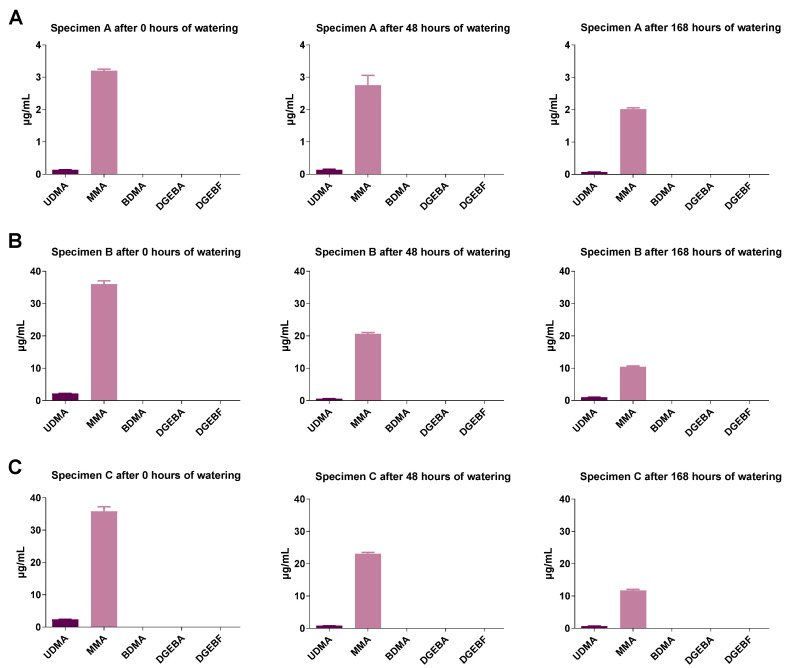
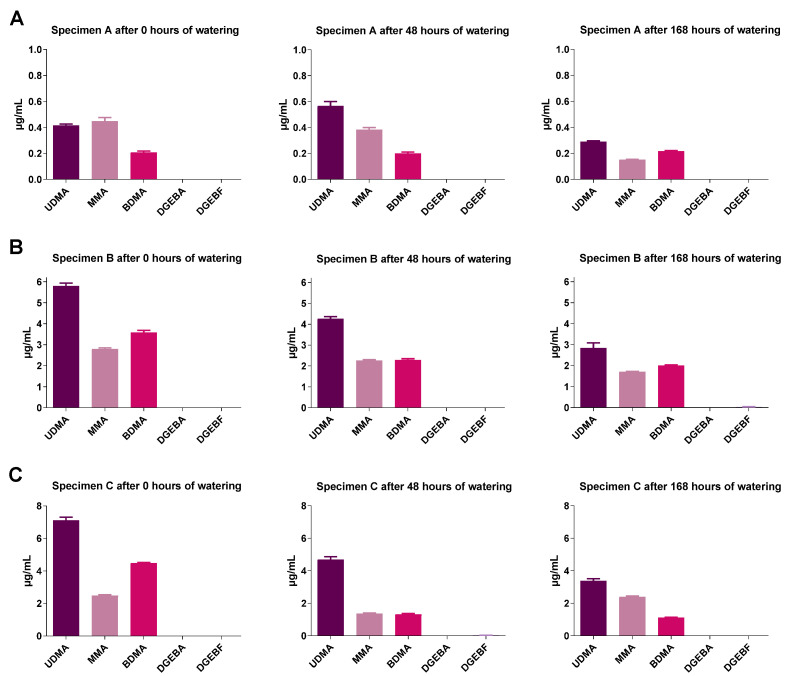
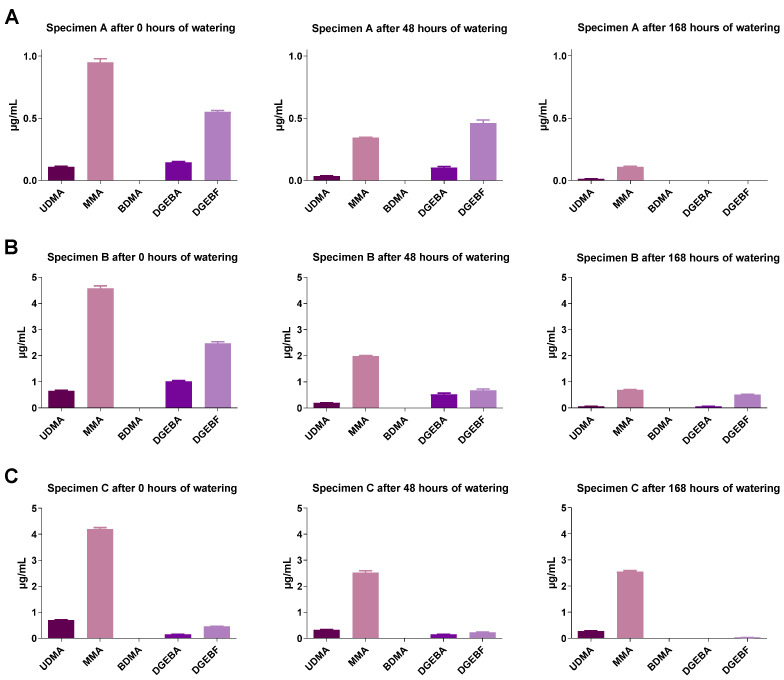
Depending on their composition, plastics have a cytotoxic potential that needs to be evaluated before they are used in dentistry, e.g., as orthodontic removable appliances. Relevant guidelines set out requirements that a potential new resin in the medical field must meet, with a wide scope for experimental design. In the present study, test specimens of different geometries consisting of varying polymers (Orthocryl, Orthocryl LC, Loctite EA 9483, Polypropylene) were soaked for different periods of time, then transferred to cell culture medium for 24 h, which was subsequently used for 24-h cultivation of A549 cells, followed by cytotoxicity assays (WST-1, Annexin V-FITC-propidium iodide (PI) flow cytometry). In this context, a reduction in the cytotoxic effect of the eluates of test specimens prepared from Orthocryl LC and Loctite EA 9483 was particularly evident in the Annexin V-FITC-PI assay when the soaking time was extended to 48 h and 168 h, respectively. Consistent with this, a reduced release of potentially toxic monomers into the cell culture medium, as measured by gas chromatography-mass spectrometry, was observed when the prior soaking time of test specimens of all geometries was extended. Remarkably, a significant increase in cytotoxic effect was observed in the WST-1 assay, which was accompanied by a higher release of monomers when the thickness of the test sample was increased from 0.5 to 1.0 mm, although an elution volume adapted to the surface area was used. However, further increasing the thickness to 3.0 mm did not lead to an increase in the observed cytotoxicity or monomer release. Test specimens made of polypropylene showed no toxicity under all test specimen sizes and soaking time conditions. Overall, it is recommended to perform toxicity studies of test specimens using different geometries and soaking times. Thereby, the influence of the different specimen thicknesses should also be considered. Finally, an extension of the test protocols proposed in ISO 10993-5:2009 should be considered, e.g., by flow cytometry or monomer analysis as well as fixed soaking times.
根据其组成,塑料具有细胞毒性潜力,在将其用于牙科领域之前,例如作为正畸可摘矫治器,需要对其进行评估。相关指南规定了医疗领域中新型树脂必须满足的要求,为实验设计提供了广泛的空间。在本研究中,不同形状的测试样本由不同的聚合物(Orthocryl、Orthocryl LC、Loctite EA 9483、聚丙烯)组成,浸泡不同的时间后,转移到细胞培养液中 24 小时,随后用于 A549 细胞 24 小时培养,然后进行细胞毒性测定(WST-1、Annexin V-FITC-碘化丙啶(PI)流式细胞术)。在这种情况下,当浸泡时间分别延长至 48 小时和 168 小时时,特别是在用 Annexin V-FITC-PI 测定法检测时,Orthocryl LC 和 Loctite EA 9483 制备的测试样本的洗脱液的细胞毒性作用明显降低。一致的是,当所有形状的测试样本的预浸泡时间延长时,通过气相色谱-质谱法观察到潜在有毒单体向细胞培养液中的释放减少。值得注意的是,在 WST-1 测定法中观察到细胞毒性作用显著增加,当测试样本厚度从 0.5 毫米增加到 1.0 毫米时,伴随有单体释放增加,尽管使用了适应表面积的洗脱体积。然而,当厚度进一步增加到 3.0 毫米时,并没有导致观察到的细胞毒性或单体释放增加。在所有测试样本尺寸和浸泡时间条件下,聚丙烯制成的测试样本均无毒性。总体而言,建议使用不同的测试样本形状和浸泡时间进行测试样本的毒性研究。因此,还应考虑不同样本厚度的影响。最后,应考虑延长 ISO 10993-5:2009 中提出的测试方案,例如通过流式细胞术或单体分析以及固定浸泡时间。