Perrone Maria Grazia, Vitale Paola, Miciaccia Morena, Ferorelli Savina, Centonze Antonella, Solidoro Roberta, Munzone Cristina, Bonaccorso Carmela, Fortuna Cosimo Gianluca, Kleinmanns Katrin, Bjørge Line, Scilimati Antonio
Department of Pharmacy-Pharmaceutical Sciences, University of Bari "Aldo Moro", Via E. Orabona 4, 70125 Bari, Italy.
Department of Chemical Science, University of Catania, Viale Andrea Doria 6, 95125 Catania, Italy.
Pharmaceuticals (Basel). 2022 May 26;15(6):668. doi: 10.3390/ph15060668.
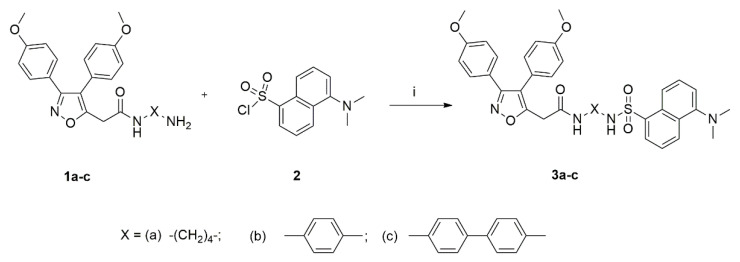
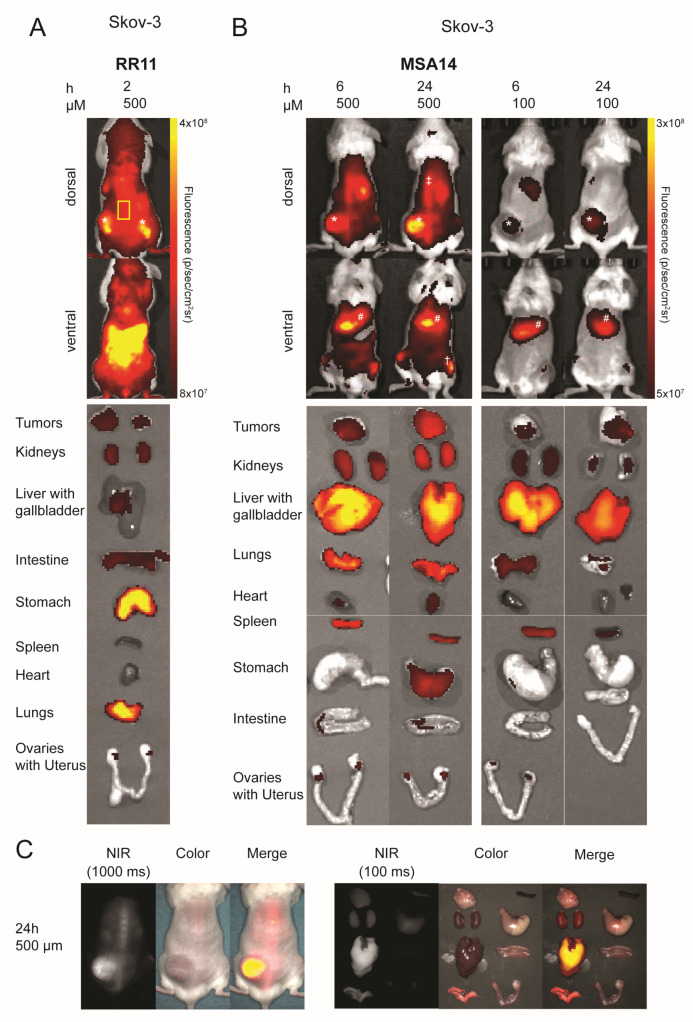
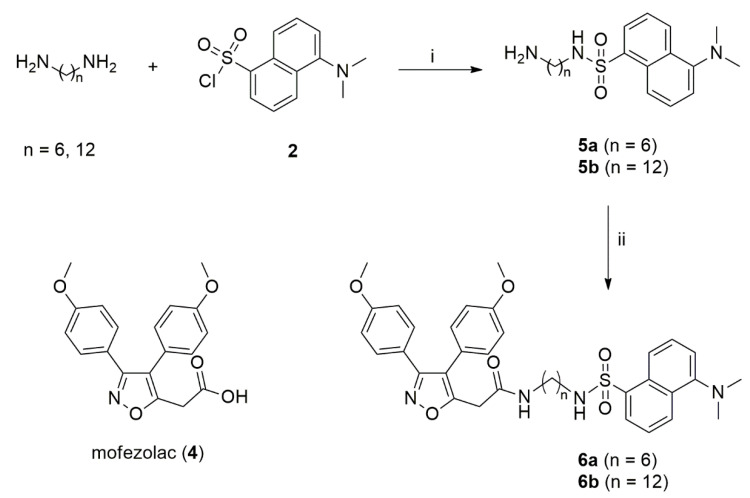
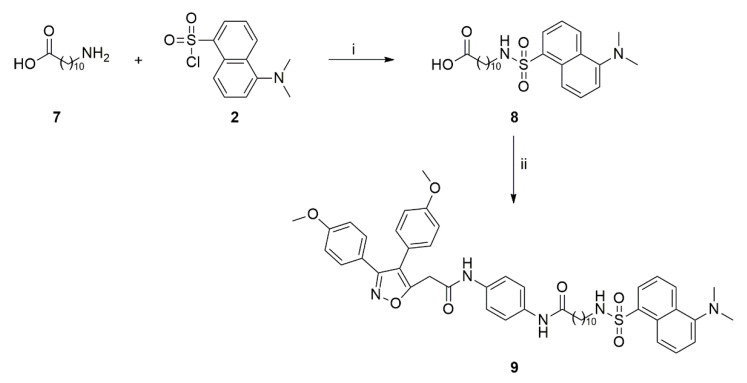
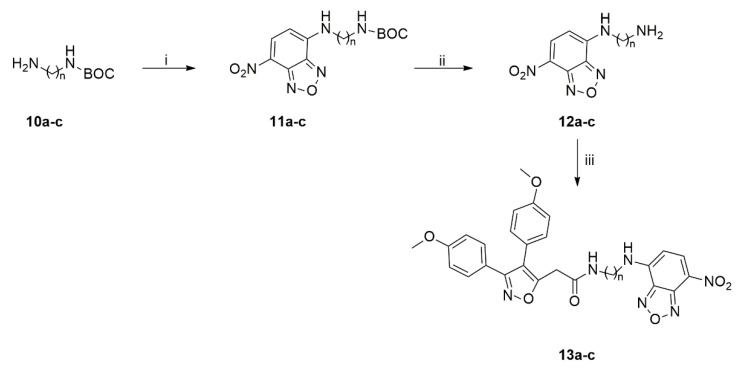
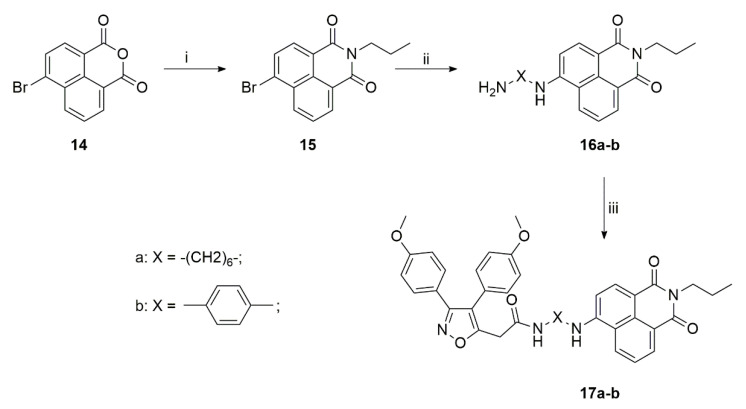
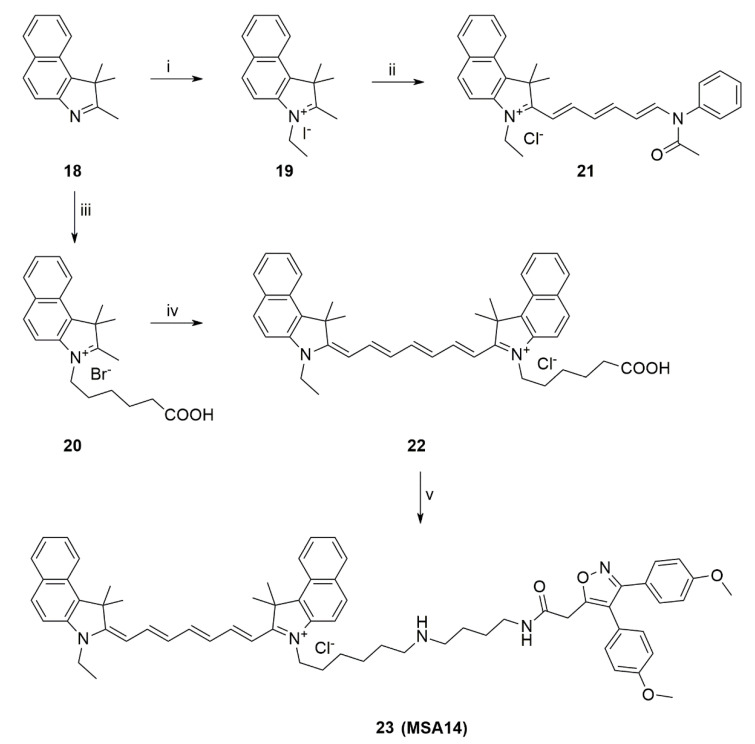
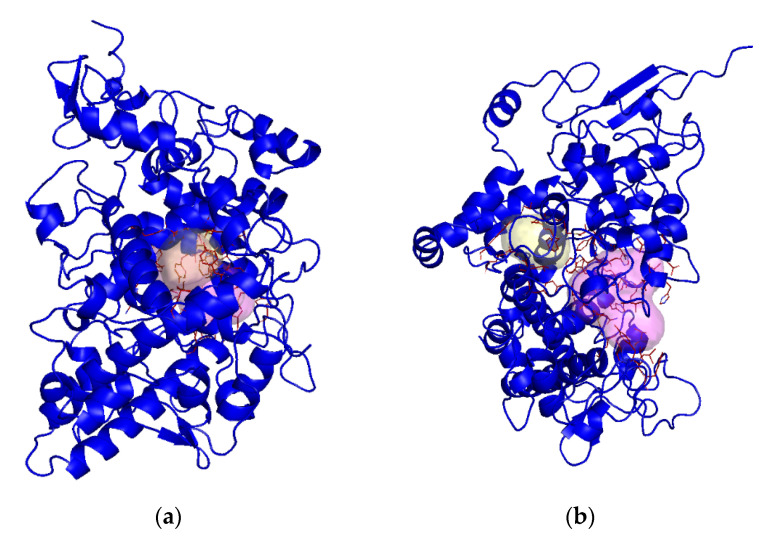
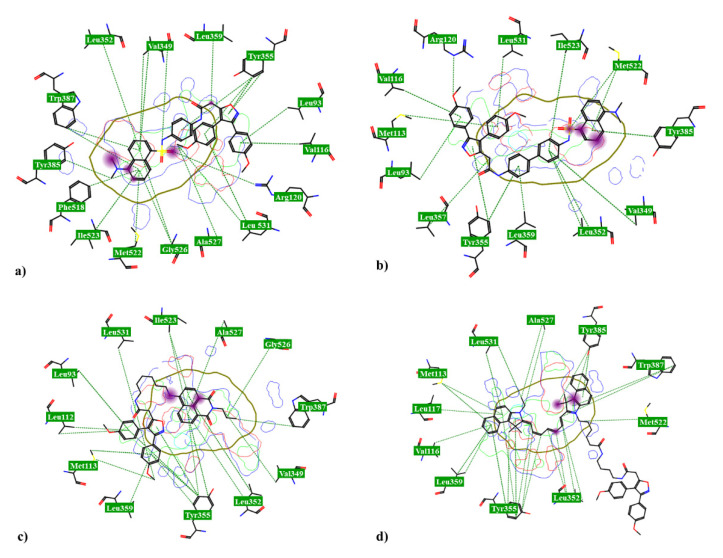
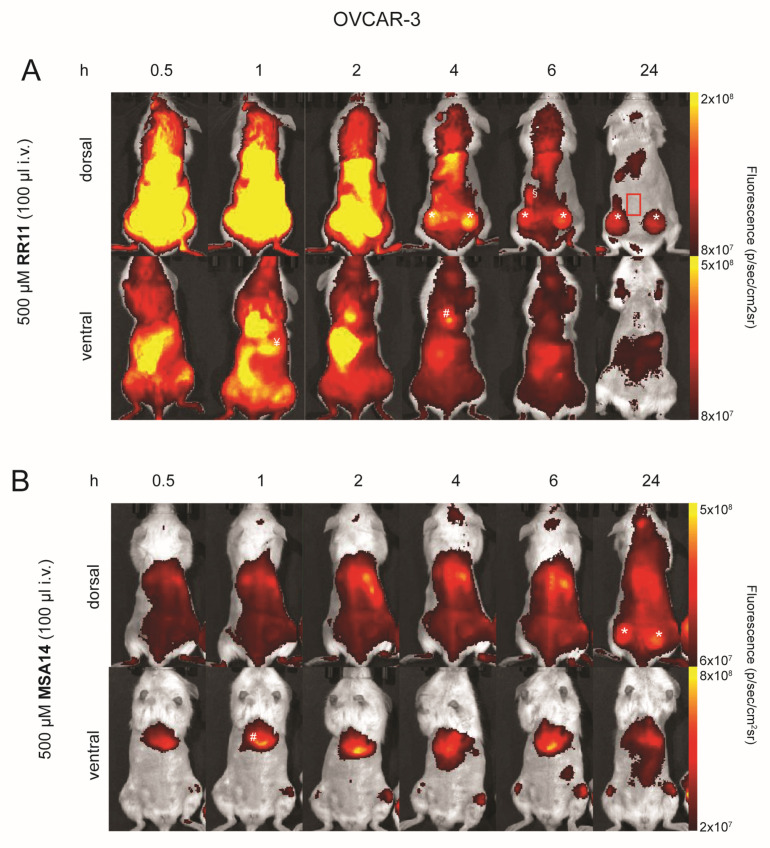
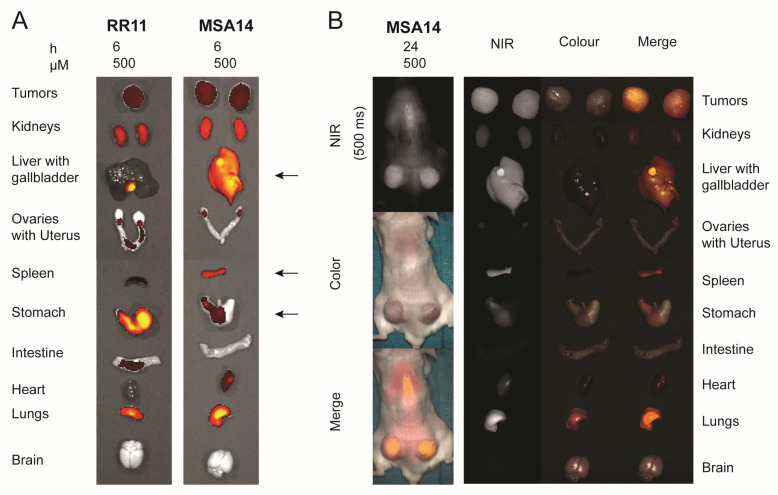
The identification and removal of all gross and microscopic tumor to render the patient disease free represents a huge challenge in ovarian cancer treatment. The presence of residual disease is an independent negative prognostic factor. Herein, we describe the synthesis and the "in vitro" evaluation of compounds as cyclooxygenase (COX)-1 inhibitors, the COX-1 isoform being an ovarian cancer biomarker, each bearing fluorochromes with different fluorescence features. Two of these compounds -[4-(9-dimethylimino-9H-benzo[a]phenoxazin-5-ylamino) butyl]-2-(3,4-bis(4-methoxyphenyl)isoxazol-5-yl)acetamide chloride (RR11) and 3-(6-(4-(2-(3,4-bis(4-methoxyphenyl)isoxazole-5-yl)acetamido)butyl)amino-6-oxohexyl)-2-[7-(1,3-dihydro-1,1-dimethyl-3-ethyl 2-benz[e]indolin-2-yl-idene)-1,3,5-heptatrienyl]-1,1-dimethyl-3-(6-carboxilato-hexyl)-1-benz[e]indolium chloride, (MSA14) were found to be potent and selective inhibitors of cyclooxygenase (COX)-1 "in vitro", and thus were further investigated "in vivo". The IC values were 0.032 and 0.087 µM for RR11 and (MSA 14), respectively, whereas the COX-2 IC for RR11 is 2.4 µM while (MSA14) did not inhibit COX-2 even at a 50 µM concentration. Together, this represented selectivity index = 75 and 874, respectively. Structure-based virtual screening (SBVS) performed with the Fingerprints for Ligands and Proteins (FLAP) software allowed both to differentiate highly active compounds from less active and inactive structures and to define their interactions inside the substrate-binding cavity of COX1. Fluorescent probes RR11 and (MSA14), were used for preliminary near-infrared (NIR) fluorescent imaging (FLI) in human ovarian cancer (OVCAR-3 and SKOV-3) xenograft models. Surprisingly, a tumor-specific signal was observed for both tested fluorescent probes, even though this signal is not linked to the presence of COX-1.
识别并清除所有肉眼可见和显微镜下可见的肿瘤,使患者无病,这在卵巢癌治疗中是一项巨大挑战。残留病灶的存在是一个独立的负面预后因素。在此,我们描述了作为环氧合酶(COX)-1抑制剂的化合物的合成及“体外”评估,COX-1同工型是一种卵巢癌生物标志物,每种化合物都带有具有不同荧光特征的荧光染料。其中两种化合物——[4-(9-二甲基亚氨基-9H-苯并[a]吩恶嗪-5-基氨基)丁基]-2-(3,4-双(4-甲氧基苯基)异恶唑-5-基)乙酰氯(RR11)和3-(6-(4-(2-(3,4-双(4-甲氧基苯基)异恶唑-5-基)乙酰氨基)丁基)氨基-6-氧代己基)-2-[7-(1,3-二氢-1,1-二甲基-3-乙基-2-苯并[e]吲哚-2-亚基)-1,3,5-庚三烯基]-1,1-二甲基-3-(6-羧基己基)-1-苯并[e]吲哚鎓氯(MSA14),在“体外”被发现是环氧合酶(COX)-1的强效和选择性抑制剂,因此进一步进行了“体内”研究。RR11和MSA14的IC值分别为0.032和0.087μM,而RR11对COX-2的IC值为2.4μM,而MSA14即使在50μM浓度下也不抑制COX-2。两者的选择性指数分别为75和874。使用配体和蛋白质指纹(FLAP)软件进行的基于结构的虚拟筛选(SBVS),既能区分高活性化合物与低活性和无活性结构,又能确定它们在COX1底物结合腔内的相互作用。荧光探针RR11和MSA14用于人卵巢癌(OVCAR-3和SKOV-3)异种移植模型的初步近红外(NIR)荧光成像(FLI)。令人惊讶的是,两种测试的荧光探针都观察到了肿瘤特异性信号,尽管该信号与COX-1的存在无关。