Zhong Yuke, Liu Hang, Liu Guohui, Zhao Lili, Dai Chengcheng, Liang Yi, Du Juncong, Zhou Xuan, Mo Lijuan, Tan Changhong, Tan Xinjie, Deng Fen, Liu Xi, Chen Lifen
Department of Neurology, The Second Affiliated Hospital of Chongqing Medical University, Chongqing, China.
NPJ Parkinsons Dis. 2022 Jun 24;8(1):82. doi: 10.1038/s41531-022-00347-2.
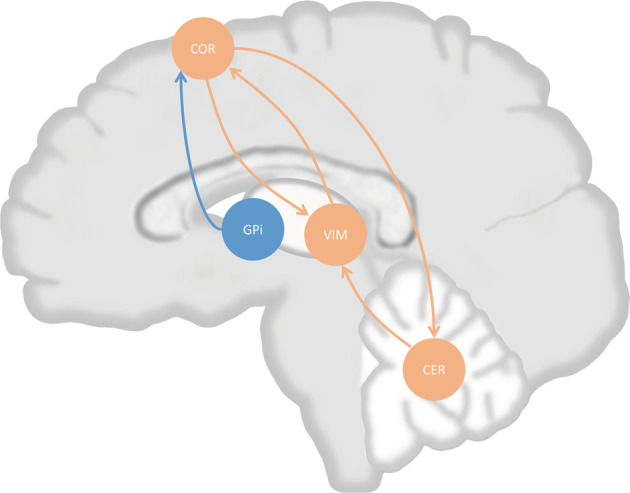
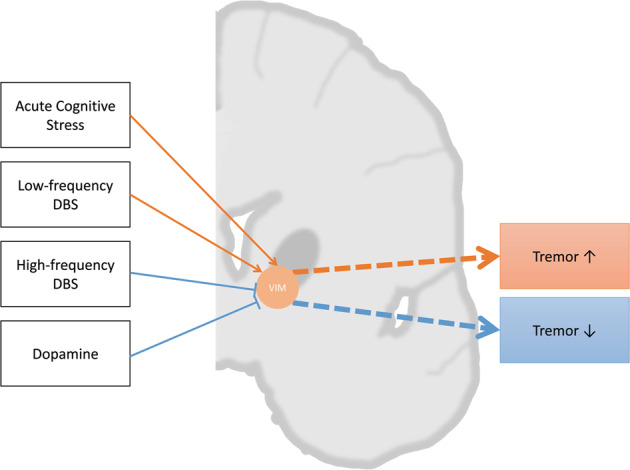
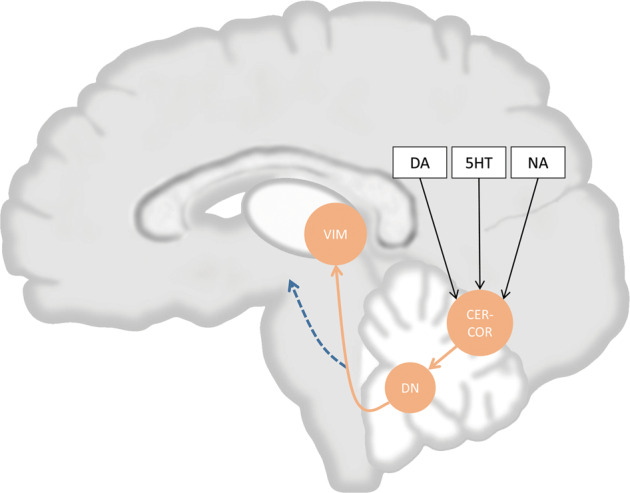
Tremor is one of the core symptoms of Parkinson's disease (PD), but its mechanism is poorly understood. The cerebellum is a growing focus in PD-related researches and is reported to play an important role in tremor in PD. The cerebellum may participate in the modulation of tremor amplitude via cerebello-thalamo-cortical circuits. The cerebellar excitatory projections to the ventral intermediate nucleus of the thalamus may be enhanced due to PD-related changes, including dopaminergic/non-dopaminergic system abnormality, white matter damage, and deep nuclei impairment, which may contribute to dysregulation and resistance to levodopa of tremor. This review summarized the pathological, structural, and functional changes of the cerebellum in PD and discussed the role of the cerebellum in PD-related tremor, aiming to provide an overview of the cerebellum-related mechanism of tremor in PD.
震颤是帕金森病(PD)的核心症状之一,但其机制尚不清楚。小脑在PD相关研究中日益受到关注,据报道在PD震颤中起重要作用。小脑可能通过小脑-丘脑-皮质回路参与震颤幅度的调节。由于PD相关变化,包括多巴胺能/非多巴胺能系统异常、白质损伤和深部核团损害,小脑对丘脑腹中间核的兴奋性投射可能增强,这可能导致震颤的调节失调和对左旋多巴的抵抗。本综述总结了PD中小脑的病理、结构和功能变化,并讨论了小脑在PD相关震颤中的作用,旨在概述PD中与小脑相关的震颤机制。