College of Horticulture, Nanjing Agricultural University, No. 1 Weigang, Nanjing, 210095, China.
BMC Plant Biol. 2022 Jun 24;22(1):304. doi: 10.1186/s12870-022-03693-8.
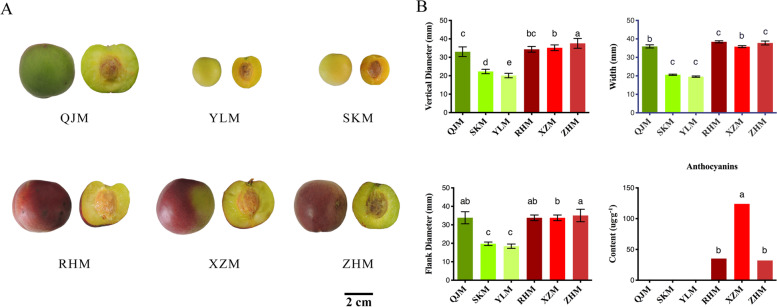
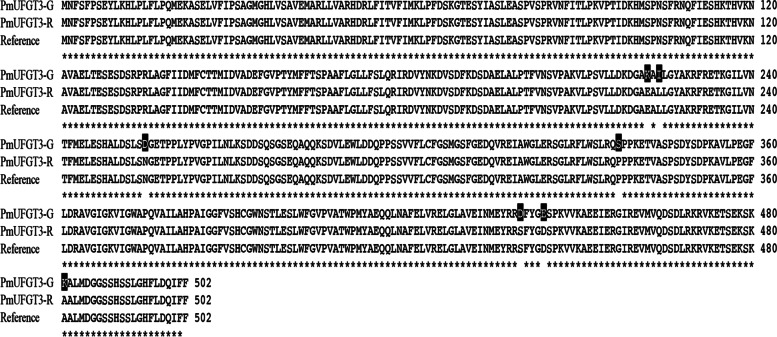
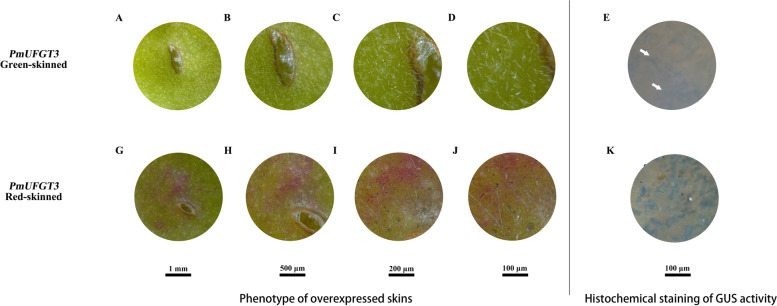
Japanese apricot (Prunus mume Sieb. et Zucc.) is popular for both ornamental and processing value, fruit color affects the processing quality, and red pigmentation is the most obvious phenotype associated with fruit color variation in Japanese apricot, mutations in structural genes in the anthocyanin pathway can disrupt the red pigmentation, while the formation mechanism of the red color trait in Japanese apricot is still unclear. RESULTS: One SNP marker (PmuSNP_27) located within PmUFGT3 gene coding region was found highly polymorphic among 44 different fruit skin color cultivars and relative to anthocyanin biosynthesis in Japanese apricot. Meantime, critical mutations were identified in two alleles of PmUFGT3 in the green-skinned type is inactivated by seven nonsense mutations in the coding region, which leads to seven amino acid substitution, resulting in an inactive UFGT enzyme. Overexpression of the PmUFGT3 allele from red-skinned Japanese apricot in green-skinned fruit lines resulted in greater anthocyanin accumulation in fruit skin. Expression of same allele in an Arabidopsis T-DNA mutant deficient in anthocyanidin activity the accumulation of anthocyanins. In addition, using site-directed mutagenesis, we created a single-base substitution mutation (G to T) of PmUFGT3 isolated from green-skinned cultivar, which caused an E to D amino acid substitution and restored the function of the inactive allele of PmUFGT3 from a green-skinned individual.
This study confirms the function of PmUFGT3, and provides insight into the mechanism underlying fruit color determination in Japanese apricot, and possible approaches towards genetic engineering of fruit color.
日本李(Prunus mume Sieb. et Zucc.)因其观赏和加工价值而广受欢迎,果实颜色影响加工质量,红色素沉着是与日本李果实颜色变化最明显的表型相关的,花青素途径结构基因的突变可以破坏红色素沉着,而日本李红色性状的形成机制仍不清楚。
在 44 个不同果皮颜色品种中,在 PmUFGT3 基因编码区发现了一个 SNP 标记(PmuSNP_27),高度多态性与日本李中的花青素生物合成相关。同时,在绿色果皮类型的两个等位基因中发现了关键突变,在编码区的七个无意义突变失活,导致七个氨基酸取代,从而产生无活性的 UFGT 酶。在绿色果皮品系中过表达来自红色果皮日本李的 PmUFGT3 等位基因导致果皮中花青素积累增加。在拟南芥 T-DNA 突变体中表达相同的等位基因,该突变体缺乏花青素活性,导致花青素积累。此外,通过定点诱变,我们从绿色果皮品种中分离出 PmUFGT3 的单个碱基取代突变(G 到 T),导致 E 到 D 氨基酸取代,并恢复了来自绿色个体的 PmUFGT3 失活等位基因的功能。
本研究证实了 PmUFGT3 的功能,为日本李果实颜色决定的机制提供了深入的了解,并为水果颜色的遗传工程提供了可能的方法。