Signori Davide, Magliocca Aurora, Hayashida Kei, Graw Jan A, Malhotra Rajeev, Bellani Giacomo, Berra Lorenzo, Rezoagli Emanuele
School of Medicine and Surgery, University of Milano-Bicocca, Monza, Italy.
Department of Medical Physiopathology and Transplants, University of Milan, Milan, Italy.
Intensive Care Med Exp. 2022 Jun 27;10(1):28. doi: 10.1186/s40635-022-00455-6.
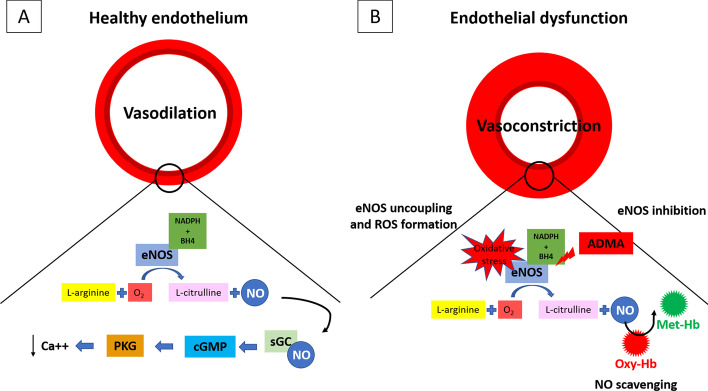
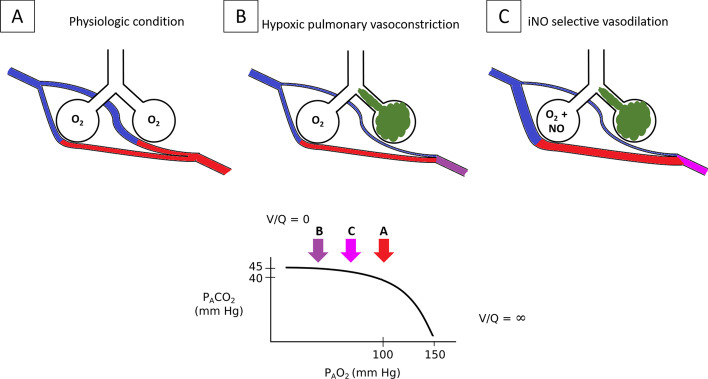
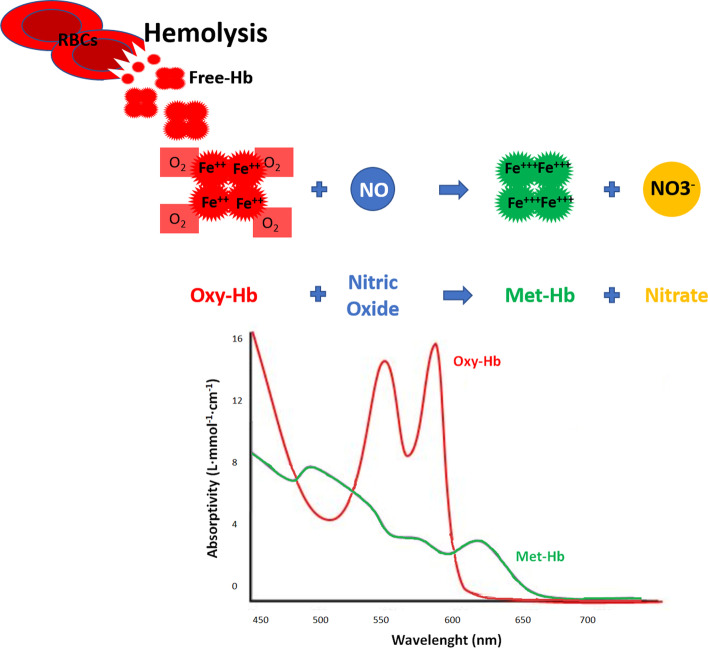
Nitric oxide (NO) is a key molecule in the biology of human life. NO is involved in the physiology of organ viability and in the pathophysiology of organ dysfunction, respectively. In this narrative review, we aimed at elucidating the mechanisms behind the role of NO in the respiratory and cardio-cerebrovascular systems, in the presence of a healthy or dysfunctional endothelium. NO is a key player in maintaining multiorgan viability with adequate organ blood perfusion. We report on its physiological endogenous production and effects in the circulation and within the lungs, as well as the pathophysiological implication of its disturbances related to NO depletion and excess. The review covers from preclinical information about endogenous NO produced by nitric oxide synthase (NOS) to the potential therapeutic role of exogenous NO (inhaled nitric oxide, iNO). Moreover, the importance of NO in several clinical conditions in critically ill patients such as hypoxemia, pulmonary hypertension, hemolysis, cerebrovascular events and ischemia-reperfusion syndrome is evaluated in preclinical and clinical settings. Accordingly, the mechanism behind the beneficial iNO treatment in hypoxemia and pulmonary hypertension is investigated. Furthermore, investigating the pathophysiology of brain injury, cardiopulmonary bypass, and red blood cell and artificial hemoglobin transfusion provides a focus on the potential role of NO as a protective molecule in multiorgan dysfunction. Finally, the preclinical toxicology of iNO and the antimicrobial role of NO-including its recent investigation on its role against the Sars-CoV2 infection during the COVID-19 pandemic-are described.
一氧化氮(NO)是人类生命生物学中的关键分子。NO分别参与器官存活的生理学和器官功能障碍的病理生理学过程。在这篇叙述性综述中,我们旨在阐明在存在健康或功能失调的内皮情况下,NO在呼吸和心脑血管系统中发挥作用的背后机制。NO是维持多器官存活及充足器官血液灌注的关键因素。我们报告其生理内源性产生及其在循环系统和肺内的作用,以及与NO耗竭和过量相关的干扰的病理生理学意义。该综述涵盖从一氧化氮合酶(NOS)产生内源性NO的临床前信息到外源性NO(吸入一氧化氮,iNO)的潜在治疗作用。此外,在临床前和临床环境中评估了NO在危重症患者的几种临床情况中的重要性,如低氧血症、肺动脉高压、溶血、脑血管事件和缺血再灌注综合征。相应地,研究了iNO治疗低氧血症和肺动脉高压的有益机制。此外,研究脑损伤、体外循环以及红细胞和人工血红蛋白输血的病理生理学,聚焦于NO作为多器官功能障碍中保护分子的潜在作用。最后,描述了iNO的临床前毒理学以及NO的抗菌作用,包括其在COVID-19大流行期间对Sars-CoV2感染作用的最新研究。