Zhang Xiaomei, Li Yanqing, Zhong Yueping, Wang Ziheng
Department of Neurosurgery, Affiliated Hospital of Nantong University, Nantong, China.
Medical College, Nantong University, Nantong, China.
Front Psychol. 2022 Jun 10;13:733864. doi: 10.3389/fpsyg.2022.733864. eCollection 2022.
Acromegaly is often characterized by altered physical (including facial) appearance. However, there is little medical or psychological research on body image concerns in patients with acromegaly. The aim of this study was to identify factors influencing the body image distress in patients with acromegaly and to explore the possible effects of stigma on body image concerns.
Cross-sectional study.
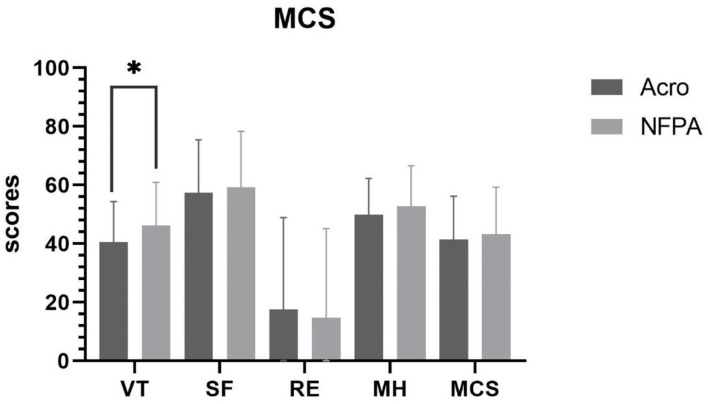
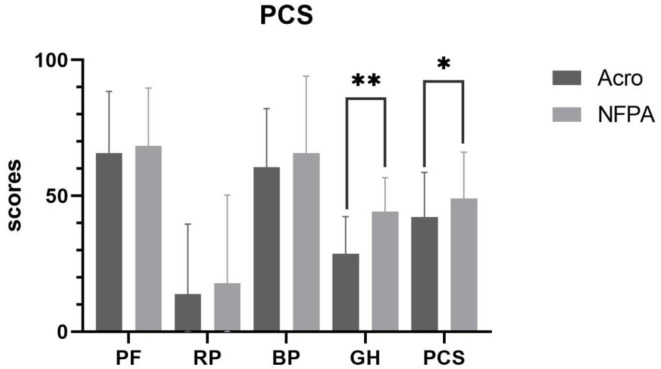
A total of 68 individuals with acromegaly were enrolled in the study. A total of 70 persons with nonfunctional pituitary adenomas were randomly recruited as a healthy control group. Using structured questionnaires, we explored perceived body image using the Body Image Concern Inventory. We also used the Hamilton Anxiety Scale, the Stigma Scale for Chronic Illness, the Brief Illness Perception Questionnaire, and the 36-Item Short-Form Health Survey to evaluate health-associated variables and to analyze factors that affect body image concerns in patients with acromegaly.
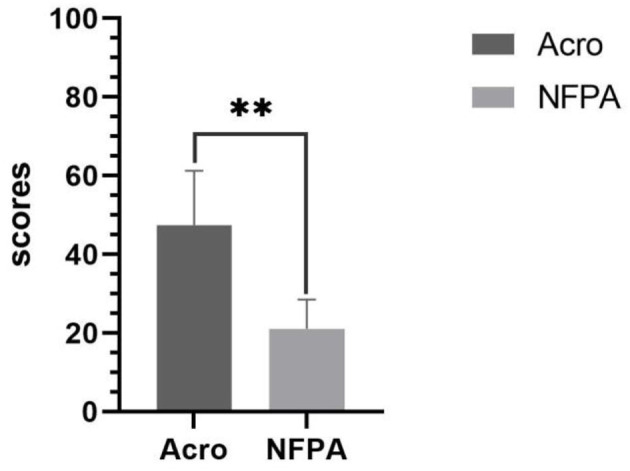
Of the 68 participants, 31 were men and 37 women (mean age ± standard deviation: 46.36 ± 12.47 years). The mean body image concern score was 47.49 ± 13.81 for patients with acromegaly and 21.10 ± 7.44 for patients with nonfunctional pituitary adenoma. The difference between the two groups was statistically significant. A multiple stepwise regression analysis showed that the related factors for body image distress were gender ( = 0.001), age at diagnosis ( = 0.01), and internalized stigma ( < 0.001, Adj. = 0.756).
People with acromegaly have substantial body image concerns, and these concerns are increased by the stigma associated with this disease; such concerns lead to poor quality of life (QoL). Physicians need to find better ways to control patients' hormone levels, and nurses should provide more information on how to improve body image or find ways to reduce patients' body image distress.
肢端肥大症常以身体(包括面部)外观改变为特征。然而,针对肢端肥大症患者身体形象问题的医学或心理学研究较少。本研究的目的是确定影响肢端肥大症患者身体形象困扰的因素,并探讨病耻感对身体形象问题的可能影响。
横断面研究。
本研究共纳入68例肢端肥大症患者。随机招募70例无功能性垂体腺瘤患者作为健康对照组。我们使用结构化问卷,通过身体形象关注量表来探究感知到的身体形象。我们还使用汉密尔顿焦虑量表、慢性病耻感量表、简短疾病感知问卷和36项简短健康调查来评估与健康相关的变量,并分析影响肢端肥大症患者身体形象问题的因素。
68名参与者中,男性31名,女性37名(平均年龄±标准差:46.36±12.47岁)。肢端肥大症患者的平均身体形象关注得分为47.49±13.81,无功能性垂体腺瘤患者为21.10±7.44。两组之间的差异具有统计学意义。多元逐步回归分析显示,身体形象困扰的相关因素为性别(P = 0.001)、诊断时年龄(P = 0.01)和内化病耻感(P < 0.001,调整R² = 0.756)。
肢端肥大症患者存在严重的身体形象问题,且与该疾病相关的病耻感加剧了这些问题;此类问题会导致生活质量下降。医生需要找到更好的方法来控制患者的激素水平,护士应提供更多关于如何改善身体形象或找到减轻患者身体形象困扰的方法的信息。