Department of Oncology, The Affiliated Hospital of Xuzhou Medical University, Xuzhou, Jiangsu 221000, China.
Department of Laboratory, The Affiliated Hospital of Xuzhou Medical University, Xuzhou, Jiangsu 221000, China.
Comput Math Methods Med. 2022 Jun 17;2022:4321466. doi: 10.1155/2022/4321466. eCollection 2022.
Gastric cancer is among the most common malignant tumors of the digestive system. This study explored the molecular mechanisms and potential therapeutic targets for gastric cancer occurrence and progression using bioinformatics.
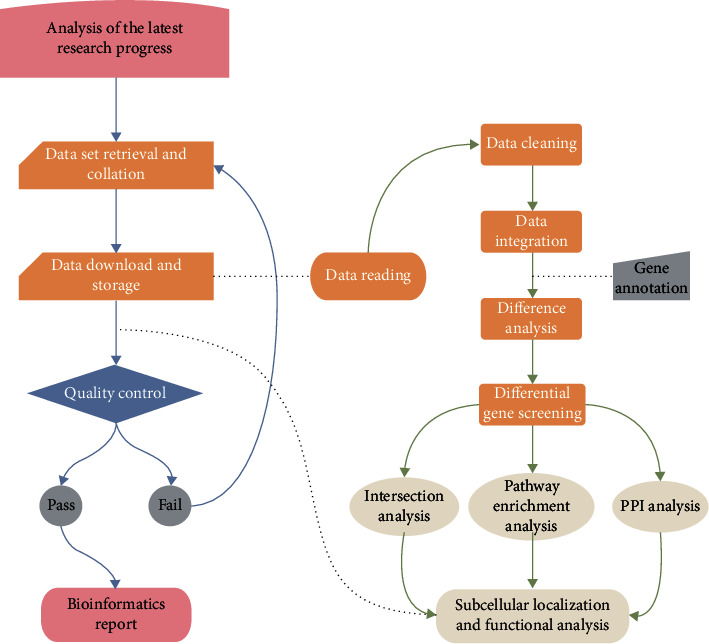
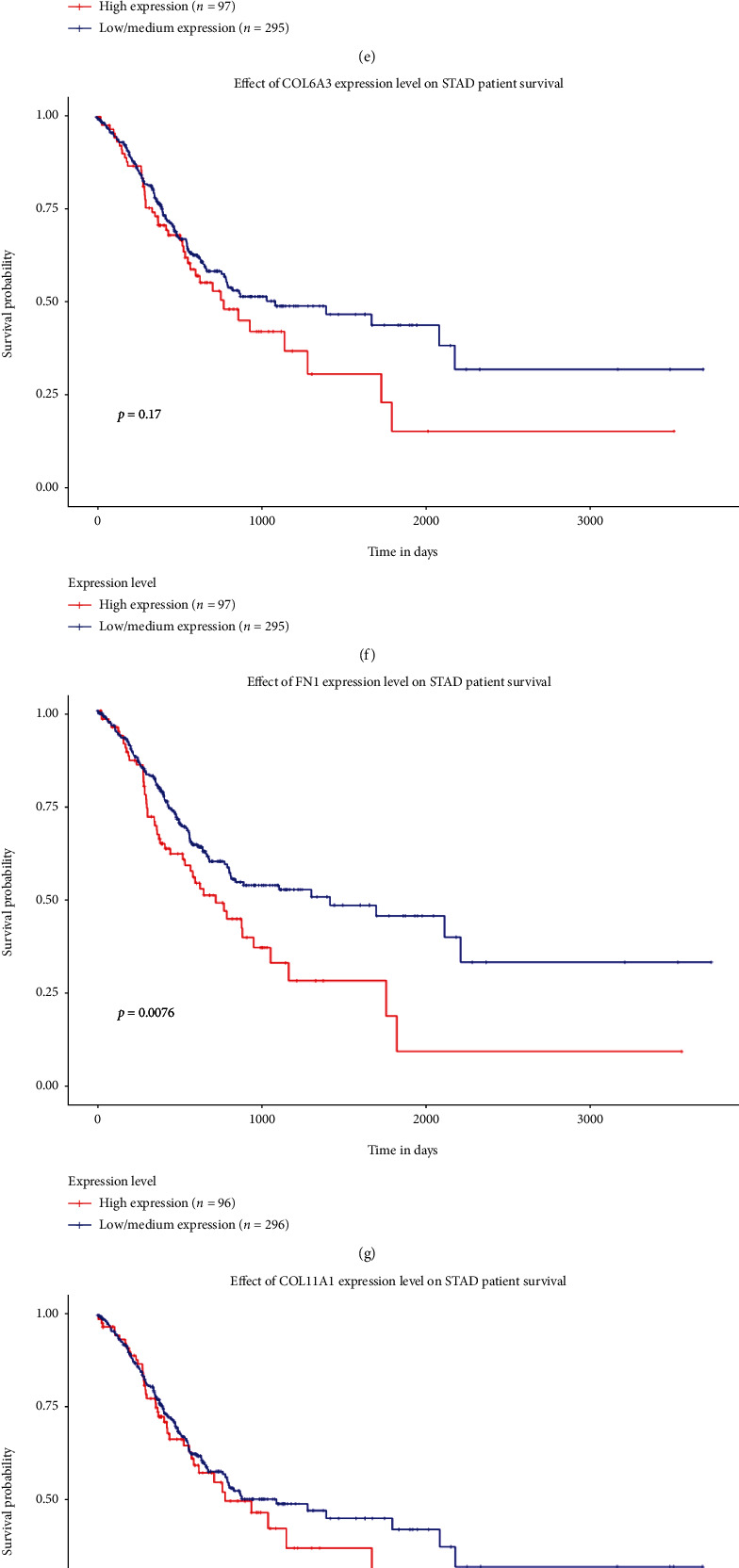
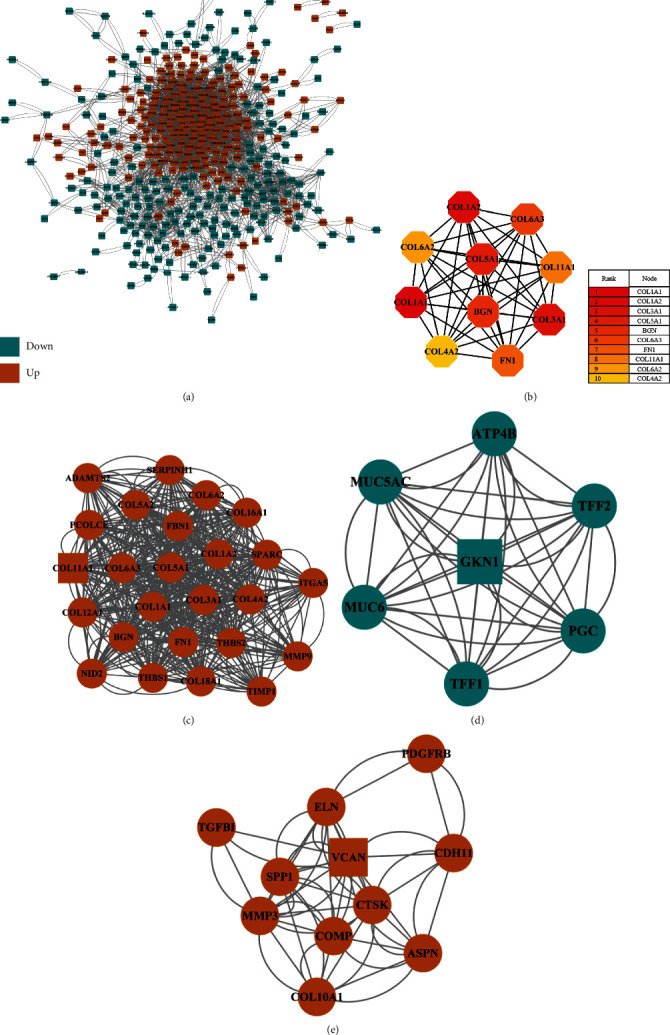
The gastric cancer microarray dataset was downloaded from the Gene Expression Omnibus (GEO) database. The R package was used for data mining and screening differentially expressed genes (DEGs). Gene Ontology (GO) analysis and Kyoto Encyclopedia of Gene and Genome (KEGG) pathway analysis were performed using the Database for Annotation, Visualization, and Integrated Discovery (DAVID). Based on the protein-protein interaction (PPI) network analysis, core targets and core subsets were screened. Then, the relationship between the expression level of the core genes and the prognosis of gastric cancer patients was analyzed using the Gene Expression Profiling Interactive Analysis (GEPIA) database.
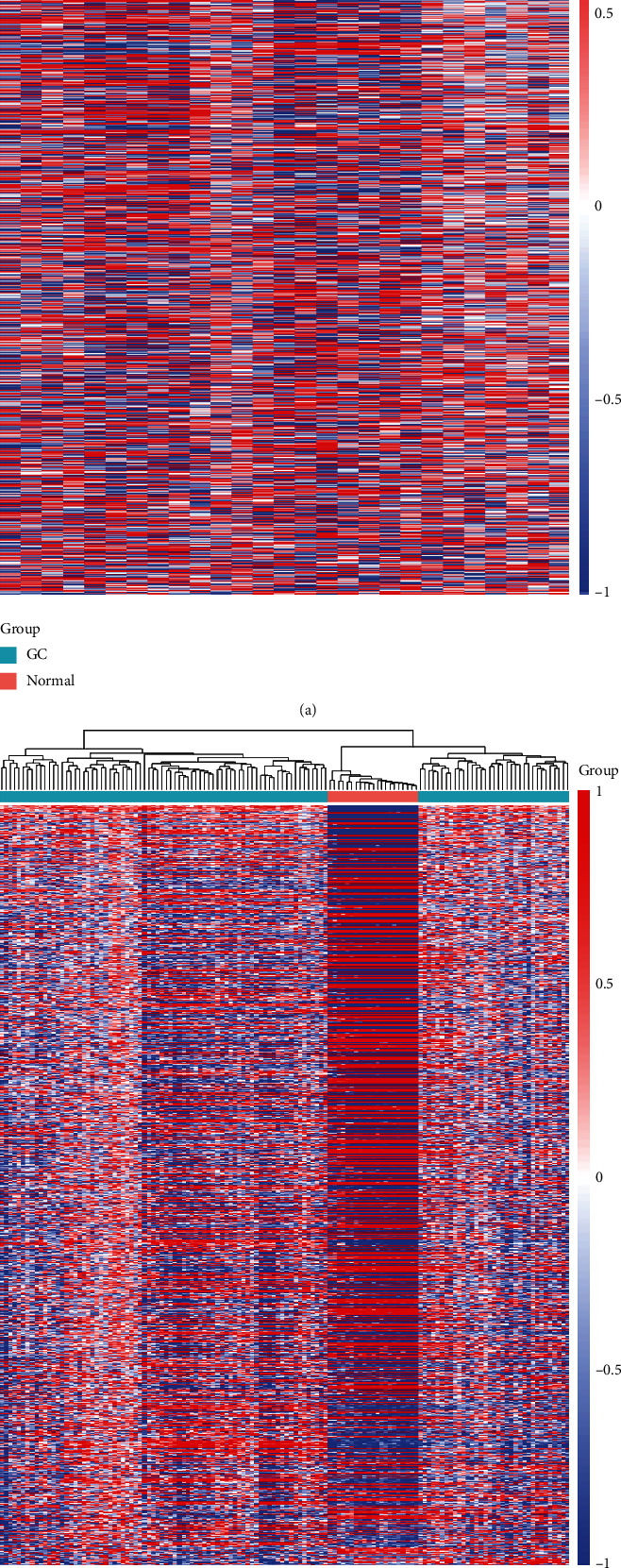
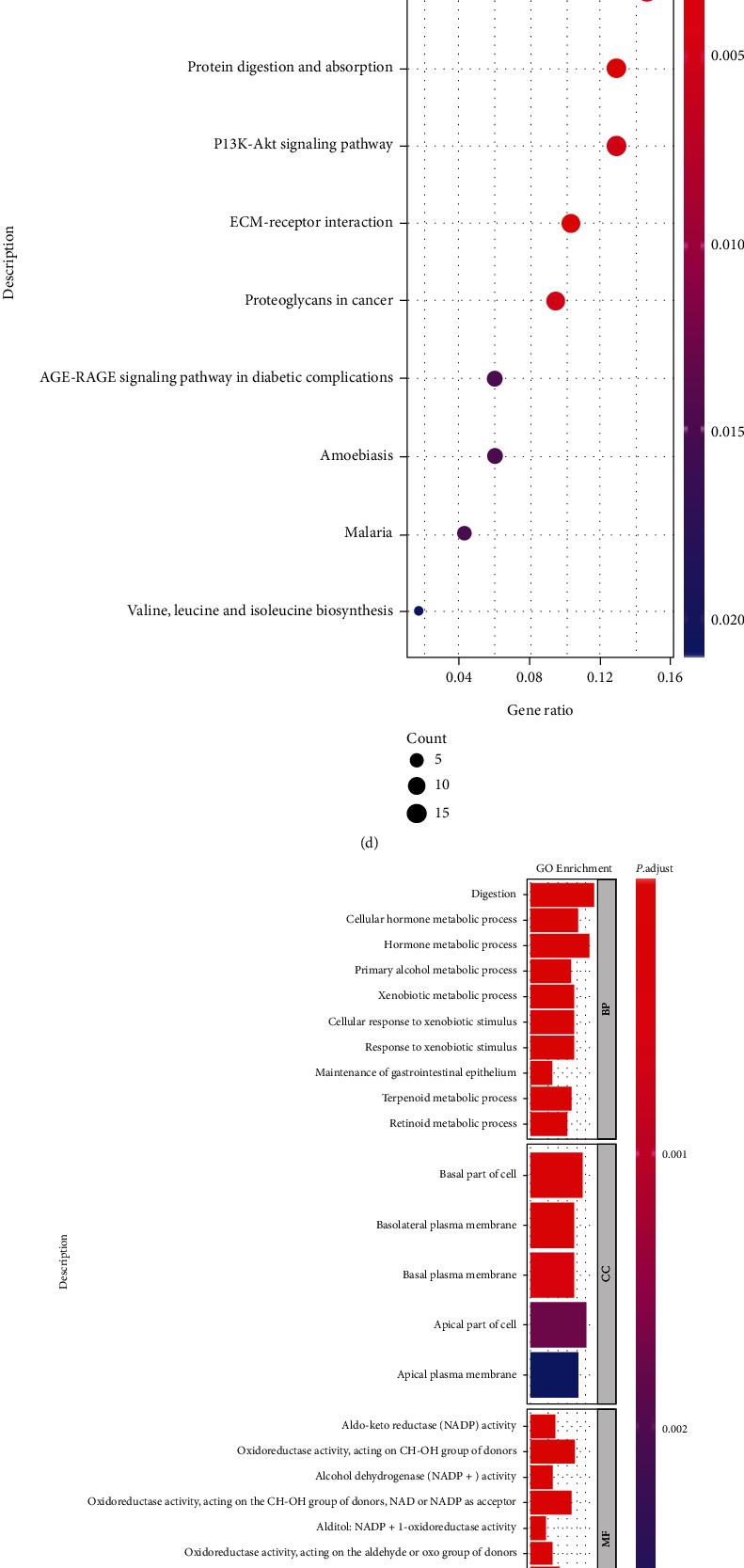
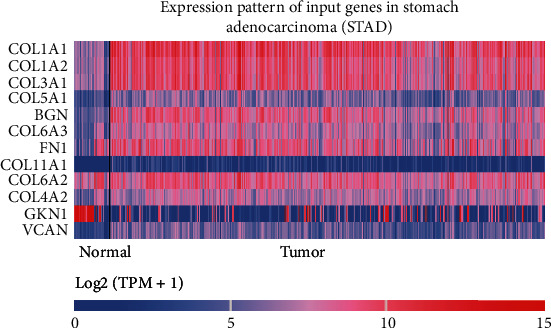
Using the GSE19826 and GSE54129 datasets, a total of 550 DEGs were identified, including 248 upregulated and 302 downregulated genes. GO and KEGG analyses showed that the upregulated DEGs were mainly enriched in the extracellular matrix (ECM) organization of the biological process (BP), the collagen-containing ECM of cellular component (CC), and the ECM structural constituent of molecular function (MF). DEGs were also enriched in human papillomavirus infections, the focal adhesion pathway, PI3K-Akt signaling pathway, and among others. The downregulated DEGs were mainly enriched in digestion, basal part of the cell, and aldo-keto reductase (NADP) activity. And the above pathways were enriched primarily in the metabolism of xenobiotics by cytochrome P450, drug metabolism-cytochrome P450, and retinol metabolism. Five core genes, including COL1A2, COL3A1, BGN, FN1, and VCAN, were significantly highly expressed in gastric cancer patients and were associated with poor prognosis.
This study identified new potential molecular targets closely related to gastric cancer occurrence and development via mining public data using bioinformatics analysis methods.
胃癌是消化系统最常见的恶性肿瘤之一。本研究通过生物信息学方法探讨胃癌发生和发展的分子机制及潜在治疗靶点。
从基因表达综合数据库(GEO)下载胃癌微阵列数据集,使用 R 包进行数据挖掘和筛选差异表达基因(DEGs)。采用数据库检索注释可视化综合发现(DAVID)进行基因本体(GO)分析和京都基因与基因组百科全书(KEGG)通路分析。基于蛋白质-蛋白质相互作用(PPI)网络分析,筛选核心靶点和核心亚群。然后,使用基因表达谱交互式分析(GEPIA)数据库分析核心基因表达水平与胃癌患者预后的关系。
使用 GSE19826 和 GSE54129 数据集,共鉴定出 550 个 DEGs,其中 248 个上调,302 个下调。GO 和 KEGG 分析显示,上调的 DEGs 主要富集于生物学过程(BP)的细胞外基质(ECM)组织、细胞成分(CC)的富含胶原蛋白的 ECM 和分子功能(MF)的 ECM 结构成分。DEGs 还富集于人乳头瘤病毒感染、焦点黏附通路、PI3K-Akt 信号通路等。下调的 DEGs 主要富集于消化、细胞基底和醛酮还原酶(NADP)活性。以上通路主要富集于细胞色素 P450 介导的外源化合物代谢、药物代谢-细胞色素 P450 和视黄醇代谢。COL1A2、COL3A1、BGN、FN1 和 VCAN 这 5 个核心基因在胃癌患者中显著高表达,与预后不良相关。
本研究通过生物信息学分析方法挖掘公共数据,鉴定出与胃癌发生发展密切相关的新的潜在分子靶点。