Department of Orthodontics, University of Regensburg, Regensburg, Germany.
Department of Pediatric Dentistry, School of Dentistry of Ribeirão Preto, University of São Paulo, Ribeirão Preto, Brazil.
Biomed Res Int. 2022 Jun 15;2022:1503052. doi: 10.1155/2022/1503052. eCollection 2022.
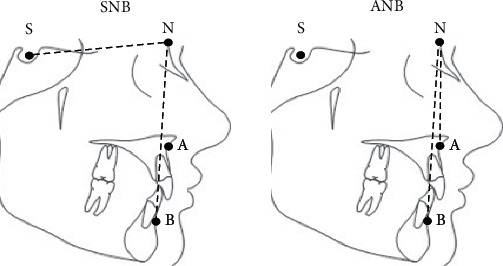
Skeletal malocclusions are common phenotypes in humans and have a strong influence on genetic factors. Transforming growth factor beta (TGF) controls numerous functions of the human body, including cell proliferation, differentiation, and migration. Thus, this study is aimed at evaluating whether genetic polymorphisms in and its receptor are associated with mandibular retrognathism in German children and adolescents. Children and teenagers older than 8 years in the mixed or permanent dentition were included in this study. Patients with syndromes and facial trauma and patients with congenital alterations were excluded. Digital cephalometric tracings were performed using the anatomical landmarks point A, point B, sella (S), and nasion (N). Patients that have a retrognathic mandible (SNB < 78°) were selected as case group, and the patients with an orthognathic mandible (SNB = 78°- 82°) were selected as the control group. Genomic deoxyribonucleic acid (DNA) from saliva was used to evaluate four genetic polymorphisms in (rs1800469 and rs4803455) and (rs3087465 and rs764522) using real-time PCR. Chi-square or Fisher exact tests were used to compare gender, genotype, and allele distribution among groups. Genotype distribution was calculated in an additive and recessive model. Haplotype analysis was also performed. The established alpha of this study was 5%. A total of 146 patients (age ranging from 8 to 18 years) were included in this epidemiological genetic study. The genetic polymorphism rs3087465 in was associated with mandibular retrognathism. Carrying the AA genotype in the rs3087465 polymorphism decreased the chance of having mandibular retrognathism (odds ratio = 0.25, confidence interval 95% = 0.06 to 0.94, = 0.045). None of the haplotypes was associated with mandibular retrognathism ( > 0.05). In conclusion, we found that the genetic polymorphism rs3087465 in the promoter region of the was associated with mandibular retrognathism in Germans.
骨骼错颌畸形是人类常见的表型,受遗传因素影响较大。转化生长因子β(TGF)β 控制着人体的许多功能,包括细胞增殖、分化和迁移。因此,本研究旨在评估德国儿童和青少年中 和其受体 中的遗传多态性是否与下颌后缩有关。本研究纳入了混合牙列或恒牙列中年龄大于 8 岁的儿童和青少年。排除综合征和面部创伤患者以及先天性改变患者。使用解剖学标志点 A、点 B、蝶鞍(S)和鼻根(N)进行数字头颅侧位测量。选择下颌后缩(SNB<78°)的患者为病例组,选择下颌正常(SNB=78°-82°)的患者为对照组。使用唾液基因组脱氧核糖核酸(DNA),采用实时 PCR 法评估 中的四个遗传多态性(rs1800469 和 rs4803455)和 中的四个遗传多态性(rs3087465 和 rs764522)。采用卡方检验或 Fisher 确切概率法比较各组间的性别、基因型和等位基因分布。按加性和隐性模型计算基因型分布。还进行了单体型分析。本研究的建立α值为 5%。本流行病学遗传研究共纳入 146 例患者(年龄 8-18 岁)。 中的 rs3087465 遗传多态性与下颌后缩有关。rs3087465 多态性中 AA 基因型携带者下颌后缩的几率降低(比值比=0.25,95%置信区间=0.06-0.94,P=0.045)。没有单体型与下颌后缩相关(P>0.05)。总之,我们发现 启动子区的 rs3087465 遗传多态性与德国人的下颌后缩有关。