Erickson Thane M, Jacobson Samantha V, Banning Rebecca L, Quach Christina M, Reas Hannah E
Department of Clinical Psychology, Seattle Pacific University, USA.
Puget Sound VA Health Care System, USA.
Compr Psychoneuroendocrinol. 2021 Sep 4;8:100084. doi: 10.1016/j.cpnec.2021.100084. eCollection 2021 Nov.
Hair cortisol concentrations (HCC) provide a biomarker for stress adaptation, which has downstream health consequences. Personality traits (e.g., neuroticism) and social processes (e.g., chronic interpersonal goals) may confer risk or buffer against dysregulated cortisol secretion. However, few studies have examined personality or interpersonal factors predicting hair cortisol, which estimates longer-term secretion and therefore provides a potential biomarker for studying trait-like psychological processes. The present study investigated effects of personality traits and daily interpersonal goals during stressors on HCC.
Participants ( = 90) reported Big Five traits at baseline, recorded interpersonal (self-image and compassionate) goals pursued during their worst psychosocial stressors for 4-5 weeks (1,949 entries), then provided a hair sample to estimate cortisol secretion over the past two months.
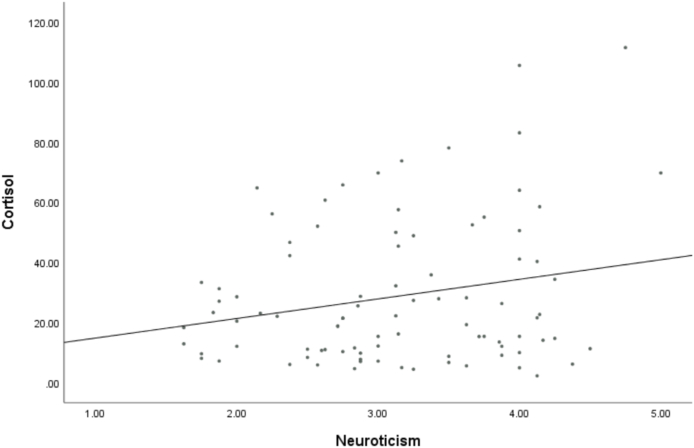
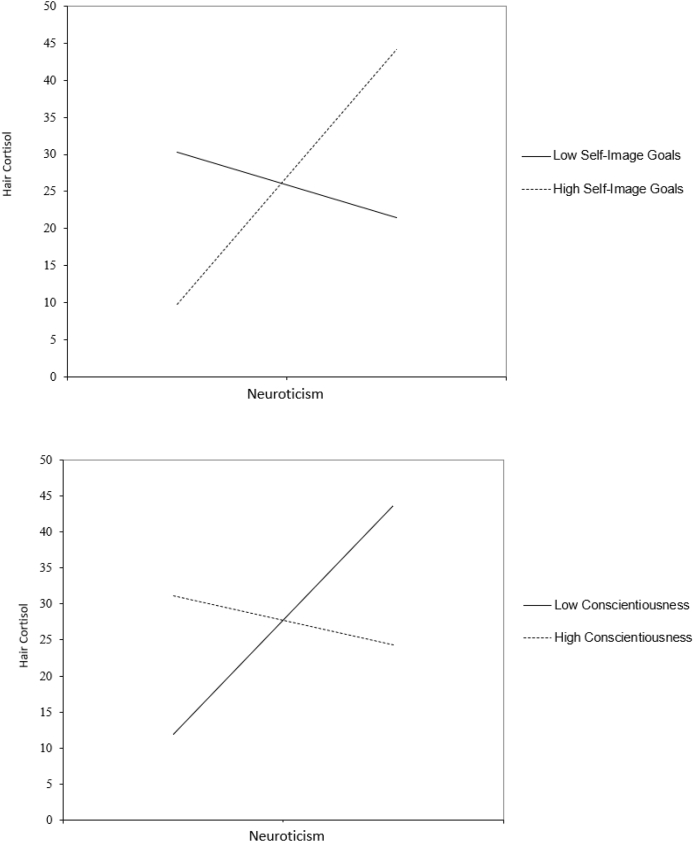
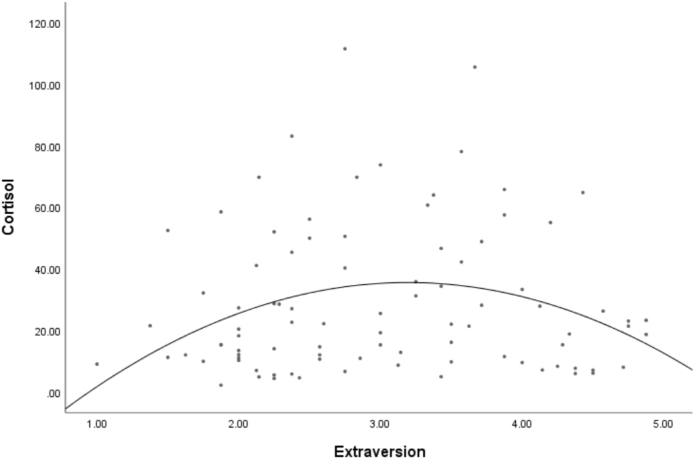
As hypothesized, neuroticism predicted higher HCC, beyond other Big Five traits ( = 7.45, = 3.36, = .029). Moreover, this effect was greater for those chronically striving to promote/protect one's self-image during psychosocial stressors ( = 14.53, = 4.72, = .003), and for those low in conscientiousness ( = 14.84, = 4.83, = .003). Moderate extraversion was associated with higher HCC. Striving to support others (compassionate goals) exerted no direct or interactive effect on HCC, contrary to hypotheses.
Results support the relevance of neuroticism and maladaptive interpersonal strivings to longer-term neuroendocrine responses, suggesting hair cortisol as a potential method for studying links of trait-like psychological and HPA processes.
头发皮质醇浓度(HCC)为压力适应提供了一种生物标志物,其对健康有下游影响。人格特质(如神经质)和社会过程(如长期人际目标)可能会带来风险或缓冲皮质醇分泌失调。然而,很少有研究考察预测头发皮质醇的人格或人际因素,头发皮质醇可估计长期分泌情况,因此为研究特质样心理过程提供了一种潜在的生物标志物。本研究调查了压力源期间人格特质和日常人际目标对HCC的影响。
参与者(n = 90)在基线时报告了大五人格特质,记录了在4 - 5周(1949条记录)内最严重心理社会压力源期间追求的人际(自我形象和同情心)目标,然后提供一份头发样本以估计过去两个月的皮质醇分泌情况。
如假设所示,神经质预测了更高的HCC,超过其他大五人格特质(β = 7.45,SE = 3.36,p = .029)。此外,对于那些在心理社会压力源期间长期努力提升/保护自我形象的人(β = 14.53,SE = 4.72,p = .003)以及尽责性低的人(β = 14.84,SE = 4.83,p = .003),这种影响更大。适度外向与更高的HCC相关。与假设相反,努力支持他人(同情心目标)对HCC没有直接或交互作用。
结果支持神经质和适应不良的人际努力与长期神经内分泌反应的相关性,表明头发皮质醇是研究特质样心理和HPA过程联系的一种潜在方法。