Department of Periodontics, School of Stomatology, Lanzhou University, Lanzhou, China; Department of Periodontics, Faculty of Dentistry, Thamar University, Dhamar, Yemen.
Department of Prosthodontics, Faculty of Dentistry, Thamar University, Dhamar, Yemen.
Int Dent J. 2022 Oct;72(5):634-640. doi: 10.1016/j.identj.2022.03.003. Epub 2022 Jun 25.
The aim of this study was to investigate the alveolar bone density and thickness in Chinese participants with and without periodontitis.
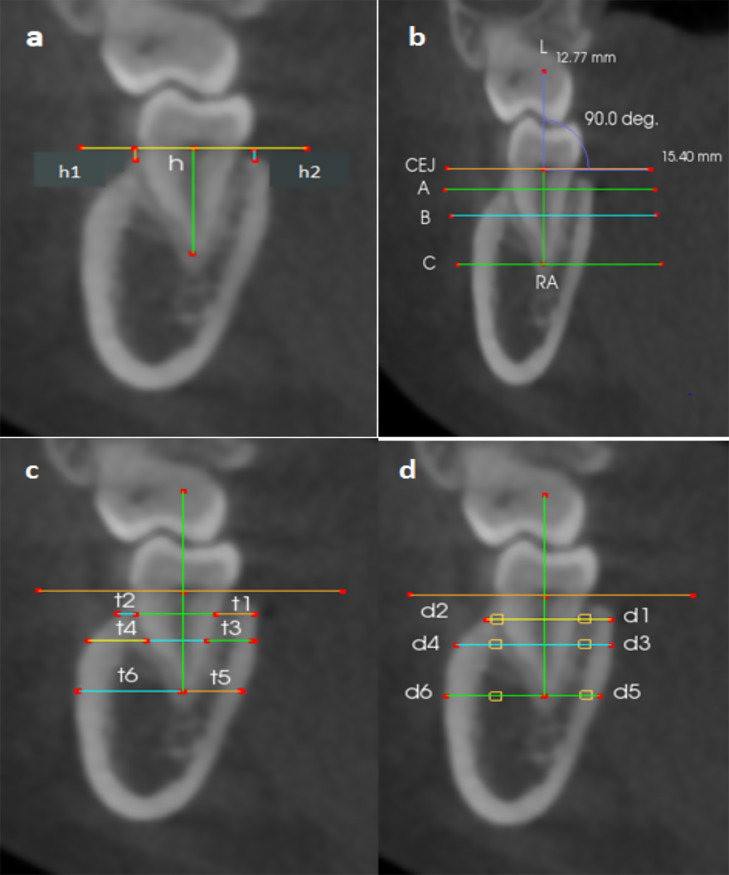
This study was retrospective and cross-sectional in nature and used cone-beam computed tomography (CBCT) to evaluate alveolar bone loss, bone density, and bone thickness around 668 mandibular molars (344 periodontally healthy teeth and 324 teeth with periodontitis). Comparative statistical tests were done related to the age, sex, tooth type, tooth side, and degree of bone loss. The significance level was set to be P < .05.
The alveolar bone density significantly differed between the healthy and periodontitis groups (mean difference = 24.4 Hounsfield units; P = .007). Similarly, the alveolar bone thickness of the healthy group was significantly higher than that of the periodontitis group (4.6 ± 1.8 mm compared to 4.2 ± 1.1 mm). Teeth in females demonstrated a significantly (P ˂ .001) higher bone density compared with males in both healthy and compromised groups. However, males showed a significantly (P ˂ .05) thicker bone of the teeth than females in relation to the healthy group. The alveolar bone density and thickness in both healthy and periodontitis groups significantly differed between the first and the second molars (P < .001). The alveolar bone thickness had a highly significant difference (P < .001) between the different degrees of bone loss.
Alveolar bone thickness and density were reduced at periodontally diseased teeth.
本研究旨在调查中国牙周炎患者和非牙周炎患者的牙槽骨密度和厚度。
本研究为回顾性和横断面研究,使用锥形束 CT(CBCT)评估 668 颗下颌磨牙(344 颗牙周健康牙和 324 颗牙周炎牙)的牙槽骨丧失、骨密度和骨厚度。与年龄、性别、牙类型、牙侧和骨丧失程度有关的比较统计检验。显著性水平设为 P<.05。
健康组和牙周炎组的牙槽骨密度差异有统计学意义(平均差异=24.4 亨氏单位;P=.007)。同样,健康组的牙槽骨厚度明显高于牙周炎组(4.6±1.8mm 比 4.2±1.1mm)。女性的牙齿骨密度明显高于健康组和受损组的男性(P<.001)。然而,与健康组相比,男性的牙齿骨密度明显较女性厚(P<.05)。健康组和牙周炎组的牙槽骨密度和厚度在第一磨牙和第二磨牙之间差异有统计学意义(P<.001)。牙槽骨厚度在不同骨丧失程度之间差异有高度统计学意义(P<.001)。
牙周病牙的牙槽骨厚度和密度降低。