Department of Neurology, Beijing Tiantan Hospital, Capital Medical University, No.119 South 4th Ring West Road, Fengtai District, Beijing, 100070, China.
China National Clinical Research Center for Neurological Diseases, No.119 South 4th Ring West Road, Fengtai District, Beijing, 100070, China.
BMC Neurol. 2022 Jun 27;22(1):236. doi: 10.1186/s12883-022-02760-9.
Stress hyperglycemia is a common condition in patients suffering from critical illness such as spontaneous intracerebral hemorrhage (ICH). Our study aimed to use glucose-to-glycated hemoglobin (HbA1c) ratio to investigate the impact of stress hyperglycemia on clinical outcomes in patients with ICH.
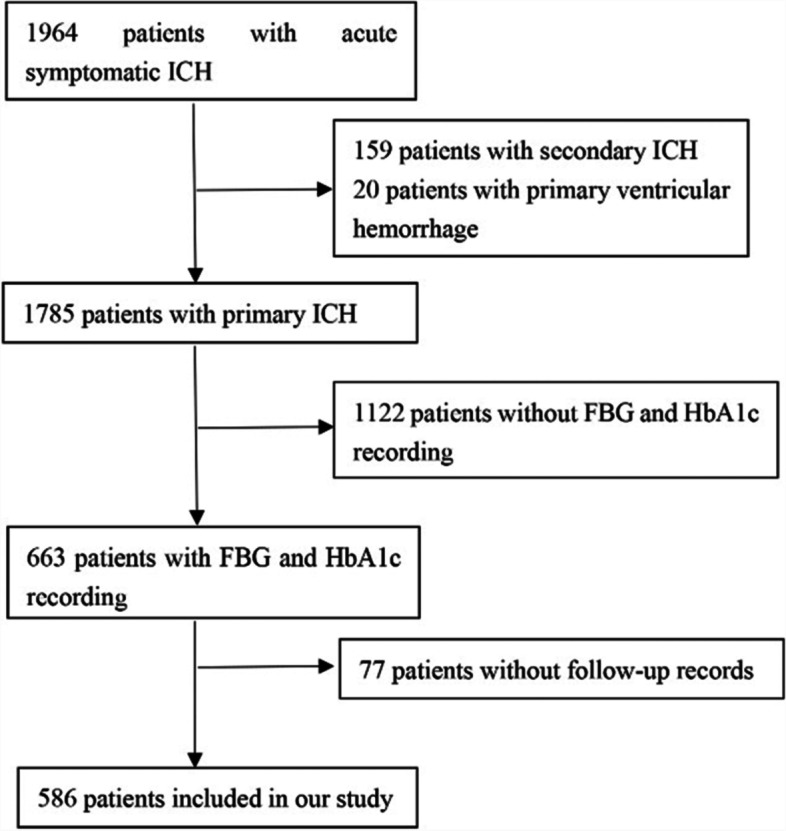
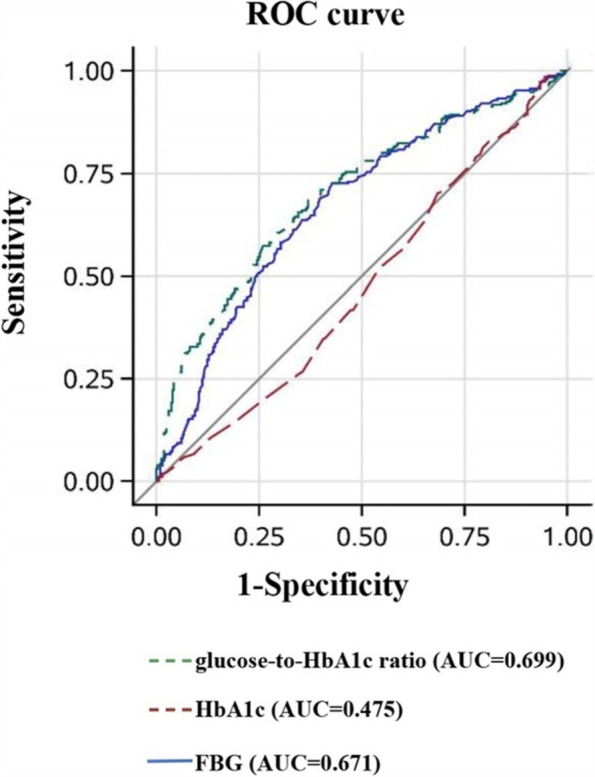
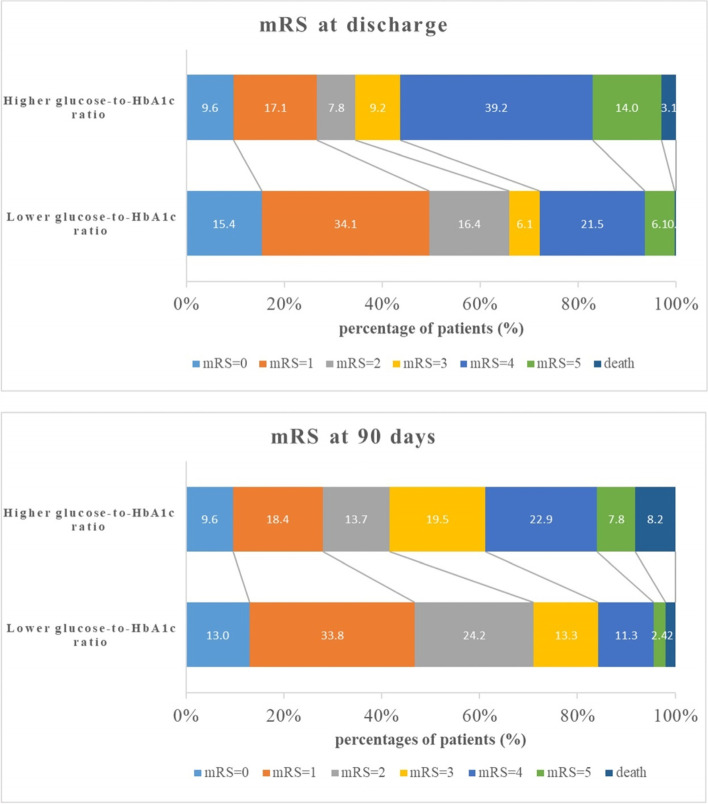
A sample of eligible 586 patients with spontaneous intracerebral hemorrhage from a multicenter, hospital-based cohort between 2014 and 2016 were recruited in our study. Stress hyperglycemia was evaluated by the index of the glucose-to-HbA1c ratio that was calculated by fasting blood glucose (mmol/L) divided by HbA1c (%). Patients were divided into two groups based on the median of the glucose-to-HbA1c ratio. The main outcomes were poor functional outcomes (modified Rankin Scale score of 3-6) at discharge and 90 days. Multivariable logistic regression and stratified analyses were performed to explore the association of stress hyperglycemia with poor prognosis of ICH.
On multivariable analysis, higher glucose-to-HbA1c ratio (≥1.02) was independently correlated with poor functional outcomes at discharge (adjusted OR = 3.52, 95%CI: 1.98-6.23) and 90 days (adjusted OR = 2.27, 95%CI: 1.38-3.73) after adjusting for potential confounding factors. The correlation between glucose-to-HbA1c ratio and worse functional outcomes still retained in patients with or without diabetes mellitus.
Stress hyperglycemia, calculated by glucose-to-HbA1c ratio, was independently correlated with worse functional outcomes at discharge and 90 days in patients with ICH. Moreover, glucose-to-HbA1c ratio, might not only be used as a simple and readily available index to predict clinical outcomes of ICH but also provide meaningful insight into future analysis to investigate the optimal range of glucose levels among ICH patients and develop tailored glucose-lowering strategies.
应激性高血糖是患有自发性脑出血(ICH)等危重病患者的常见情况。我们的研究旨在使用血糖与糖化血红蛋白(HbA1c)比值来探讨应激性高血糖对 ICH 患者临床结局的影响。
我们从 2014 年至 2016 年期间的一个多中心、基于医院的队列中招募了 586 名符合条件的自发性脑出血患者作为样本。通过空腹血糖(mmol/L)除以 HbA1c(%)计算出的血糖与 HbA1c 比值指数来评估应激性高血糖。根据血糖与 HbA1c 比值的中位数将患者分为两组。主要结局是出院时和 90 天时的不良功能结局(改良 Rankin 量表评分 3-6)。进行多变量逻辑回归和分层分析,以探讨应激性高血糖与 ICH 预后不良的关系。
多变量分析显示,较高的血糖与 HbA1c 比值(≥1.02)与出院时和 90 天时的不良功能结局独立相关(校正后 OR=3.52,95%CI:1.98-6.23)和 90 天(校正后 OR=2.27,95%CI:1.38-3.73),调整了潜在混杂因素后。在患有或不患有糖尿病的患者中,血糖与 HbA1c 比值与较差的功能结局之间的相关性仍然存在。
血糖与 HbA1c 比值计算的应激性高血糖与 ICH 患者出院时和 90 天时的不良功能结局独立相关。此外,血糖与 HbA1c 比值不仅可以作为预测 ICH 患者临床结局的简单、易得的指标,还可以为未来分析提供有意义的见解,以研究 ICH 患者血糖水平的最佳范围,并制定针对个体的降糖策略。