Laboratory for Cell Signaling and Cancer, Maisonneuve-Rosemont Hospital Research Center, Montréal, Québec, Canada.
Laboratory for Cell Signaling in Immunotherapy, Maisonneuve-Rosemont Hospital Research Center, Montréal, Québec, Canada; Department of Medicine, University of Montréal, Montréal, Québec, Canada.
J Biol Chem. 2022 Aug;298(8):102198. doi: 10.1016/j.jbc.2022.102198. Epub 2022 Jun 25.
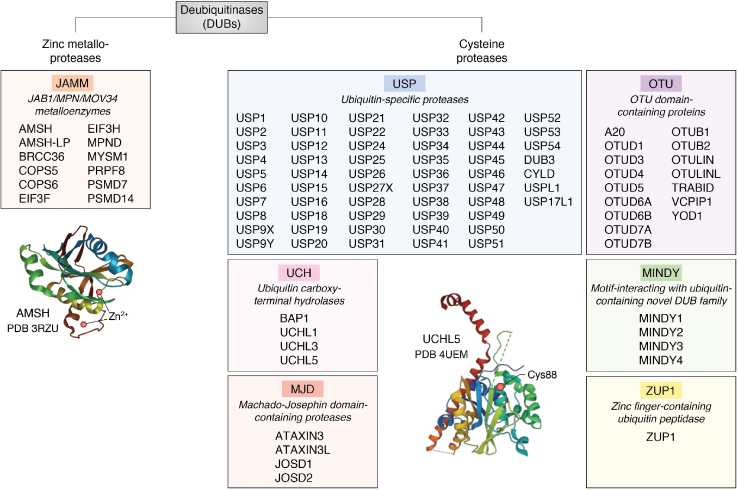
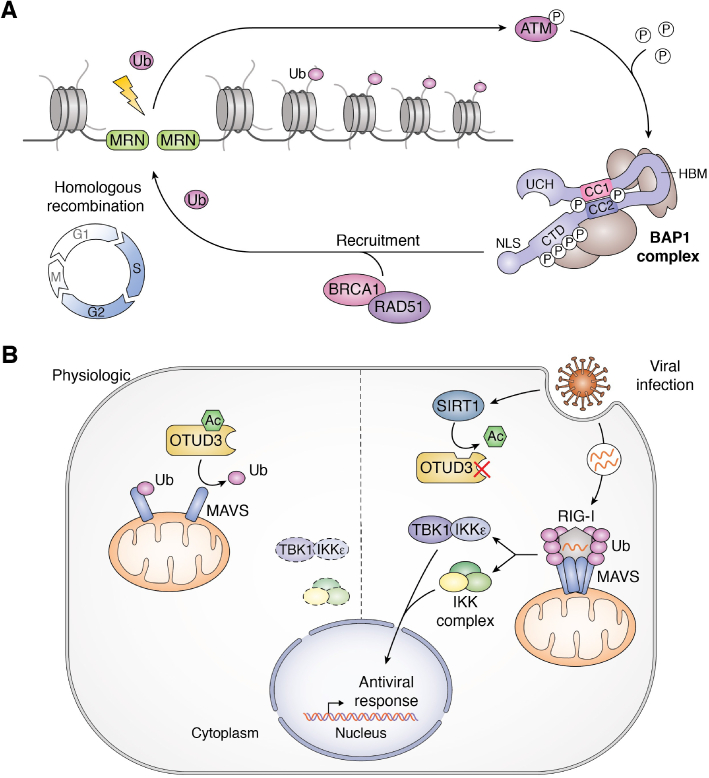
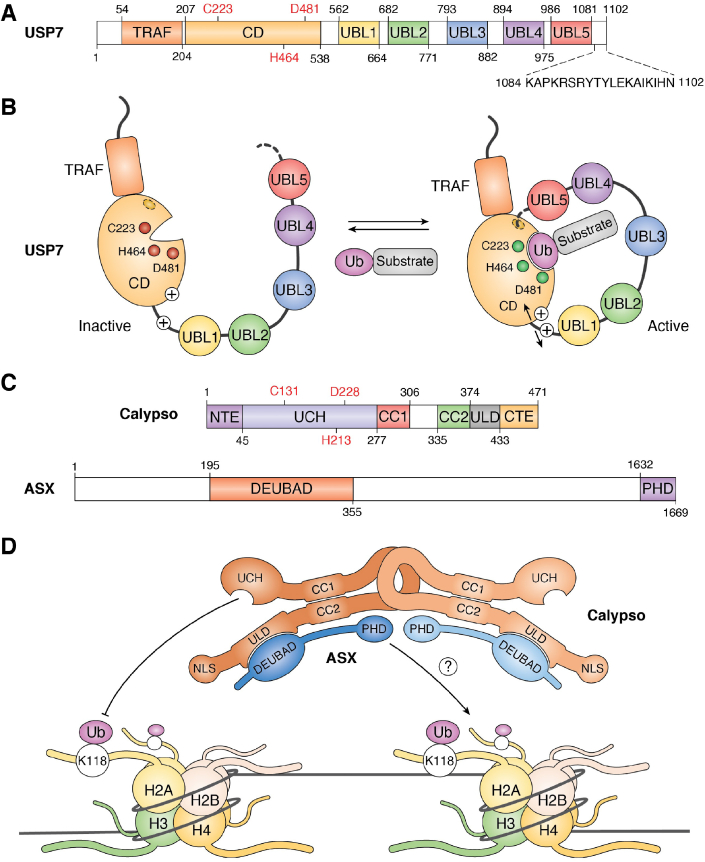
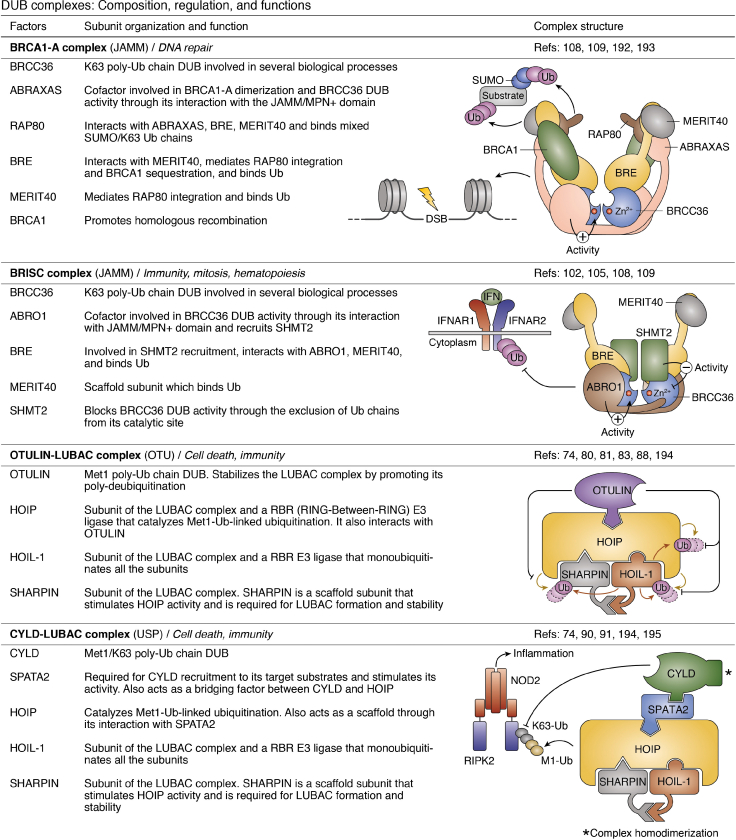
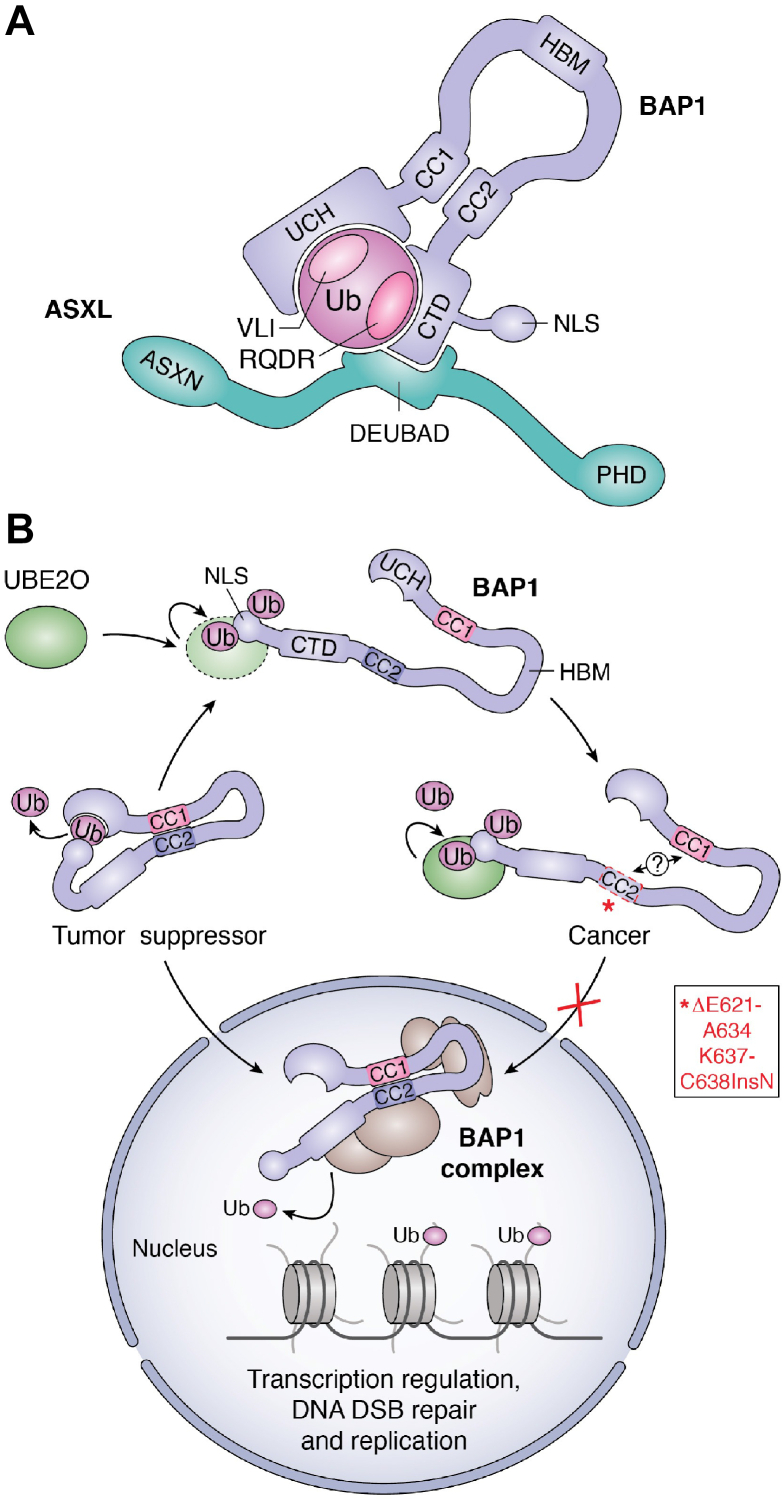
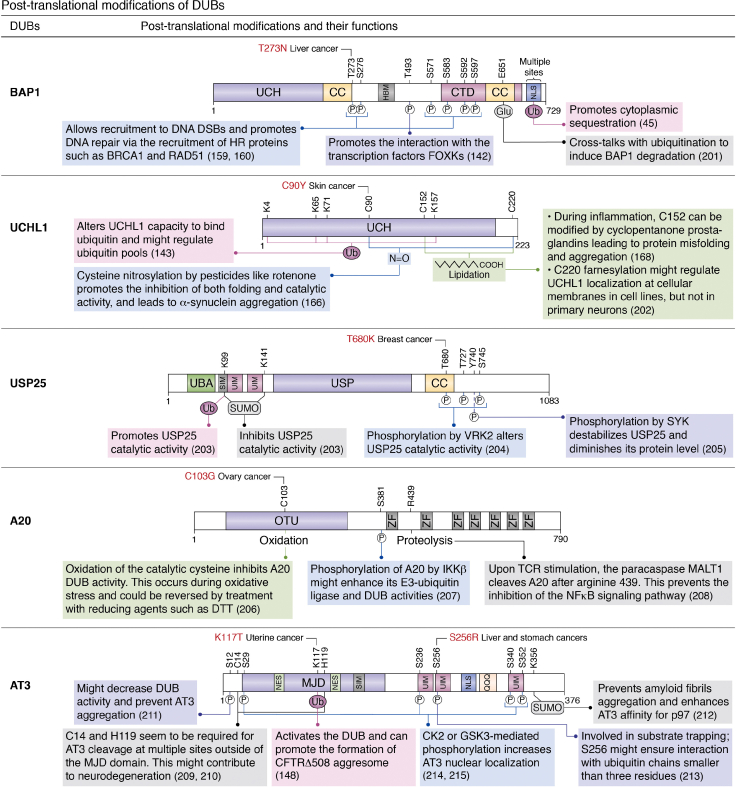
Deubiquitinases (DUBs) are required for the reverse reaction of ubiquitination and act as major regulators of ubiquitin signaling processes. Emerging evidence suggests that these enzymes are regulated at multiple levels in order to ensure proper and timely substrate targeting and to prevent the adverse consequences of promiscuous deubiquitination. The importance of DUB regulation is highlighted by disease-associated mutations that inhibit or activate DUBs, deregulating their ability to coordinate cellular processes. Here, we describe the diverse mechanisms governing protein stability, enzymatic activity, and function of DUBs. In particular, we outline how DUBs are regulated by their protein domains and interacting partners. Intramolecular interactions can promote protein stability of DUBs, influence their subcellular localization, and/or modulate their enzymatic activity. Remarkably, these intramolecular interactions can induce self-deubiquitination to counteract DUB ubiquitination by cognate E3 ubiquitin ligases. In addition to intramolecular interactions, DUBs can also oligomerize and interact with a wide variety of cellular proteins, thereby forming obligate or facultative complexes that regulate their enzymatic activity and function. The importance of signaling and post-translational modifications in the integrated control of DUB function will also be discussed. While several DUBs are described with respect to the multiple layers of their regulation, the tumor suppressor BAP1 will be outlined as a model enzyme whose localization, stability, enzymatic activity, and substrate recognition are highly orchestrated by interacting partners and post-translational modifications.
去泛素化酶(DUBs)是泛素化反应的逆反应所必需的,它们是泛素信号过程的主要调节剂。新出现的证据表明,这些酶在多个水平上受到调节,以确保适当和及时的底物靶向,并防止随机去泛素化的不利后果。疾病相关突变抑制或激活 DUBs,使其协调细胞过程的能力失调,这凸显了 DUB 调节的重要性。在这里,我们描述了控制 DUB 蛋白稳定性、酶活性和功能的多种机制。特别是,我们概述了 DUB 如何受到其蛋白结构域和相互作用伙伴的调节。分子内相互作用可以促进 DUB 的蛋白稳定性,影响其亚细胞定位,并/或调节其酶活性。值得注意的是,这些分子内相互作用可以诱导自身去泛素化,以抵消同源 E3 泛素连接酶对 DUB 的泛素化。除了分子内相互作用外,DUB 还可以寡聚化并与多种细胞蛋白相互作用,从而形成调节其酶活性和功能的必需或可选复合物。信号转导和翻译后修饰在 DUB 功能的综合调控中的重要性也将进行讨论。虽然有几种 DUBs 因其多层次的调节而被描述,但肿瘤抑制因子 BAP1 将被概述为一种模型酶,其定位、稳定性、酶活性和底物识别都受到相互作用伙伴和翻译后修饰的高度协调。