Department of Interdisciplinary Medicine, University of Bari "Aldo Moro", Bari, Italy.
Division of Medical Oncology, Azienda Ospedaliero-Universitaria Consorziale Policlinico di Bari, Bari, Italy.
J Immunother Cancer. 2022 Jun;10(6). doi: 10.1136/jitc-2022-004854.
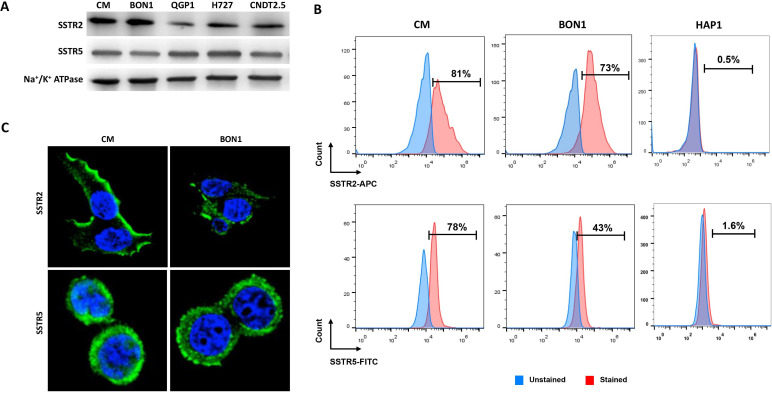
Neuroendocrine tumors (NETs) overexpress somatostatin receptors (SSTRs).
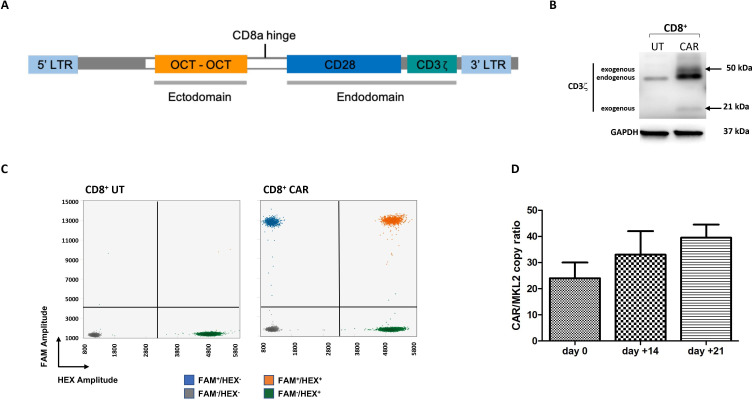
We developed a second-generation, ligand-based, anti-SSTR chimeric antigen receptor (CAR) incorporating the somatostatin analog octreotide in its extracellular moiety.
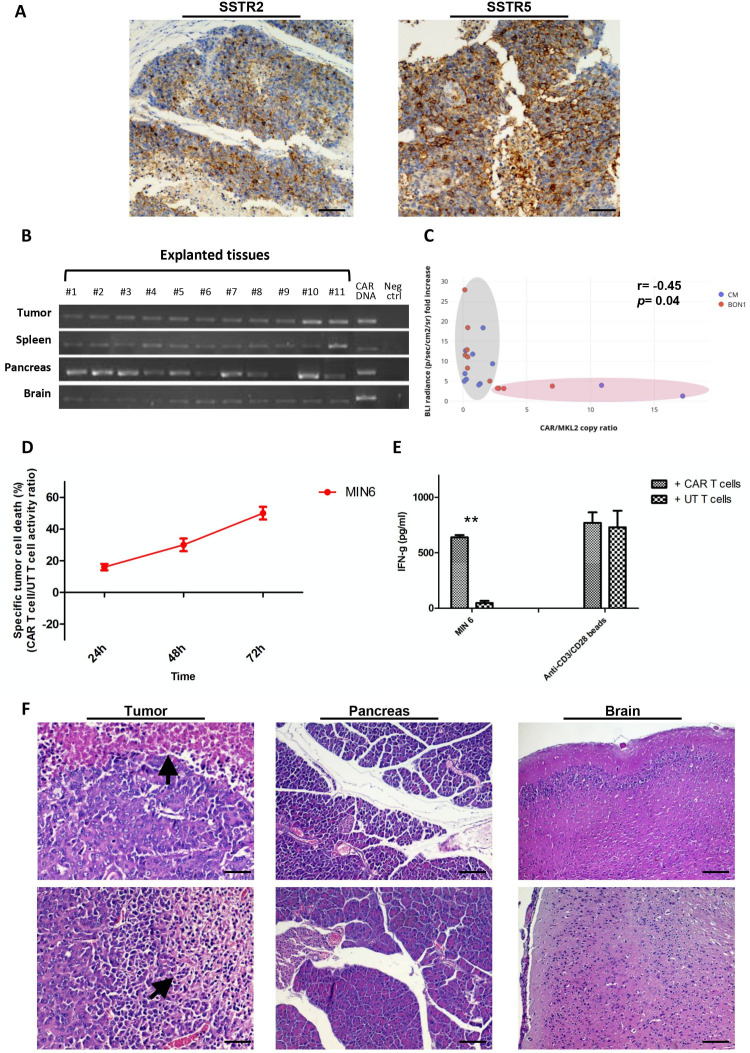
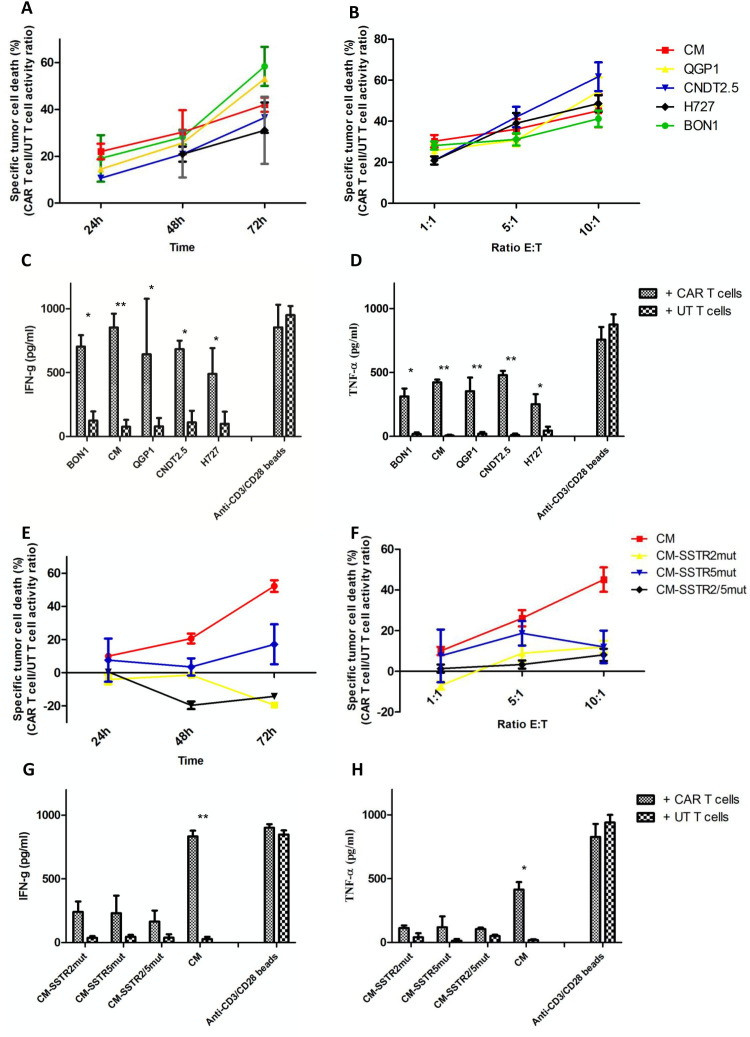
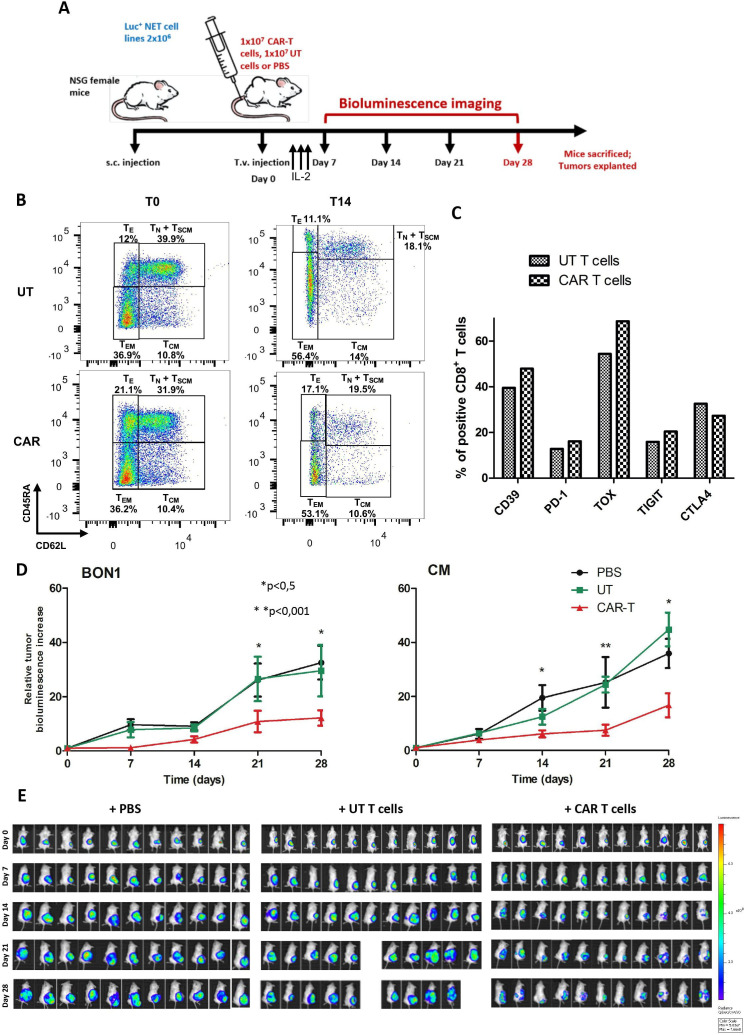
Anti-SSTR CAR T cells exerted antitumor activity against SSTR+NET cell linesin vitro. The killing activity was highly specific, as demonstrated by the lack of CAR T cell reactivity against NET cells engineered to express mutated variants of SSTR2/5 by CRISPR/Cas9. When adoptively transferred in NSG mice, anti-SSTR CAR T cells induced significant antitumor activity against human NET xenografts. Although anti-SSTR CAR T cells could recognize the murine SSTRs as shown by their killing ability against murine NET cells, no obvious deleterious effects on SSTR-expressing organs such as the brain or the pancreas were observed in mice.
Taken together, our results establish anti-SSTR CAR T cells as a potential candidate for early phase clinical investigations in patients with NETs. More broadly, the demonstration that a known peptide drug can direct CAR T cell targeting may streamline the potential utility of multiple peptide motifs and provide a blueprint for therapeutic applications in a variety of cancers.
神经内分泌肿瘤 (NETs) 过度表达生长抑素受体 (SSTRs)。
我们开发了第二代基于配体的抗 SSTR 嵌合抗原受体 (CAR),其细胞外部分包含生长抑素类似物奥曲肽。
抗 SSTR CAR T 细胞在体外对表达 SSTR 的 NET 细胞系表现出抗肿瘤活性。杀伤活性具有高度特异性,这体现在通过 CRISPR/Cas9 工程改造表达 SSTR2/5 突变变体的 NET 细胞时,CAR T 细胞无反应性。当被过继转移到 NSG 小鼠中时,抗 SSTR CAR T 细胞对人 NET 异种移植物诱导了显著的抗肿瘤活性。尽管抗 SSTR CAR T 细胞能够识别鼠 SSTRs,如它们对鼠 NET 细胞的杀伤能力所示,但在小鼠中未观察到对表达 SSTR 的器官(如大脑或胰腺)的明显有害影响。
综上所述,我们的结果确立了抗 SSTR CAR T 细胞作为 NET 患者早期临床研究的潜在候选药物。更广泛地说,证明已知肽药物可以指导 CAR T 细胞靶向可能简化多种肽基序的潜在用途,并为各种癌症的治疗应用提供蓝图。