Department of Psychology, Norwegian University of Science and Technology, Trondheim.
J Nerv Ment Dis. 2022 Dec 1;210(12):943-950. doi: 10.1097/NMD.0000000000001557.
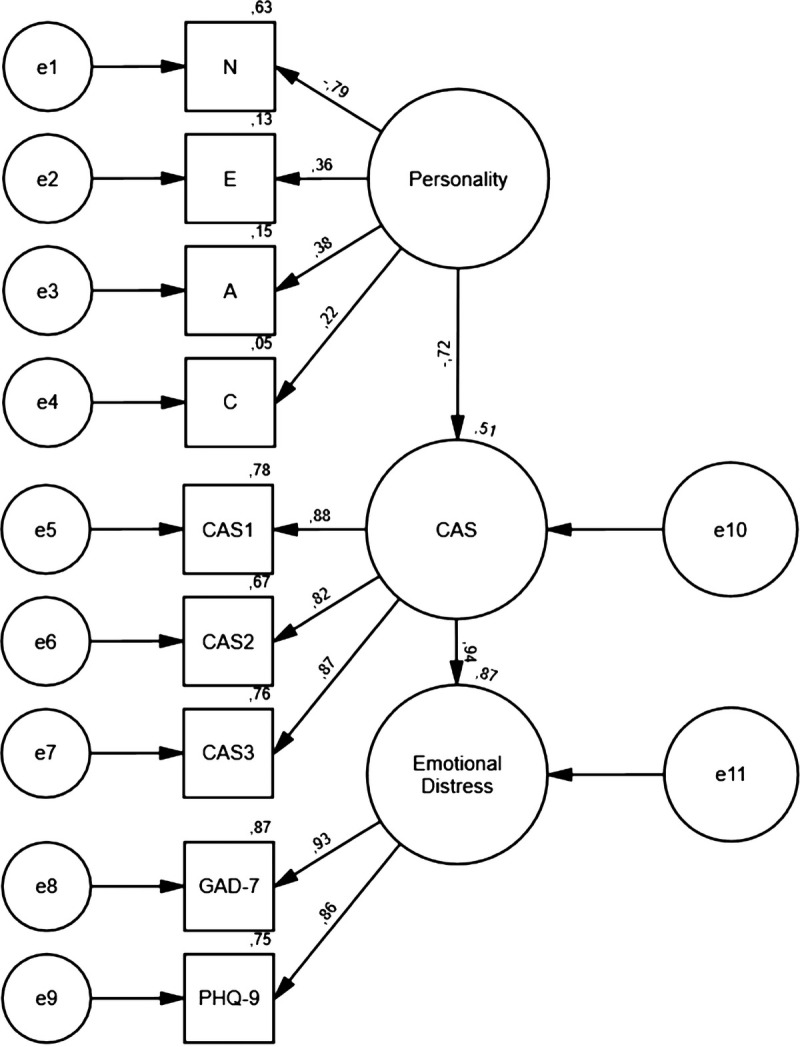
To enhance formulation and interventions for emotional distress symptoms, research should aim to identify factors that contribute to distress and disorder. One way to formulate emotional distress symptoms is to view them as state manifestations of underlying personality traits. However, the metacognitive model suggests that emotional distress is maintained by metacognitive strategies directed by underlying metacognitive beliefs. The aim of the present study was therefore to evaluate the role of these factors as predictors of anxiety and depression symptoms in a cross-sectional sample of 4936 participants collected during the COVID-19 pandemic. Personality traits (especially neuroticism) were linked to anxiety and depression, but metacognitive beliefs and strategies accounted for additional variance. Among the predictors, metacognitive strategies accounted for the most variance in symptoms. Furthermore, we evaluated two statistical models based on personality traits versus metacognitions and found that the latter provided the best fit. Thus, these findings indicate that emotional distress symptoms are maintained by metacognitive strategies that are better accounted for by metacognitions compared with personality traits. Theoretical and clinical implications of these findings are discussed.
为了增强情绪困扰症状的配方和干预措施,研究应旨在确定导致困扰和障碍的因素。一种表述情绪困扰症状的方法是将其视为潜在人格特质的状态表现。然而,元认知模型表明,情绪困扰是由指向潜在元认知信念的元认知策略维持的。因此,本研究的目的是评估这些因素在 COVID-19 大流行期间收集的 4936 名参与者的横断面样本中作为焦虑和抑郁症状预测因子的作用。人格特质(尤其是神经质)与焦虑和抑郁有关,但元认知信念和策略解释了额外的差异。在预测因子中,元认知策略解释了症状的最大差异。此外,我们评估了基于人格特质与元认知的两个统计模型,发现后者提供了最佳拟合。因此,这些发现表明,情绪困扰症状是由元认知策略维持的,与人格特质相比,元认知策略更好地解释了情绪困扰症状。讨论了这些发现的理论和临床意义。