Mesika Aviv, Nadav Golan, Shochat Chen, Kalfon Limor, Jackson Karen, Khalaileh Ayat, Karasik David, Falik-Zaccai Tzipora C
Institute of Human Genetics, Galilee Medical Center, Nahariya, Israel.
Azrieli Faculty of Medicine, Bar Ilan University, Safed, Israel.
Front Cell Dev Biol. 2022 Jun 13;10:902969. doi: 10.3389/fcell.2022.902969. eCollection 2022.
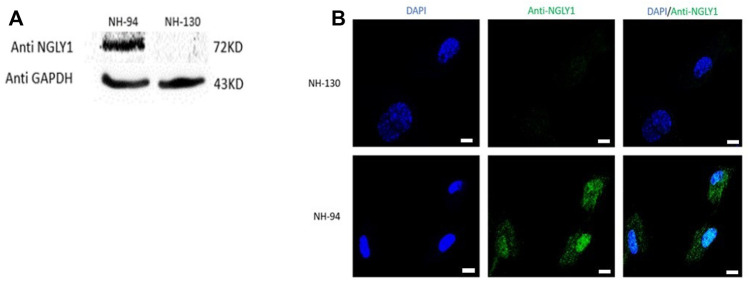
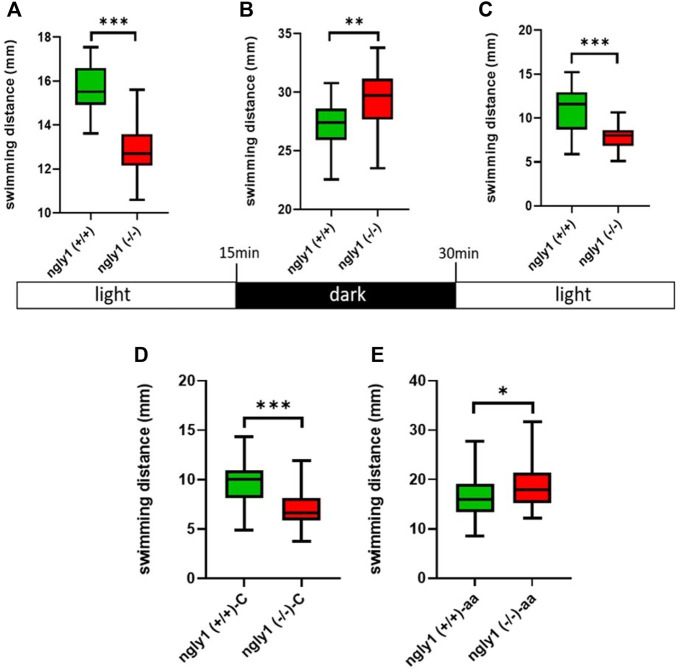
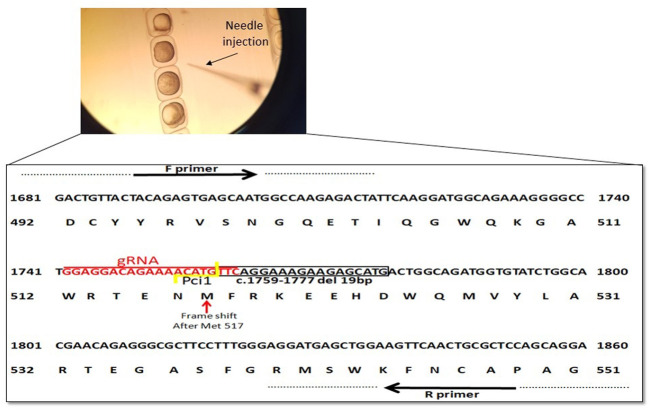
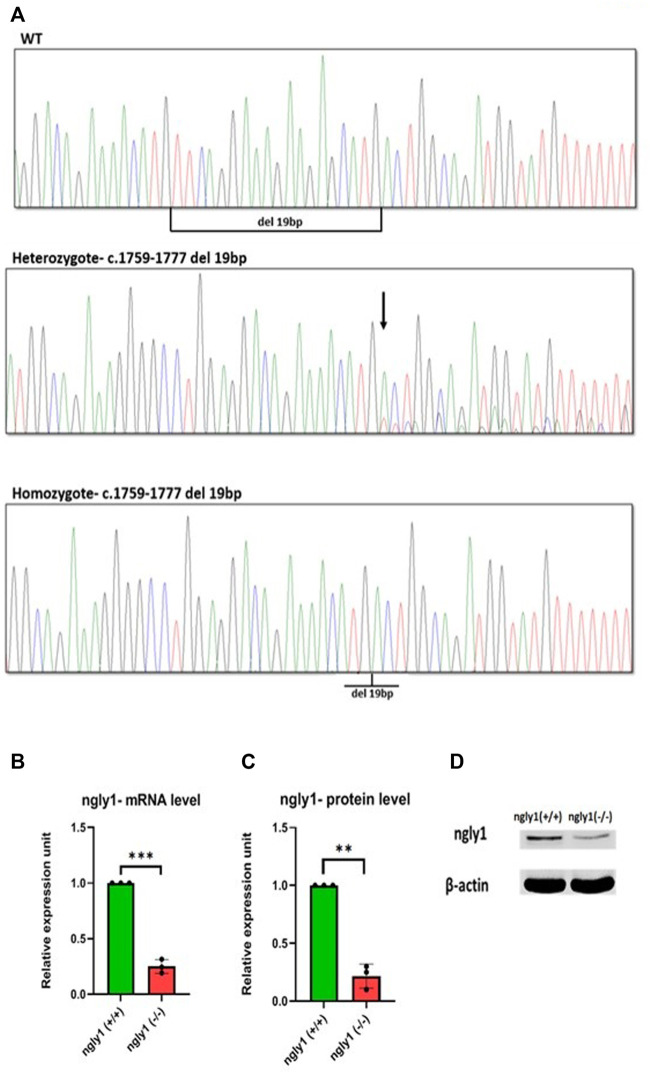
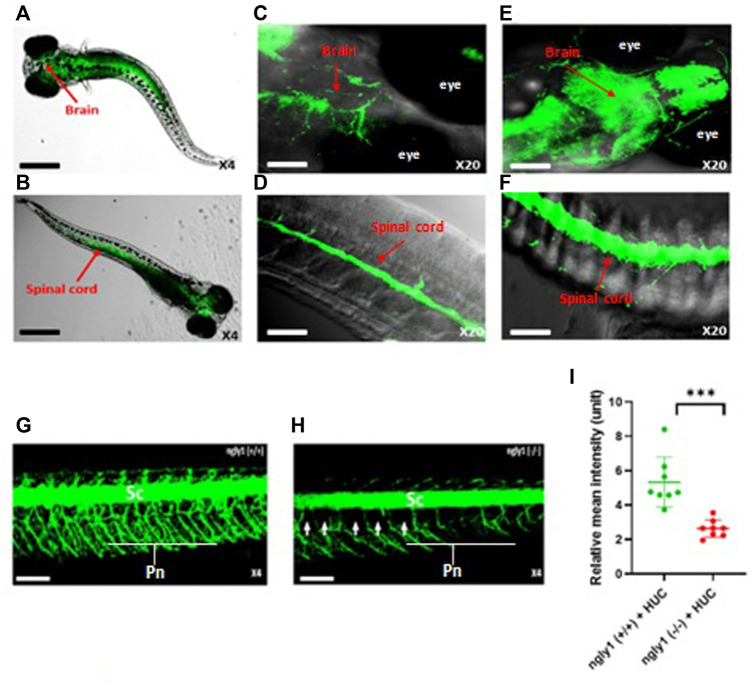
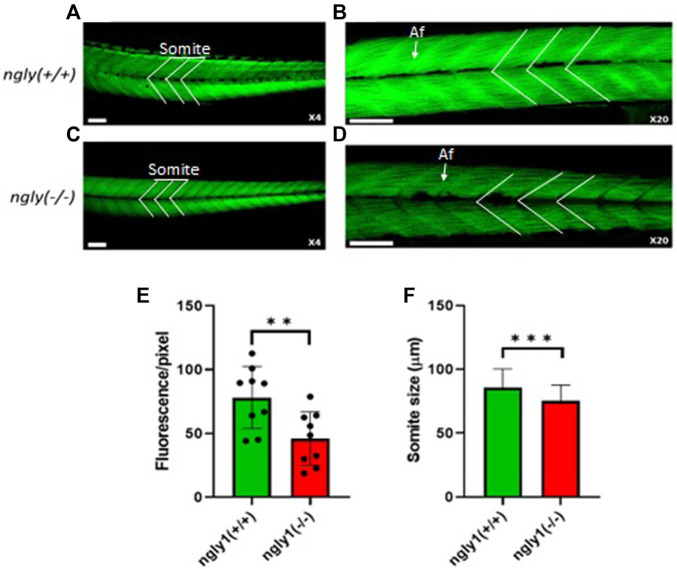
NGLY1 is an enigmatic enzyme with multiple functions across a wide range of species. In humans, pathogenic genetic variants in are linked to a variable phenotype of global neurological dysfunction, abnormal tear production, and liver disease presenting the rare autosomal recessive disorder N-glycanase deficiency. We have ascertained four NGLY1 deficiency patients who were found to carry a homozygous nonsense variant (c.1294G > T, p.Glu432*) in . We created an deficiency zebrafish model and studied the nervous and musculoskeletal (MSK) systems to further characterize the phenotypes and pathophysiology of the disease. Nervous system morphology analysis has shown significant loss of axon fibers in the peripheral nervous system. In addition, we found muscle structure abnormality of the mutant fish. Locomotion behavior analysis has shown hypersensitivity of the larval fish during stress conditions. This first reported NGLY1 deficiency zebrafish model might add to our understanding of NGLY1 role in the development of the nervous and MSK systems. Moreover, it might elucidate the natural history of the disease and be used as a platform for the development of novel therapies.
NGLY1是一种神秘的酶,在广泛的物种中具有多种功能。在人类中,其致病基因变异与全球神经功能障碍、泪液分泌异常和肝脏疾病的可变表型相关,呈现出罕见的常染色体隐性疾病N-聚糖酶缺乏症。我们确定了四名NGLY1缺乏症患者,发现他们在该基因中携带纯合无义变异(c.1294G>T,p.Glu432*)。我们创建了一个NGLY1缺乏的斑马鱼模型,并研究了神经和肌肉骨骼(MSK)系统,以进一步表征该疾病的表型和病理生理学。神经系统形态学分析显示,外周神经系统中的轴突纤维显著减少。此外,我们发现突变鱼的肌肉结构异常。运动行为分析表明,幼体斑马鱼在应激条件下表现出超敏反应。这个首次报道的NGLY1缺乏斑马鱼模型可能会增进我们对NGLY1在神经和MSK系统发育中作用的理解。此外,它可能阐明该疾病的自然史,并用作开发新疗法的平台。