Takeda-CiRA Joint Program (T-CiRA).
T-CiRA Discovery, Research, Takeda Pharmaceutical Co., Ltd.
Proc Jpn Acad Ser B Phys Biol Sci. 2021;97(2):89-102. doi: 10.2183/pjab.97.005.
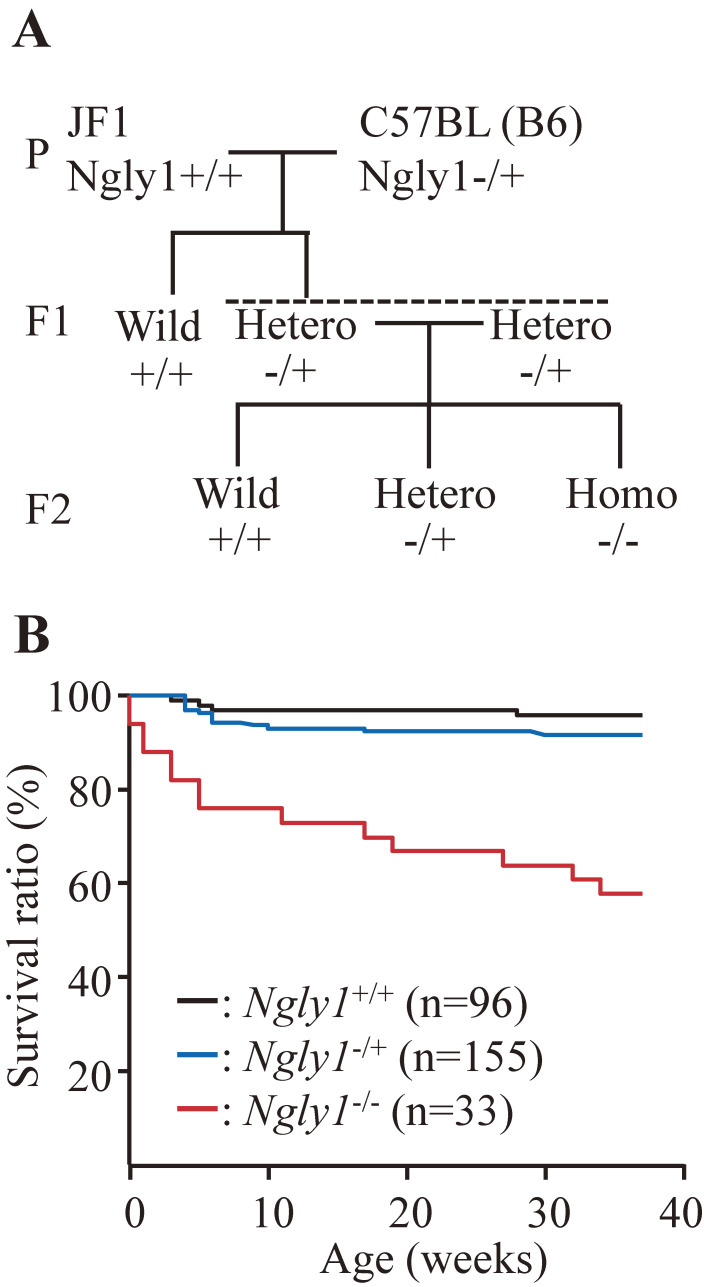
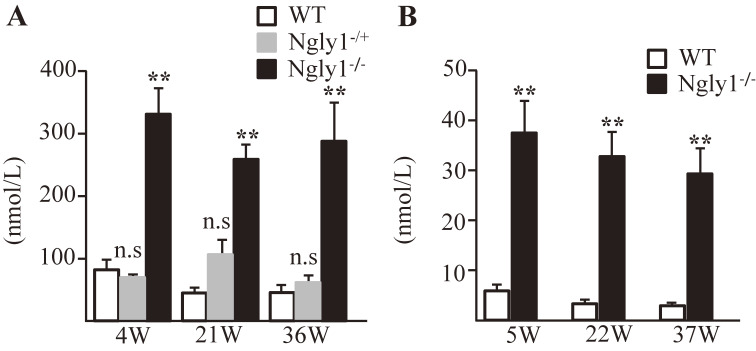
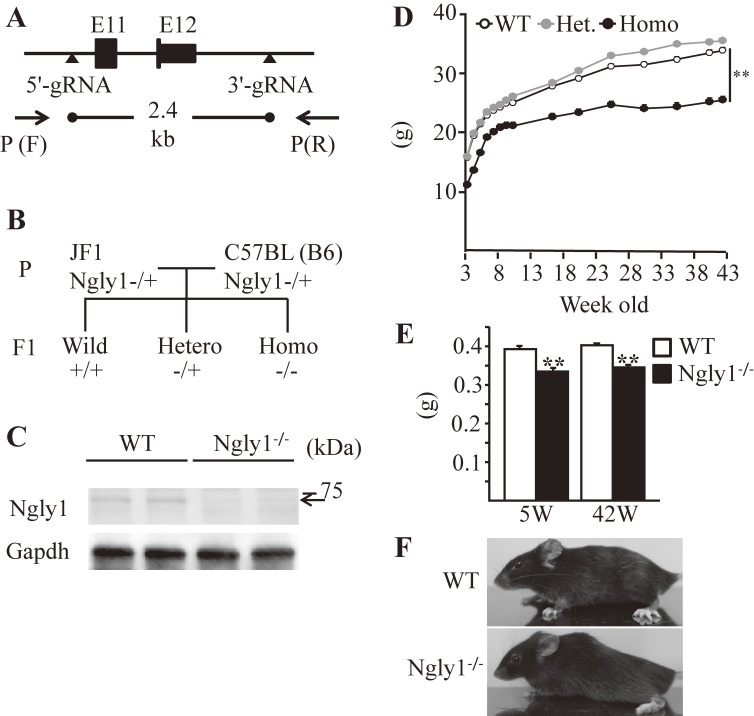
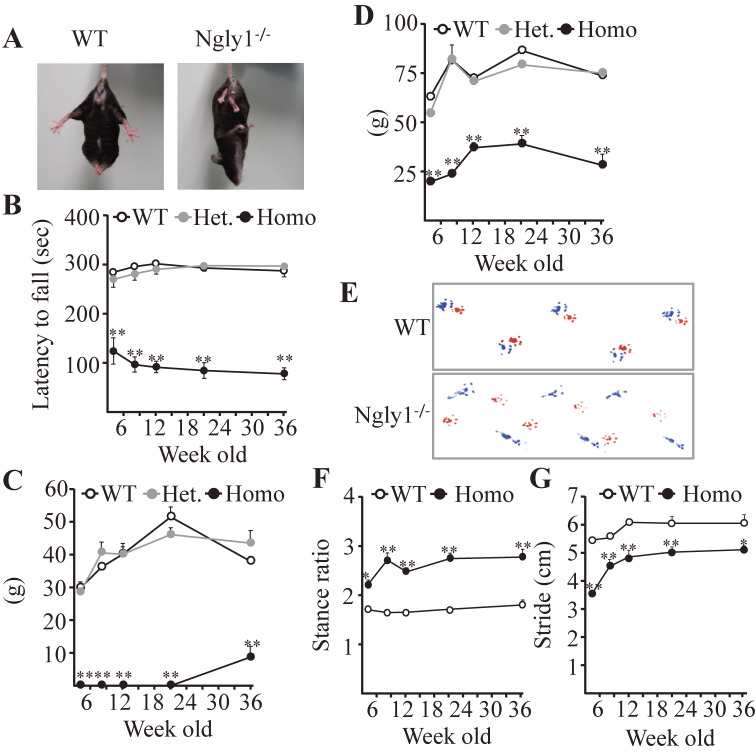
N-Glycanase 1 (NGLY1) deficiency is a congenital disorder caused by mutations in the NGLY1 gene. Because systemic Ngly1 mice with a C57BL/6 (B6) background are embryonically lethal, studies on the mechanism of NGLY1 deficiency using mice have been problematic. In this study, B6-Ngly1 mice were crossed with Japanese wild mice-originated Japanese fancy mouse 1 (JF1) mice to produce viable F Ngly1 mice from (JF1×B6)F Ngly1 mice. Systemic Ngly1 mice with a JF1 mouse background were also embryonically lethal. Hybrid F1 Ngly1 (JF1/B6F1) mice, however, showed developmental delay and motor dysfunction, similar to that in human patients. JF1/B6F1 Ngly1 mice showed increased levels of plasma and urinary aspartylglycosamine, a potential biomarker for NGLY1 deficiency. JF1/B6F1 Ngly1 mice are a useful isogenic animal model for the preclinical testing of therapeutic options and understanding the precise pathogenic mechanisms responsible for NGLY1 deficiency.
N-糖基化酶 1(NGLY1)缺乏症是一种由 NGLY1 基因突变引起的先天性疾病。由于 C57BL/6(B6)背景的全身性 Ngly1 小鼠在胚胎期致死,因此使用小鼠研究 NGLY1 缺乏症的机制一直存在问题。在这项研究中,B6-Ngly1 小鼠与源自日本野生鼠的日本奇特鼠 1(JF1)小鼠杂交,从(JF1×B6)F Ngly1 小鼠中产生了有活力的 F Ngly1 小鼠。具有 JF1 小鼠背景的全身性 Ngly1 小鼠在胚胎期也致死。然而,杂合 F1 Ngly1(JF1/B6F1)小鼠表现出发育迟缓和运动功能障碍,类似于人类患者。JF1/B6F1 Ngly1 小鼠的血浆和尿液中天冬氨酰糖胺水平升高,天冬氨酰糖胺是 NGLY1 缺乏症的潜在生物标志物。JF1/B6F1 Ngly1 小鼠是一种有用的同基因动物模型,可用于治疗选择的临床前测试,并有助于理解导致 NGLY1 缺乏症的确切致病机制。