Department of Cell Biology, Physiology, and Immunology, Animal Physiology Unit, Faculty of Biosciences, Universitat Autònoma de Barcelona, Barcelona, Spain.
Institut de Neurociències, Universitat Autònoma de Barcelona, Barcelona, Spain.
Glia. 2022 Nov;70(11):2032-2044. doi: 10.1002/glia.24234. Epub 2022 Jun 30.
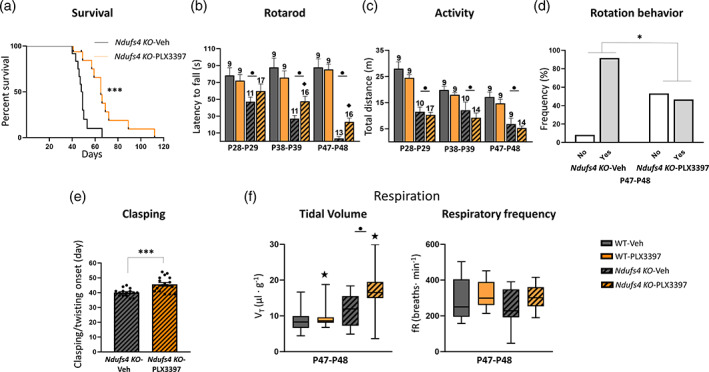
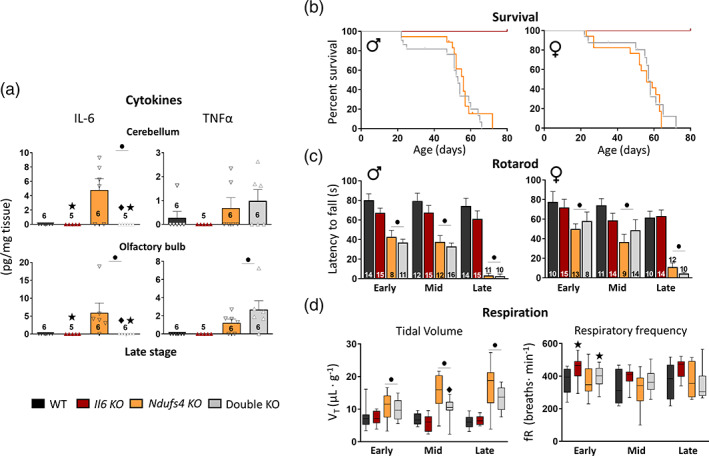
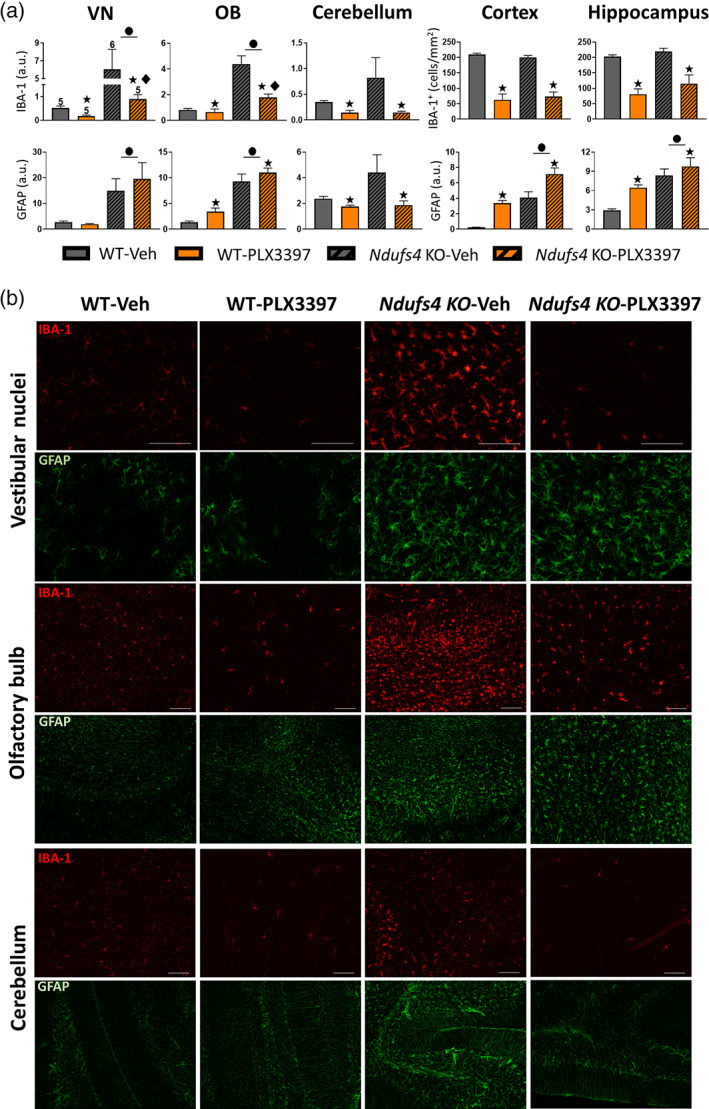
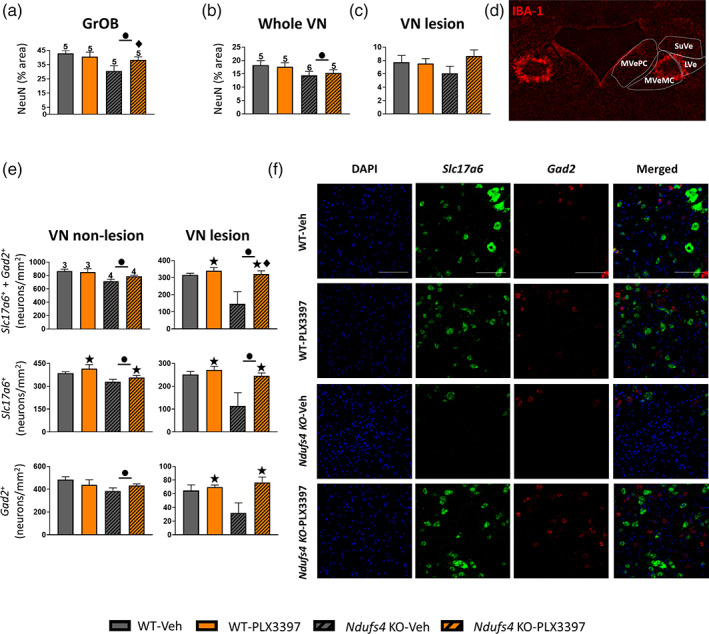
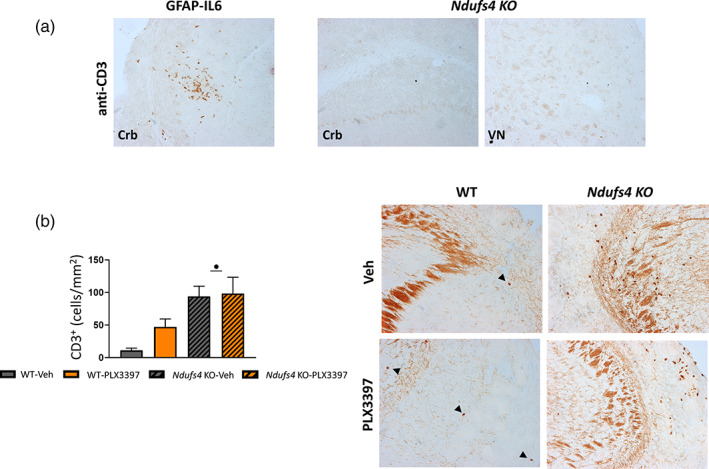
Leigh syndrome is a mitochondrial disease characterized by neurodegeneration, neuroinflammation, and early death. Mice lacking NDUFS4, a mitochondrial complex I subunit (Ndufs4 KO mice), have been established as a good animal model for studying human pathology associated with Leigh syndrome. As the disease progresses, there is an increase in neurodegeneration and neuroinflammation, thereby leading to deteriorating neurological symptoms, including motor deficits, breathing alterations, and eventually, death of the animal. However, despite the magnitude of neuroinflammation associated with brain lesions, the role of neuroinflammatory pathways and their main cellular components have not been addressed directly as relevant players in the disease pathology. Here, we investigate the role of microglial cells, the main immune cells of the CNS, in Leigh-like syndrome pathology, by pharmacologically depleting them using the colony-stimulating factor 1 receptor antagonist PLX3397. Microglial depletion extended lifespan and delayed motor symptoms in Ndufs4 KO mice, likely by preventing neuronal loss. Next, we investigated the role of the major cytokine interleukin-6 (IL-6) in the disease progression. IL-6 deficiency partially rescued breathing abnormalities and modulated gliosis but did not extend the lifespan or rescue motor decline in Ndufs4 KO mice. The present results show that microglial accumulation is pathogenic, in a process independent of IL-6, and hints toward a contributing role of neuroinflammation in the disease of Ndufs4 KO mice and potentially in patients with Leigh syndrome.
Leigh 综合征是一种线粒体疾病,其特征为神经退行性变、神经炎症和早逝。缺乏线粒体复合物 I 亚基(Ndufs4 KO 小鼠)的小鼠已被确立为研究与 Leigh 综合征相关的人类病理学的良好动物模型。随着疾病的进展,神经退行性变和神经炎症增加,从而导致神经症状恶化,包括运动缺陷、呼吸改变,最终导致动物死亡。然而,尽管与脑损伤相关的神经炎症程度很大,但神经炎症途径及其主要细胞成分作为疾病病理学中的相关参与者的作用尚未直接解决。在这里,我们通过使用集落刺激因子 1 受体拮抗剂 PLX3397 药理学耗尽小胶质细胞来研究小胶质细胞,即中枢神经系统的主要免疫细胞,在 Leigh 样综合征病理学中的作用。小胶质细胞耗竭延长了 Ndufs4 KO 小鼠的寿命并延迟了运动症状,可能是通过防止神经元丢失。接下来,我们研究了主要细胞因子白细胞介素 6 (IL-6) 在疾病进展中的作用。IL-6 缺乏部分挽救了呼吸异常并调节了神经胶质增生,但并未延长 Ndufs4 KO 小鼠的寿命或挽救运动能力下降。目前的结果表明,小胶质细胞的积累是致病的,这一过程与 IL-6 无关,并暗示神经炎症在 Ndufs4 KO 小鼠疾病以及潜在的 Leigh 综合征患者中起作用。