Laboratory of Hepatology, Department of Chronic Diseases, Metabolism and Ageing, KU Leuven, Leuven, 3000, Belgium; Metabolomics Expertise Center, Center for Cancer Biology, CCB-VIB, VIB, Leuven, 3000, Belgium.
Laboratory of Hepatology, Department of Chronic Diseases, Metabolism and Ageing, KU Leuven, Leuven, 3000, Belgium; Metabolomics Expertise Center, Center for Cancer Biology, CCB-VIB, VIB, Leuven, 3000, Belgium; Clinical Department of Laboratory Medicine, University Hospitals Leuven, Leuven, 3000, Belgium.
Mol Metab. 2022 Sep;63:101537. doi: 10.1016/j.molmet.2022.101537. Epub 2022 Jun 27.
Primary mitochondrial diseases (PMD) are a large, heterogeneous group of genetic disorders affecting mitochondrial function, mostly by disrupting the oxidative phosphorylation (OXPHOS) system. Understanding the cellular metabolic re-wiring occurring in PMD is crucial for the development of novel diagnostic tools and treatments, as PMD are often complex to diagnose and most of them currently have no effective therapy.
To characterize the cellular metabolic consequences of OXPHOS dysfunction and based on the metabolic signature, to design new diagnostic and therapeutic strategies.
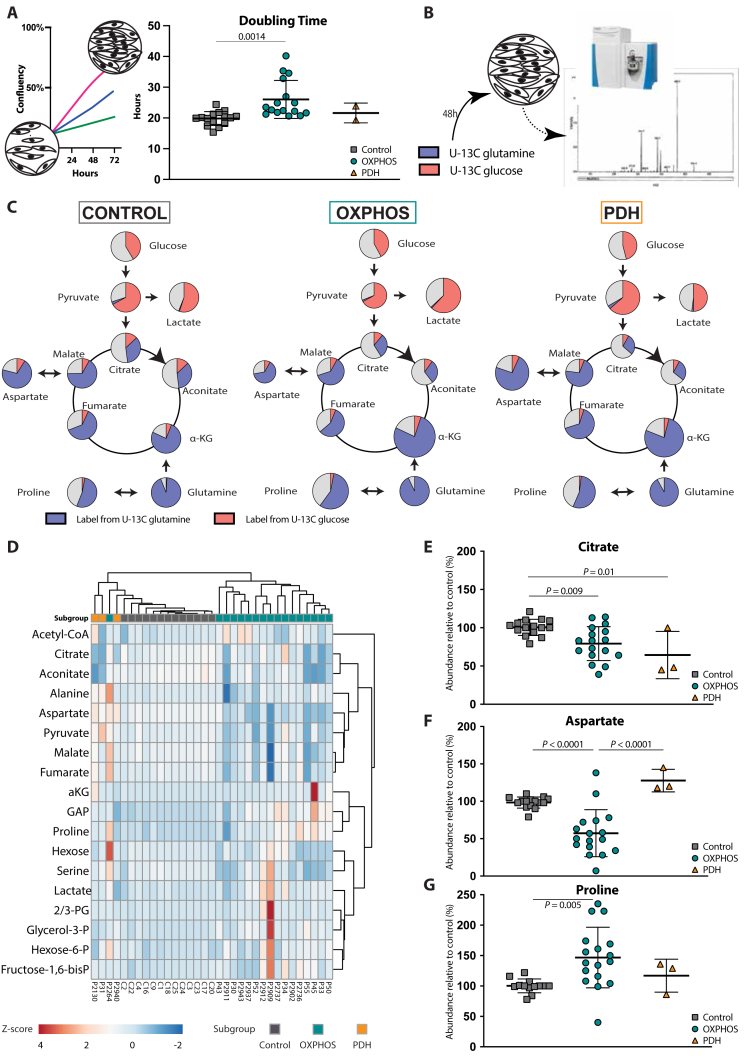
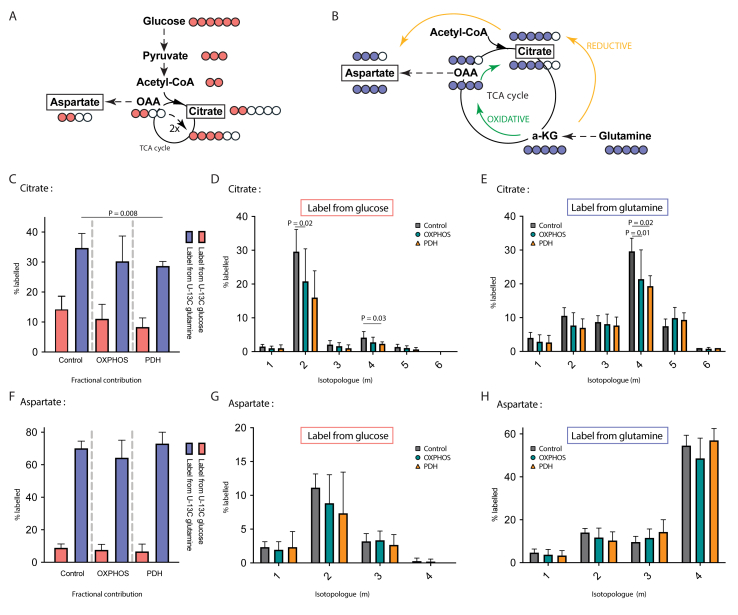
In vitro assays were performed in skin-derived fibroblasts obtained from patients with diverse PMD and validated in pharmacological models of OXPHOS dysfunction. Proliferation was assessed using the Incucyte technology. Steady-state glucose and glutamine tracing studies were performed with LC-MS quantification of cellular metabolites. The therapeutic potential of nutritional supplements was evaluated by assessing their effect on proliferation and on the metabolomics profile. Successful therapies were then tested in a in vivo lethal rotenone model in zebrafish.
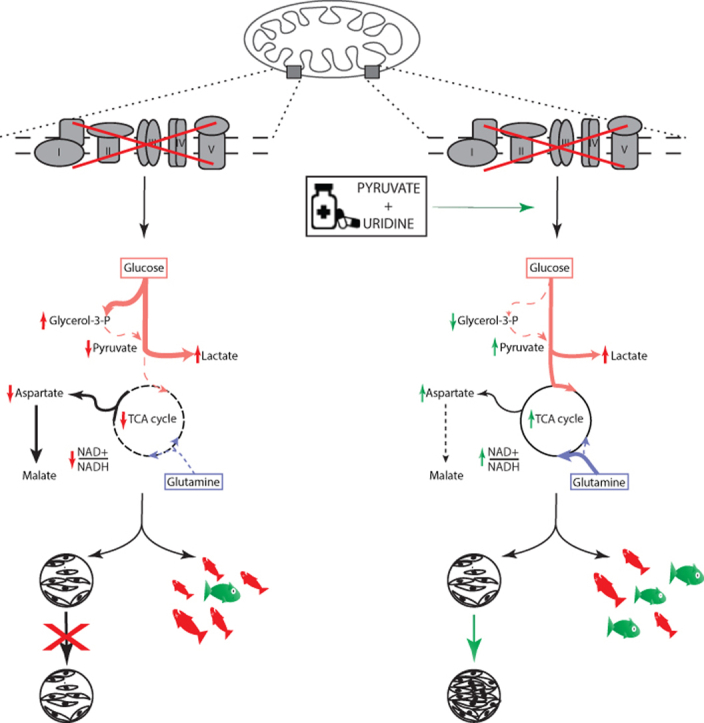
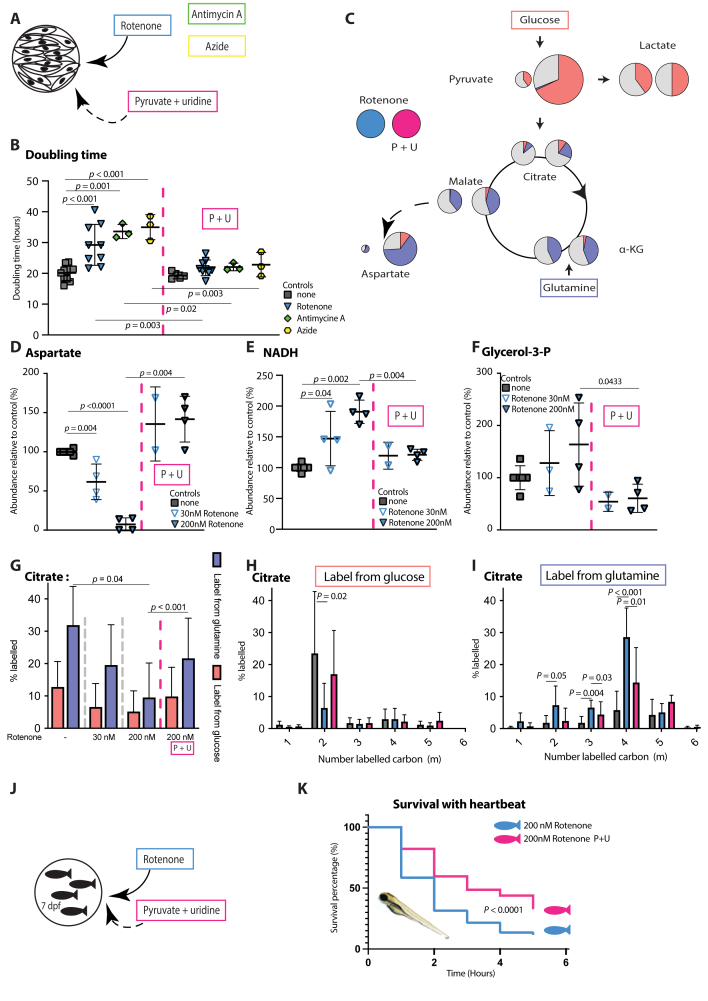
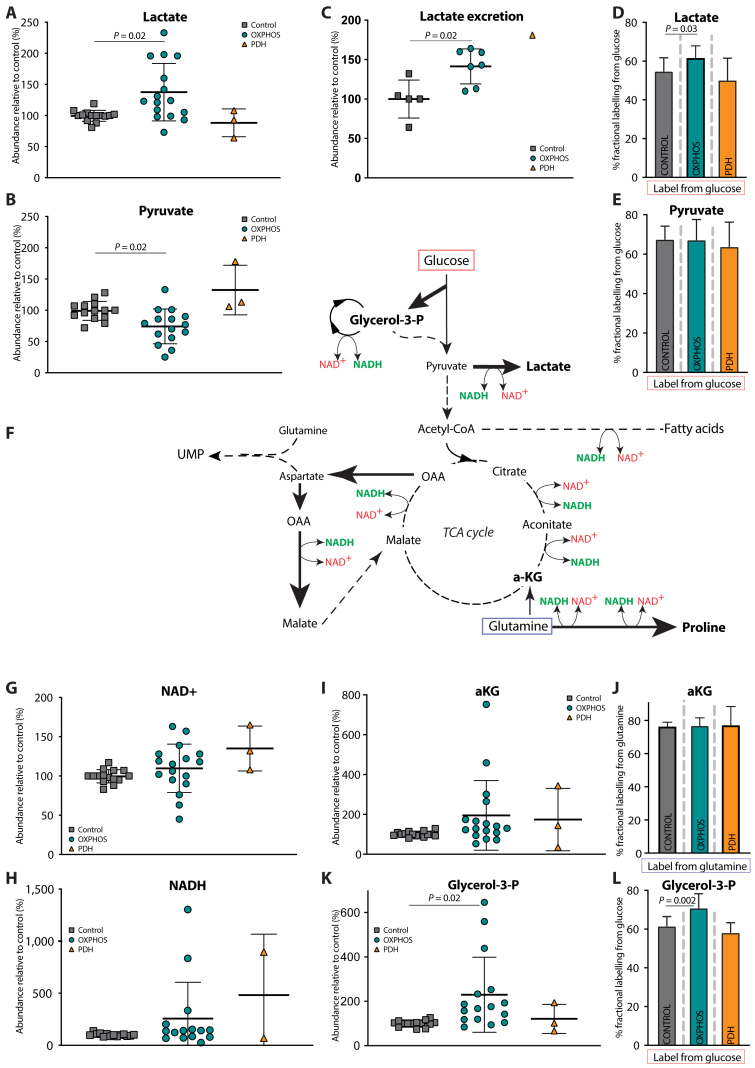
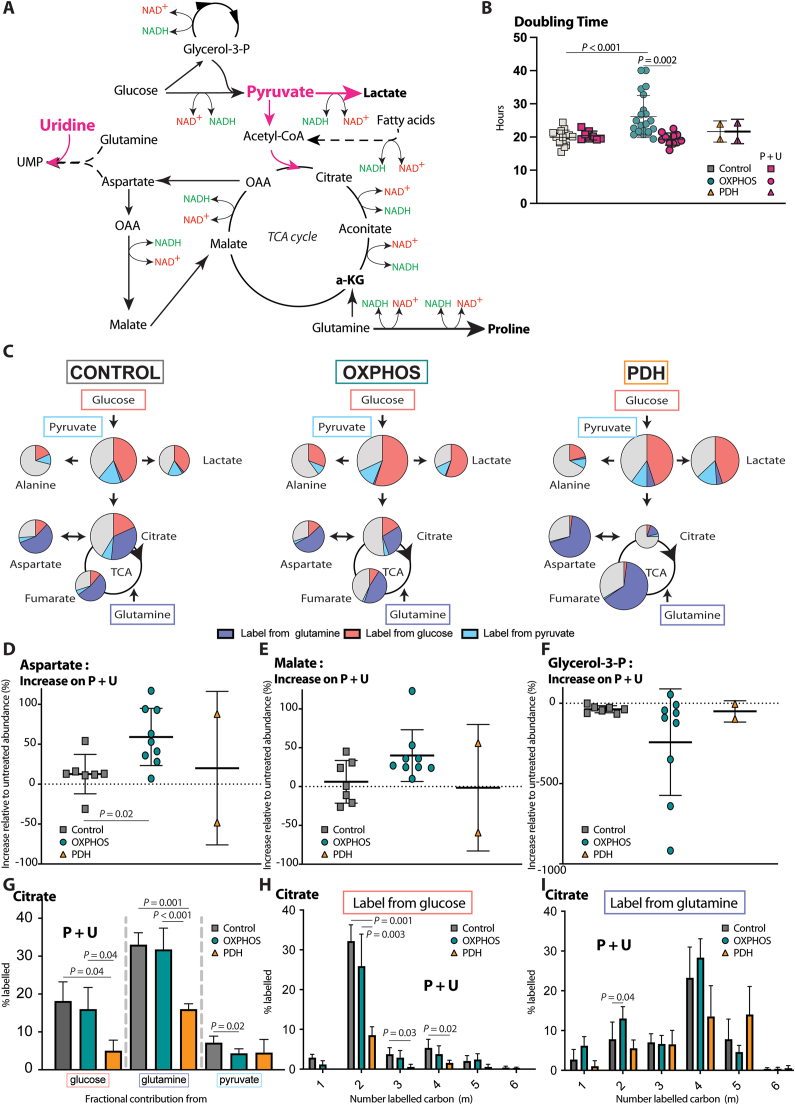
OXPHOS dysfunction has a unique metabolic signature linked to an NAD+/NADH imbalance including depletion of TCA intermediates and aspartate, and increased levels of glycerol-3-phosphate. Supplementation with pyruvate and uridine fully rescues this altered metabolic profile and the subsequent proliferation deficit. Additionally, in zebrafish, the same nutritional treatment increases the survival after rotenone exposure.
Our findings reinforce the importance of the NAD+/NADH imbalance following OXPHOS dysfunction in PMD and open the door to new diagnostic and therapeutic tools for PMD.
原发性线粒体疾病(PMD)是一组影响线粒体功能的遗传疾病,它们具有很大的异质性,主要通过破坏氧化磷酸化(OXPHOS)系统来实现。了解 PMD 中发生的细胞代谢重排对于开发新的诊断工具和治疗方法至关重要,因为 PMD 通常难以诊断,而且目前大多数疾病都没有有效的治疗方法。
阐明 OXPHOS 功能障碍导致的细胞代谢后果,并基于代谢特征,设计新的诊断和治疗策略。
在从患有不同 PMD 的患者中获得的皮肤衍生成纤维细胞中进行体外测定,并在 OXPHOS 功能障碍的药理学模型中进行验证。使用 Incucyte 技术评估增殖情况。通过 LC-MS 定量细胞代谢物进行稳态葡萄糖和谷氨酰胺追踪研究。通过评估营养补充剂对增殖和代谢组学特征的影响来评估其治疗潜力。然后,在斑马鱼中的一种致死性鱼藤酮模型中测试成功的治疗方法。
OXPHOS 功能障碍具有独特的代谢特征,与 NAD+/NADH 失衡有关,包括 TCA 中间产物和天冬氨酸的消耗,以及甘油-3-磷酸水平的增加。补充丙酮酸和尿苷可完全挽救这种代谢特征的改变和随后的增殖缺陷。此外,在斑马鱼中,相同的营养处理可增加鱼藤酮暴露后的存活率。
我们的研究结果强调了 OXPHOS 功能障碍后 NAD+/NADH 失衡在 PMD 中的重要性,并为 PMD 提供了新的诊断和治疗工具。