Center for Conservation Genomics, Smithsonian's National Zoo and Conservation Biology Institute, Washington, DC, USA.
Center for Species Survival, Smithsonian's National Zoo and Conservation Biology Institute, Washington, DC, USA.
Sci Rep. 2022 Jun 30;12(1):11017. doi: 10.1038/s41598-022-15091-z.
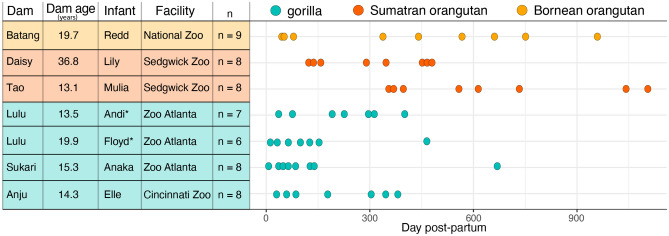
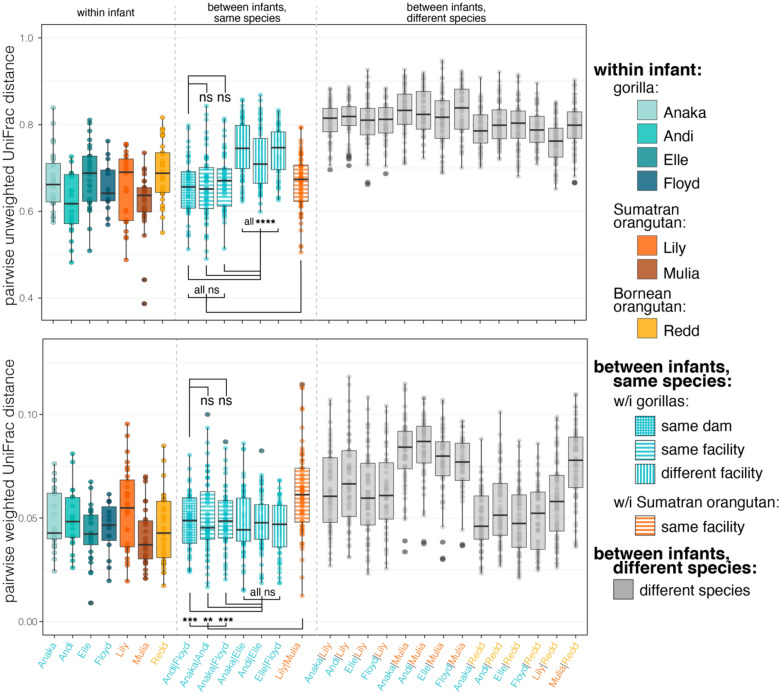
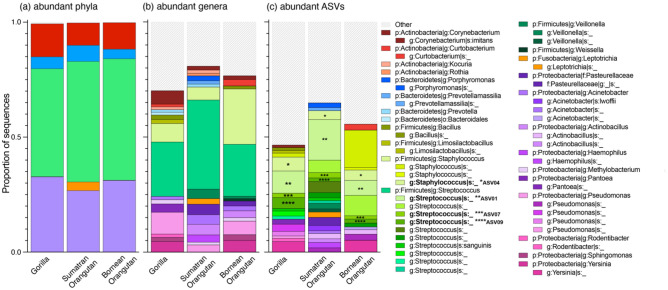
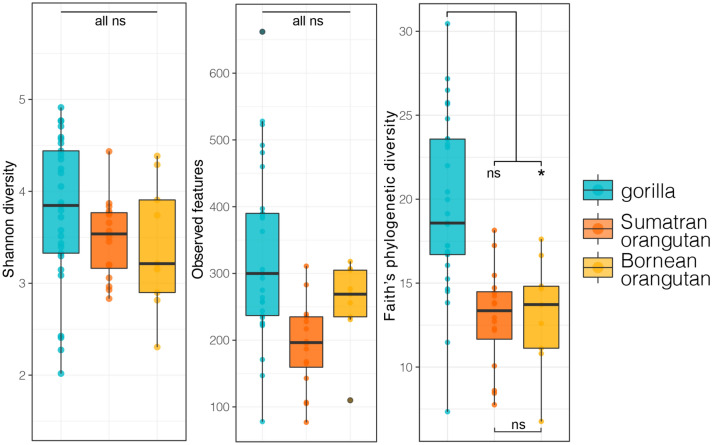
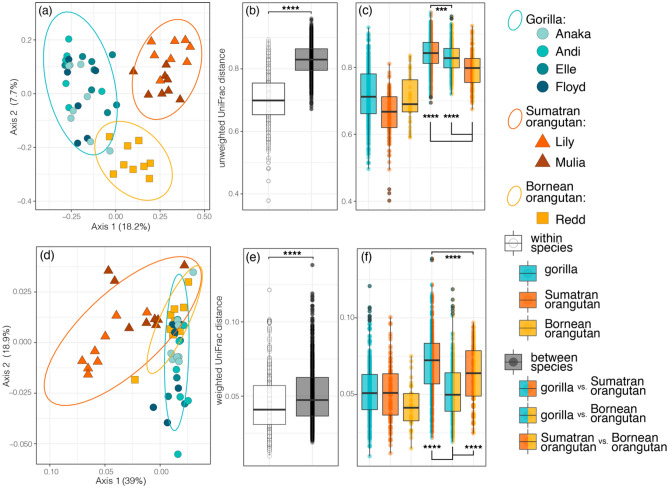
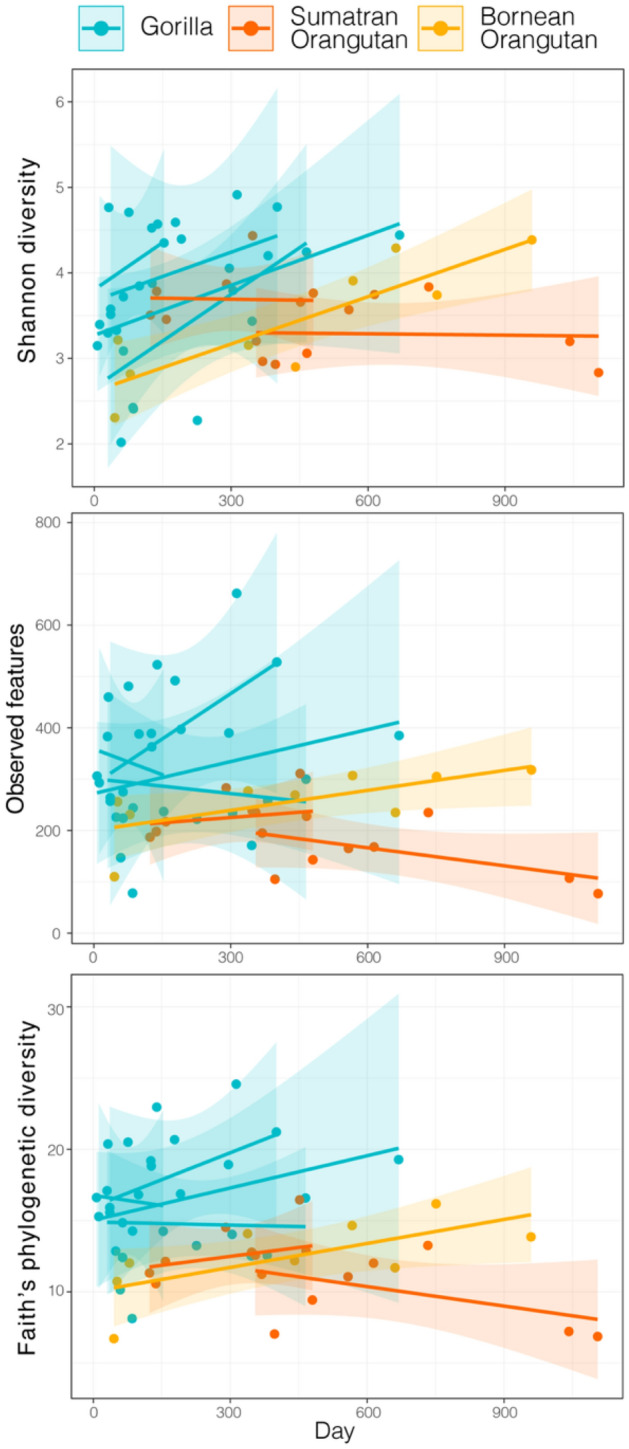
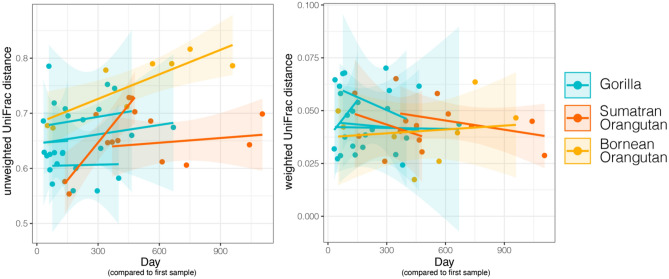
In mammalian neonates, milk consumption provides nutrients, growth factors, immune molecules, and microbes. Milk microbiomes are increasingly recognized for their roles in seeding infant gut microbiomes and priming immune development. However, milk microbiome variation within and among individuals remains under investigation. We used 16S rRNA gene sequencing to investigate factors shaping milk microbiomes in three captive great ape species: Gorilla gorilla gorilla (individuals, N = 4; samples, n = 29), Pongo abelii (N = 2; n = 16), and Pongo pygmaeus (N = 1; n = 9). We demonstrate variation among host species, over lactation, and between housing facilities. In phylogenetic community composition, milk microbiomes were distinct among the three ape species. We found only a few shared, abundant bacterial taxa and suggest that they likely serve functional roles. The diversity and community composition of milk microbiomes showed gradual changes over time in gorillas and the Bornean orangutan, which was detectable with our comprehensive sampling over lactation stages (> 300-day span). In gorillas, milk microbiomes differed between housing facilities, but were similar between dams within a facility. These results support the strong influence of evolutionary history in shaping milk microbiomes, but also indicate that more proximate cues from mother, offspring, and the environment affect the distribution of rarer microbial taxa.
在哺乳动物新生儿中,牛奶的摄入提供了营养物质、生长因子、免疫分子和微生物。牛奶微生物组在为婴儿肠道微生物组播种和启动免疫发育方面的作用越来越受到关注。然而,个体内和个体间牛奶微生物组的变化仍在研究之中。我们使用 16S rRNA 基因测序来研究三种圈养的大型猿类的牛奶微生物组形成的因素:大猩猩(个体,N=4;样本,n=29)、婆罗洲猩猩(N=2;n=16)和 pyg 倭黑猩猩(N=1;n=9)。我们展示了宿主物种之间、泌乳期间和不同饲养设施之间的差异。在系统发育群落组成方面,三种猿类的牛奶微生物组存在差异。我们只发现了少数共同的、丰富的细菌类群,并认为它们可能具有功能作用。牛奶微生物组的多样性和群落组成在大猩猩和婆罗洲猩猩中随着时间的推移逐渐发生变化,这在我们对泌乳阶段(>300 天)的全面采样中是可以检测到的。在大猩猩中,饲养设施之间的牛奶微生物组存在差异,但同一设施内的母兽之间的牛奶微生物组相似。这些结果支持了进化历史在塑造牛奶微生物组方面的强大影响,但也表明来自母亲、后代和环境的更接近的线索影响了稀有微生物类群的分布。