State Key Laboratory of Environmental Criteria and Risk Assessment, Chinese Research Academy of Environmental Sciences, 8 Dayangfang, Beijing, 100012, China.
Lanzhou University, Lanzhou, 730000, China.
Sci Rep. 2022 Jun 30;12(1):11113. doi: 10.1038/s41598-022-15488-w.
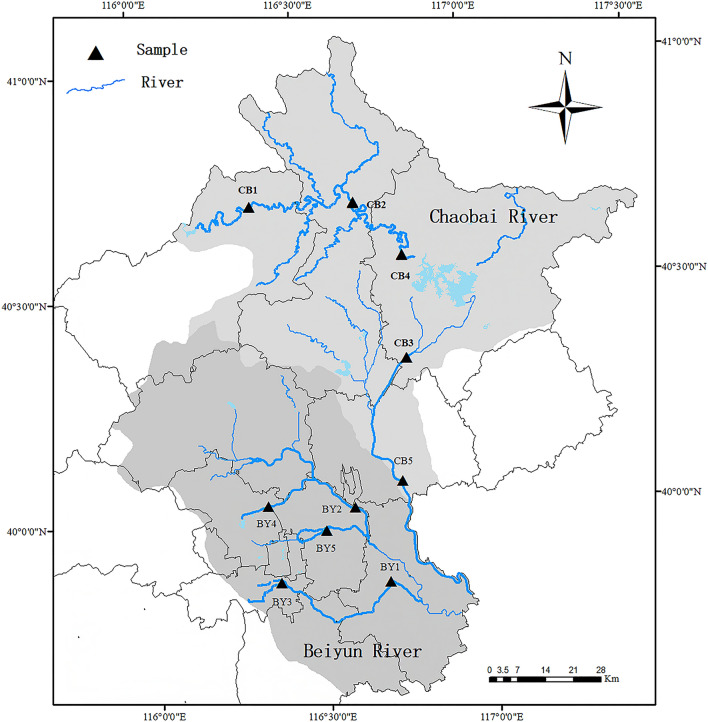
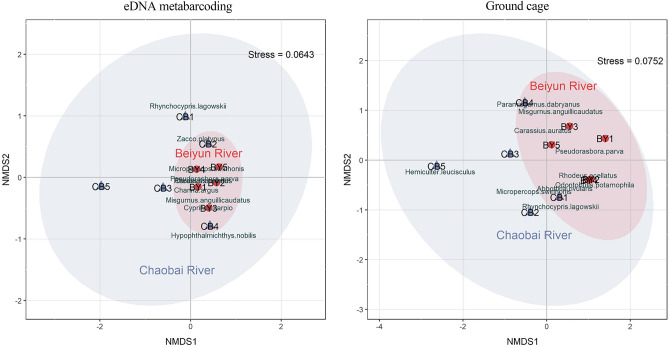
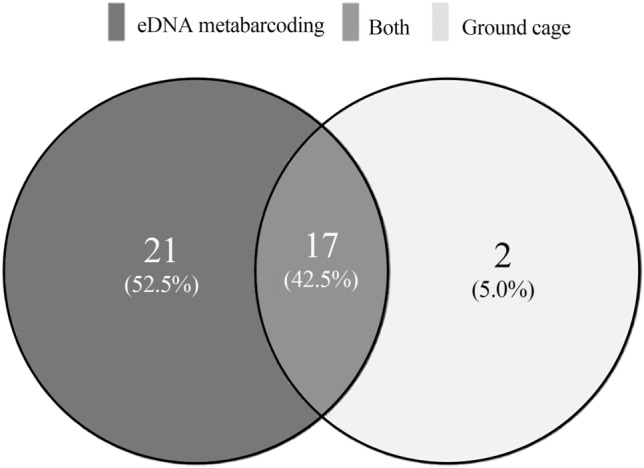
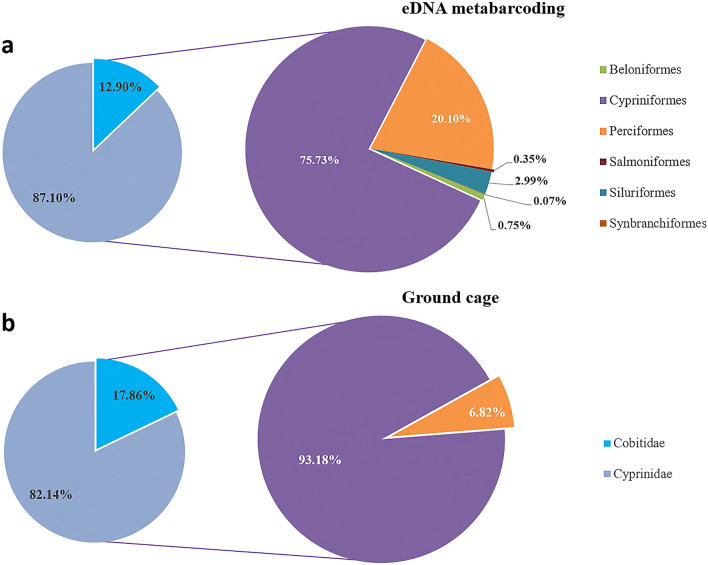
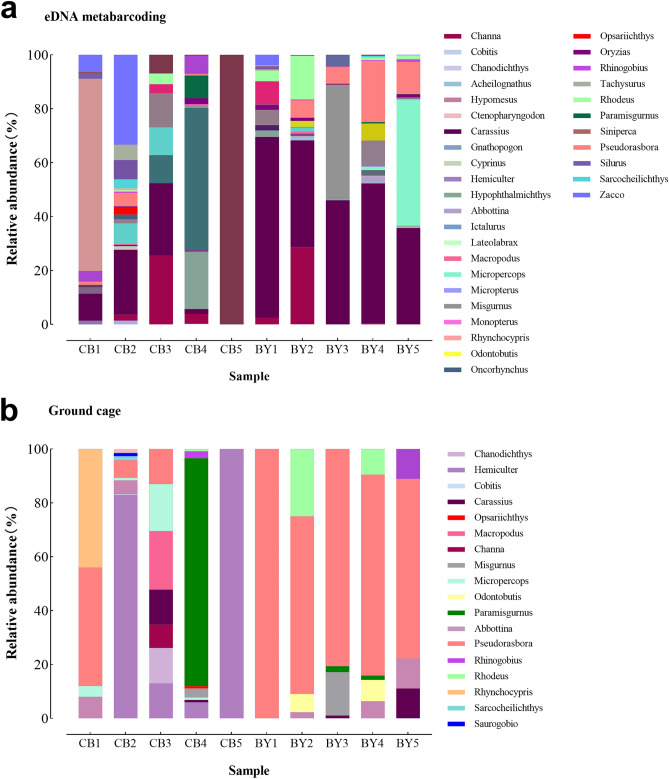
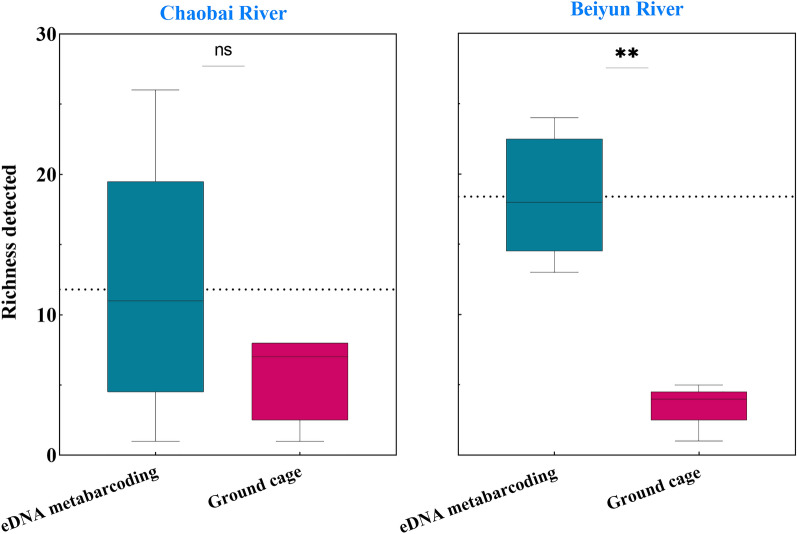
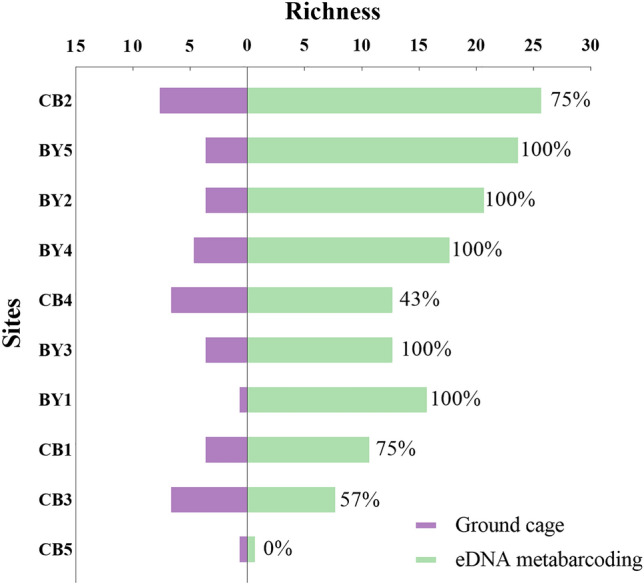
Fish diversity, an important indicator of the health of aquatic ecosystems, is declining sharply due to water pollution, overfishing, climate change, and species invasion. For protecting fish diversity, effective surveying and monitoring are prerequisites. In this study, eDNA (environmental DNA) metabarcoding and ground cages were used to survey the fish diversity of the Chaobai and Beiyun Rivers in Beijing. Based on the two methods, we identified 40 species, belonging to 35 genera, 18 families, and six orders. The richness of fish identified by eDNA metabarcoding was significantly higher than that captured by ground cages in both rivers. The fish captured by the ground cage method were all recognized by eDNA metabarcoding, except Squalidus wolterstorffi and Saurogobio dabryi, which were captured only in ground cages. The correlation of relative abundance between the two methods was affected by the properties of the rivers, such as the flow rate. Fish caught by ground cage in the Beiyun River were identified by eDNA, but not in the Chaobai River. Our results also suggest that the Chaobai River has higher fish diversity than the Beiyun River and different community assemblage. In addition to differences in the natural properties of the focal rivers, the development of urbanization is also an important contributor to different community structures overserved. eDNA metabarcoding as a new survey tool has great application prospects, it provides certain theoretical data and methodological references for the protection and management of river fish diversity.
鱼类多样性是水生生态系统健康的重要指标,由于水污染、过度捕捞、气候变化和物种入侵,鱼类多样性正急剧下降。为了保护鱼类多样性,有效的调查和监测是前提。本研究采用环境 DNA(eDNA)宏条形码和地笼两种方法,对北京潮白河的鱼类多样性进行了调查。基于这两种方法,共鉴定出 40 种鱼类,隶属于 35 属、18 科和 6 目。eDNA 宏条形码鉴定出的鱼类丰富度明显高于两种方法在两条河流中捕获的鱼类丰富度。地笼法捕获的鱼类都被 eDNA 宏条形码所识别,除了伍氏白甲鱼和北方铜鱼,这两种鱼仅在地笼中捕获。两种方法的相对丰度的相关性受到河流等特性的影响,如流速。在北运河流域,地笼捕获的鱼类可以通过 eDNA 进行鉴定,但在潮白河流域则不行。我们的研究结果还表明,与北运河流域相比,潮白河流域的鱼类多样性更高,群落组成也不同。除了关注河流的自然属性差异外,城市发展也是导致不同群落结构的重要因素。eDNA 宏条形码作为一种新的调查工具具有广阔的应用前景,它为河流鱼类多样性的保护和管理提供了一定的理论数据和方法学参考。