
缺氧相关蛋白与泛癌转移的密切相互作用。
The close interaction between hypoxia-related proteins and metastasis in pancarcinomas.
机构信息
Programa de Investigación en Salud Global, Facultad de Ciencias de la Salud, Universidad Internacional SEK, 170302, Quito, Ecuador.
Escuela de Medicina, Facultad de Ciencias de la Salud, Universidad de Las Américas, 170124, Quito, Ecuador.
出版信息
Sci Rep. 2022 Jun 30;12(1):11100. doi: 10.1038/s41598-022-15246-y.
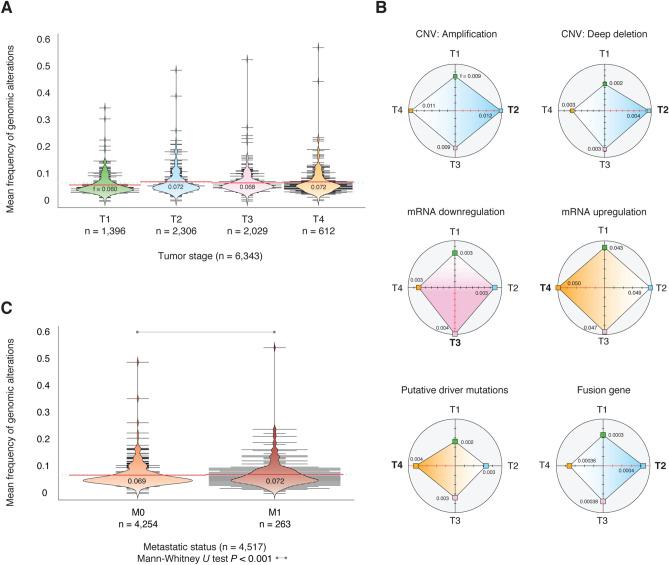
Many primary-tumor subregions exhibit low levels of molecular oxygen and restricted access to nutrients due to poor vascularization in the tissue, phenomenon known as hypoxia. Hypoxic tumors are able to regulate the expression of certain genes and signaling molecules in the microenvironment that shift it towards a more aggressive phenotype. The transcriptional landscape of the tumor favors malignant transformation of neighboring cells and their migration to distant sites. Herein, we focused on identifying key proteins that participate in the signaling crossroads between hypoxic environment and metastasis progression that remain poorly defined. To shed light on these mechanisms, we performed an integrated multi-omics analysis encompassing genomic/transcriptomic alterations of hypoxia-related genes and Buffa hypoxia scores across 17 pancarcinomas taken from the PanCancer Atlas project from The Cancer Genome Atlas consortium, protein-protein interactome network, shortest paths from hypoxia-related proteins to metastatic and angiogenic phenotypes, and drugs involved in current clinical trials to treat the metastatic disease. As results, we identified 30 hypoxia-related proteins highly involved in metastasis and angiogenesis. This set of proteins, validated with the MSK-MET Project, could represent key targets for developing therapies. The upregulation of mRNA was the most prevalent alteration in all cancer types. The highest frequencies of genomic/transcriptomic alterations and hypoxia score belonged to tumor stage 4 and positive metastatic status in all pancarcinomas. The most significantly associated signaling pathways were HIF-1, PI3K-Akt, thyroid hormone, ErbB, FoxO, mTOR, insulin, MAPK, Ras, AMPK, and VEGF. The interactome network revealed high-confidence interactions among hypoxic and metastatic proteins. The analysis of shortest paths revealed several ways to spread metastasis and angiogenesis from hypoxic proteins. Lastly, we identified 23 drugs enrolled in clinical trials focused on metastatic disease treatment. Six of them were involved in advanced-stage clinical trials: aflibercept, bevacizumab, cetuximab, erlotinib, ipatasertib, and panitumumab.
许多原发性肿瘤亚区由于组织中血管化不良而表现出低水平的分子氧和受限的营养物质摄取,这种现象称为缺氧。缺氧肿瘤能够调节微环境中某些基因和信号分子的表达,使其向更具侵袭性的表型转变。肿瘤的转录景观有利于邻近细胞的恶性转化及其向远处转移。在此,我们专注于鉴定参与缺氧环境与转移进展之间信号交叉的关键蛋白,这些蛋白的作用仍未得到充分定义。为了阐明这些机制,我们对来自癌症基因组图谱协会的 PanCancer Atlas 项目中 17 种泛癌的与缺氧相关基因的基因组/转录组改变和 Buffa 缺氧评分进行了综合的多组学分析,包括蛋白质-蛋白质相互作用网络、从与缺氧相关的蛋白质到转移和血管生成表型的最短路径,以及目前用于治疗转移性疾病的临床试验中的药物。结果,我们鉴定出 30 种与转移和血管生成高度相关的缺氧相关蛋白。该蛋白组通过 MSK-MET 项目进行验证,可作为开发治疗方法的关键靶标。在所有癌症类型中,mRNA 的上调是最常见的改变。在所有泛癌中,基因组/转录组改变和缺氧评分的最高频率属于肿瘤分期 4 和阳性转移状态。最显著相关的信号通路是 HIF-1、PI3K-Akt、甲状腺激素、ErbB、FoxO、mTOR、胰岛素、MAPK、Ras、AMPK 和 VEGF。互作网络揭示了缺氧和转移蛋白之间的高可信度相互作用。最短路径分析揭示了从缺氧蛋白传播转移和血管生成的几种方式。最后,我们鉴定出 23 种参与转移性疾病治疗的临床试验药物。其中 6 种药物参与了晚期临床试验:阿柏西普、贝伐珠单抗、西妥昔单抗、厄洛替尼、ipatasertib 和帕尼单抗。




 Zotero 插件