Department of Plant Breeding, Swedish University of Agricultural Sciences, P.O. Box 190, 23422, Lomma, Sweden.
Instituto de Biología Molecular Y Celular de Plantas, CSIC-Universidad Politécnica de Valencia, 46022, Valencia, Spain.
Plant Cell Rep. 2022 Sep;41(9):1843-1852. doi: 10.1007/s00299-022-02893-8. Epub 2022 Jun 30.
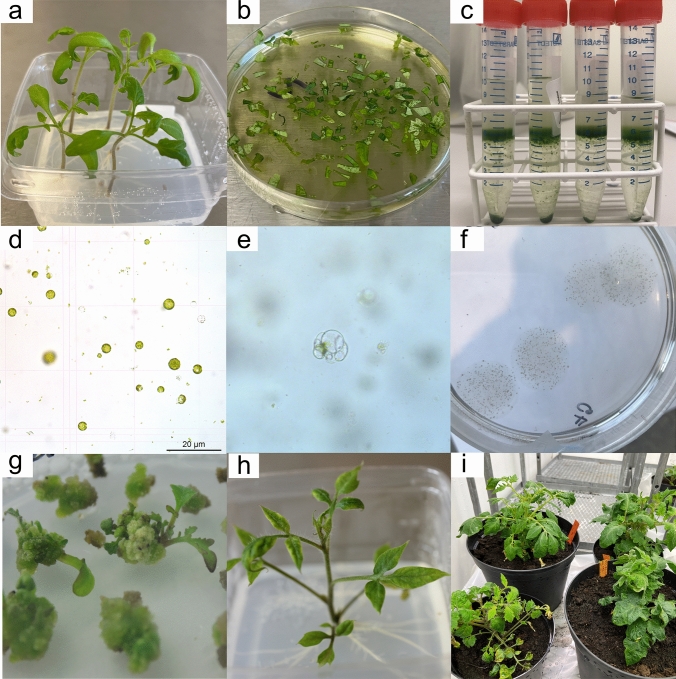
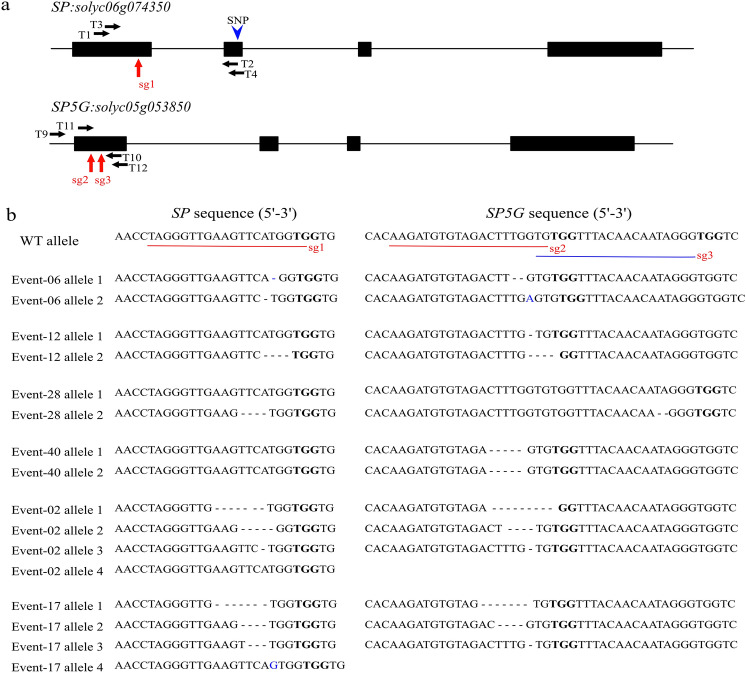
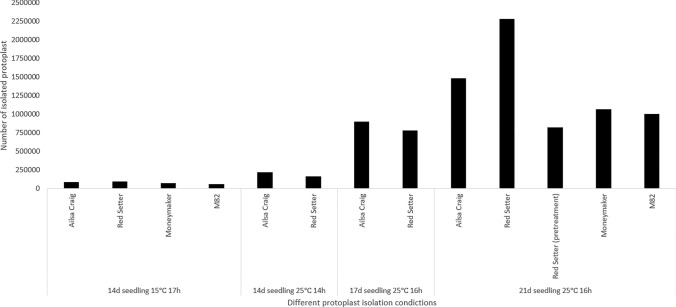
We have established a DNA-free genome editing method via ribonucleoprotein-based CRISPR/Cas9 in cultivated tomato and obtained mutant plants regenerated from transfected protoplasts with a high mutation rate. The application of genome editing as a research and breeding method has provided many possibilities to improve traits in many crops in recent years. In cultivated tomato (Solanum lycopersicum), so far only stable Agrobacterium-mediated transformation carrying CRISPR/Cas9 reagents has been established. Shoot regeneration from transfected protoplasts is the major bottleneck in the application of DNA-free genome editing via ribonucleoprotein-based CRISPR/Cas9 method in cultivated tomato. In this study, we report the implementation of a transgene-free breeding method for cultivated tomato by CRISPR/Cas9 technology, including the optimization of protoplast isolation and overcoming the obstacle in shoot regeneration from transfected protoplasts. We have identified that the shoot regeneration medium containing 0.1 mg/L IAA and 0.75 mg/L zeatin was the best hormone combination with a regeneration rate of up to 21.3%. We have successfully obtained regenerated plants with a high mutation rate four months after protoplast isolation and transfection. Out of 110 regenerated M plants obtained, 35 (31.8%) were mutated targeting both SP and SP5G genes simultaneously and the editing efficiency was up to 60% in at least one allele in either SP or SP5G genes.
我们通过基于核糖核蛋白的 CRISPR/Cas9 在栽培番茄中建立了一种无 DNA 基因组编辑方法,并从转染的原生质体中获得了具有高突变率的突变体植物再生。近年来,基因组编辑作为一种研究和育种方法,为许多作物的性状改良提供了许多可能性。在栽培番茄(Solanum lycopersicum)中,迄今为止仅建立了稳定的农杆菌介导的携带 CRISPR/Cas9 试剂的转化。基于核糖核蛋白的 CRISPR/Cas9 方法的无 DNA 基因组编辑在栽培番茄中的应用主要瓶颈是转染原生质体的芽再生。在本研究中,我们报告了通过 CRISPR/Cas9 技术在栽培番茄中实施无转基因育种方法,包括原生质体分离的优化和克服转染原生质体芽再生的障碍。我们已经确定,含有 0.1mg/L IAA 和 0.75mg/L 玉米素的芽再生培养基是最佳的激素组合,再生率高达 21.3%。我们已经成功地在原生质体分离和转染四个月后获得了具有高突变率的再生植物。在获得的 110 个再生 M 植株中,有 35 株(31.8%)同时靶向 SP 和 SP5G 基因发生突变,SP 或 SP5G 基因中至少一个等位基因的编辑效率高达 60%。