Wang Xian, Zeng Han-Xu, Jiang Ling, Liu Xue-Qi, Huang Yue-Bo, Wu Yong-Gui
Department of Nephropathy, The First Affiliated Hospital of Anhui Medical University, Hefei, Anhui, 230022, People's Republic of China.
Center for Scientific Research of Anhui Medical University, Hefei, Anhui, 230022, People's Republic of China.
Diabetes Metab Syndr Obes. 2022 Jun 24;15:1945-1959. doi: 10.2147/DMSO.S366907. eCollection 2022.
Diabetic kidney disease (DKD) is closely associated with the death or survival of resident kidney cells.
The purpose of this study was to determine the changes in renal cell survival and death in DKD and their diagnostic values in DKD progression.
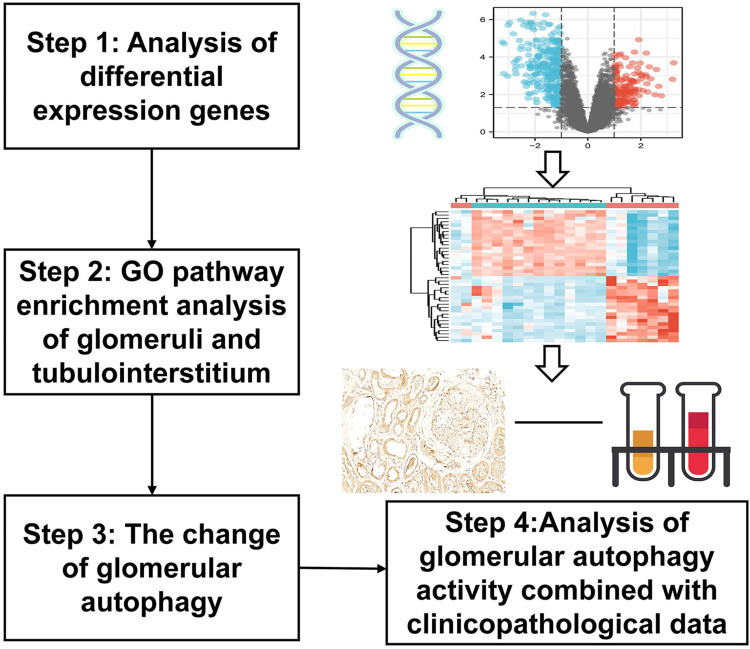
This study analyzed a dataset of renal tissues from DKD patients to identify changes in genes associated with renal cell death and survival. Our findings were subsequently validated in human kidney tissues. Differential indicators of DKD patients' clinicopathological data screened by stepwise regression and glomerular P62 protein expression were included in binary logistic regression analysis to assess the impact of these parameters on DKD progression. A receiver operating characteristic (ROC) curve analysis was employed to evaluate the diagnostic value of P62 protein in DKD progression.
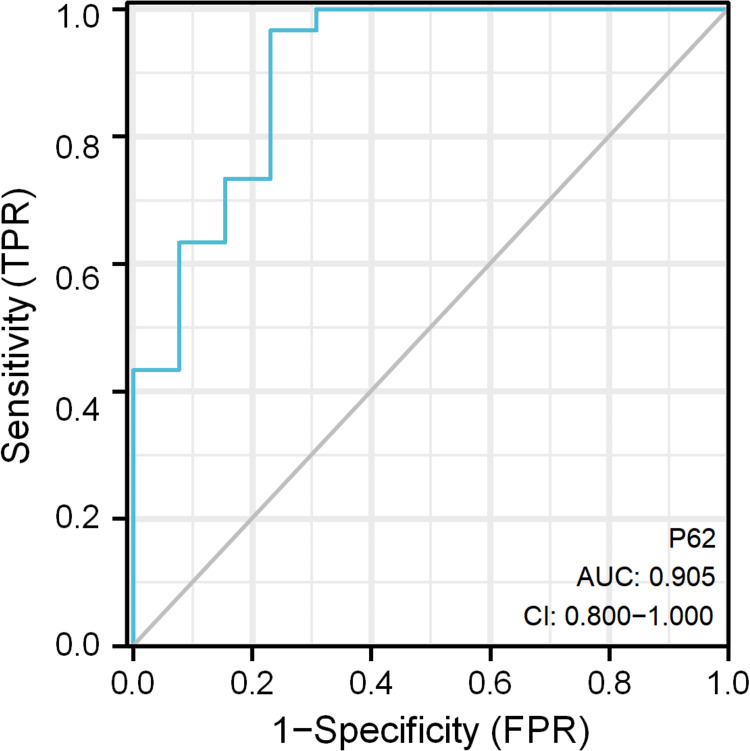
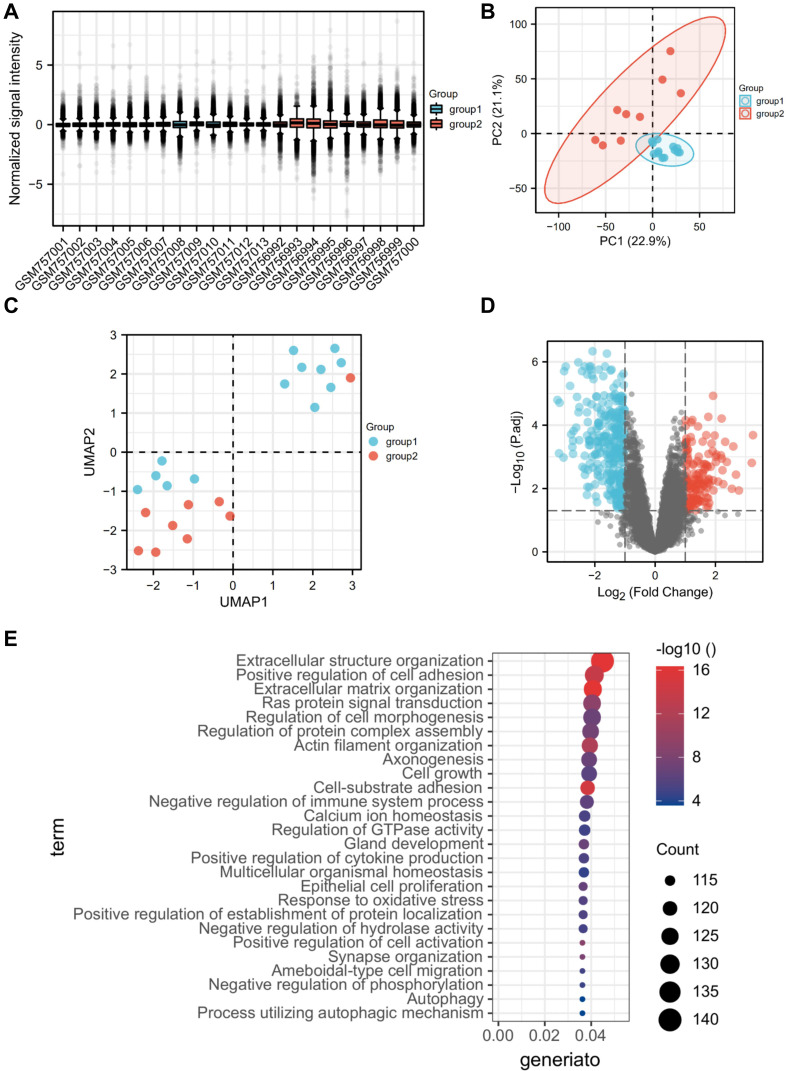
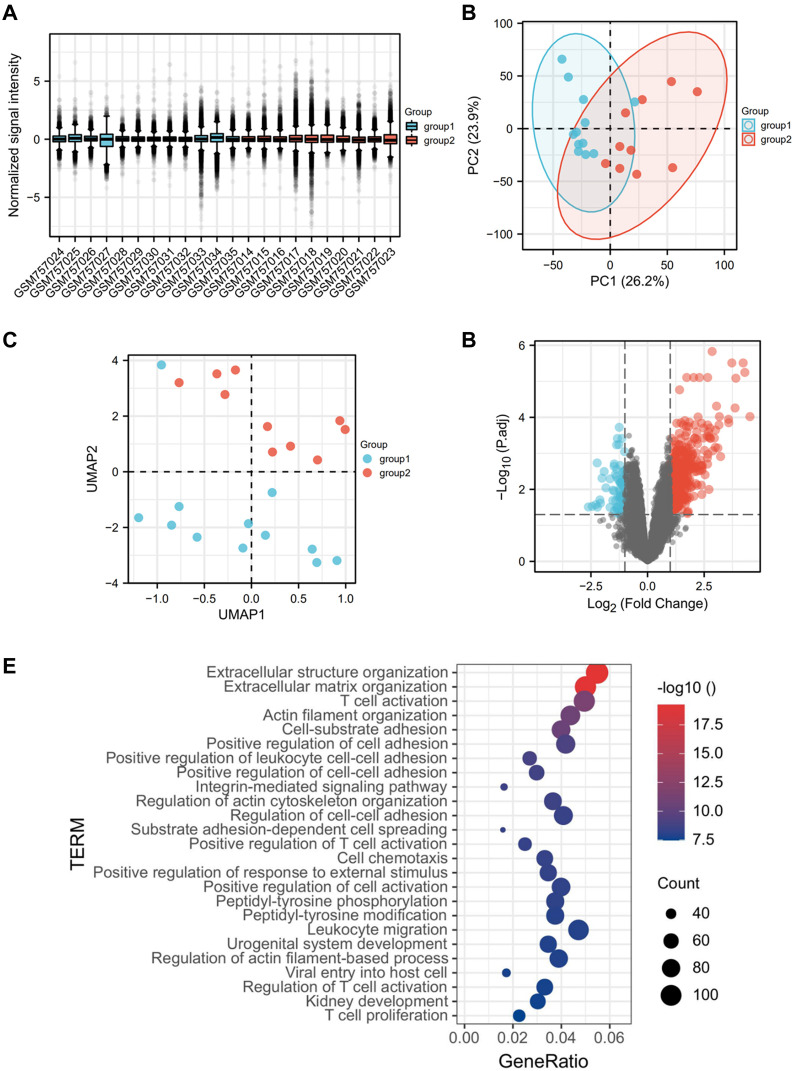
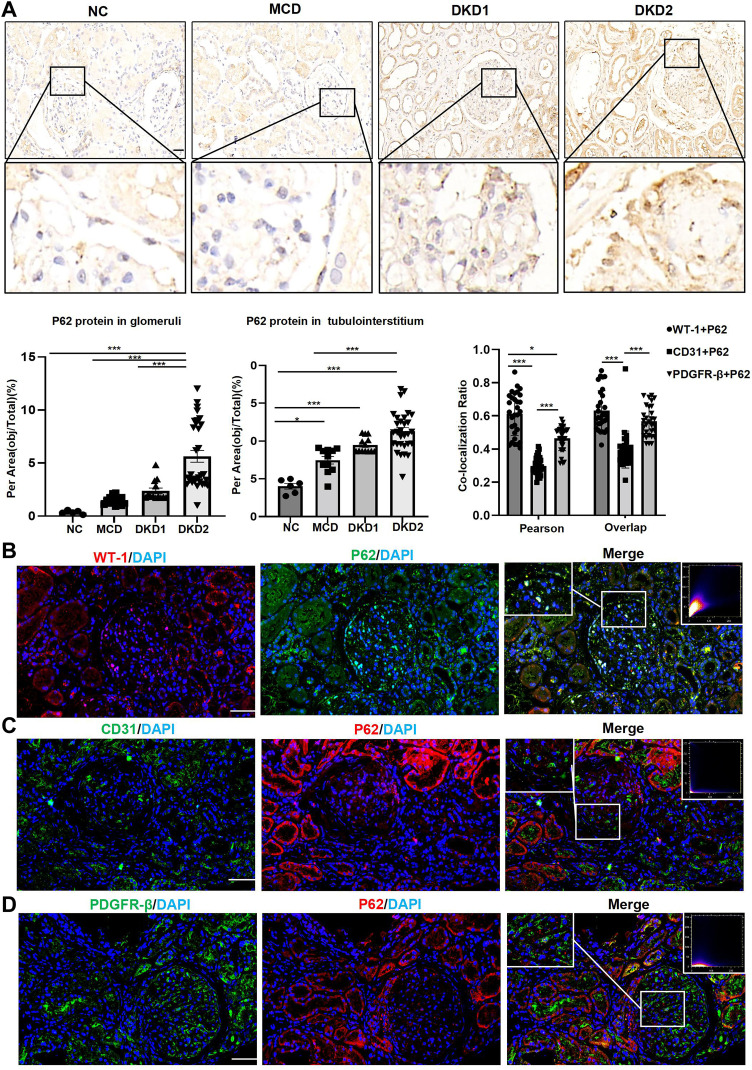
Bioinformatics analysis results revealed that glomerular autophagy in DKD was more significantly altered, which was consistent with the semi-quantitative results of P62 in glomeruli. Further studies established that P62 expression was mainly increased in podocytes. Stepwise regression analysis indicated that changes in the expressions of glomerular P62 and apolipoprotein A1 (ApoA1) might be involved in the progression of DKD. However, binary logistic regression analysis results suggested that only P62 was significantly associated with DKD development. ROC curve analysis showed that the area under the curve (AUC) of P62 for the detection of DKD was 0.905.
Autophagy inhibition occurred in both glomeruli and tubules, and was most pronounced in glomerular podocytes. The levels of P62 protein in glomeruli, as an autophagy activity indicator, was one of the predictors of entering the stage of macroalbuminuria in DKD.
糖尿病肾病(DKD)与肾固有细胞的死亡或存活密切相关。
本研究旨在确定DKD中肾细胞存活和死亡的变化及其在DKD进展中的诊断价值。
本研究分析了DKD患者肾组织数据集,以确定与肾细胞死亡和存活相关基因的变化。我们的研究结果随后在人肾组织中得到验证。通过逐步回归筛选出的DKD患者临床病理数据的差异指标和肾小球P62蛋白表达纳入二元逻辑回归分析,以评估这些参数对DKD进展的影响。采用受试者工作特征(ROC)曲线分析评估P62蛋白在DKD进展中的诊断价值。
生物信息学分析结果显示,DKD中肾小球自噬改变更为显著,这与肾小球中P62的半定量结果一致。进一步研究表明,P62表达主要在足细胞中增加。逐步回归分析表明,肾小球P62和载脂蛋白A1(ApoA1)表达的变化可能参与DKD的进展。然而,二元逻辑回归分析结果表明,只有P62与DKD发展显著相关。ROC曲线分析显示,P62检测DKD的曲线下面积(AUC)为0.905。
肾小球和肾小管均发生自噬抑制,且在肾小球足细胞中最为明显。肾小球中P62蛋白水平作为自噬活性指标,是DKD进入大量蛋白尿阶段的预测指标之一。