Luo Hongbo, Bao Zhangli, Zhou Mingjian, Chen Yuxin, Huang Zhaoxi
Departments of Rehabilitation.
Emergency.
Neuroreport. 2022 Aug 3;33(11):451-462. doi: 10.1097/WNR.0000000000001803. Epub 2022 Jun 27.
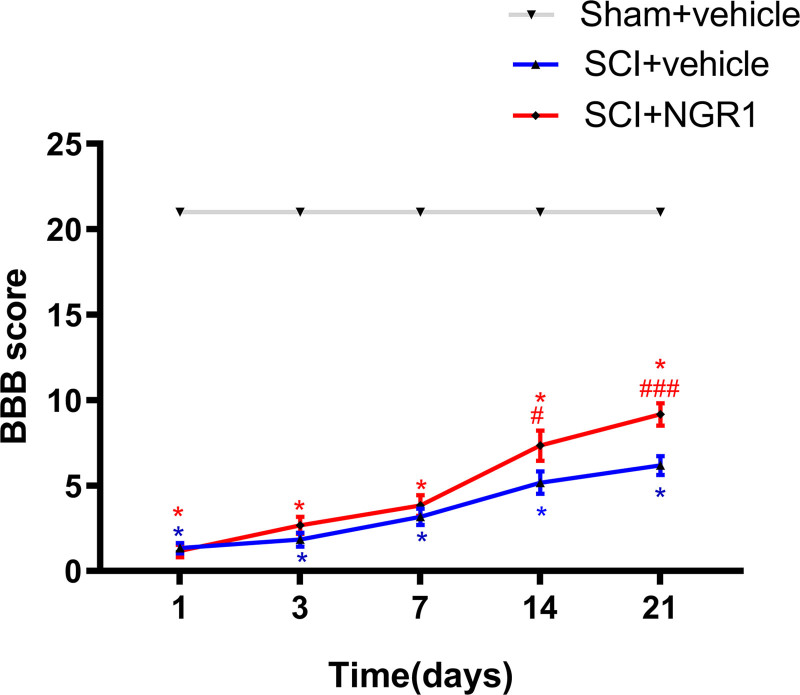
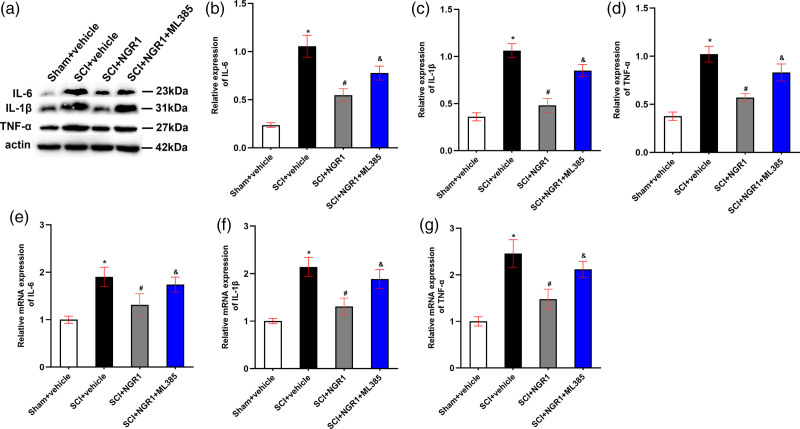
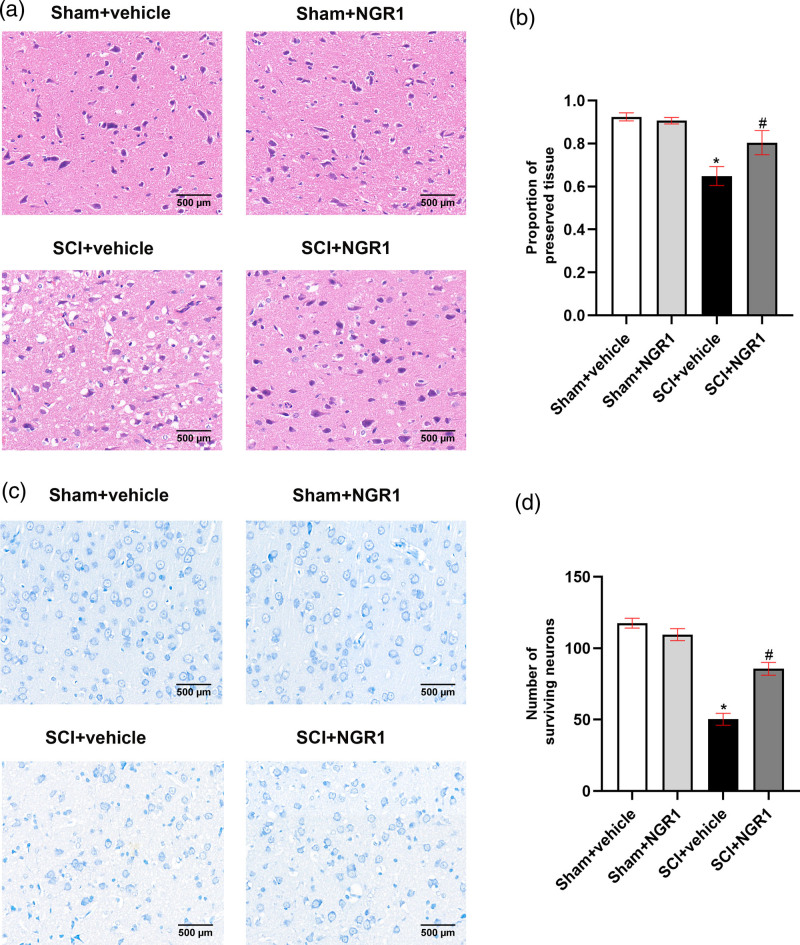
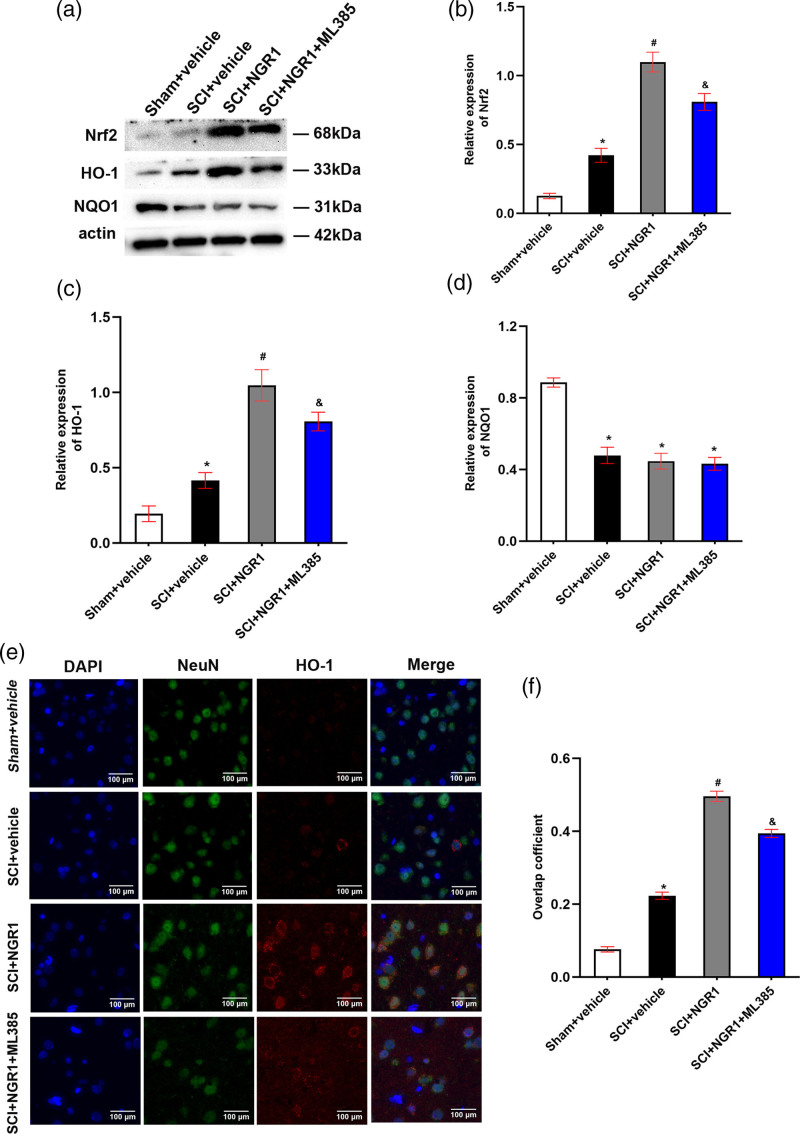
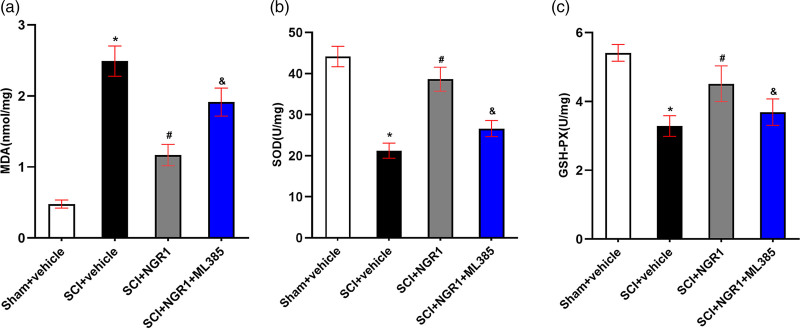
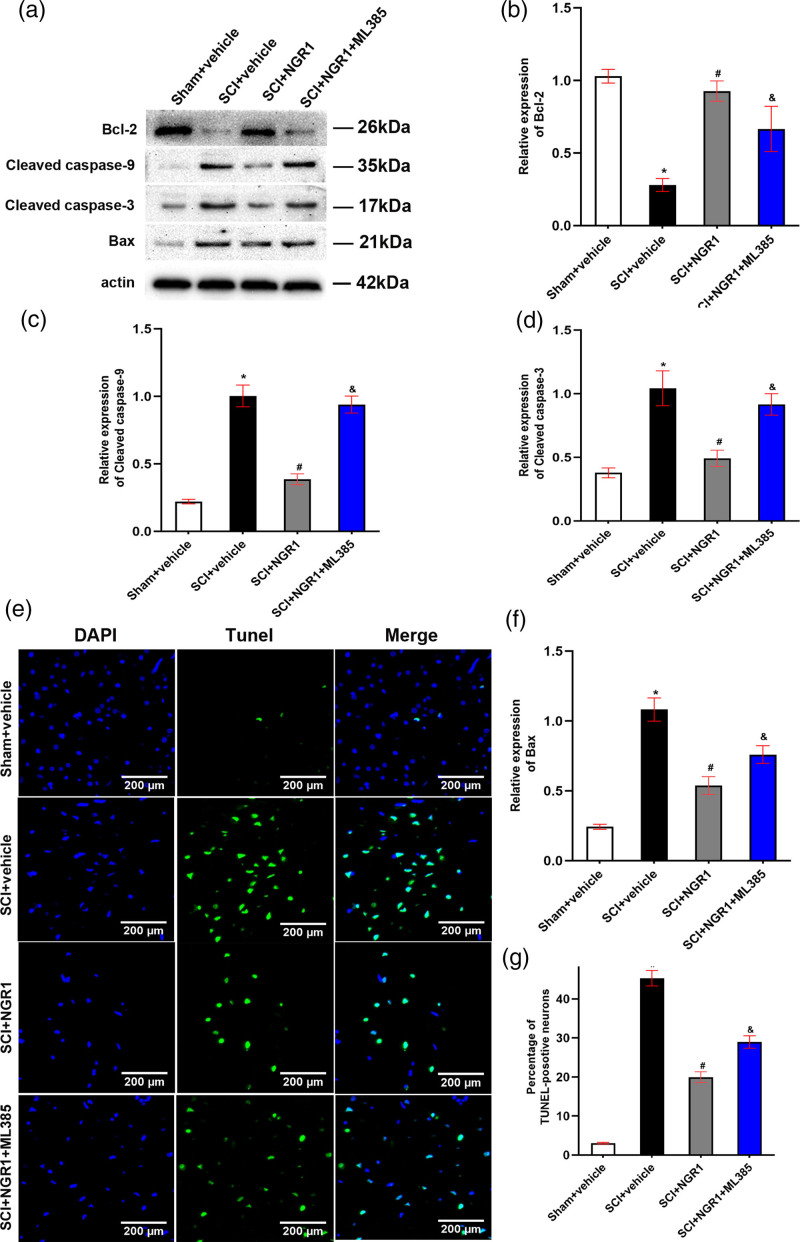
The secondary injury plays a vital role in the development of spinal cord injury (SCI), which is characterized by the occurrence of oxidative stress, neuronal apoptosis, and inflammatory response. Notoginsenoside R1 (NGR1) has been involved in the modulation of antioxidative stress and anti-inflammatory response. However, its roles in SCI-induced injury are still unknown. We explored the therapeutic effect of NGR1 and its underlying mechanism after SCI by using behavioral, biochemical, and immunohistochemical techniques. The administration of NGR1 after SCI enhanced the neurological function, and mitigated tissue damage and motor neuron loss than those in SCI + vehicle group. Meanwhile, significantly increased expression of Nrf2 protein and HO-1 protein was found in the SCI + NGR1 group compared with those in the SCI + vehicle group. In addition, the inhibitory effects of oxidative stress, apoptotic neuron ratio, and neuronal inflammation in the SCI + NGR1 group can be partially reversed when the Nrf2/HO-1 signaling pathway was inhibited by ML385. Our results indicate that the administration of NGR1 can attenuate oxidative stress, neuronal apoptosis, and inflammation by activating the Nrf2/HO-1 signaling pathway after SCI, thereby improving neurological function.
继发性损伤在脊髓损伤(SCI)的发展过程中起着至关重要的作用,其特征为氧化应激、神经元凋亡及炎症反应的发生。三七皂苷R1(NGR1)参与了抗氧化应激和抗炎反应的调节。然而,其在SCI诱导损伤中的作用仍不清楚。我们通过行为学、生物化学和免疫组织化学技术探究了NGR1在SCI后的治疗效果及其潜在机制。SCI后给予NGR1比SCI+载体组增强了神经功能,减轻了组织损伤和运动神经元损失。同时,与SCI+载体组相比,SCI+NGR1组中Nrf2蛋白和HO-1蛋白的表达显著增加。此外,当Nrf2/HO-1信号通路被ML385抑制时,SCI+NGR1组中氧化应激、凋亡神经元比例和神经元炎症的抑制作用可部分逆转。我们的结果表明,SCI后给予NGR1可通过激活Nrf2/HO-1信号通路减轻氧化应激、神经元凋亡和炎症,从而改善神经功能。