Quan Mingji, Oh Yumi, Cho Sung-Yup, Kim Ju Hee, Moon Hyeong-Gon
Interdisciplinary Graduate Program in Cancer Biology, Seoul National University College of Medicine, Seoul, Korea.
Medical Research Center, Genomic Medicine Institute, Seoul National University College of Medicine, Seoul, Korea.
J Breast Cancer. 2022 Jun;25(3):178-192. doi: 10.4048/jbc.2022.25.e28.
Chromosomal instability (CIN) contributes to intercellular genetic heterogeneity and has been implicated in paclitaxel (PTX) resistance in breast cancer. In this study, we explored polo-like kinase 1 (PLK1) as an important regulator of mitotic integrity and as a useful predictive biomarker for PTX resistance in breast cancer.
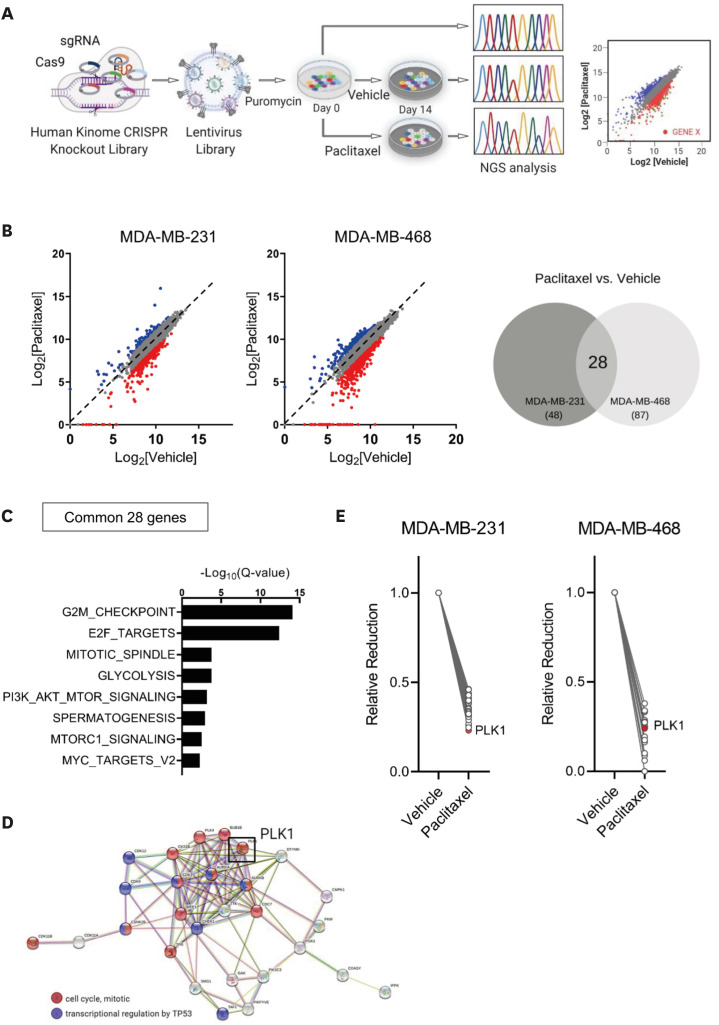
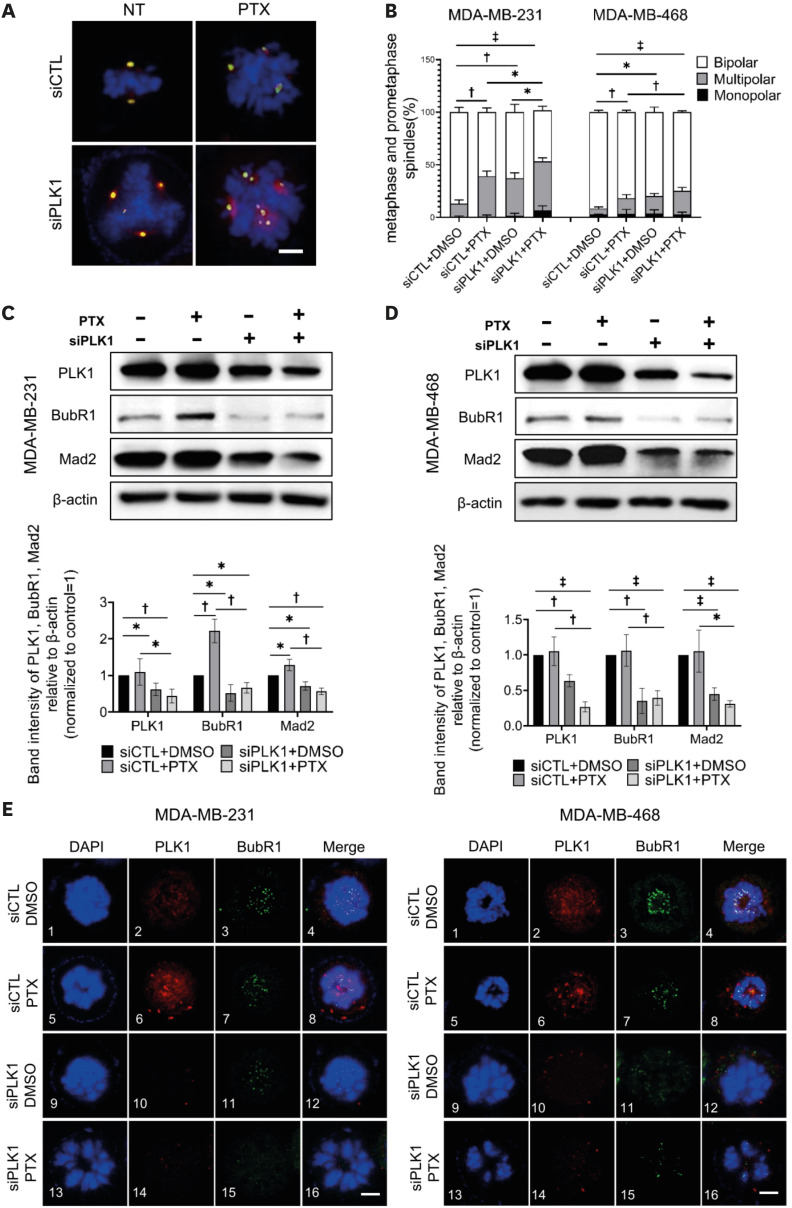
We performed PTX resistance screening using the human kinome CRISPR/Cas9 library in breast cancer cells. cell proliferation and apoptosis assays and xenograft experiments were performed to determine the effects of PLK1 on breast cancer cells. Immunofluorescence microscopy was used to measure the degree of multipolar cell division.
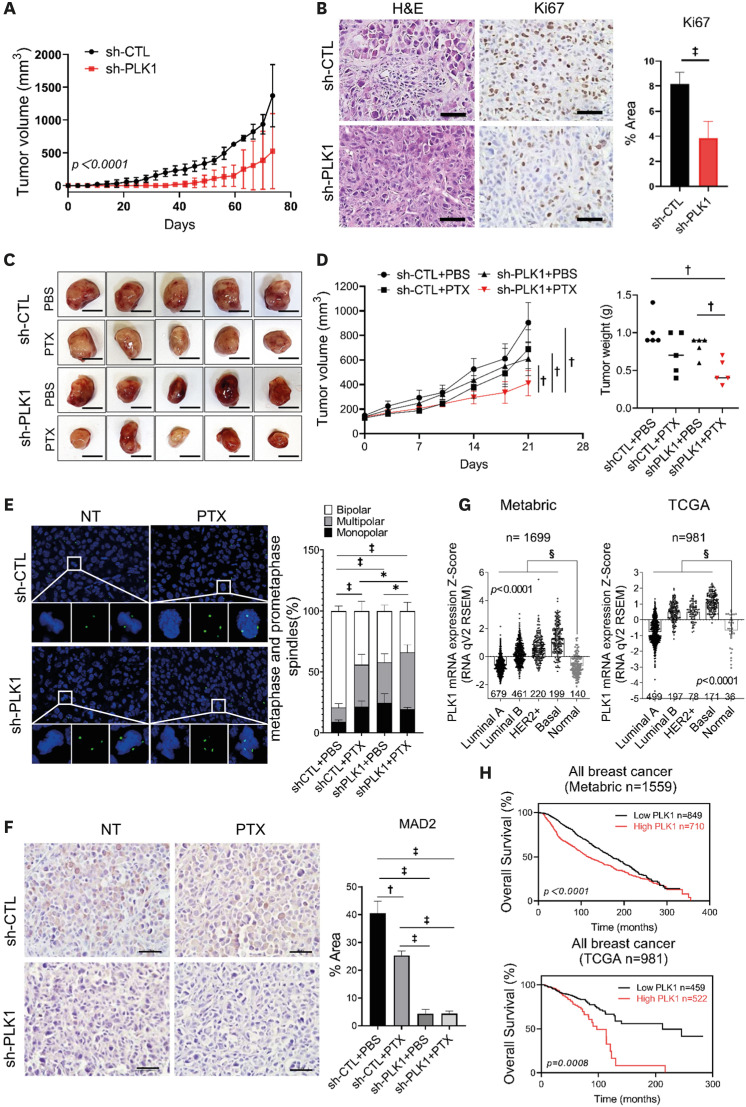
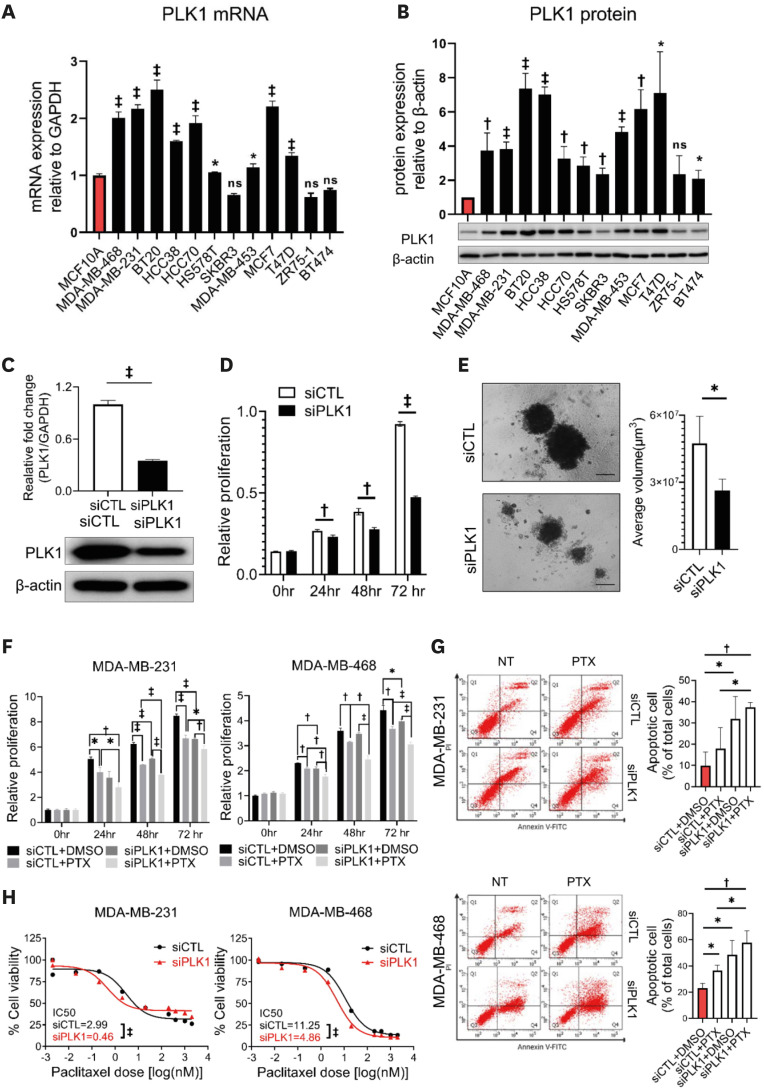
Kinome-wide CRISPR/Cas9 screening identified various kinases involved in PTX resistance in breast cancer cells; among these, PLK1 was chosen for further experiments. PLK1 knockdown inhibited the proliferation of MDA-MB-231 and MDA-MB-468 cells and . Moreover, PLK1 silencing sensitized breast cancer cells and mouse xenograft tumor models to PTX cytotoxicity. Silencing of PLK1 induced the formation of multipolar spindles and increased the percentage of multipolar cells. In addition, PLK1 silencing resulted in the downregulation of BubR1 and Mad2 in breast cancer cells. Furthermore, PLK1 upregulation in primary breast cancer was associated with decreased overall patient survival based on the analysis of The Cancer Genome Atlas and Molecular Taxonomy of Breast Cancer International Consortium databases.
PLK1 plays an important role in PTX resistance by regulating CIN in breast cancer cells. Targeting PLK1 may be an effective treatment strategy for PTX-resistant breast cancers.
染色体不稳定(CIN)导致细胞间遗传异质性,并与乳腺癌对紫杉醇(PTX)的耐药性有关。在本研究中,我们探索了 polo 样激酶 1(PLK1)作为有丝分裂完整性的重要调节因子以及乳腺癌中 PTX 耐药性的有用预测生物标志物。
我们使用人类激酶组 CRISPR/Cas9 文库在乳腺癌细胞中进行 PTX 耐药性筛选。进行细胞增殖和凋亡测定以及异种移植实验以确定 PLK1 对乳腺癌细胞的影响。使用免疫荧光显微镜测量多极细胞分裂的程度。
全激酶组 CRISPR/Cas9 筛选确定了参与乳腺癌细胞中 PTX 耐药性的各种激酶;其中,选择 PLK1 进行进一步实验。敲低 PLK1 抑制了 MDA-MB-231 和 MDA-MB-468 细胞的增殖。此外,PLK1 沉默使乳腺癌细胞和小鼠异种移植肿瘤模型对 PTX 细胞毒性敏感。沉默 PLK1 诱导多极纺锤体形成并增加多极细胞的百分比。此外,PLK1 沉默导致乳腺癌细胞中 BubR1 和 Mad2 的下调。此外,基于癌症基因组图谱和乳腺癌国际联盟分子分类数据库的分析,原发性乳腺癌中 PLK1 的上调与患者总体生存率降低相关。
PLK1 通过调节乳腺癌细胞中的 CIN 在 PTX 耐药性中起重要作用。靶向 PLK1 可能是 PTX 耐药性乳腺癌的有效治疗策略。