Division of Hematology and Oncology, Department of Medicine, University of Virginia, Charlottesville, VA.
National Marrow Donor Program/Be The Match, Minneapolis, MN.
Blood. 2022 Aug 18;140(7):673-684. doi: 10.1182/blood.2022016089.
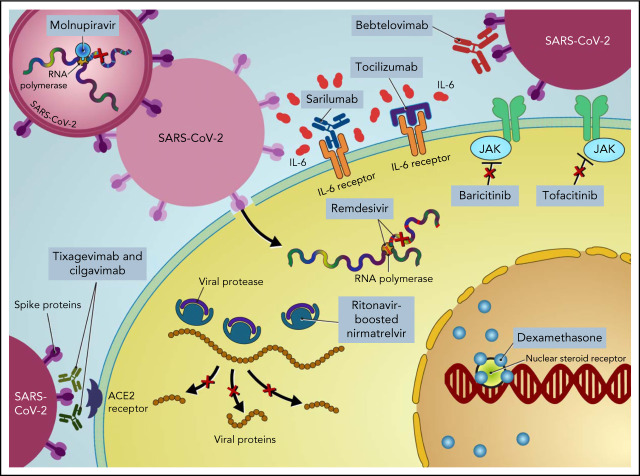
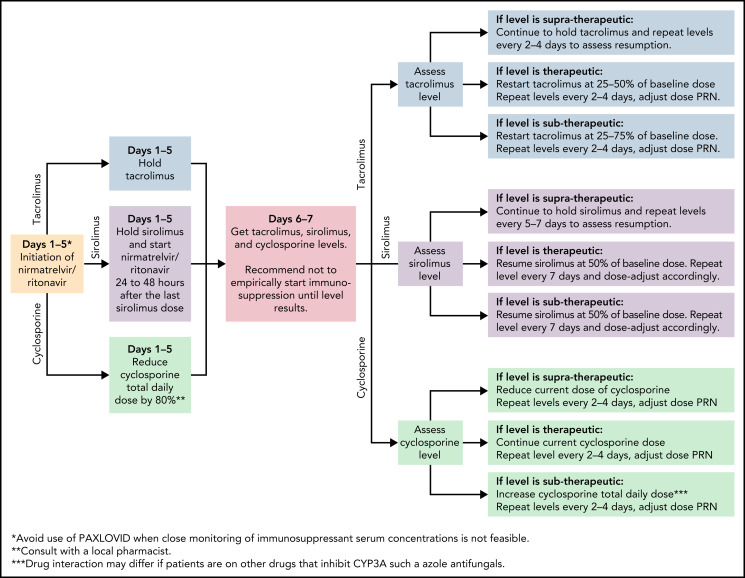
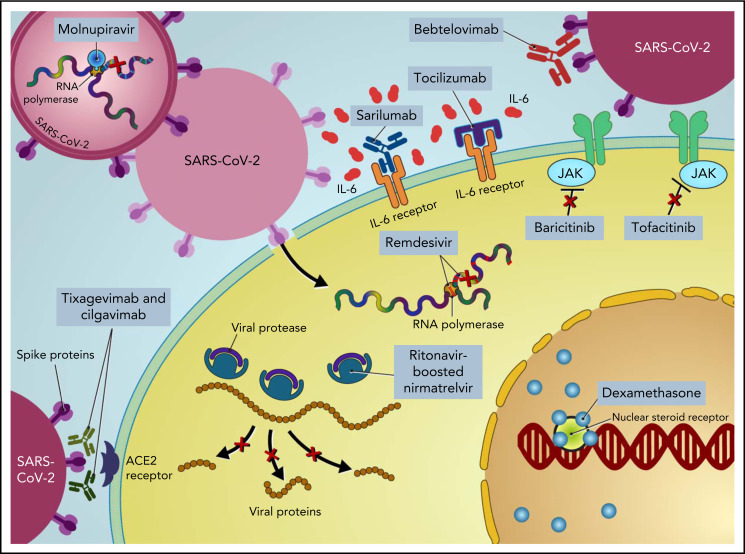
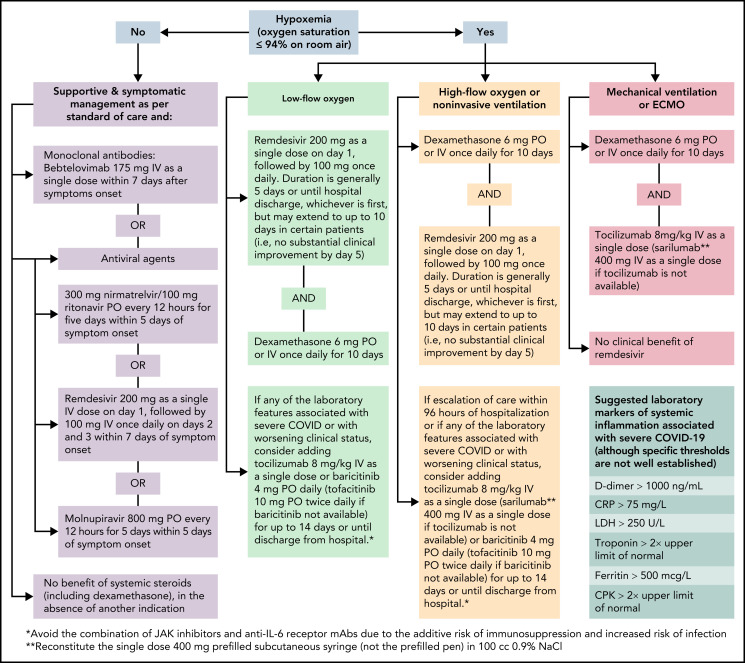
Patients with hematologic malignancies and recipients of hematopoietic cell transplantation (HCT) are more likely to experience severe coronavirus disease 2019 (COVID-19) and have a higher risk of morbidity and mortality after infection with severe acute respiratory syndrome coronavirus 2 (SARS-CoV-2). Compared with the general population, these patients have suboptimal humoral responses to COVID-19 vaccines and subsequently increased risk for breakthrough infections, underscoring the need for additional therapies, including pre- and postexposure prophylaxis, to attenuate clinical progression to severe COVID-19. Therapies for COVID-19 are mostly available for adults and in the inpatient and outpatient settings. Selection and administration of the best treatment options are based on host factors; virus factors, including circulating SARS-CoV-2 variants; and therapeutic considerations, including the clinical efficacy, availability, and practicality of treatment and its associated side effects, including drug-drug interactions. In this paper, we discuss how we approach managing COVID-19 in patients with hematologic malignancies and recipients of HCT and cell therapy.
患有血液系统恶性肿瘤和接受造血细胞移植(HCT)的患者更容易出现严重的 2019 年冠状病毒病(COVID-19),并且在感染严重急性呼吸综合征冠状病毒 2(SARS-CoV-2)后发病率和死亡率更高。与一般人群相比,这些患者对 COVID-19 疫苗的体液反应不佳,随后突破性感染的风险增加,这凸显了需要包括预防和暴露前预防在内的额外治疗方法,以减轻 COVID-19 向严重疾病的临床进展。COVID-19 的治疗方法主要适用于成年人以及住院和门诊环境。最佳治疗方案的选择和管理基于宿主因素;病毒因素,包括循环中的 SARS-CoV-2 变体;以及治疗考虑因素,包括治疗的临床疗效、可用性和实用性及其相关副作用,包括药物相互作用。在本文中,我们讨论了我们如何处理血液系统恶性肿瘤和接受 HCT 和细胞治疗的患者的 COVID-19 管理。