Zhang Zhiqiang, Xia Zhangtian, Luo Ge, Yao Ming
Department of Bengbu Medical College, Bengbu, China.
Department of Anesthesiology and Pain Research Center, The Affiliated Hospital of Jiaxing University, 1882 Zhong-Huan-South Road, Jiaxing, 314000, China.
Pain Ther. 2022 Sep;11(3):971-985. doi: 10.1007/s40122-022-00412-x. Epub 2022 Jul 2.
Postherpetic neuralgia (PHN) is a painful condition that persists for 1 month or more after herpes zoster rash has healed. Radiofrequency thermocoagulation (RF-TC) provides analgesia by destroying the dorsal root ganglion and blocking the pain upload pathway; nonetheless, the concomitant neurological-related side effects and recurrence remain a concern.
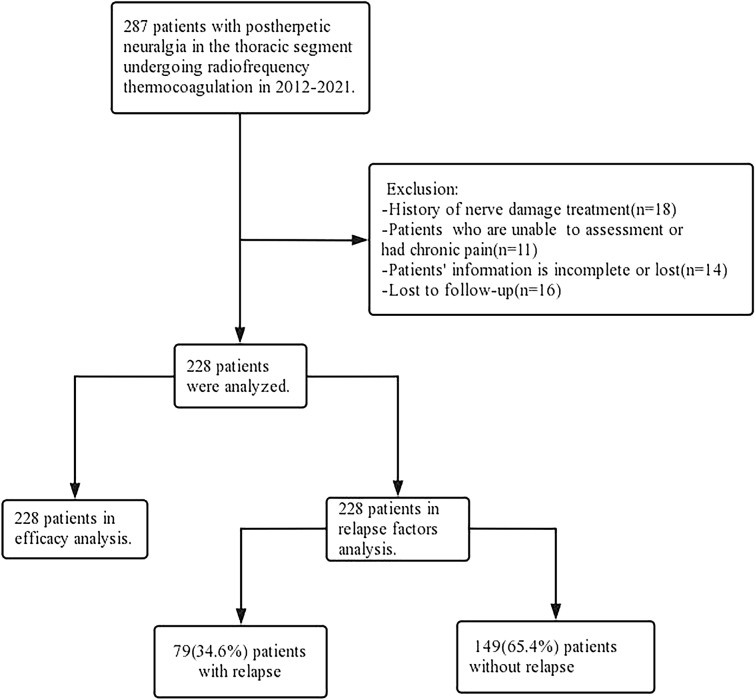
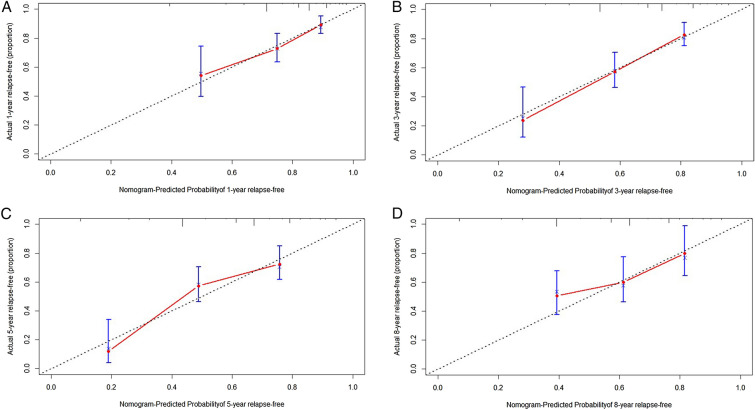
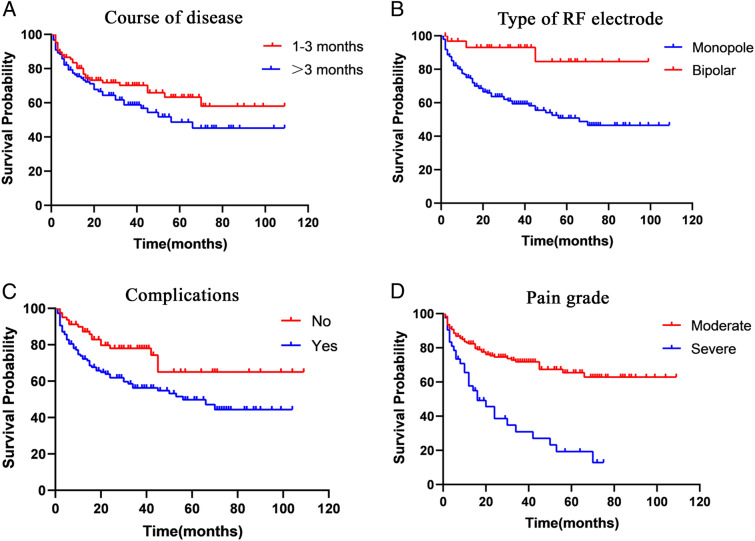
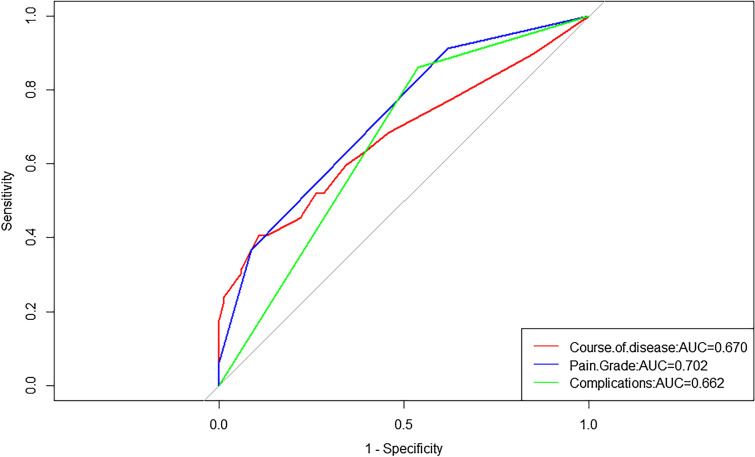
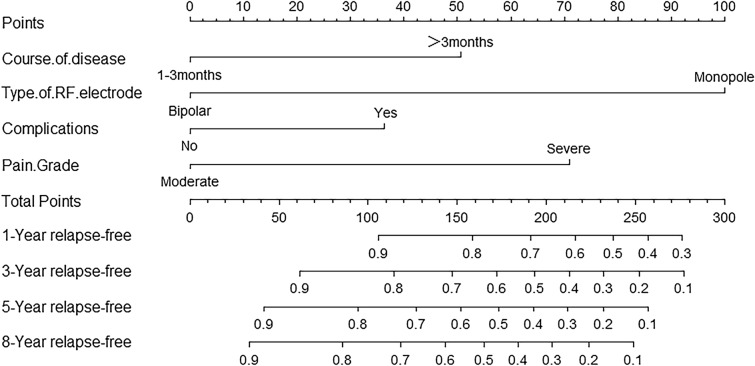
In this study, 228 patients with PHN in the thoracic segment treated with RF-TC of the dorsal root ganglion of the spinal nerve were included, and were followed up regularly after surgery. The numerical rating scale (NRS) scores, time to recurrence, and intraoperative and postoperative adverse events were recorded and analyzed. The Kaplan-Meier method was used to plot survival curves and calculate the cumulative effective rate and recurrence rate. Cox regression analyses were performed to identify factors associated with postoperative recurrence. Predictive models were built to assess the value of applications.
The NRS scores decreased in all postoperative periods compared with preoperative ones. At 10-year-follow-up, recurrence was observed in 34.6% (79/228) of patients that underwent PHN. The main postoperative complications were numbness and reduced abdominal muscle strength, which gradually decreased with time, while the abdominal muscle strength gradually recovered. No other adverse events occurred. Interval-censored multivariable Cox regression analysis demonstrated that disease course, complications, pain grade, and type of RF electrode were associated with a significantly higher risk of relapse. The main intraoperative adverse effect was a transient increase in pain during RF-TC.
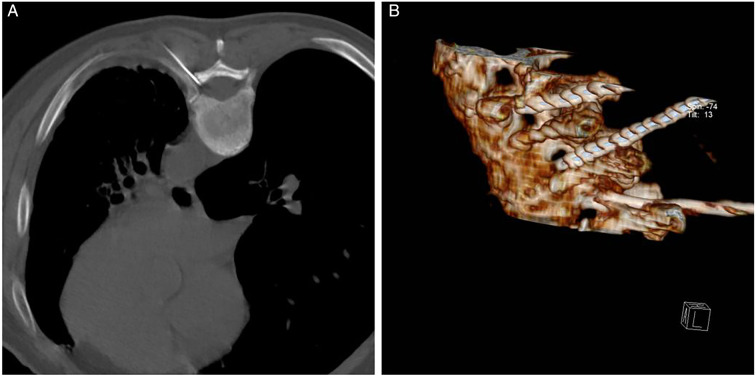
CT-guided RF-TC of the dorsal root ganglion of the spinal nerve for PHN is a relatively safe and effective surgical option. Disease course, type of RF electrode, complications, and pain grade are risk factors for postoperative recurrence and can assist in clinical decision-making before the RF-CT procedure.
带状疱疹后神经痛(PHN)是一种在带状疱疹皮疹愈合后持续1个月或更长时间的疼痛病症。射频热凝术(RF-TC)通过破坏背根神经节并阻断疼痛上传通路来提供镇痛效果;尽管如此,与之相关的神经副作用和复发问题仍然令人担忧。
本研究纳入了228例接受脊神经背根神经节RF-TC治疗的胸段PHN患者,并在术后进行定期随访。记录并分析数字评分量表(NRS)评分、复发时间以及术中及术后不良事件。采用Kaplan-Meier法绘制生存曲线并计算累积有效率和复发率。进行Cox回归分析以确定与术后复发相关的因素。建立预测模型以评估应用价值。
与术前相比,所有术后时间段的NRS评分均降低。在10年随访中,接受PHN治疗的患者中有34.6%(79/228)出现复发。术后主要并发症为麻木和腹肌力量减弱,随着时间推移逐渐减轻,而腹肌力量逐渐恢复。未发生其他不良事件。区间删失多变量Cox回归分析表明,病程、并发症、疼痛分级和RF电极类型与复发风险显著升高相关。术中主要不良反应是RF-TC期间疼痛短暂增加。
CT引导下脊神经背根神经节RF-TC治疗PHN是一种相对安全有效的手术选择。病程、RF电极类型、并发症和疼痛分级是术后复发的危险因素,可在RF-CT手术前协助临床决策。