Guo Shang, Chia Weekai, Wang Hongwei, Bushinsky David A, Zhong Biao, Favus Murray J
Department of Orthopedics, Shanghai Jiaotong University Affiliated Sixth People's Hospital, Shanghai 200233, PR China.
Shanghai Realgen Biotech Co., Ltd, Shanghai 200215, PR China.
Genes Dis. 2020 Sep 30;9(3):797-806. doi: 10.1016/j.gendis.2020.09.001. eCollection 2022 May.
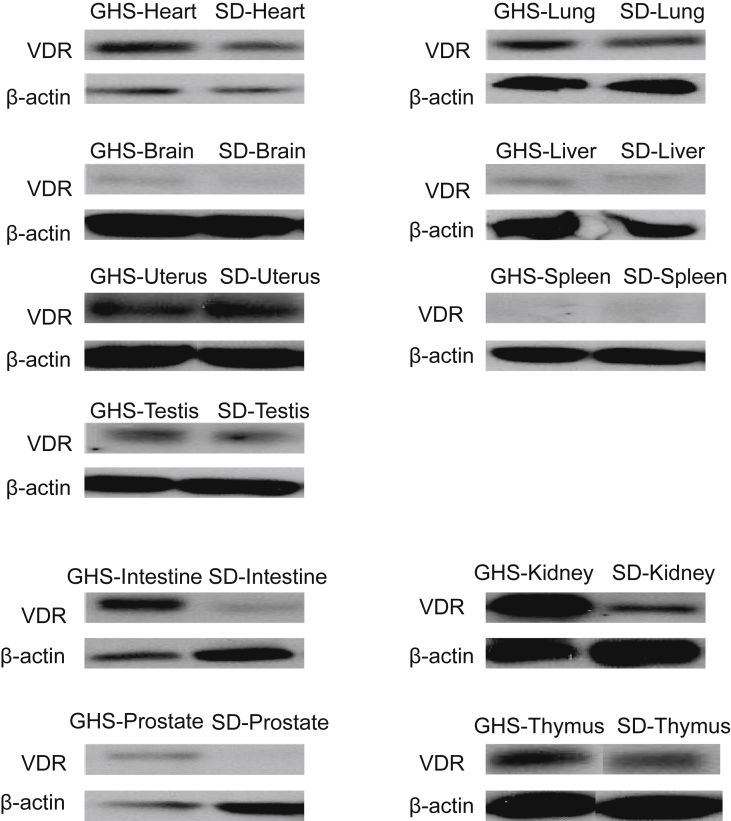
Human idiopathic hypercalciuria (IH) is the most common cause of calcium oxalate nephrolithiasis with perturbed calcium metabolism with increased bone resorption and decreased renal calcium reabsorption, which can be phenotype-copied in the genetic hypercalciuric stone-forming (GHS) rat model. We previously demonstrated that high VDR expression plays important roles in the development of hypercalciuria in the GHS rats. However, the underlying mechanism through which VDR impact hypercalciuria development remains to be fully understood. Here, we sought to determine how VDR regulated its target genes that are implicated in calcium homeostasis and potentially hypercalciuria. We found that VDR expression in the GHS rats was elevated in the calcium transporting tissues, as well as in the thymus and prostate, but not in lung, brain, heart, liver and spleen, when compared with control SD rats. Snail expression in the GHS rats was significantly downregulated in kidney, intestine, thymus and testis. Intraperitoneal injection of 1,25(OH)D significantly upregulated the expression of renal calcium sensing receptor (CaSR), intestinal calcium transporters transient receptor potential vanilloid type 6 (TRPV6), and VDR in GHS rats, compared with that in control SD rats. ChIP assays revealed that VDR specifically bound to the proximal promoters of target genes, followed by histone H3 hyperacetylation or hypermethylation. Collectively, our results suggest that elevated VDR expression may contribute to the development of hypercalciuria by sensitizing VDR target genes to 1,25(OH)D through histone modifications at their promoter regions in a genetic hypercalciuric stone-forming (GHS) rat model.
人类特发性高钙尿症(IH)是草酸钙肾结石最常见的病因,其钙代谢紊乱,骨吸收增加,肾钙重吸收减少,这在遗传性高钙尿结石形成(GHS)大鼠模型中可表现出相似表型。我们之前证明,高维生素D受体(VDR)表达在GHS大鼠高钙尿症的发生发展中起重要作用。然而,VDR影响高钙尿症发生发展的潜在机制仍有待充分了解。在此,我们试图确定VDR如何调节其与钙稳态及潜在高钙尿症相关的靶基因。我们发现,与对照SD大鼠相比,GHS大鼠中VDR在钙转运组织以及胸腺和前列腺中表达升高,但在肺、脑、心脏、肝脏和脾脏中未升高。GHS大鼠中Snail在肾脏、肠道、胸腺和睾丸中的表达显著下调。与对照SD大鼠相比,腹腔注射1,25(OH)D可显著上调GHS大鼠肾钙敏感受体(CaSR)、肠道钙转运体瞬时受体电位香草酸亚型6(TRPV6)和VDR的表达。染色质免疫沉淀分析显示,VDR特异性结合靶基因的近端启动子,随后是组蛋白H3的高乙酰化或高甲基化。总体而言,我们的结果表明,在遗传性高钙尿结石形成(GHS)大鼠模型中,VDR表达升高可能通过在其启动子区域进行组蛋白修饰,使VDR靶基因对1,25(OH)D敏感,从而促进高钙尿症的发生发展。