Canada's Michael Smith Genome Sciences Centre, BC Cancer Agency, Vancouver, Canada.
Department of Medical Genetics, University of British Columbia, Vancouver, Canada.
Elife. 2022 Jul 5;11:e77898. doi: 10.7554/eLife.77898.
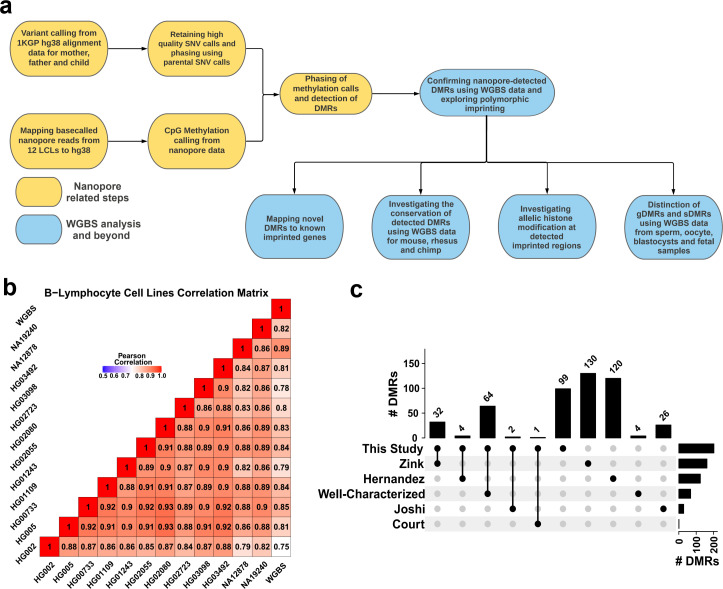
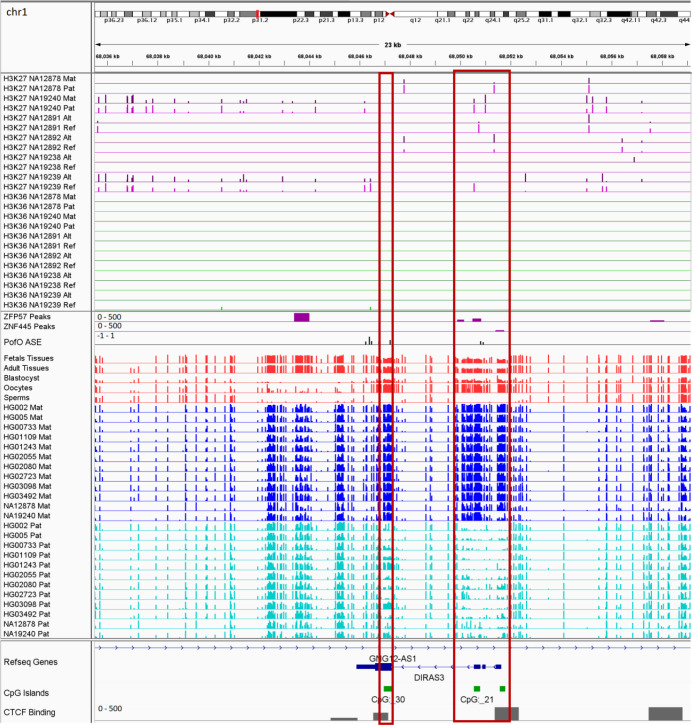
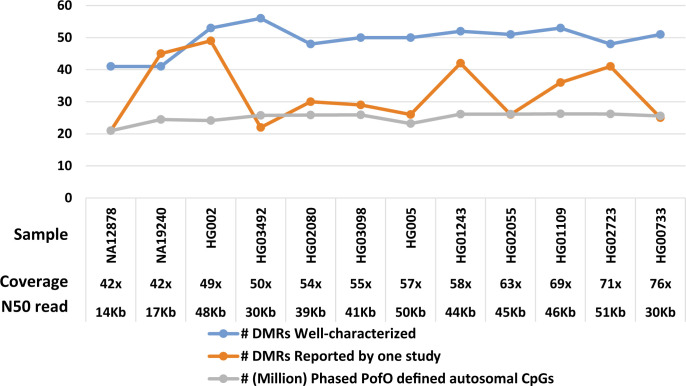
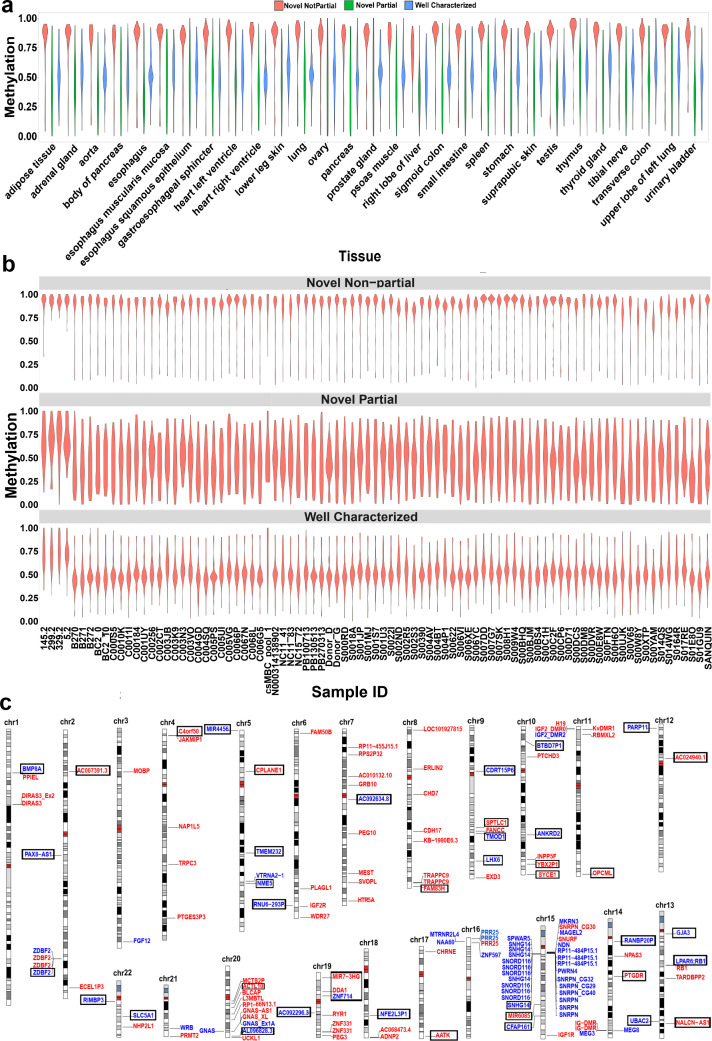
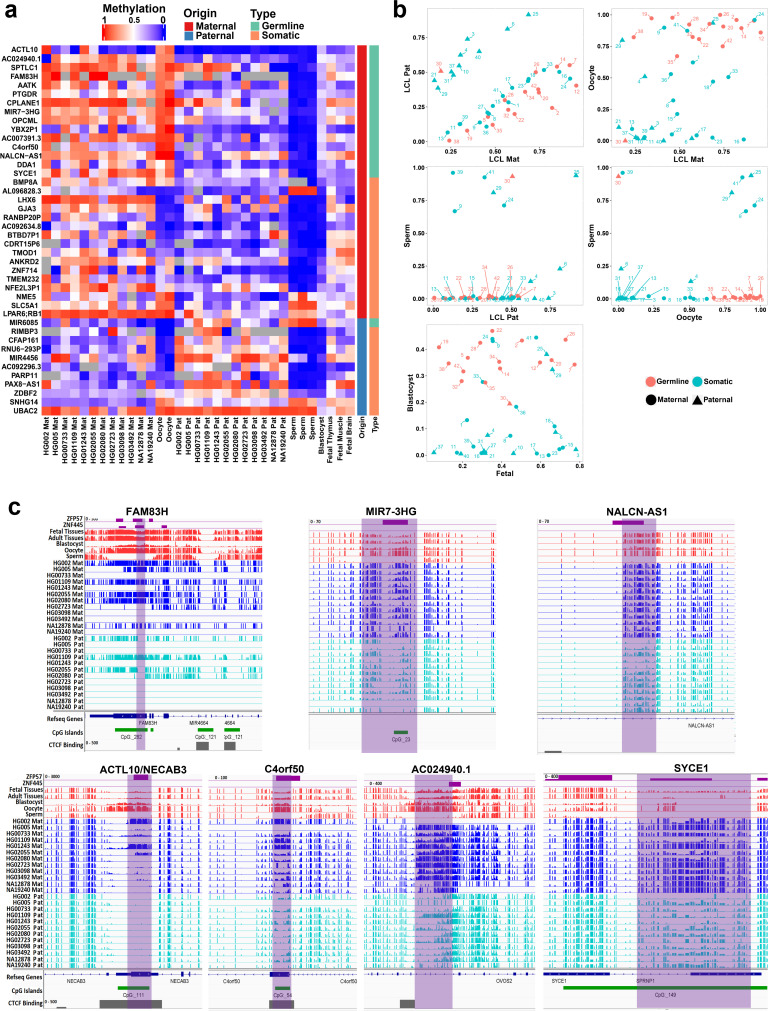
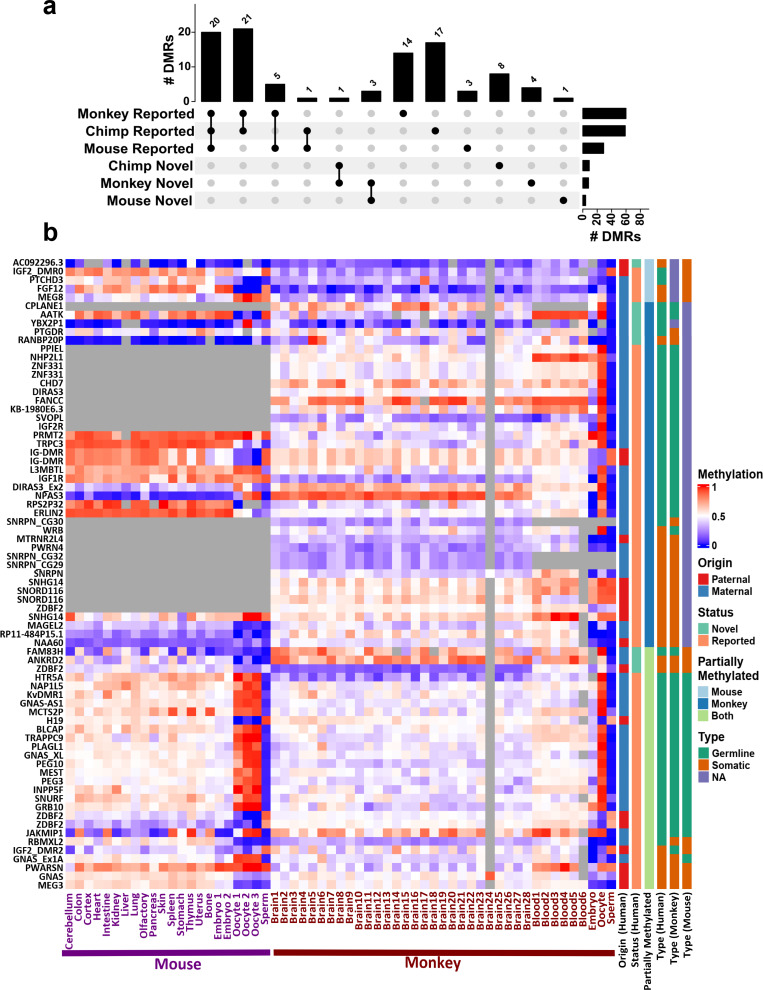
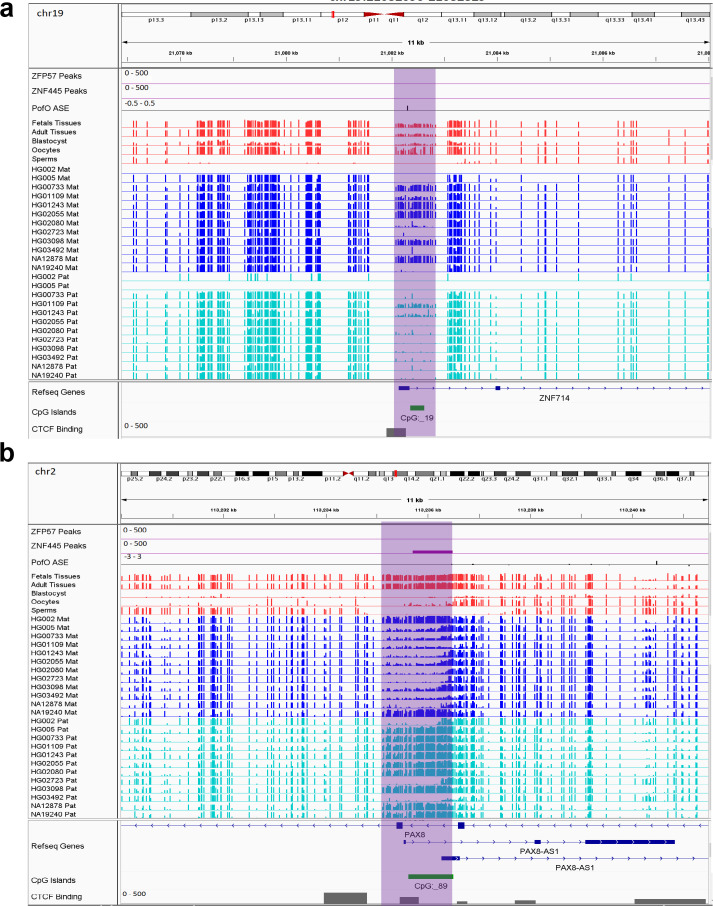
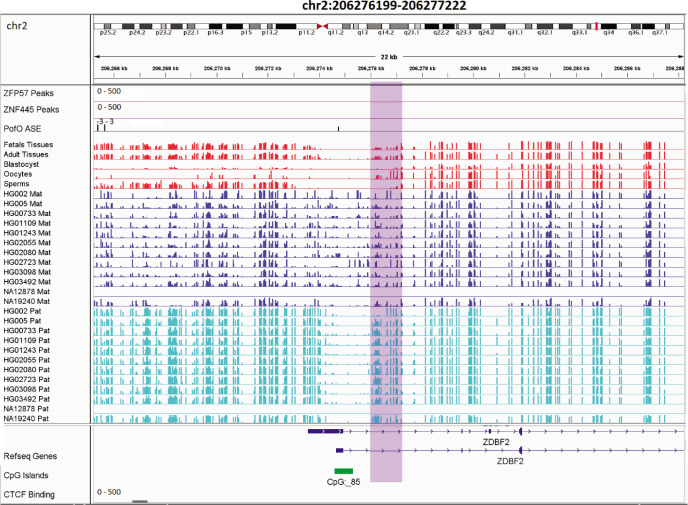
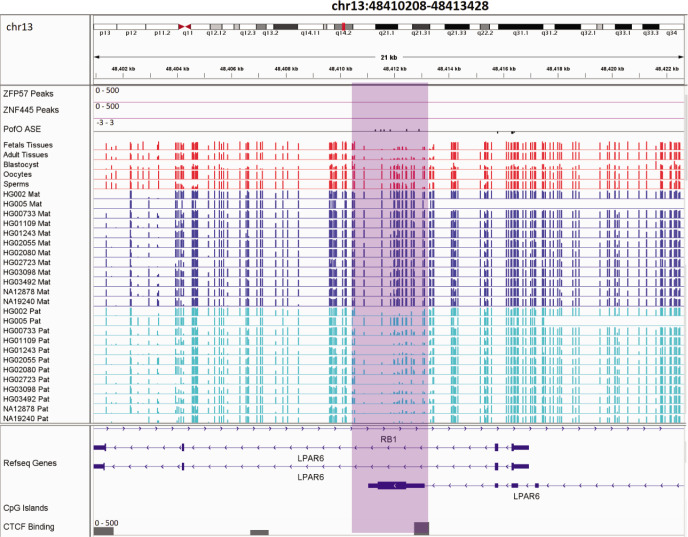
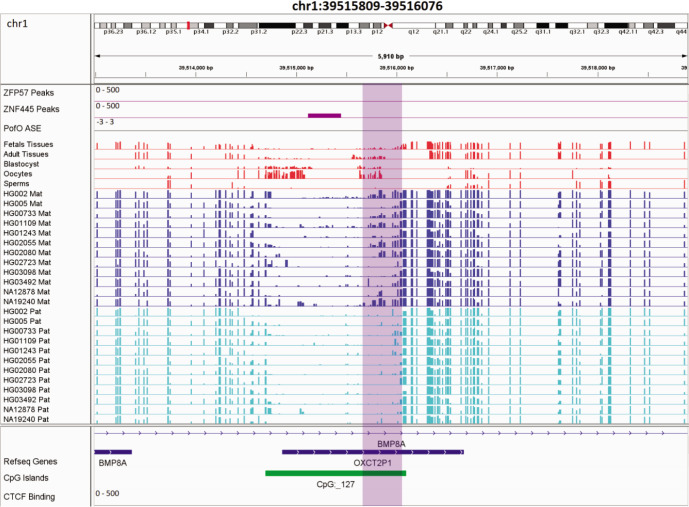
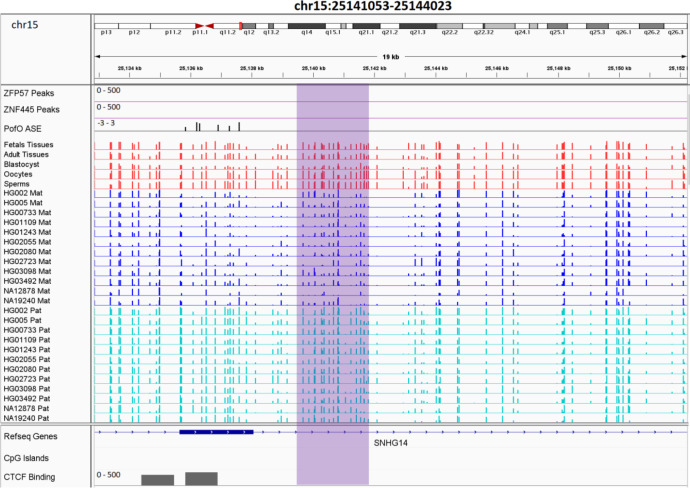
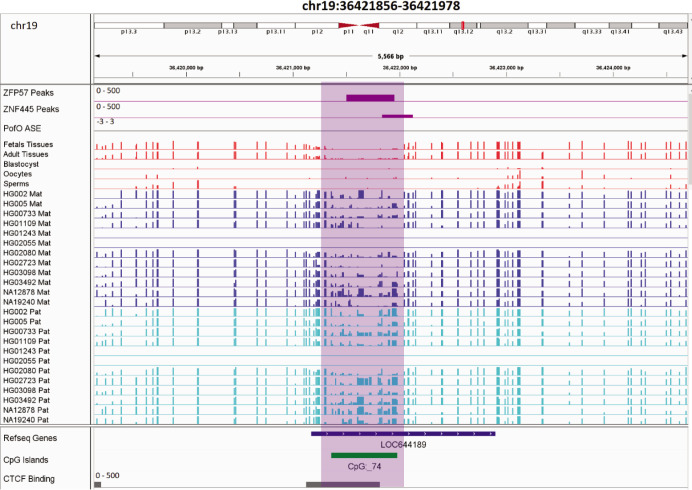
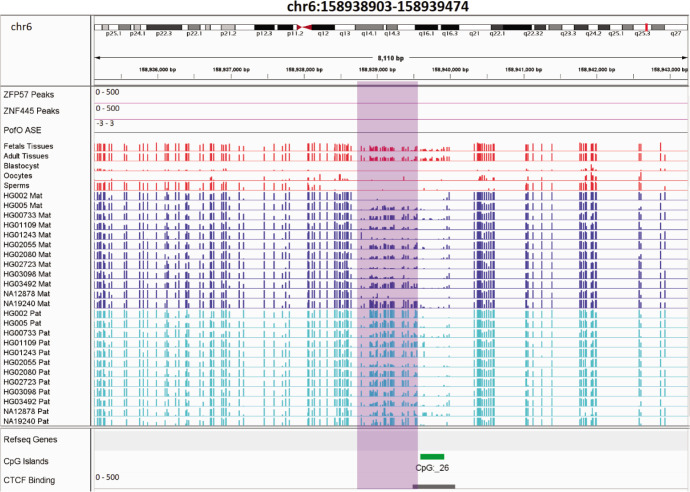
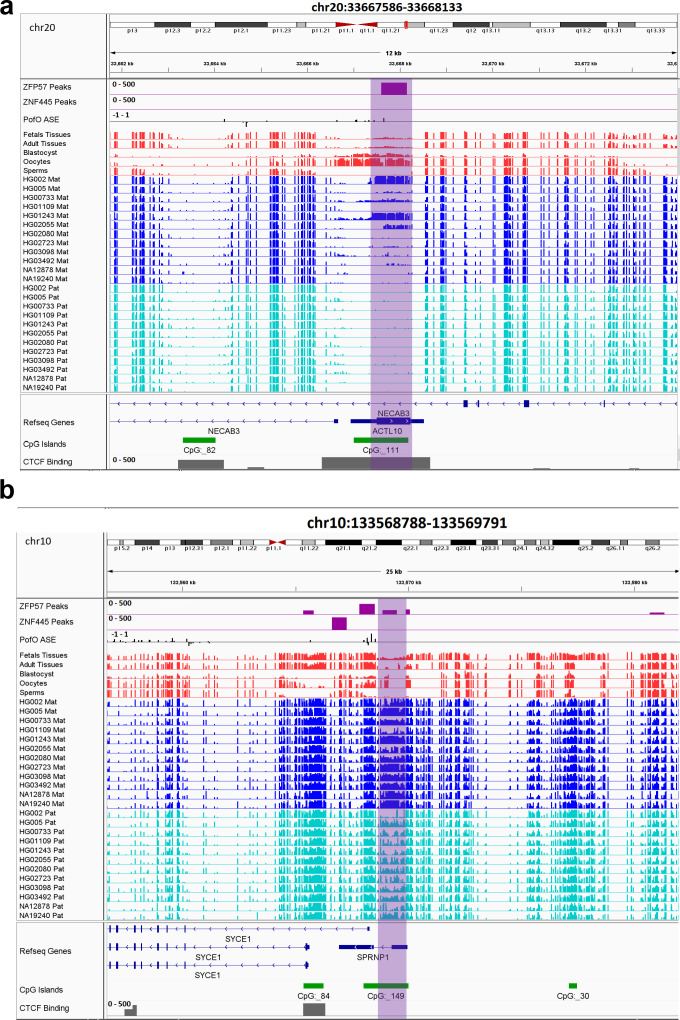
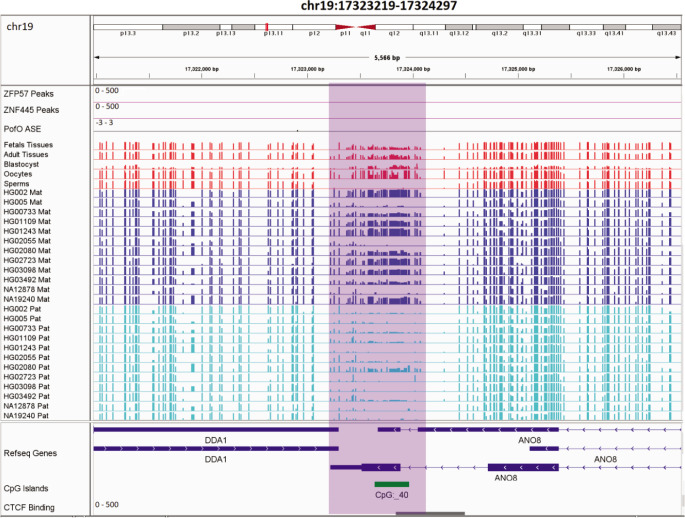
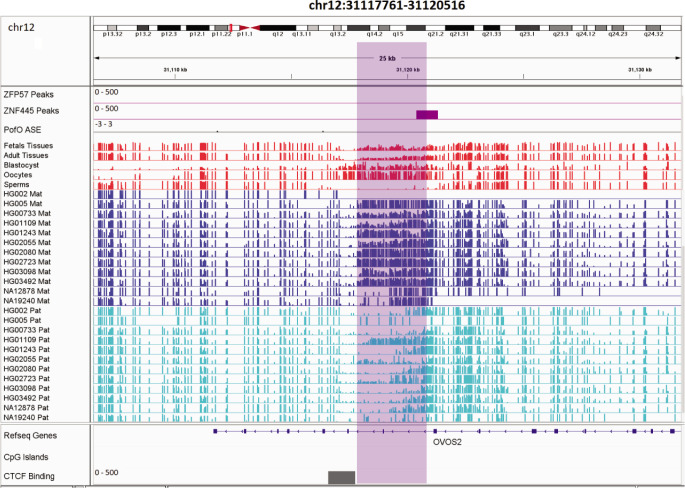
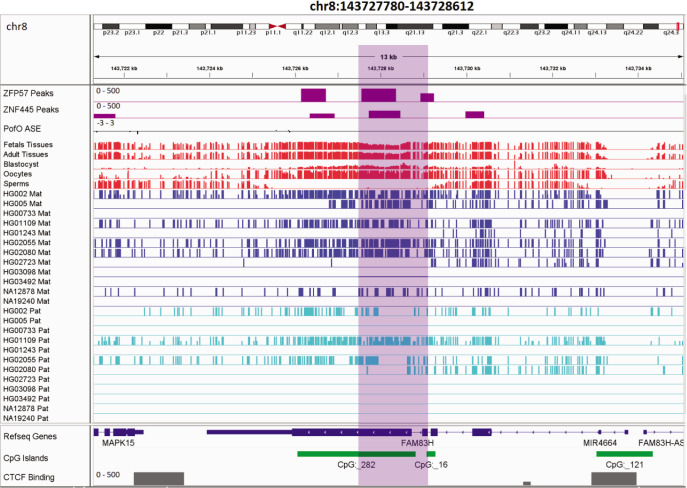
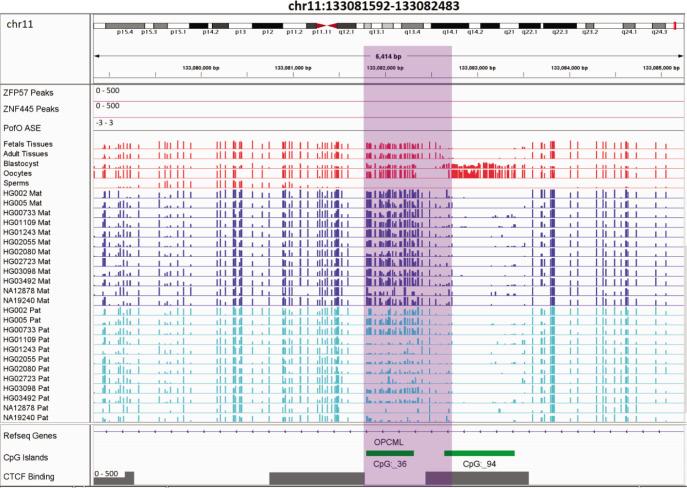
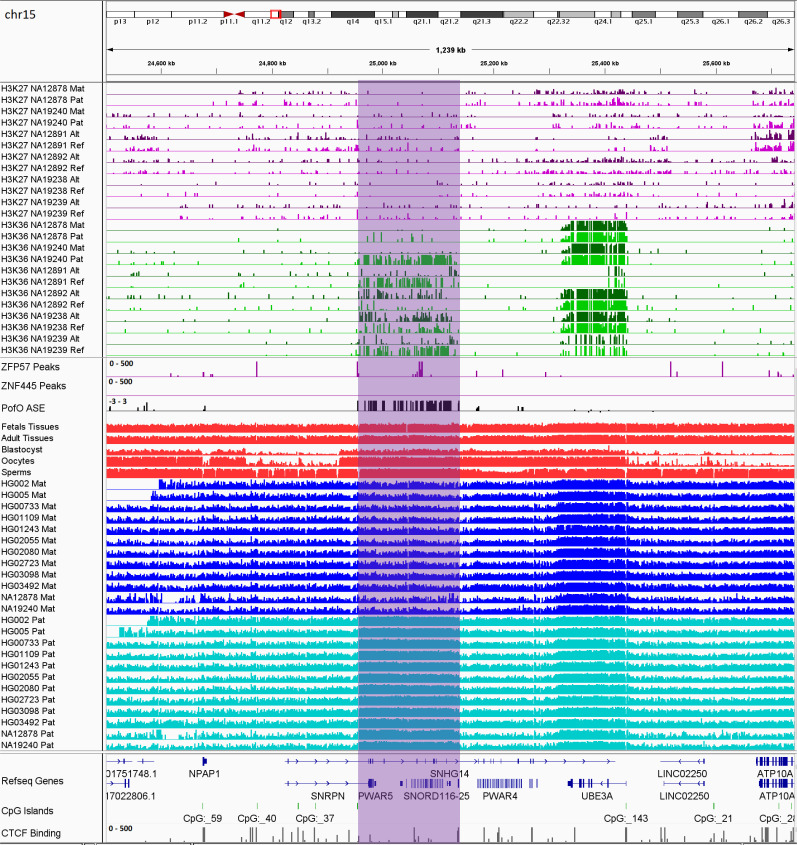
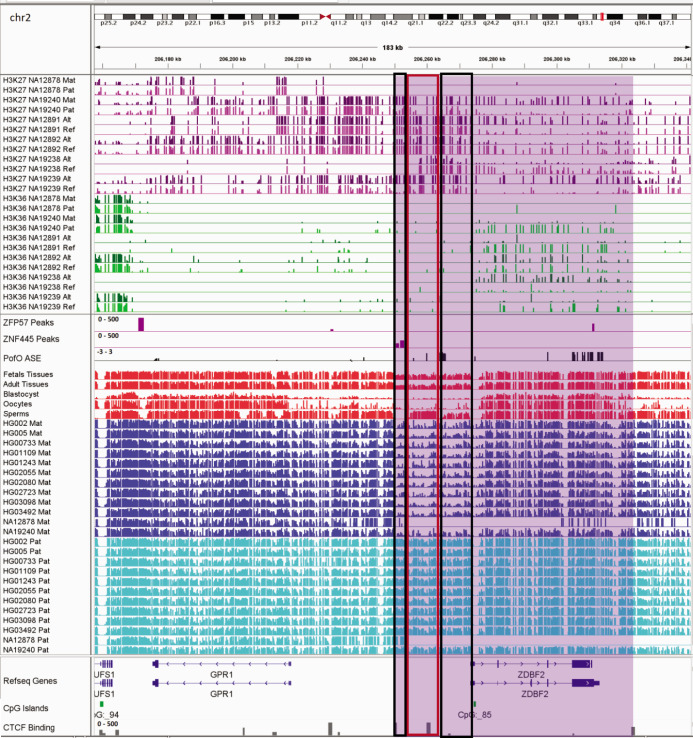
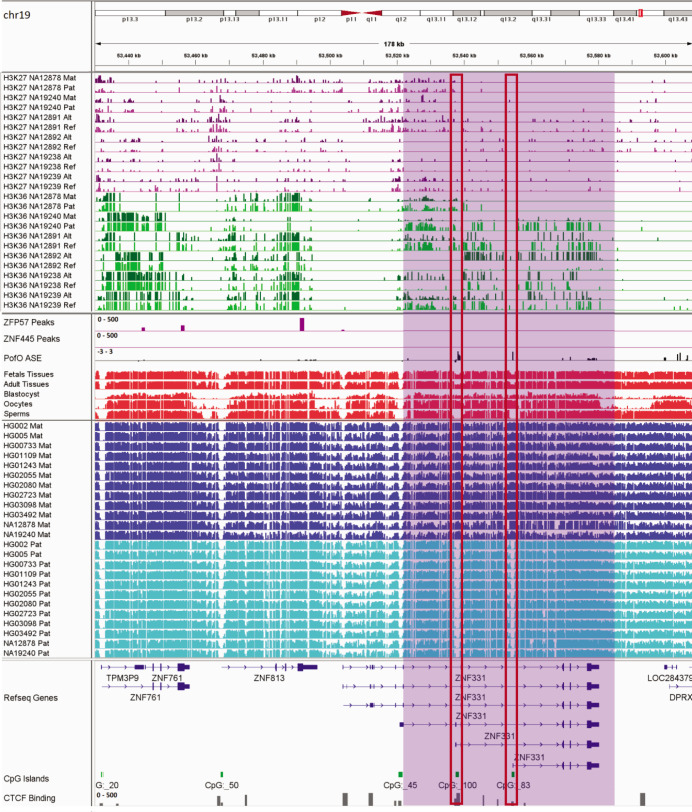
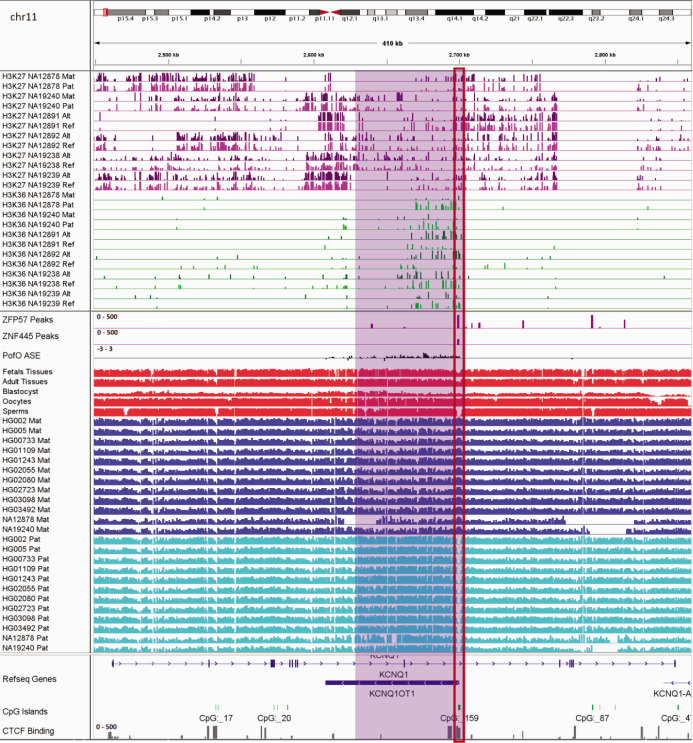
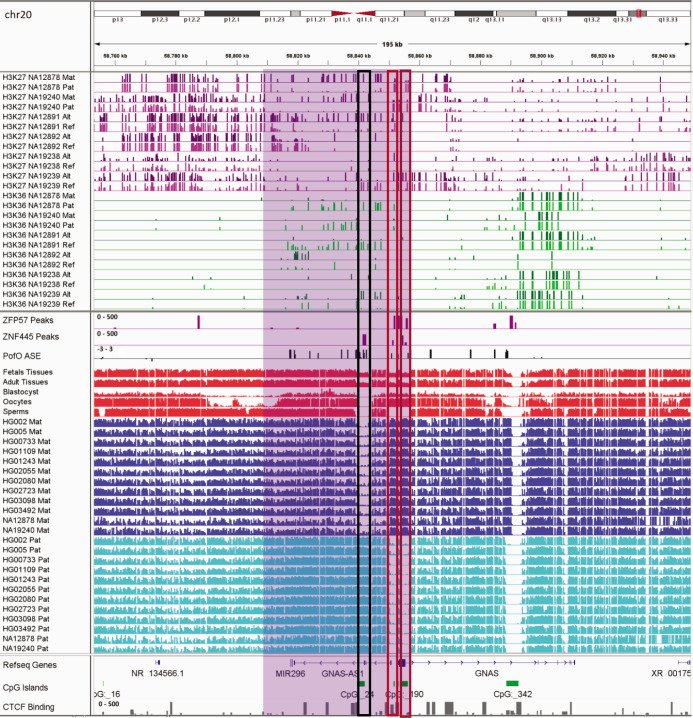
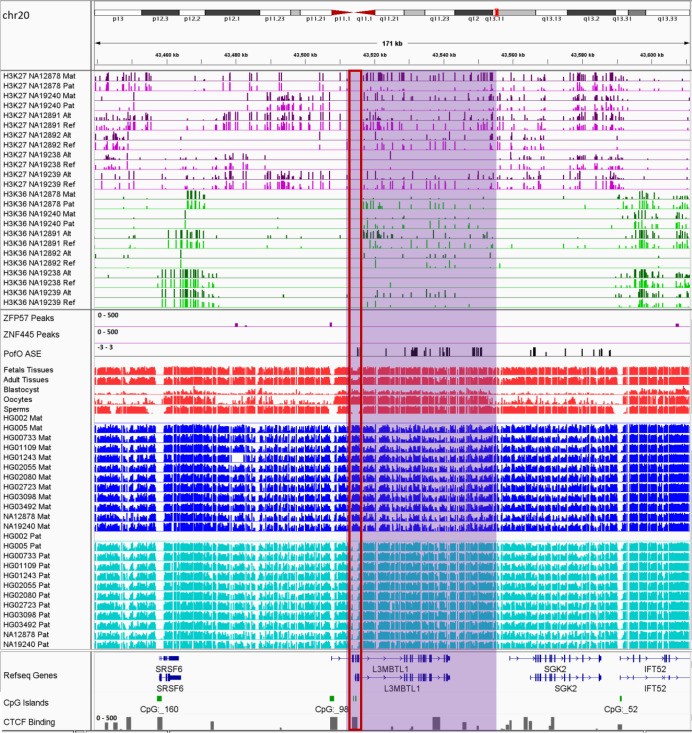
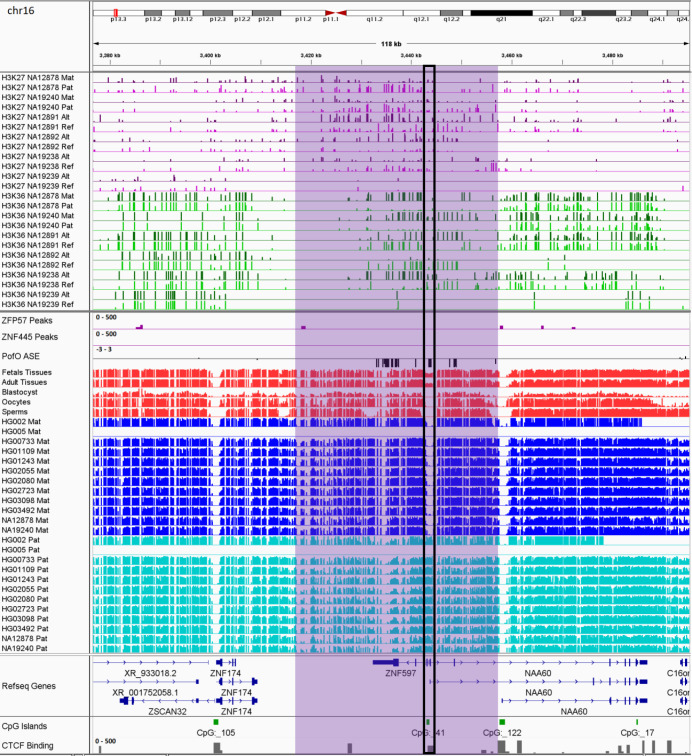
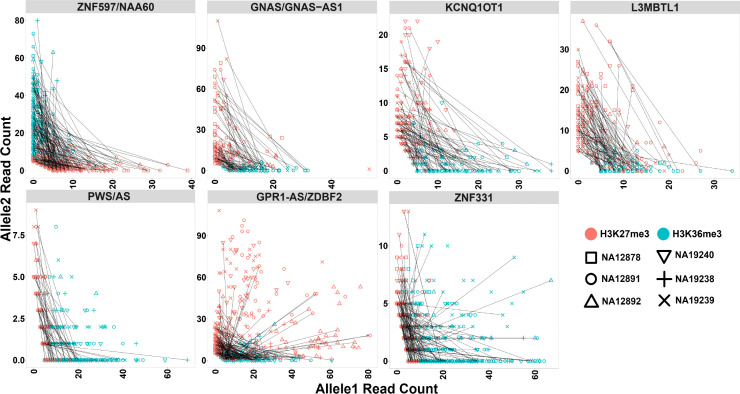
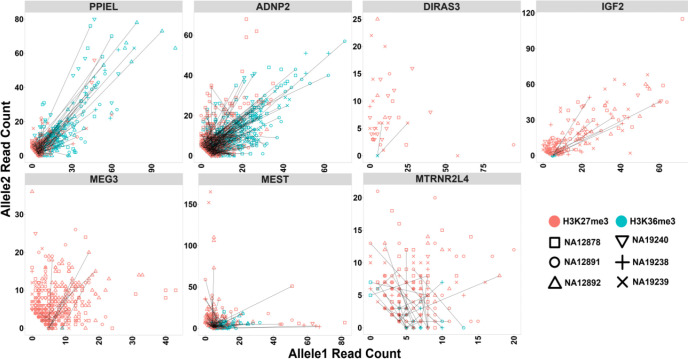
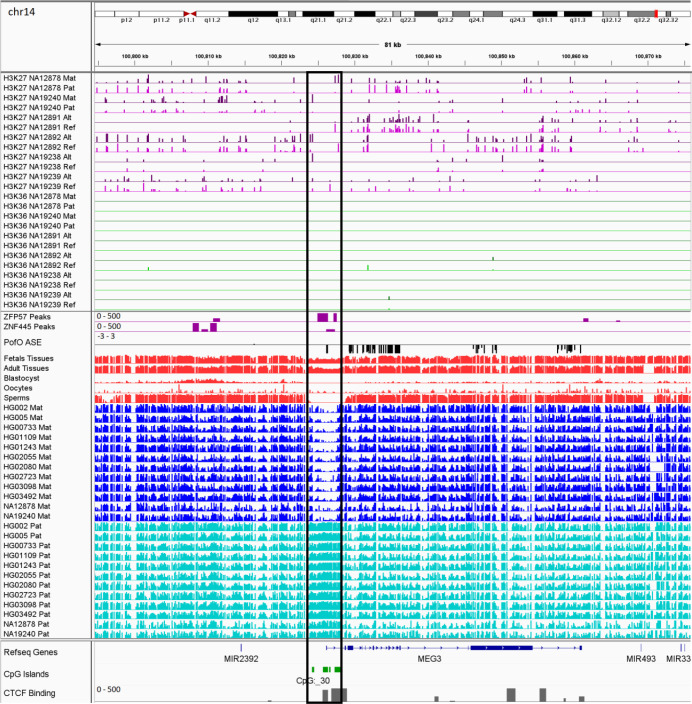
Imprinting is a critical part of normal embryonic development in mammals, controlled by defined parent-of-origin (PofO) differentially methylated regions (DMRs) known as imprinting control regions. Direct nanopore sequencing of DNA provides a means to detect allelic methylation and to overcome the drawbacks of methylation array and short-read technologies. Here, we used publicly available nanopore sequencing data for 12 standard B-lymphocyte cell lines to acquire the genome-wide mapping of imprinted intervals in humans. Using the sequencing data, we were able to phase 95% of the human methylome and detect 94% of the previously well-characterized, imprinted DMRs. In addition, we found 42 novel imprinted DMRs (16 germline and 26 somatic), which were confirmed using whole-genome bisulfite sequencing (WGBS) data. Analysis of WGBS data in mouse (), rhesus monkey (), and chimpanzee () suggested that 17 of these imprinted DMRs are conserved. Some of the novel imprinted intervals are within or close to imprinted genes without a known DMR. We also detected subtle parental methylation bias, spanning several kilobases at seven known imprinted clusters. At these blocks, hypermethylation occurs at the gene body of expressed allele(s) with mutually exclusive H3K36me3 and H3K27me3 allelic histone marks. These results expand upon our current knowledge of imprinting and the potential of nanopore sequencing to identify imprinting regions using only parent-offspring trios, as opposed to the large multi-generational pedigrees that have previously been required.
印迹是哺乳动物正常胚胎发育的关键部分,由定义的亲本来源(PofO)差异甲基化区域(DMR)控制,这些区域称为印迹控制区域。直接的纳米孔测序为检测等位基因甲基化提供了一种手段,并克服了甲基化阵列和短读技术的缺点。在这里,我们使用了 12 种标准 B 淋巴细胞系的公开可用的纳米孔测序数据,以获得人类印迹区间的全基因组图谱。使用测序数据,我们能够对 95%的人类甲基组进行相位分析,并检测到 94%以前特征良好的印迹 DMR。此外,我们发现了 42 个新的印迹 DMR(16 个生殖系和 26 个体细胞),这些 DMR 通过全基因组亚硫酸氢盐测序(WGBS)数据得到了验证。对小鼠()、恒河猴()和黑猩猩()的 WGBS 数据分析表明,这些印迹 DMR 中有 17 个是保守的。一些新的印迹区间位于已知的印迹基因内或附近,但没有已知的 DMR。我们还检测到了一些微妙的亲本甲基化偏向,跨越了七个已知印迹簇中的几个千碱基。在这些块中,表达等位基因的基因体发生超甲基化,具有相互排斥的 H3K36me3 和 H3K27me3 等位基因组蛋白标记。这些结果扩展了我们对印迹的现有认识,以及纳米孔测序的潜力,即使用仅父母-子女三人组而不是以前需要的大型多代系谱来识别印迹区域。