Department of Gastroenterology, Kanazawa University Graduate School of Medical Sciences, Kanazawa, Japan.
Department of Cell Metabolism and Nutrition, Kanazawa University Graduate School of Medical Sciences, Kanazawa, Japan.
Cell Mol Gastroenterol Hepatol. 2022;14(4):925-944. doi: 10.1016/j.jcmgh.2022.06.008. Epub 2022 Jul 1.
BACKGROUND & AIMS: The lipid oxidation is a key factor for damaging hepatocytes and causing cell death. However, the mechanisms underlying hepatocyte death and the role of the most popular lipid peroxidation product 4-hydroxy-2-nonenal (HNE) in nonalcoholic steatohepatitis (NASH) remains unclear.
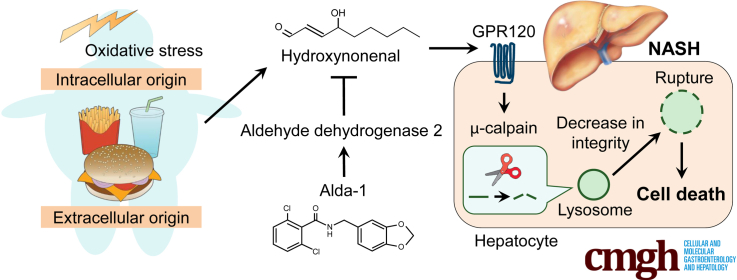
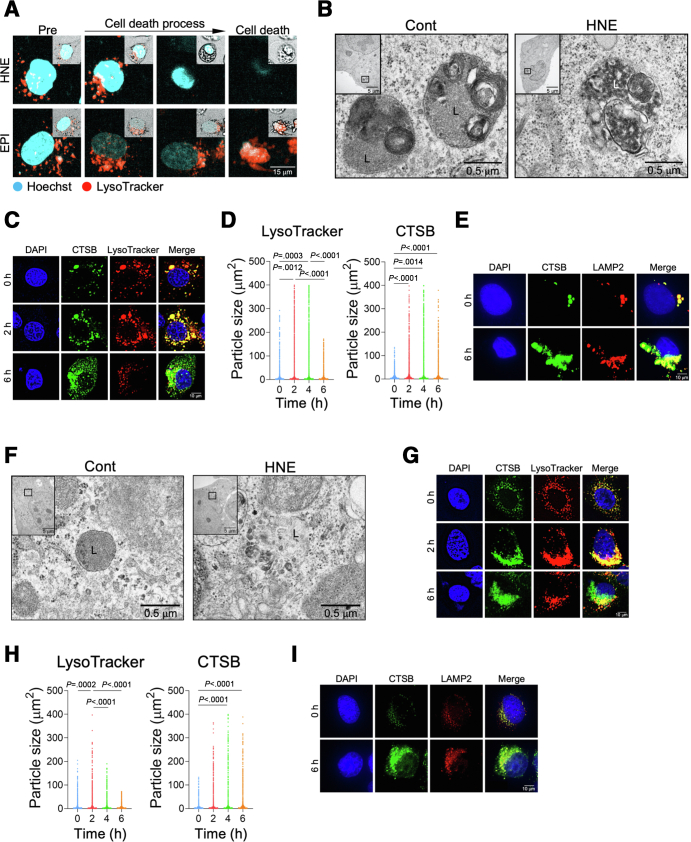
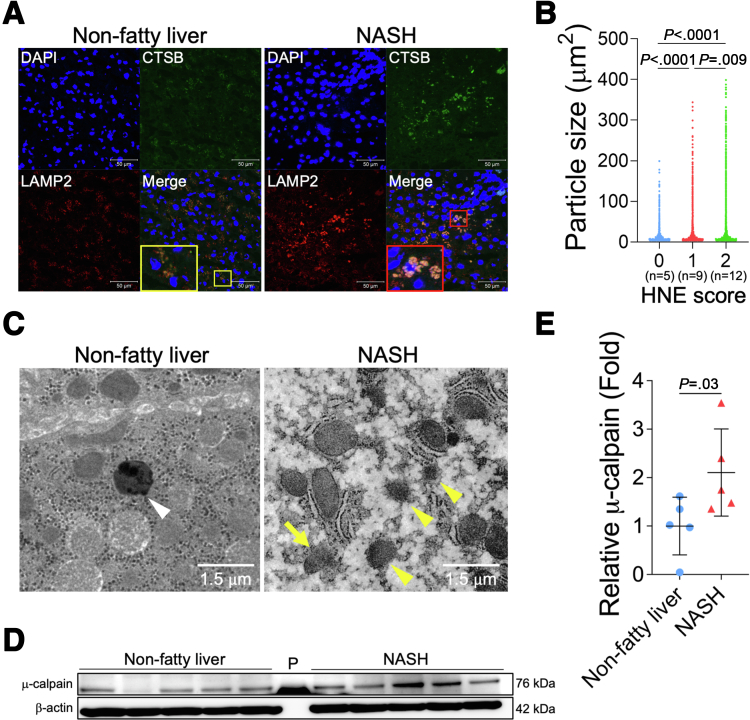
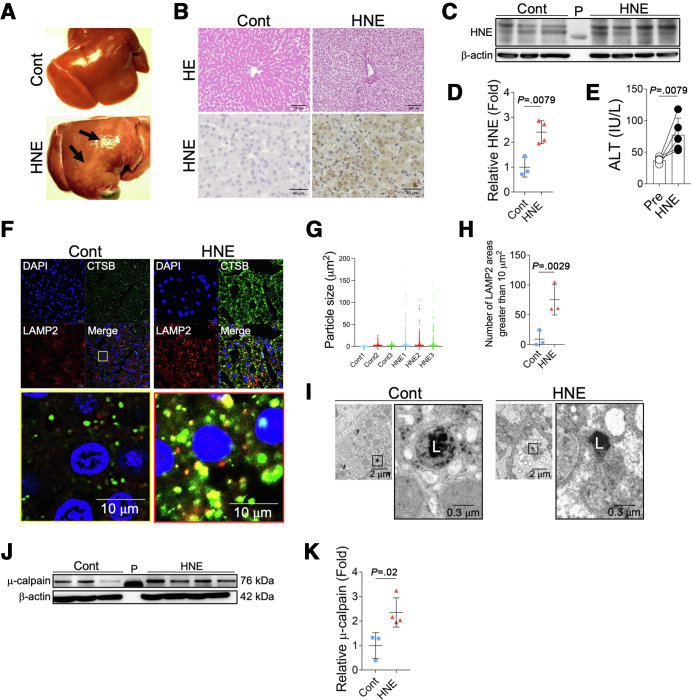
We demonstrated using hepatoma cell lines, a NASH mouse model, HNE-treated monkeys, and biopsy specimens from patients with NASH that HNE induced hepatocyte death by disintegrating the lysosomal limiting membrane.
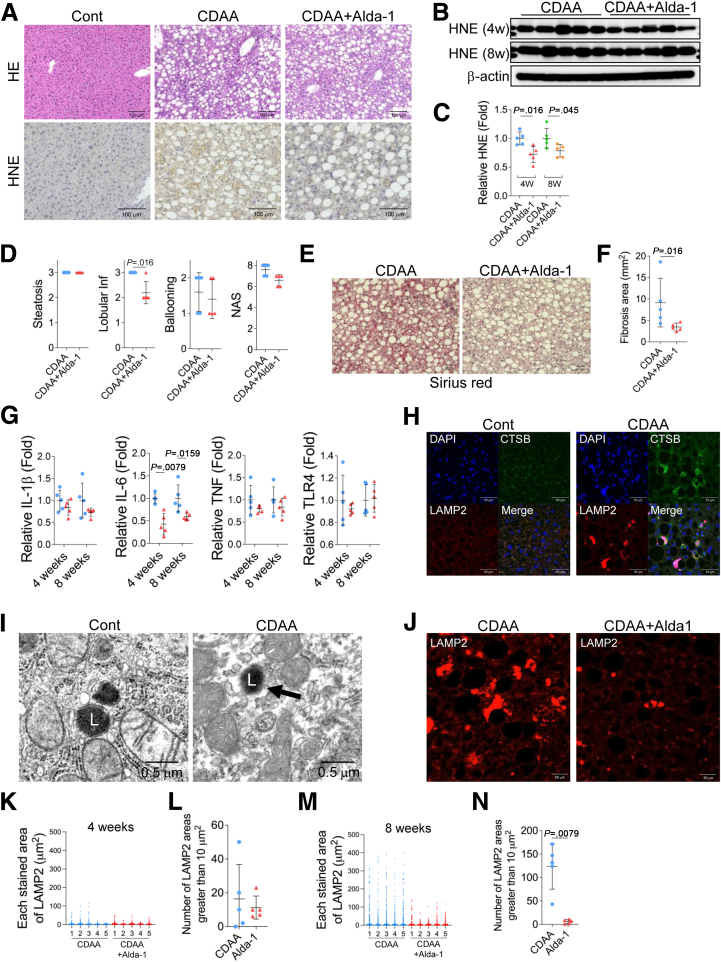
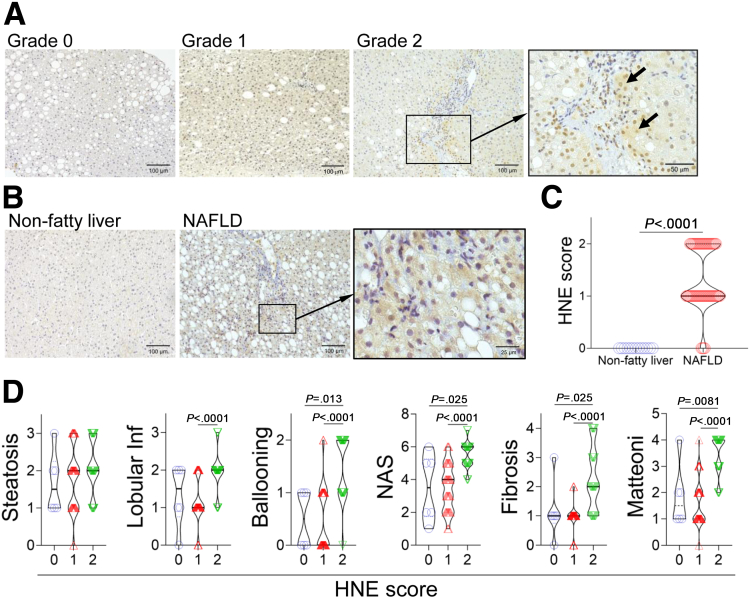
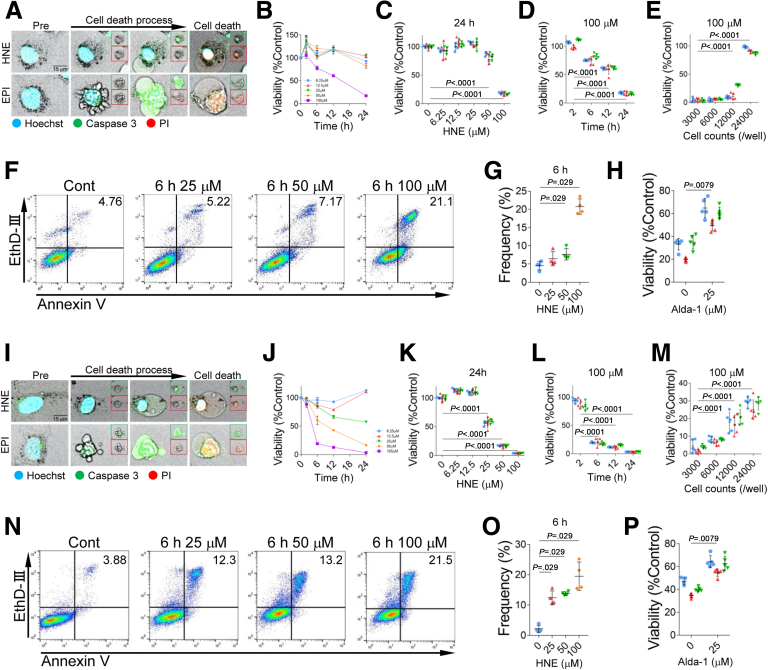
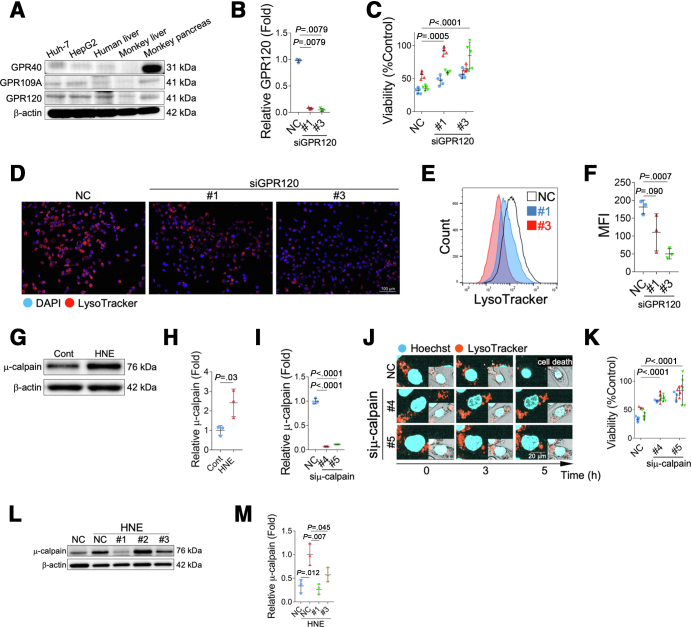
The degree of HNE deposition in human NASH hepatocytes was more severe in cases with high lobular inflammation, ballooning, and fibrosis scores, and was associated with enlargement of the staining of lysosomes in hepatocytes. In in vitro experiments, HNE activated μ-calpain via G-protein coupled receptor (GPR) 120. The resultant rupture/permeabilization of the lysosomal limiting membrane induced the leakage of cathepsins from lysosomes and hepatocyte death. The blockade of G-protein coupled receptor 120 (GPR120) or μ-calpain expression suppressed lysosomal membrane damage and hepatocyte death by HNE. Alda-1, which activates aldehyde dehydrogenase 2 to degrade HNE, prevented HNE-induced hepatocyte death. Intravenous administration of HNE to monkeys for 6 months resulted in hepatocyte death by a mechanism similar to that of cultured cells. In addition, intraperitoneal administration of Alda-1 to choline-deficient, amino-acid defined treated mice for 8 weeks inhibited HNE deposition, decreased liver inflammation, and disrupted lysosomal membranes in hepatocytes, resulting in improvement of liver fibrosis.
These results provide novel insights into the mechanism of hepatocyte death in NASH and will contribute to the development of new therapeutic strategies for NASH.
脂质氧化是损伤肝细胞和导致细胞死亡的关键因素。然而,肝细胞死亡的机制以及最受欢迎的脂质过氧化产物 4-羟基-2-壬烯醛(HNE)在非酒精性脂肪性肝炎(NASH)中的作用仍不清楚。
我们使用肝癌细胞系、NASH 小鼠模型、HNE 处理的猴子和 NASH 患者的活检标本证明,HNE 通过破坏溶酶体限制膜诱导肝细胞死亡。
在具有高小叶炎症、气球样变和纤维化评分的人类 NASH 肝细胞中,HNE 的沉积程度更严重,并且与肝细胞中溶酶体染色的增大相关。在体外实验中,HNE 通过 G 蛋白偶联受体(GPR)120 激活 μ-钙蛋白酶。溶酶体限制膜的破裂/通透性导致组织蛋白酶从溶酶体漏出和肝细胞死亡。G 蛋白偶联受体 120(GPR120)或 μ-钙蛋白酶表达的阻断抑制了 HNE 诱导的溶酶体膜损伤和肝细胞死亡。激活醛脱氢酶 2 以降解 HNE 的 Alda-1 可防止 HNE 诱导的肝细胞死亡。6 个月向猴子静脉内给予 HNE 可导致类似于培养细胞的机制引起的肝细胞死亡。此外,8 周内向胆碱缺乏、氨基酸定义处理的小鼠腹腔内给予 Alda-1 可抑制 HNE 沉积、减少肝脏炎症并破坏肝细胞中的溶酶体膜,从而改善肝纤维化。
这些结果为 NASH 中肝细胞死亡的机制提供了新的见解,并将有助于开发 NASH 的新治疗策略。