Zhang Yumeng, Sokol Lubomir
Department of Internal Medicine, University of South Florida, Tampa, FL, USA.
Department of Malignant Hematology, Moffitt Cancer Center, Tampa, FL, USA.
Cancer Manag Res. 2022 Jun 28;14:2107-2117. doi: 10.2147/CMAR.S330398. eCollection 2022.
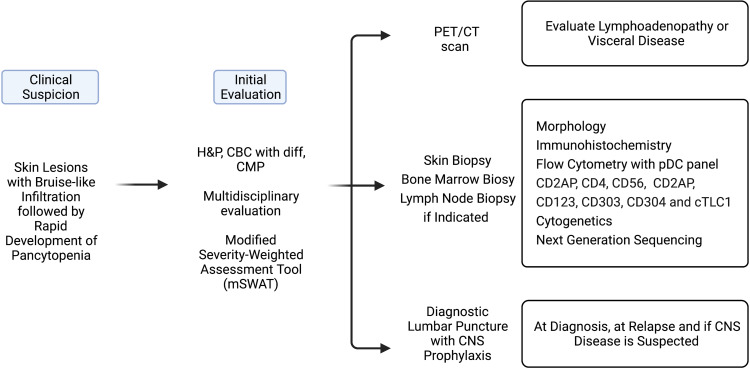
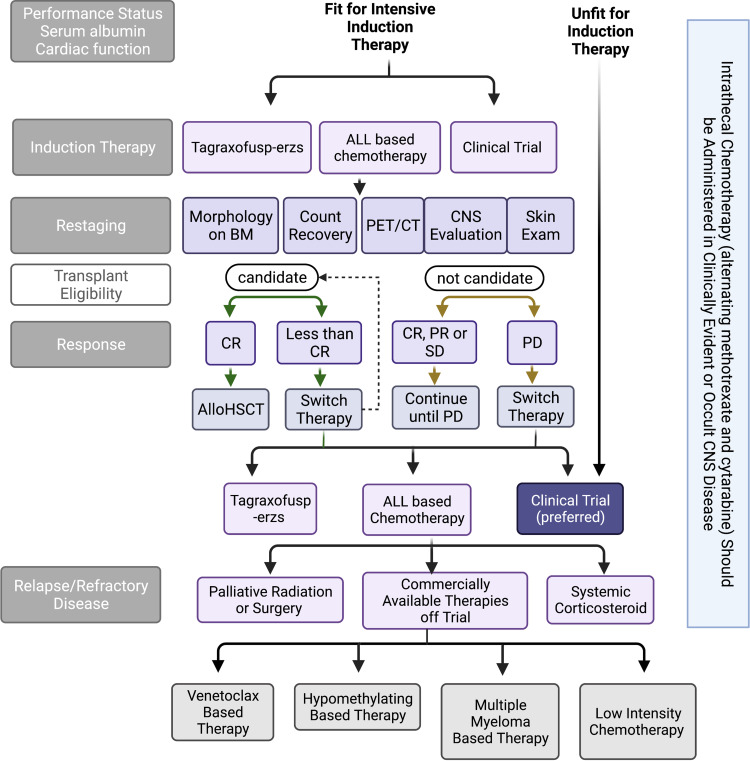
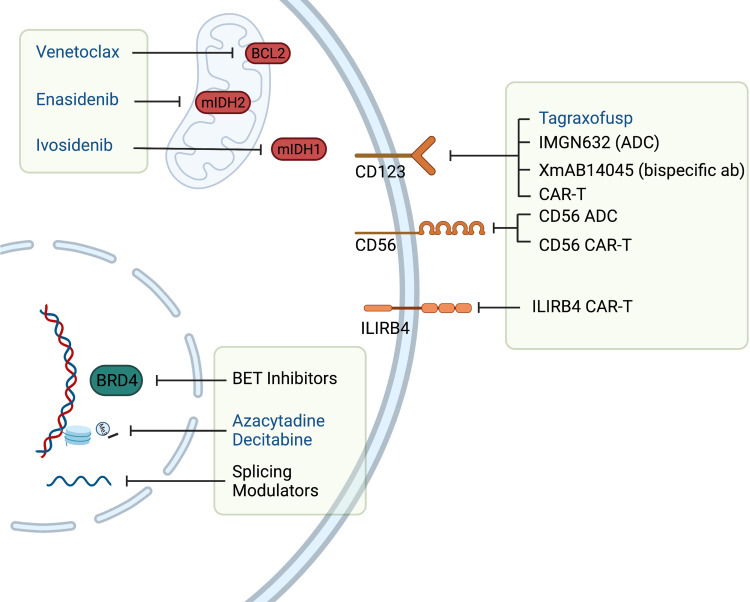
Blastic plasmacytoid dendritic cell neoplasm (BPDCN) is aggressive hematologic malignancy derived from plasmacytoid dendritic cell precursors of myeloid cell lineage. Patients frequently present with bruise-like skin lesions, which typically are followed months later by progressive cytopenias. Historically, BPDCN prognosis has been dismal, with median overall survival ranging from 9 to 13 months. In the past 2 decades, our understanding of BPDCN pathogenesis has led to the successful development of novel therapeutics. In December 2018, the FDA approved tagraxofusp-erzs for adults and pediatric patients older than 2 years who have either treatment-naïve or relapsed/refractory BPDCN. Acute lymphoblastic leukemia (ALL)-based chemotherapy regimens also provide comparable outcomes to tagraxofusp. In our practice, for patients with good performance status, we use tagraxofusp, ALL-based chemotherapy regimens, or clinical trials as frontline induction therapy, followed by consolidation with allogeneic stem cell transplant once the first complete response has been achieved. Our induction regimen also includes intrathecal chemotherapy for central nervous system prophylaxis. Patients with poor performance status who are treatment-naïve or patients with relapsed/refractory disease have limited therapeutic options, and we strongly recommend enrollment in clinical trials; several novel agents and combinations are currently under clinical investigation for both treatment-naïve and relapsed/refractory BPDCN.
母细胞样浆细胞样树突状细胞肿瘤(BPDCN)是一种侵袭性血液系统恶性肿瘤,起源于髓系细胞谱系的浆细胞样树突状细胞前体。患者常出现瘀斑样皮肤病变,通常数月后会进展为血细胞减少。从历史上看,BPDCN的预后很差,总体中位生存期为9至13个月。在过去20年里,我们对BPDCN发病机制的认识促使新型疗法成功研发。2018年12月,美国食品药品监督管理局(FDA)批准了塔格拉索夫单抗-erzs用于治疗初治或复发/难治性BPDCN的成人及2岁以上儿童患者。基于急性淋巴细胞白血病(ALL)的化疗方案也能提供与塔格拉索夫单抗相当的疗效。在我们的临床实践中,对于身体状况良好的患者,我们使用塔格拉索夫单抗、基于ALL的化疗方案或临床试验作为一线诱导治疗,一旦获得首次完全缓解,随后进行异基因干细胞移植巩固治疗。我们的诱导方案还包括鞘内化疗以预防中枢神经系统受累。初治的身体状况较差的患者或复发/难治性疾病患者的治疗选择有限,我们强烈建议他们参加临床试验;目前有几种新型药物及联合方案正在针对初治和复发/难治性BPDCN进行临床研究。