Institute of Human Genetics, University Hospital Schleswig-Holstein, University of Lübeck and Kiel University, Lübeck and Kiel, Germany.
Institute of Human Genetics, University Hospital Schleswig-Holstein, University of Lübeck and Kiel University, Lübeck and Kiel, Germany
J Med Genet. 2022 Sep;59(9):827-839. doi: 10.1136/jmedgenet-2022-108588. Epub 2022 Jul 5.
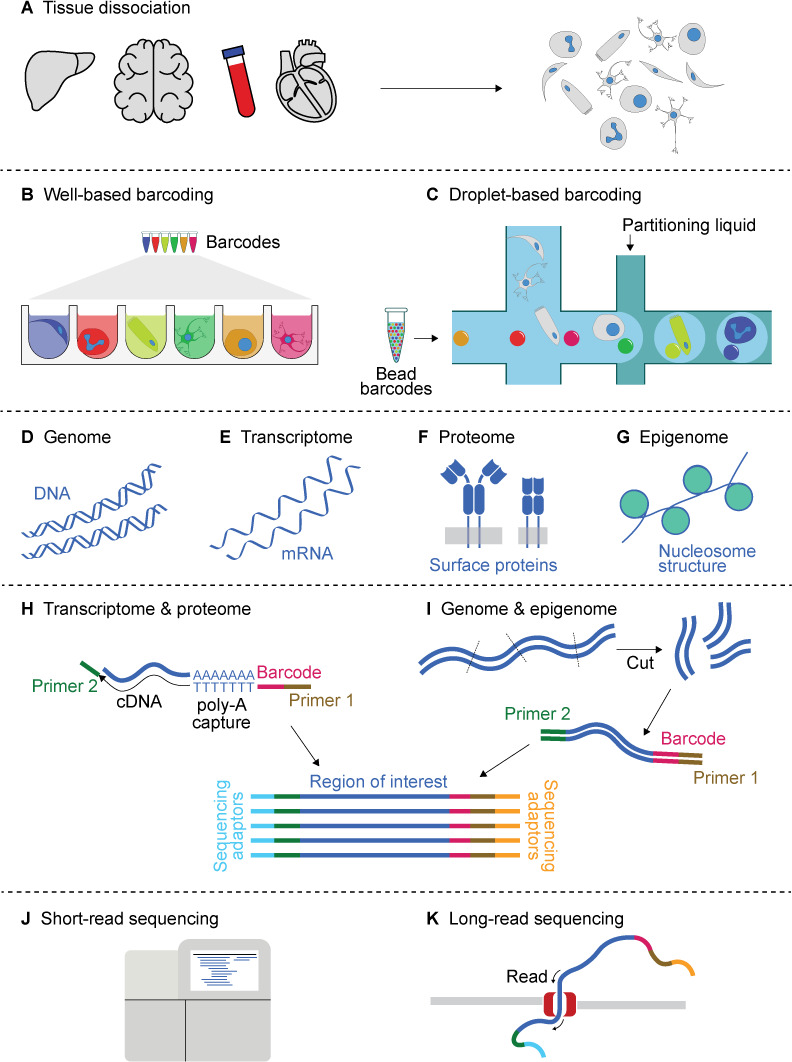
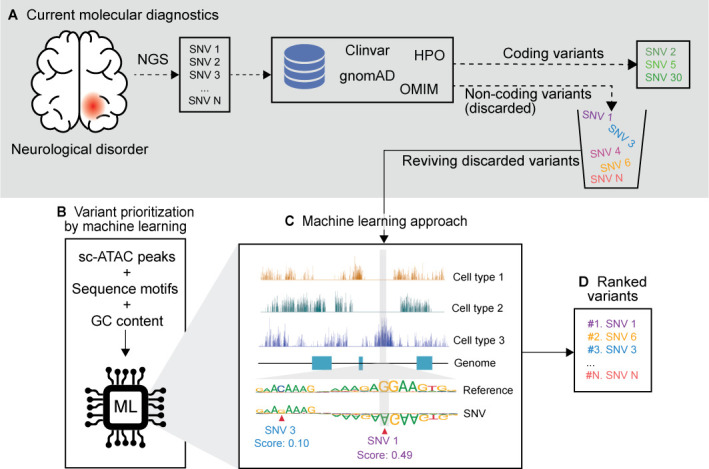
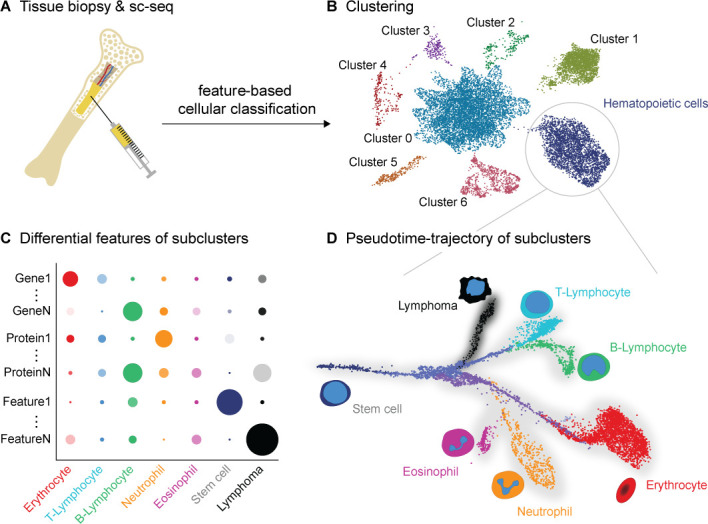
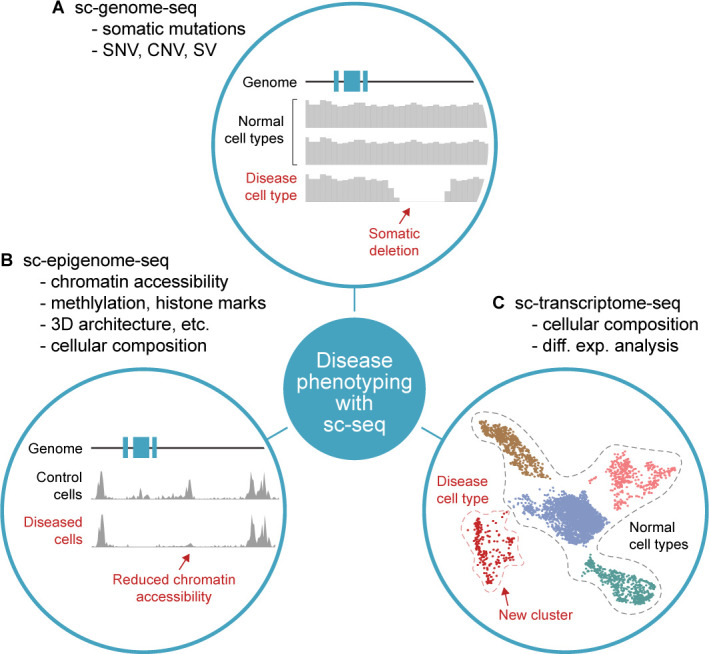
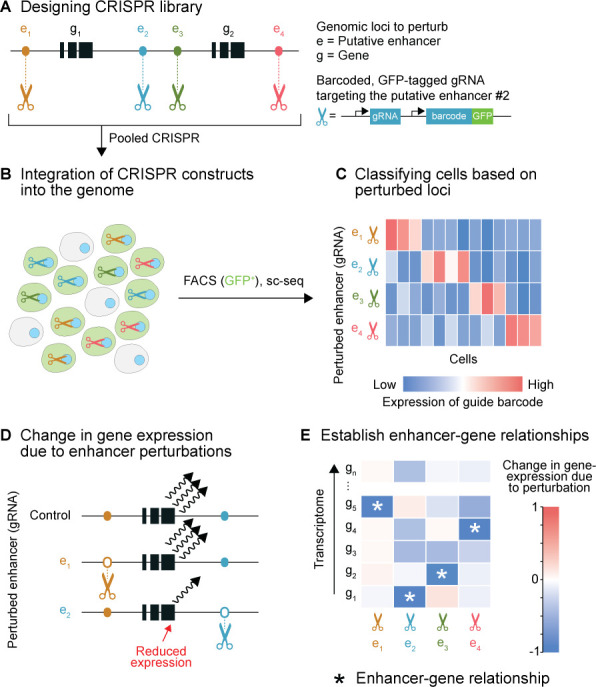
Single-cell sequencing is a powerful approach that can detect genetic alterations and their phenotypic consequences in the context of human development, with cellular resolution. Humans start out as single-cell zygotes and undergo fission and differentiation to develop into multicellular organisms. Before fertilisation and during development, the cellular genome acquires hundreds of mutations that propagate down the cell lineage. Whether germline or somatic in nature, some of these mutations may have significant genotypic impact and lead to diseased cellular phenotypes, either systemically or confined to a tissue. Single-cell sequencing enables the detection and monitoring of the genotype and the consequent molecular phenotypes at a cellular resolution. It offers powerful tools to compare the cellular lineage between 'normal' and 'diseased' conditions and to establish genotype-phenotype relationships. By preserving cellular heterogeneity, single-cell sequencing, unlike bulk-sequencing, allows the detection of even small, diseased subpopulations of cells within an otherwise normal tissue. Indeed, the characterisation of biopsies with cellular resolution can provide a mechanistic view of the disease. While single-cell approaches are currently used mainly in basic research, it can be expected that applications of these technologies in the clinic may aid the detection, diagnosis and eventually the treatment of rare genetic diseases as well as cancer. This review article provides an overview of the single-cell sequencing technologies in the context of human genetics, with an aim to empower clinicians to understand and interpret the single-cell sequencing data and analyses. We discuss the state-of-the-art experimental and analytical workflows and highlight current challenges/limitations. Notably, we focus on two prospective applications of the technology in human genetics, namely the annotation of the non-coding genome using single-cell functional genomics and the use of single-cell sequencing data for in silico variant prioritisation.
单细胞测序是一种强大的方法,可以在单细胞分辨率下检测人类发育过程中遗传改变及其表型后果。人类从单细胞受精卵开始,经历裂变和分化,发育成多细胞生物。在受精前和发育过程中,细胞基因组会获得数百个突变,这些突变会沿着细胞谱系传播。这些突变无论是生殖系还是体细胞突变,有些可能具有重要的基因型影响,并导致细胞表型疾病,无论是全身性的还是局限于组织的。单细胞测序能够以单细胞分辨率检测和监测基因型及其随后的分子表型。它提供了强大的工具来比较“正常”和“患病”条件下的细胞谱系,并建立基因型-表型关系。通过保留细胞异质性,单细胞测序与批量测序不同,它允许在正常组织内检测到甚至是很小的、患病的细胞亚群。事实上,对具有单细胞分辨率的活检进行分析可以提供疾病的机制观点。虽然单细胞方法目前主要用于基础研究,但可以预期这些技术在临床中的应用可能有助于检测、诊断,最终治疗罕见的遗传疾病和癌症。本文综述了单细胞测序技术在人类遗传学中的应用,旨在使临床医生能够理解和解释单细胞测序数据和分析。我们讨论了最新的实验和分析工作流程,并强调了当前的挑战/局限性。值得注意的是,我们重点介绍了该技术在人类遗传学中的两个预期应用,即使用单细胞功能基因组学注释非编码基因组,以及使用单细胞测序数据进行虚拟变异优先级排序。