Lazofsky Abigail, Doherty Cathleen, Szary Patrick, Buckley Brian
Environmental and Occupational Health Sciences Institute, Rutgers University, 170 Frelinghuysen Road, Piscataway, NJ, 08854, USA.
Center for Advanced Infrastructure and Transportation, Rutgers University, 100 Brett Road, Piscataway, NJ, 08854, USA.
Emerg Contam. 2022;8:318-328. doi: 10.1016/j.emcon.2022.06.005. Epub 2022 Jul 1.
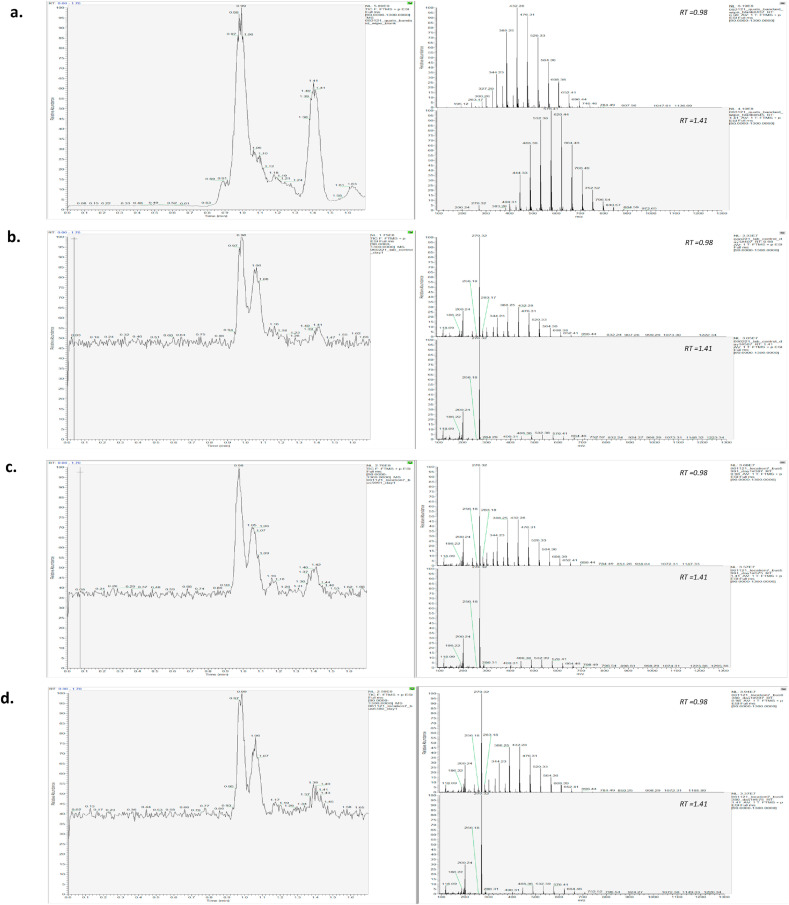
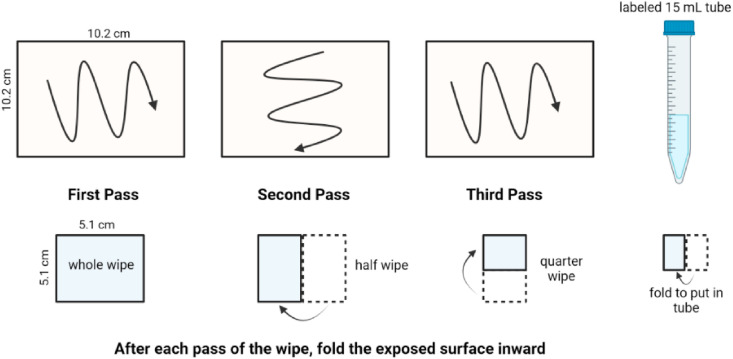
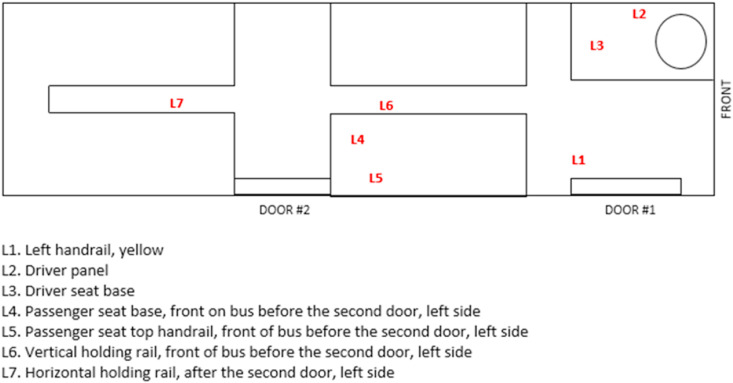
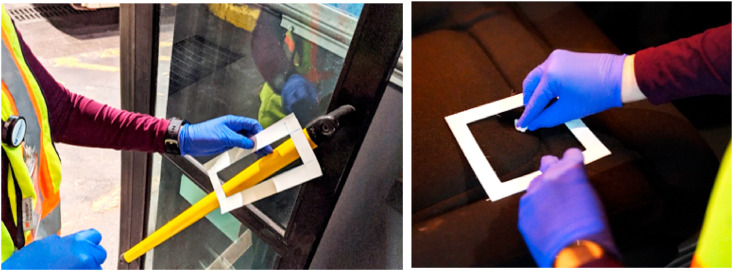
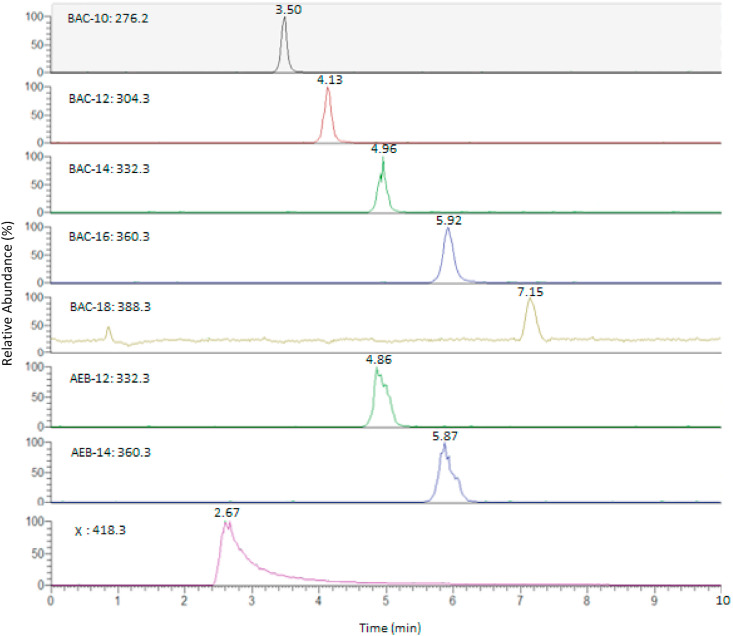
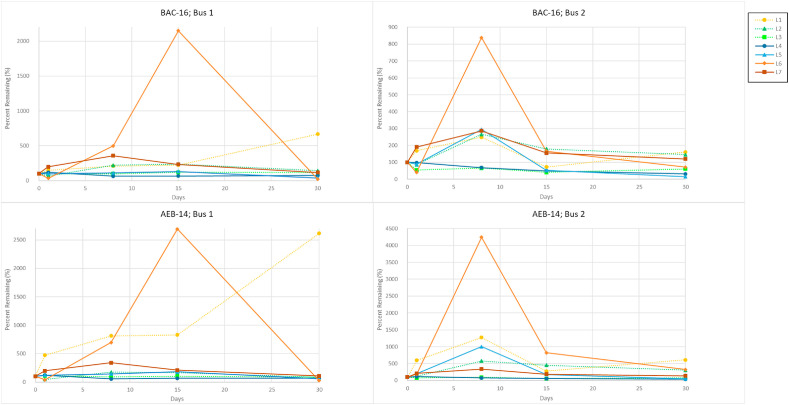
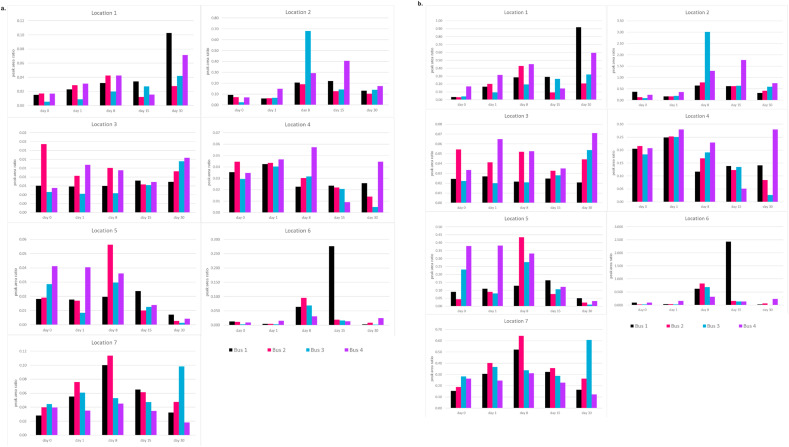
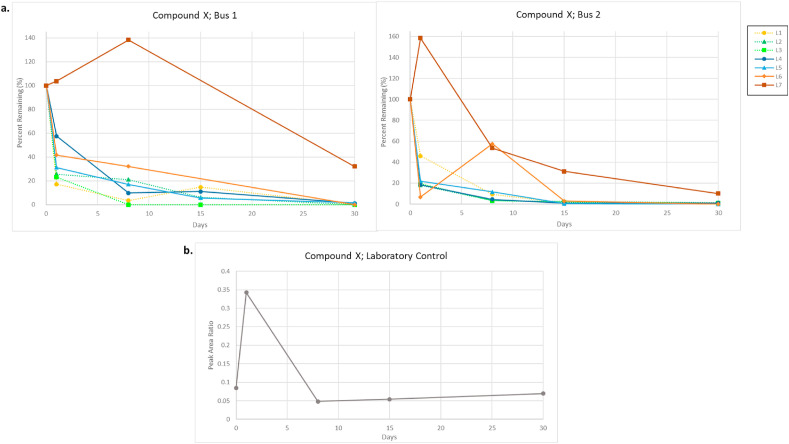
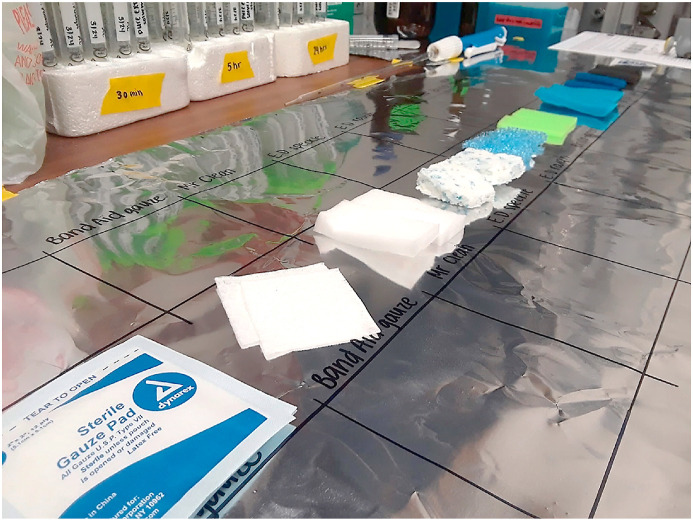
Quaternary ammonium compounds (QACs) are a class of antimicrobial disinfectants whose use in cleaning products increased during the COVID-19 pandemic. Chemically, their low vapor pressure indicates a proclivity to persist on surfaces, and their presence suggests a level of protection against microorganisms. The widespread application of QACs in response to the SARS CoV-2 virus created a need to evaluate their longevity on surfaces, for both efficacy and possible health risks. There are however, no standardized analytical methods for QAC surface sampling and analysis, and no published studies quantifying their concentrations on mass transportation vehicles-a high occupancy, close-contact microenvironment documented to facilitate the spread the SARS CoV-2 virus. Here, we describe a robust liquid chromatography mass spectrometry (LC-MS) method for the analysis of QACs and simultaneous development of a direct surface sampling and extraction protocol. We demonstrate the applicability of the method through the analysis of surface samples collected from in-service public transportation buses. The rapid, sensitive LC-MS method included 8 target QACs quantified on a Q-Exactive HF Hybrid Quadrupole-Orbitrap mass spectrometer using an electrospray ionization source and Dionex UltiMate 3000 UHPLC system for analyte separation. QAC standard mixtures at concentrations between 0.1 ng mL and 2000 ng mL were analyzed, and chromatographic separation of all analytes was achieved in less than 10 min. All correlation coefficients were reported at r > 0.986, and LODs ranged from 0.007 to 2.103 ng mL for all compounds, confirming the method's sensitivity. A previously reported surface sampling and extraction protocol was modified to further simplify the procedure and expand the number of target compounds. The new sampling protocol was optimized from 10 commercially available wipes and 4 solvent types by quantifying recovery from the surface. Band-Aid brand small gauze pads saturated with isopropanol had the highest recovery efficiencies, ranging from 61.5 to 102.9% across all analytes. To test the real-world applicability, wipe samples were collected from 4 in-circulation New Jersey Transit buses on 5 separate days over the course of a month to assess the occurrence and longevity of QACs on sanitized mass transportation vehicles. Concentrations of QACs were detected on every wipe sample taken, and at all sampled time points, confirming their persistence on hard surfaces. QACs have the potential to form polymers, and detection of the polymer might serve as a secondary indication of their effectiveness on surfaces. None of the polymers detected however, were unique to QACs from this study. The polymers detected were already present in the wipe and used as an internal standard to demonstrate the efficacy of extraction and analysis of polymeric QACs.
季铵化合物(QACs)是一类抗菌消毒剂,在新冠疫情期间其在清洁产品中的使用有所增加。从化学性质上讲,它们的低蒸气压表明其易于在表面残留,其存在意味着对微生物有一定程度的防护。为应对严重急性呼吸综合征冠状病毒2(SARS-CoV-2)病毒而广泛应用的QACs,使得有必要评估它们在表面的存留时间,以了解其有效性和可能存在的健康风险。然而,目前尚无用于QAC表面采样和分析的标准化分析方法,也没有已发表的研究对其在公共交通工具上的浓度进行量化,公共交通工具是一个高载客量、近距离接触的微环境,有记录表明其有助于SARS-CoV-2病毒的传播。在此,我们描述了一种用于分析QACs的稳健的液相色谱-质谱联用(LC-MS)方法,并同时开发了一种直接表面采样和萃取方案。我们通过分析从在役公共交通巴士上采集的表面样本,证明了该方法的适用性。这种快速、灵敏的LC-MS方法包括8种目标QACs,使用电喷雾电离源和戴安UltiMate 3000超高效液相色谱系统进行分析物分离,在Q-Exactive HF混合型四极杆-轨道阱质谱仪上进行定量。分析了浓度在0.1 ng/mL至2000 ng/mL之间的QAC标准混合物,所有分析物在不到10分钟内实现了色谱分离。所有相关系数均报告为r > 0.986,所有化合物的检测限范围为0.007至2.103 ng/mL,证实了该方法的灵敏度。对先前报道的表面采样和萃取方案进行了修改,以进一步简化程序并扩大目标化合物的数量。通过量化从表面的回收率,从10种市售擦拭布和4种溶剂类型中对新的采样方案进行了优化。用异丙醇饱和浸湿后的邦迪牌小纱布垫具有最高的回收效率,所有分析物的回收率范围为61.5%至102.9%。为测试实际适用性,在一个月的时间里,分5天从4辆新泽西运输公司在运营的巴士上采集擦拭布样本,以评估QACs在经过消毒的公共交通工具上的存在情况和存留时间。在采集的每一个擦拭布样本以及所有采样时间点都检测到了QACs的浓度,证实了它们在硬表面上的持久性。QACs有形成聚合物的可能性,聚合物检测可能作为其在表面有效性的一个次要指标。然而,检测到的聚合物并非本研究中QACs所特有的。检测到的聚合物已存在于擦拭布中,并用作内标以证明对聚合态QACs的萃取和分析效果。