Center for Regenerative Medicine, Massachusetts General Hospital, Boston, MA.
Department of Stem Cell and Regenerative Biology, Harvard University, Boston, MA.
Blood Adv. 2022 Sep 13;6(17):5072-5084. doi: 10.1182/bloodadvances.2022007250.
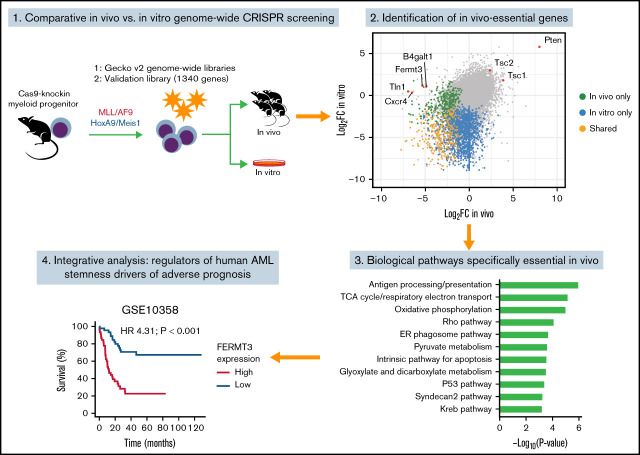
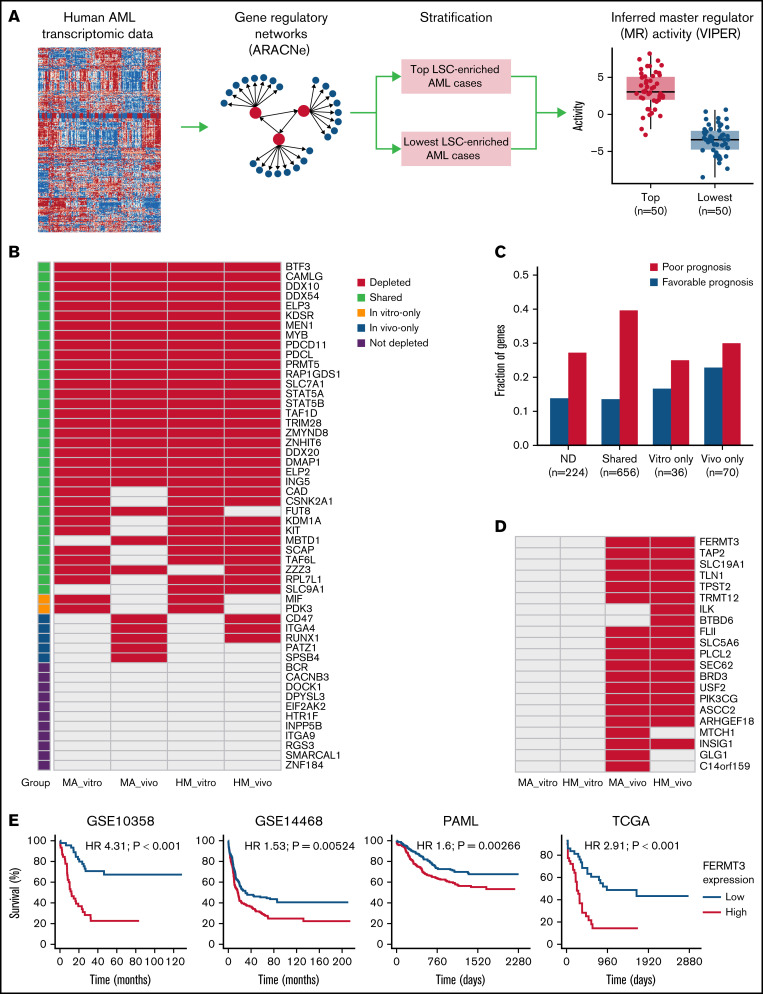
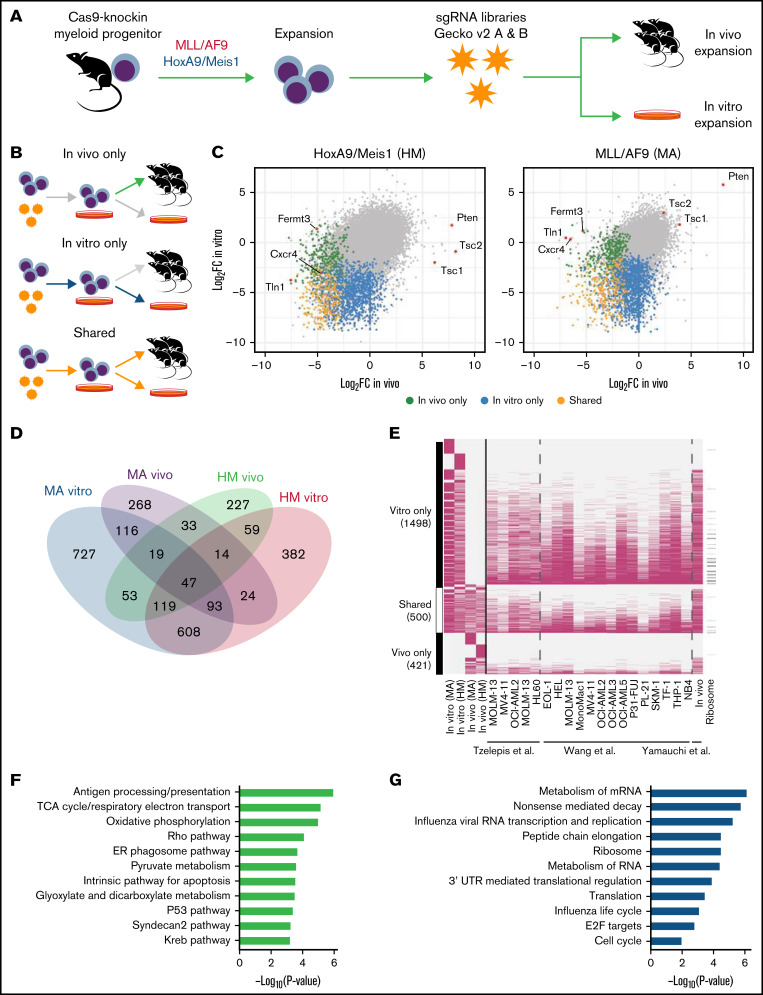
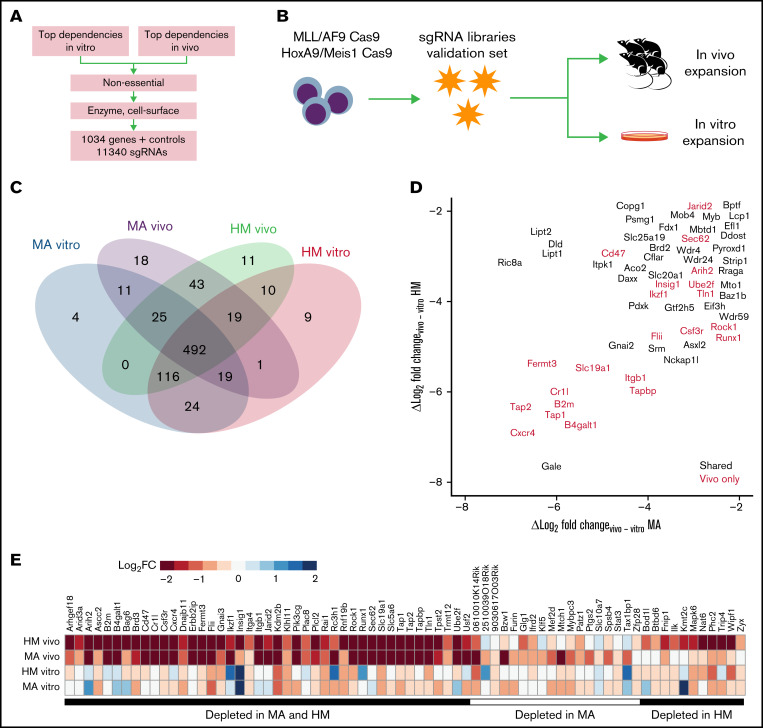
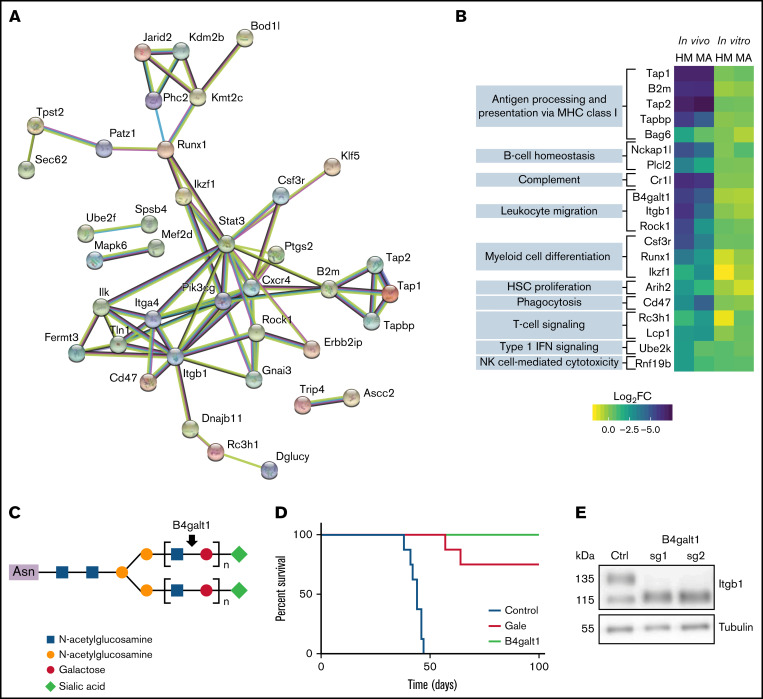
Genome-wide CRISPR screens have been extremely useful in identifying therapeutic targets in diverse cancers by defining genes that are essential for malignant growth. However, most CRISPR screens were performed in vitro and thus cannot identify genes that are essential for interactions with the microenvironment in vivo. Here, we report genome-wide CRISPR screens in 2 in vivo murine models of acute myeloid leukemia (AML) driven by the KMT2A/MLLT3 fusion or by the constitutive coexpression of Hoxa9 and Meis1. Secondary validation using a focused library identified 72 genes specifically essential for leukemic growth in vivo, including components of the major histocompatibility complex class I complex, Cd47, complement receptor Cr1l, and the β-4-galactosylation pathway. Importantly, several of these in vivo-specific hits have a prognostic effect or are inferred to be master regulators of protein activity in human AML cases. For instance, we identified Fermt3, a master regulator of integrin signaling, as having in vivo-specific dependency with high prognostic relevance. Overall, we show an experimental and computational pipeline for genome-wide functional screens in vivo in AML and provide a genome-wide resource of essential drivers of leukemic growth in vivo.
全基因组 CRISPR 筛选在鉴定不同癌症的治疗靶点方面非常有用,这些靶点定义了恶性生长所必需的基因。然而,大多数 CRISPR 筛选都是在体外进行的,因此无法识别与体内微环境相互作用所必需的基因。在这里,我们报告了在由 KMT2A/MLLT3 融合或 Hoxa9 和 Meis1 组成性共表达驱动的 2 种急性髓系白血病(AML)体内小鼠模型中进行的全基因组 CRISPR 筛选。使用聚焦文库进行的二次验证鉴定了 72 个在体内对白血病生长至关重要的基因,包括主要组织相容性复合体 I 类复合物的成分、CD47、补体受体 Cr1l 和 β-4-半乳糖基化途径。重要的是,这些体内特异性命中的几个具有预后作用或被推断为人类 AML 病例中蛋白质活性的主调控因子。例如,我们鉴定出 Fermt3 是整合素信号的主调控因子,具有体内特异性依赖性和高预后相关性。总体而言,我们展示了一种在 AML 中进行体内全基因组功能筛选的实验和计算管道,并提供了一个体内白血病生长必需驱动因素的全基因组资源。